
The Overview
Michael Fulton
Melbourne-based skier and snowboarder with 50+ resorts across 5 continents. Specialises in Australian resorts and international resort comparisons.
Lake Louise's summit reaches 2,637 metres, dropping 991 vertical metres to a base at 1,646 metres across 160 runs spread over roughly 1,700 hectares within Banff National Park, Alberta. Terrain splits 45 per cent intermediate, 25 per cent beginner, 19 per cent advanced and 11 per cent expert, with average annual snowfall of roughly 7.3 metres. The resort carries Ikon and Mountain Collective affiliation. Ten lifts, including four quad chairs, one six-person chair and one gondola, serve the mountain alongside one triple chair and three surface lifts.
Lake Louise holds a genuinely distinctive place among Canadian Rockies resorts, spread across four separate mountain faces that give the resort exceptional terrain variety for a single connected ski area. Its considerable scale, combined with sweeping views over the turquoise lake and surrounding glaciers, has built Lake Louise's reputation as one of the most visually striking ski destinations in North America.
Skiing history at Lake Louise dates to the 1930s, when Temple Lodge was built in 1938 on what is now the resort's Larch side, following the earlier construction of the nearby Skoki Lodge. A rope tow was built behind Temple Lodge in 1952, replaced by a detachable Poma lift in 1954, before the area's various slopes were formally amalgamated as the Lake Louise Ski Resort in 1971.
Charlie Locke became a primary investor in the resort in 1974 and sole owner by 1981, operating the mountain for two decades before Resorts of the Canadian Rockies assumed sole ownership in 2003. Locke reacquired a 50 per cent share in 2008, and the resort remains family owned and operated by Locke, his wife Louise, and their daughters Robin and Kimberley. Adult daily tickets run from 145 to 175 Canadian dollars.
991m
Vertical
160
Runs
4,201 acres
Skiable
7m
Annual snow
Ikon / Mountain Collective
Pass
The Terrain
160 runs across 4,201 acres skiable
Lake Louise is among the largest ski areas in the Canadian Rockies, covering about 1,700 hectares with 160 runs across four distinct faces. The summit is at 2,637 metres and the base at 1,646 metres, a vertical of 991 metres. Intermediates dominate with 45% of the terrain, followed by 25% beginner, 19% advanced and 11% expert. That mix makes it welcoming for mixed groups, with cruisers on one side of the mountain and committing lines on the other. The grading keeps most skiers well inside their comfort zone, yet there is plenty to grow into.
The Front Side carries the long groomed runs, including the Men's Downhill, and the bumps beneath Ptarmigan are a decent workout. Larch has gentle tree-lined pistes and good tree skiing. Over the back, the Back Bowls and West Bowl hold the real test: Whitehorn, Paradise Bowl and the cliff bands and couloirs around them demand strong skills. Beginners find wide, easy slopes close to the base. Lake Louise suits families, intermediates after variety and expert skiers who want sustained in-bounds steeps, and the day is best planned by face, starting on Front Side before moving over to the Bowls.
Terrain split
160
runs
160 runs across 4 grades
Beginner40 runs · 25%
Intermediate72 runs · 45%
Advanced30 runs · 19%
Expert18 runs · 11%
Time it right
When to visit Lake Louise
The 2025-26 season at Lake Louise ran from 4 November 2025 to 4 May 2026, a roughly twenty-six-week season supported by average annual snowfall of around 7.3 metres. This extended season reflects Lake Louise's considerable elevation and reliable early and late-season conditions within Banff National Park.
Midwinter, from December through February, typically brings the most consistent conditions across Lake Louise's four mountain faces. As an Ikon and Mountain Collective resort, Lake Louise draws substantial visitation from pass holders alongside destination travellers drawn by the resort's renowned alpine scenery.
Lake Louise's considerable scale supports strong visitor capacity during peak weekend and holiday periods, with terrain spread across four faces helping distribute crowds relative to the resort's popularity. School holiday periods bring substantial family visitation given the resort's varied terrain across all ability levels.
Specific event programming beyond standard operations is not confirmed in available resort information. Since the Locke family regained majority ownership in 2008, Lake Louise has continued building on nearly a century of skiing history since Temple Lodge's 1938 construction. The resort's considerable scale and striking alpine setting remain central to its enduring international reputation.
Season 2026 - 2027
6 Nov 2026
Opens
2 May 2027
Closes
177
Days open
7 m
Annual snow
Getting there
Getting to Lake Louise, and where to stay
Lake Louise sits within Banff National Park, Alberta, with a base elevation of 1,646 metres and a summit at 2,637 metres across a 991-metre vertical drop over roughly 1,700 hectares spanning four mountain faces. This setting places the resort beside the renowned Lake Louise and surrounding glacial peaks.
The village of Lake Louise, a small national park hamlet, offers lodging and dining within a short drive of the resort, while the larger town of Banff provides more extensive services roughly 45 minutes away.
The Trans-Canada Highway provides direct access to the resort from both Banff and Calgary. Winter driving conditions on this route can include snow and ice, though the well-travelled highway is regularly maintained given the resort's status as a major national park destination.
Calgary International Airport, roughly a two-hour drive away, is the primary gateway for visitors flying into the Canadian Rockies, with Lake Louise's considerable international profile supporting substantial destination travel alongside more local Alberta visitation.
Where to stay
Search all stays →Hotels and lodges near Lake Louise, powered by Stay22.
Latest News
From the SnowStash desk

Vermont Ski Resort Opening Dates 2026-27: Few Dates Set, Killington Waits on the Cold
Vermont's season is slow to take shape. Stratton is tentatively targeting 18 November and Sugarbush 21 November, while Pico has Friday 11 December on the calendar. Killington never sets a date and opens when the snowmaking allows, and Vail Resorts has yet to name days for Stowe, Okemo and Mount Snow. The forecasts disagree about snow, and the main El Niño worry for the Green Mountains is warmth.
9 Oct 2026
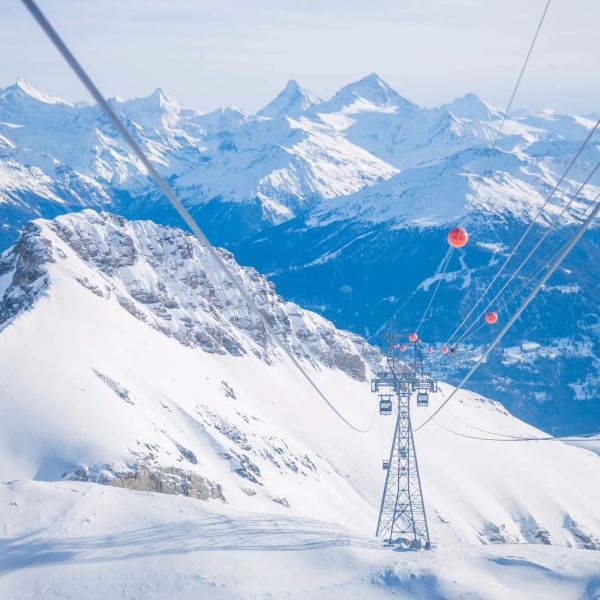
Crans-Montana 2027 World Championships President Resigns Ahead of Fraud Hearing
Less than four months out from the Crans-Montana 2027 World Championships, the man running the organising committee has stepped down. Claude-Alain Schmidhalter resigned as Swiss-Ski vice president and OC president after being indicted over a business dispute unrelated to skiing. He denies the allegations and faces court on October 27. Interim leaders are in place for the February 1-14 event.
9 Oct 2026
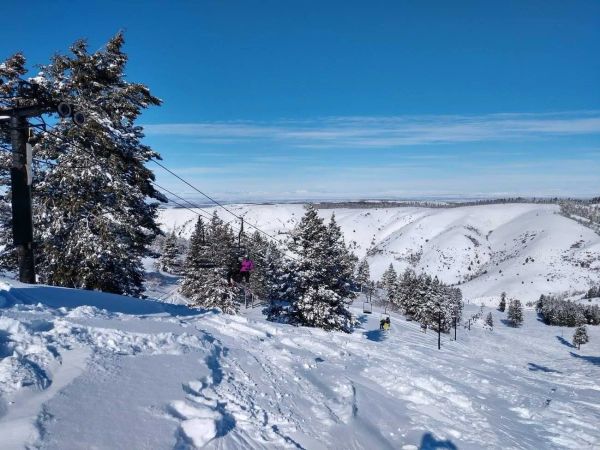
Kelly Canyon, Idaho, Adds Snowmaking, a Bigger Terrain Park and More Parking for 2026-27
Kelly Canyon had a rough 2025-26, and the Idaho resort has spent the summer making sure it doesn’t repeat. Snowmaking now reaches the top of Goldrush, the terrain park is doubling in size with a stereo system, lights and a snack shack, and the car park is getting bigger. Grooming is stepping up too. Target opening is December 4, conditions permitting.
9 Oct 2026
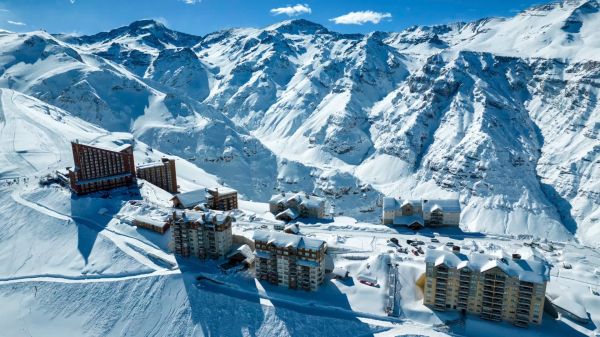
Valle Nevado Extends Season to November 8 After 108 cm in 48 Hours
Winter was meant to be winding down in Chile. Then Valle Nevado took 108 cm in 48 hours in early October, and the resort has pushed its closing date out to November 8 - its latest in 38 years of operation. That makes 143 days of skiing since opening day on June 19, with 690 cm banked for the season. Only part of the mountain is running while the storm settles, so check the mountain report before you plan a trip.
9 Oct 2026
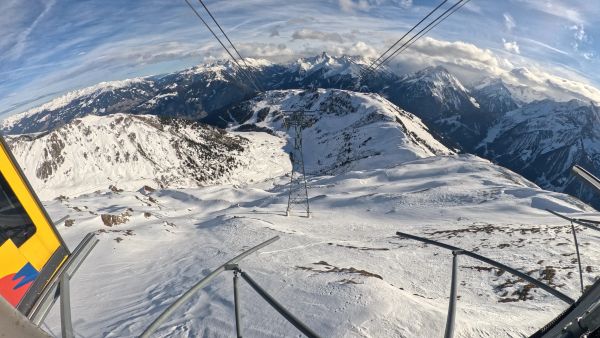
Alps Snow Forecast: Cold Front Brings Thursday Snow to the High Alps
The Alps look a lot more like winter today, for a day or so. A cold front is moving west to east, dropping up to 35 cm on high glaciers and peaks, with snow levels falling to around 1,500-1,800 m at times. Don’t plan a trip around it: mid-elevation snow will be thin and wet, every area is closed bar a limited Sölden glacier opening tomorrow, and warmer weather returns by Monday.
8 Oct 2026
California Ski Resort Opening Dates 2026-27: Mammoth Leads, Tahoe Follows
Mammoth Mountain is first up in California, targeting Friday 13 November after a dusting of September snow. Heavenly and Northstar follow on 20 November, Palisades Tahoe on Wednesday 25 November and Sugar Bowl on 27 November, with Kirkwood on 4 December and June Mountain on 19 December. Plenty of smaller areas have no date yet. A super El Niño favours the Sierra, but a warmer storm track is the catch.
7 Oct 2026
Colorado Ski Resort Opening Dates 2026-27: A-Basin and Keystone Race to Be First
Arapahoe Basin, Keystone and Winter Park are all chasing an October start, though none has a firm date yet. The first dated openers are Breckenridge and Copper on Friday 6 November, then Vail on 13 November, with most of the rest bunched around US Thanksgiving. Hesperus did not open at all last season. A super El Niño offers hope but no guarantee, and forecasters say the southern mountains have the better odds.
5 Oct 2026
Dolomiti Superski 2026-27: Four New Gondolas, New Reservoirs and an €89 Peak Day Pass
Dolomiti Superski is spending around €100 million across its 12 areas before winter. Kronplatz gets a new 10-passenger gondola with a middle station, 3 Zinnen gets Helmissimo, and Val di Fassa swaps a chairlift for a gondola above Col Valvacin. New water-storage basins and upgraded snowmaking follow, and construction has started on the San Martino to Passo Rolle link. A peak adult day pass is €89.
4 Oct 2026
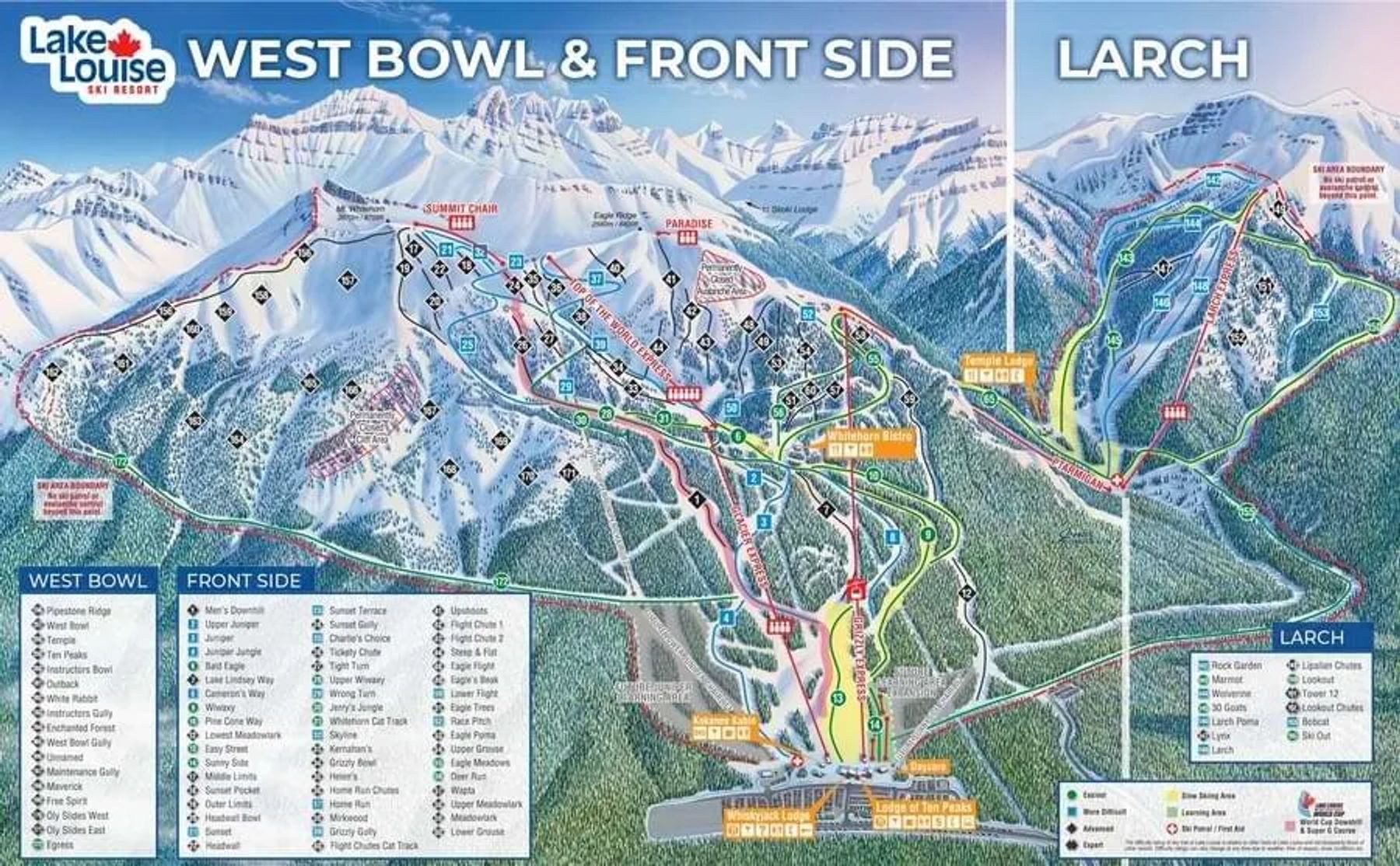
Lake Louise Trail Map
Downloadable Lake Louise trail map
Terrain split
160
runs
Beginner25%
Intermediate45%
Advanced19%
Expert11%
4,201 acres skiable1,700 hectares
Resort Stats
Elevation
Base1646m
Summit2637m
Annual snowfall
7m
Season
2026 - 2027
6 Nov 2026 - 2 May 2027
Trail coverage
160 runs
4,201 acres (1,700 ha)
About Lake Louise's trail map
Explore Lake Louise's full trail map with 160 runs across the mountain, colour-coded by difficulty and shown alongside the terrain split. Use it to plan a day that matches your ability, find lift-served pockets of your favourite grade, and see how the resort links together. Download the piste map (PDF) ↗
More Lake Louise intelligence: snow report, lift system, webcams, resort overview.