
St. Anton am Alberg
305km of pistes, 1,507m vertical drop, 88 lifts. St. Anton anchors Ski Arlberg - the cradle of alpine skiing in Austria's Tyrol.
Season 2026 - 2027
Opens
2 Dec 2026
Closes
18 Apr 2027
Days open
137
Annual snow
3m
The Overview
Michael Fulton
Melbourne-based skier and snowboarder with 50+ resorts across 5 continents. Specialises in Australian resorts and international resort comparisons.
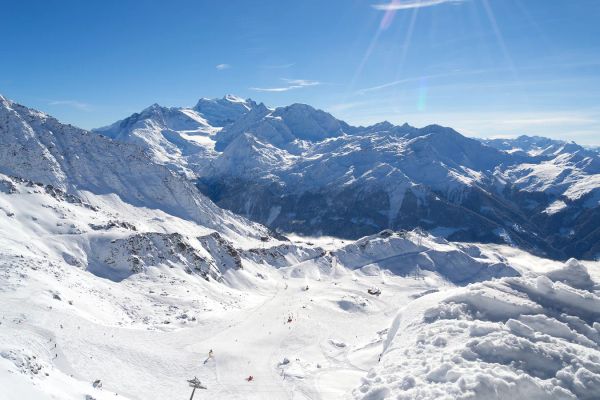
St. Anton am Arlberg serves as the gateway to Ski Arlberg, Austria's largest interconnected ski area spanning 305 kilometres of marked pistes and 200 kilometres of off-piste terrain. The vertical drop of 1,507 metres stretches from the village at 1,304 metres to the Valluga summit at 2,811 metres. Ski Club Arlberg was founded here on 3 January 1901, making the region the cradle of alpine skiing - where Hannes Schneider developed the Arlberg technique and established the first ski school in 1921.
The terrain across the Ski Arlberg pass divides into 43 per cent beginner runs, 41 per cent intermediate and 16 per cent advanced, with 141 marked pistes. Expert terrain includes ski routes such as Schindlerkar and Mattun, plus the guided-only descent from Valluga's backside down to Zürs. The longest run stretches 10.2 kilometres from Valluga to St. Anton village. Sectors span Gampen, Galzig, Rendl and the quieter Albona runs above Stuben.
St. Anton retains authentic Tyrolean village character whilst delivering one of the Alps' most vibrant après-ski scenes. Slope-side bars line the Steissbachtal trail above the village, and 15 cafés, 8 ice bars and 7 bars operate in town. The pedestrianised centre sits within walking distance of all major lift stations. Eighteen mountain restaurants are scattered across the ski area, ranging from self-service to à la carte dining.
The single Ski Arlberg lift pass covers St. Anton, St. Christoph, Stuben, Lech, Zürs, Warth-Schröcken and Sonnenkopf. Adult day passes run from €62 in low season to €72 during peak periods, with six-day passes priced at €310 to €360. The resort hosted the FIS Alpine World Ski Championships in 2001 and continues hosting Women's World Cup speed events. Strong intermediates seeking off-piste progression and experts chasing powder find their ideal terrain here.
1507m
Vertical
141
Runs
302 km
Piste
3m
Annual snow
The Terrain
141 runs across 302 km of piste
St. Anton drops 1,507 metres from the 2,811-metre Valluga to the village at 1,304 metres, across 141 runs and 302 kilometres of piste shared with the wider Ski Arlberg area. The split is 43% beginner, 40% intermediate, 14% advanced and 3% expert, but that understates how serious the mountain is, because most of its reputation rests on off-piste. The main sectors are Gampen, Galzig and Rendl, and the longest run covers 10.2 kilometres from Valluga to the village.
Valluga is the centrepiece, but there are no marked pistes down from its summit, so descents from the cable car need a guide. Schindlerkar and Mattun are the best-known ski routes, the Madloch route drops steeply into Zug, and the whole Arlberg region offers around 200 kilometres of high-alpine deep-snow runs. Rendl is quieter and has good tree skiing, which helps powder last longer after a storm. St. Anton suits advanced skiers and confident intermediates; true beginners are better served elsewhere in the Arlberg.
Terrain split
141
runs
141 runs across 4 grades
Beginner61 runs · 43%
Intermediate56 runs · 40%
Advanced20 runs · 14%
Expert4 runs · 3%
Time it right
When to visit St. Anton am Alberg
The 2025-2026 season runs from 3 December 2025 to 19 April 2026, spanning 138 operational days. Ski Arlberg divides pricing into three periods: Wedel Ski Weeks at season start, the main season from 20 December to 6 April, and Sun Ski Weeks in spring. The Rendl sector typically opens a week or weekend before Christmas to commence the main season. Lifts generally operate from 8:45am to 4:30pm daily.
St. Anton benefits from consistent natural snowfall averaging approximately 380 centimetres annually at resort level, with around 8 metres recorded at 2,000 metres elevation. The lee-side position below the Arlberg Pass captures additional deposited snow, with estimates of up to 12 metres annually between the Ulmer Hütte and Valluga. Historic data shows average upper mountain depths reaching 276 centimetres in February and 304 centimetres in March. Snowmaking backs natural accumulation across 102 kilometres of runs.
January delivers the most reliable powder conditions, with the second week typically recording the highest snowfall - averaging 62 centimetres across 3.2 snow days. February and March offer deeper base depths whilst spring conditions develop. Weekdays, particularly Tuesday through Thursday, see notably lighter crowds and shorter lift queues. The south-facing main slopes require careful timing later in season, whilst the north-facing Rendl runs and shady Albona terrain above Stuben retain snow quality longer.
The Stanton Ski Open festival from 5-7 December 2025 marks the season opening with free ski testing, live music and avalanche safety seminars. Women's World Cup downhill and super-G races return in January. The Tanzcafé Arlberg Music Festival delivers performances across the region, whilst the cult White Thrill ski race closes proceedings in late season. Wedel Weeks and Sun Ski Weeks offer reduced lift pass pricing.
Season 2026 - 2027
2 Dec 2026
Opens
18 Apr 2027
Closes
137
Days open
3 m
Annual snow
Getting there
Getting to St. Anton am Alberg, and where to stay
St. Anton am Arlberg sits at 1,304 metres elevation in the Stanzertal valley, positioned on the Rosanna River in Tyrol, western Austria. The village lies at the western edge of Tyrol province, near the border with Vorarlberg, surrounded by the peaks of the Arlberg massif. The Arlberg Pass connects Tyrol to Vorarlberg, with the historic Hospiz St. Christoph - founded in the 14th century as traveller shelter - located at 1,800 metres just up the valley.
Landeck, the regional hub at the entrance to the Stanzertal, sits approximately 30 kilometres east. The neighbouring villages of Pettneu (6 kilometres), Schnann (9 kilometres) and Flirsch (12 kilometres) fall within the St. Anton holiday region, connected by free ski bus services operating across 37 stops. St. Christoph am Arlberg lies at the pass summit, whilst Stuben sits on the Vorarlberg side.
The S16 expressway passes just minutes from St. Anton, connecting to the A12 autobahn towards Innsbruck and the A14 through Vorarlberg towards Switzerland. The 14-kilometre Arlberg Tunnel ensures reliable passage in winter conditions, though tolls apply. The Austrian motorway vignette is mandatory. Drive times reach Innsbruck in approximately 75 minutes, Zurich in under 3 hours, and Munich in around 2.5 hours.
Innsbruck Airport lies approximately 100 kilometres east, with transfers taking around 75 minutes. Zurich Airport sits 200 kilometres west, accessible in roughly 2.5 hours by road or direct train. Friedrichshafen (130 kilometres) and Memmingen (170 kilometres) airports provide budget airline options. St. Anton's train station sits centrally in the village, a short walk from the Galzigbahn and Rendlbahn. International Railjet and Eurocity services connect directly to Vienna, Zurich, Innsbruck and Munich every two hours.
Where to stay
Search all stays →Hotels and lodges near St. Anton am Alberg, powered by Stay22.
Latest News
From the SnowStash desk
Alps Snow Forecast: Up to 64 cm Headed for the High Glaciers as the Snow Line Drops
The Alps are about to swap mild, sunny October weather for something far more wintry. A cold front arrives Tuesday, and SnowStash forecasts have Monterosa Ski out in front with 64 cm over 14 days, ahead of Blatten Belalp (55 cm) and Verbier (43 cm). The snow line should fall below 2000 metres by Wednesday night, and glaciers across Switzerland, Italy and Austria are in line for the best of it. The wind will have a say too.
20 Oct 2026

Four Dead After Avalanche Near Ski Portillo in Chile
A large avalanche struck near Laguna del Inca adjacent to Ski Portillo on Saturday afternoon, killing four people and injuring four others. The group were day visitors mountaineering in the backcountry after reportedly being warned about elevated avalanche risk by resort staff.
18 Oct 2026

Europe Ski Resorts Open Now: What Is Skiable in Mid-October 2026
Europe’s ski season is open, technically. After a record-warm summer, glaciers in Austria, Switzerland and Italy are running a few pistes apiece, Sölden, Stubai and Kitzsteinhorn started late, Titlis has pushed back to 24 October, and Zermatt reopens a few lifts on 14 October after more than two months shut. Finland’s Levi and Ruka are skiing on stored snow. Here is what is open, and what you actually get at each.
14 Oct 2026

Zermatt Plans World Cup Downhill Return on the Gornergrat for 2028
Zermatt is having another crack at a World Cup downhill, and this time nobody has to cross a border. Around 13 million Swiss francs is going into rebuilding the Gornergrat piste, including a jump fed by a roughly 300-metre in-run across the roof of the Gornergrat Railway gallery, with the Matterhorn lined up behind it for the TV cameras. First men’s race is pencilled in for March 2028, pending FIS homologation.
14 Oct 2026

Mt. Rose Begins Snowmaking for the 2026-27 Season at Lake Tahoe
Lake Tahoe’s highest base elevation is paying off early: Mt. Rose has started making snow for 2026-27 after the first flurries and a cold snap. The Nevada resort is backing it with nearly US$2 million in upgrades, including a replacement snowmaking main line, a new PistenBully groomer and restraint bars on every lift. Opening day is yet to be confirmed, though Heavenly and Northstar are already eyeing 20 November.
13 Oct 2026

Utah Ski Resorts 2026-27: What’s New at Alta, Deer Valley, Powder Mountain and More
Utah is still building flat out. For 2026-27, Powder Mountain opens a steep new Skytrac chair into more than 1,000 acres of advanced terrain, Deer Valley adds 200 acres on Hail Peak, Sundance gets a new quad and Park City adds a gondola from its new parking structure. Snowmaking is expanding almost everywhere, Eagle Point stays closed after the Cottonwood Fire, and the 2034 Games are setting the pace. Here’s what’s new, resort by resort.
13 Oct 2026

Mt Hutt Invests NZ$12 Million in Base Area, Tripling Its Sun Deck
Mt Hutt is getting busier, and its base lodge is about to catch up. NZ$12 million goes into a heated sun deck roughly three times the current size (430 m² to 1,300 m²), plus a new toilet block, heated steps down to snow level, extra storage and a new food and beverage outlet. Building starts after the 2026 season, with everything due for winter 2027.
11 Oct 2026

Vermont Ski Resort Opening Dates 2026-27: Few Dates Set, Killington Waits on the Cold
Vermont's season is slow to take shape. Stratton is tentatively targeting 18 November and Sugarbush 21 November, while Pico has Friday 11 December on the calendar. Killington never sets a date and opens when the snowmaking allows, and Vail Resorts has yet to name days for Stowe, Okemo and Mount Snow. The forecasts disagree about snow, and the main El Niño worry for the Green Mountains is warmth.
9 Oct 2026
St. Anton am Alberg Lift Tickets
St. Anton am Alberg lift tickets & passes
Opening day for the winter 2026 - 2027 season is scheduled for Dec 2, 2026 (subject to change). Lift tickets at St. Anton am Alberg typically go on sale well before the start of the ski season.
Day passes start from €25, with peak rates up to €72.
11 pass options
Single-day passes
Adult 19–64
Adult Full Day
€62up to €72 peak
Full day skiing at St. Anton am Arlberg, cradle of alpine skiing. Access to 300 kilometers of slopes in Austria's largest connected ski area with legendary off-piste terrain.
Buy passYouth 15–18
Youth Full Day
€47up to €54 peak
Youth skiing at St. Anton with access to legendary Austrian off-piste terrain. Perfect for teens to experience challenging slopes where alpine skiing was invented.
Buy passChild 6–14
Child Full Day
€31up to €36 peak
Children's skiing at St. Anton am Arlberg with beginner-friendly areas. Learn to ski where Austrian alpine tradition began with excellent ski school programs.
Buy passChild 0–5
Child (5 & Under)
Free
Free skiing for children 5 and under at St. Anton. Complimentary access to Austrian alpine skiing birthplace with gentle terrain for first experiences.
Buy passSenior 65–99
Senior Full Day
€47up to €54 peak
Senior skiing at St. Anton am Arlberg from 65 years. Discounted access to Austrian skiing legend with comfortable lifts and traditional mountain huts.
Buy passAdult 19–64
Practice Lift Ticket
€25up to €30 peak
Practice lift access at St. Anton for beginner areas and magic carpets. Learn basics at birthplace of alpine skiing with gentle Austrian learning terrain.
Buy passAdult 19–64
Wedel/Sun Ski Weeks
€52up to €60 peak
Special pricing during Wedel weeks at St. Anton (December 9-20 and April 5-22). Austrian alpine skiing at reduced rates during shoulder seasons.
Buy passHalf-day passes
Adult 19–64
Half Day (from 12:30pm)
€52up to €60 peak
Afternoon skiing at St. Anton from 12:30pm. Perfect for shorter visits to legendary Austrian off-piste terrain and traditional alpine après-ski culture.
Buy passMulti-day passes
Adult 19–64
30-Point Flexible Ticket
€89
Flexible 30-point ticket at St. Anton for casual skiing. Points deducted per lift ride with transferable option valid to end of Austrian ski season.
Buy passAdult 19–64
Multi-Day Ski Arlberg (6-Day)
€310up to €360 peak
Six-day Ski Arlberg pass with extension options up to 21 days. Extended Austrian Alps vacation with access to 300 kilometers of legendary terrain.
Buy passSeason passes
Adult 19–64
Ski Arlberg Season Pass
€979
Unlimited access to entire Ski Arlberg region all season. Austria's largest connected area with 300 kilometers of slopes and legendary off-piste terrain.
Buy passLift tickets FAQ
How much does a St. Anton am Alberg day pass cost?
St. Anton am Alberg day passes range from €25 to €72 depending on the date and advance booking.
Can I buy St. Anton am Alberg lift tickets online?
Yes, you can purchase tickets directly from the resort website or at the resort ticket office.
Are there discounts for multi-day passes?
Yes, multi-day packages typically offer significant savings compared to individual day passes. The per-day cost decreases with longer stays.
What is included with a St. Anton am Alberg lift ticket?
Full access to all lifts and trails at St. Anton am Alberg, including mountain safety and patrol services.
What is the difference between St. Anton am Alberg lift tickets and ski passes?
"Lift tickets" and "ski passes" refer to the same thing at St. Anton am Alberg - your access to the mountain's lifts and trails for your chosen duration.
When should I buy St. Anton am Alberg lift tickets for the best price?
Purchase tickets at least 7 days in advance for the best rates, and consider weekday visits for further savings over weekend rates.
Does St. Anton am Alberg offer group discounts on lift tickets?
Group discounts are typically available for parties of 10 or more. Contact St. Anton am Alberg directly for group booking information and rates.
How can I check current conditions before buying tickets?
Before purchasing, check the live snow report and mountain webcams to see current weather, snow conditions, and lift operations at St. Anton am Alberg.
More St. Anton am Alberg intelligence: snow report, webcams, resort overview.