
The Overview
Michael Fulton
Melbourne-based skier and snowboarder with 50+ resorts across 5 continents. Specialises in Australian resorts and international resort comparisons.
Tignes operates across 1550 to 3456 metres, delivering 150 kilometres of marked runs and a vertical drop of 1906 metres. The Grande Motte glacier reaches 3656 metres and guarantees skiing from late November through to early May, with summer sessions running from late June to mid-July. Combined with neighbouring Val d'Isère, the Tignes–Val d'Isère ski area offers 300 kilometres of piste served by 78 lifts across over 10,000 hectares of skiable terrain. The resort hosted freestyle skiing at the 1992 Winter Olympics and remains a training base for national ski teams.
Tignes divides terrain into 57% beginner, 25% intermediate, 10% advanced and 8% expert, though grading runs above 2100 metres elevation. The 10-kilometre La Sache black run descends through the Vallon de la Sache to Les Brévières, whilst the Grande Motte sector provides wide glacier bowls and red runs from 3456 metres. The Aiguille Percée area features the natural rock arch accessed via the Palafour chairlift, and the Tovière sector connects directly to Val d'Isère via gondola. Two terrain parks operate at the Grattalu chairlift, alongside boardercross and mogul training zones.
Five villages form the resort: Val Claret sits at 2100 metres with direct funicular access to the glacier, Tignes Le Lac operates as the main hub at 2100 metres, Le Lavachet lies between the two, Les Boisses sits at 1800 metres, and Les Brévières occupies the valley floor at 1550 metres. Purpose-built architecture dominates the upper villages, prioritising ski-in ski-out access over Alpine charm, though recent redevelopment has softened the 1960s concrete blocks. Free shuttle buses link all villages until midnight, and 113 snow cannons cover 50 kilometres of piste.
A joint Tignes–Val d'Isère pass costs €48 to €71 per day for adults in the 2025-26 season, whilst Tignes-only passes run €38 to €55. Season passes cost €1299 for the combined area. Children under 8 and seniors over 75 ski free, and the Ski Start beginner programme offers three progression levels with free lifts on initial stages. The resort suits confident intermediates and experts seeking high-altitude terrain, with glacier access extending the season well beyond typical French Alps closures.
1906m
Vertical
80
Runs
150 km
Piste
8m
Annual snow
The Terrain
80 runs across 150 km of piste
Tignes spans 150 kilometres of piste and 80 runs from 1,550 metres at Les Brévières up to 3,456 metres, a vertical of 1,906 metres. It is a resort of contrasts: 57% of the terrain is beginner, 25% intermediate, 10% advanced and 8% expert, so few big mountains pair so much easy skiing with a serious expert slice. The bowls around Val Claret and Tignes Le Lac sit above 2,000 metres, and the Grande Motte glacier adds dependable snow in the early and late season. Gondolas, six-seaters and an eight-seat chair do the heavy lifting.
La Sache is the longest run, a 10-kilometre black from the Aiguille Percée down to Les Brévières. On the Grande Motte, the reds are worth repeating for the snow and the views, and Leissée is a favourite. Across Val Claret, the Tichot and Grattalu lifts serve cruising terrain and the freestyle parks. The Tovière and Tommeuses lifts connect over to Val d'Isère for more variety. Freeriders have a set of secured but ungroomed slopes plus wilder lines that need a guide. Tignes suits strong intermediates and experts, with an easy-terrain share large enough for beginners in the villages.
Terrain split
80
runs
80 runs across 4 grades
Beginner46 runs · 57%
Intermediate20 runs · 25%
Advanced8 runs · 10%
Expert6 runs · 8%
Time it right
When to visit Tignes
The 2025-26 season runs from 22 November 2025 to 3 May 2026, spanning 163 days. The Grande Motte glacier opens first with 20 kilometres of piste, then the full Tignes–Val d'Isère link opens from 29 November once lower sectors receive sufficient snow cover. Summer skiing operates from 21 June to 20 July 2026, offering 700 metres of vertical on the glacier with six lifts accessing 20 kilometres of groomed runs. The resort typically reopens in mid-October for autumn glacier skiing before the winter season begins.
Annual snowfall averages around 8 metres at 2100 metres, with over half the ski area lying above 2500 metres and the glacier providing permanent snow cover above 3000 metres. The resort's position against the Italian border captures both Atlantic depressions and Mediterranean low-pressure systems, delivering reliable accumulation from December through April. Snowmaking covers 50 kilometres of piste through 113 cannons, though natural snow depth at 2100 metres typically exceeds 2 metres by mid-season.
January and February deliver the coldest temperatures and most consistent powder, with the highest villages often registering well below freezing. March offers the sweet spot of long daylight hours, stable snow and warming temperatures, whilst April and early May provide spring corn conditions on south-facing slopes and maintained coverage on the glacier. December can see limited terrain until Christmas, and late November relies almost entirely on glacier skiing.
Winter Fest runs 11-13 January 2026 with snowboard film premieres and exhibitions, the FIS Para Alpine Skiing World Cup visits 2-6 February, and the French Alpine Ski Championships occupy 30 March to 8 April. European Snowpride takes place 21-28 March, and Spring Break programming fills 18 April to 3 May. The Live in Tignes music festival traditionally closes the season in early May with performances across multiple stages.
Season 2026 - 2027
28 Nov 2026
Opens
2 May 2027
Closes
155
Days open
8 m
Annual snow
Getting there
Getting to Tignes, and where to stay
Tignes sits in the Tarentaise Valley in the Savoie department of south-eastern France, 30 kilometres from Bourg-Saint-Maurice at the upper end of the Isère valley. The main villages occupy a natural cirque at 2100 metres, enclosed by the Grande Motte massif at 3656 metres, the Grande Casse at 3852 metres, and surrounding peaks forming the gateway to Vanoise National Park. The original village lies submerged beneath Lac du Chevril following construction of the Tignes Dam in 1952, with the dramatic concrete wall now painted with a Hercules fresco visible on the approach road.
Bourg-Saint-Maurice serves as the nearest major town, sitting 30 kilometres and 40 minutes down the valley with supermarkets, a TGV station and the regional hospital. Moutiers lies 45 kilometres north along the N90, whilst Albertville sits 80 kilometres distant at the junction of major Alpine valleys. Val d'Isère occupies the next valley 12 kilometres to the south, connected by lift and piste throughout the ski season. The wider Tarentaise Valley contains Les Arcs, La Plagne and the Trois Vallées within an hour's drive.
The N90 from Albertville and Moutiers provides the sole road access via Bourg-Saint-Maurice, climbing 1000 metres over 30 kilometres of switchbacks with spectacular views of the dam and valley. Geneva Airport lies 220 kilometres and approximately three hours west via the A40 autoroute to Annecy then the N90 through Albertville, with transfer times extending to four hours during Saturday changeover traffic. Chambéry Airport sits 143 kilometres and two hours south via the A43 and N90, offering the shortest airport transfer.
Lyon-Saint-Exupéry Airport lies 220 kilometres and three hours southeast, whilst Grenoble sits 164 kilometres and three hours southwest. Bourg-Saint-Maurice railway station receives direct TGV services from Paris in five hours and weekend Eurostar connections from London via Lyon, with local buses covering the final 30 kilometres to resort in 40-60 minutes. Altibus operates year-round bus services from the station to all five Tignes villages, with tickets costing €12 for adults and departures coordinated with train arrivals.
Where to stay
Search all stays →Hotels and lodges near Tignes, powered by Stay22.
Latest News
From the SnowStash desk

Vermont Ski Resort Opening Dates 2026-27: Few Dates Set, Killington Waits on the Cold
Vermont's season is slow to take shape. Stratton is tentatively targeting 18 November and Sugarbush 21 November, while Pico has Friday 11 December on the calendar. Killington never sets a date and opens when the snowmaking allows, and Vail Resorts has yet to name days for Stowe, Okemo and Mount Snow. The forecasts disagree about snow, and the main El Niño worry for the Green Mountains is warmth.
9 Oct 2026
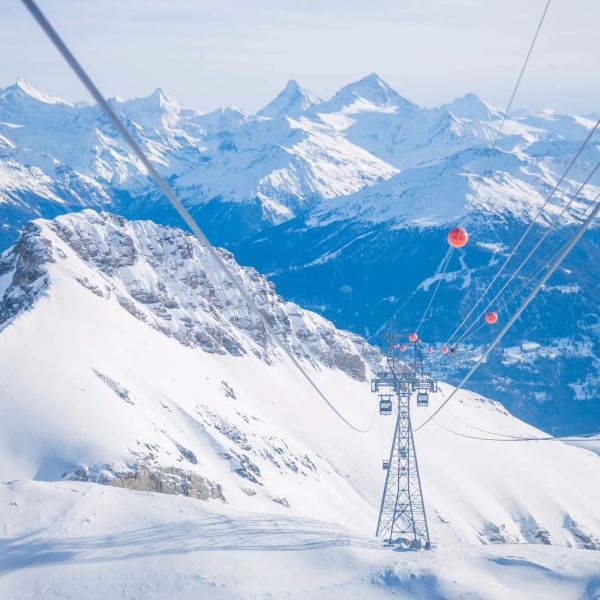
Crans-Montana 2027 World Championships President Resigns Ahead of Fraud Hearing
Less than four months out from the Crans-Montana 2027 World Championships, the man running the organising committee has stepped down. Claude-Alain Schmidhalter resigned as Swiss-Ski vice president and OC president after being indicted over a business dispute unrelated to skiing. He denies the allegations and faces court on October 27. Interim leaders are in place for the February 1-14 event.
9 Oct 2026
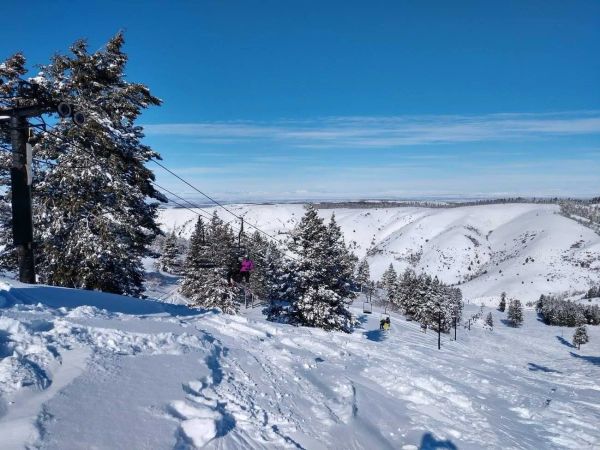
Kelly Canyon, Idaho, Adds Snowmaking, a Bigger Terrain Park and More Parking for 2026-27
Kelly Canyon had a rough 2025-26, and the Idaho resort has spent the summer making sure it doesn’t repeat. Snowmaking now reaches the top of Goldrush, the terrain park is doubling in size with a stereo system, lights and a snack shack, and the car park is getting bigger. Grooming is stepping up too. Target opening is December 4, conditions permitting.
9 Oct 2026
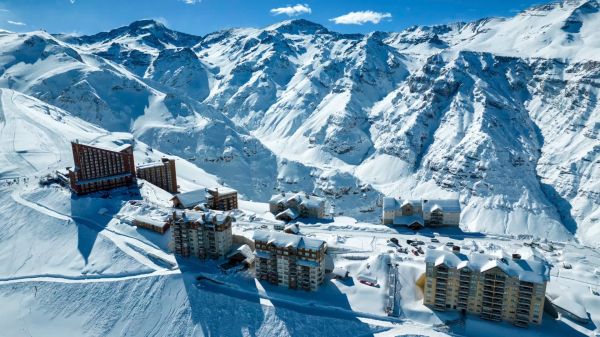
Valle Nevado Extends Season to November 8 After 108 cm in 48 Hours
Winter was meant to be winding down in Chile. Then Valle Nevado took 108 cm in 48 hours in early October, and the resort has pushed its closing date out to November 8 - its latest in 38 years of operation. That makes 143 days of skiing since opening day on June 19, with 690 cm banked for the season. Only part of the mountain is running while the storm settles, so check the mountain report before you plan a trip.
9 Oct 2026
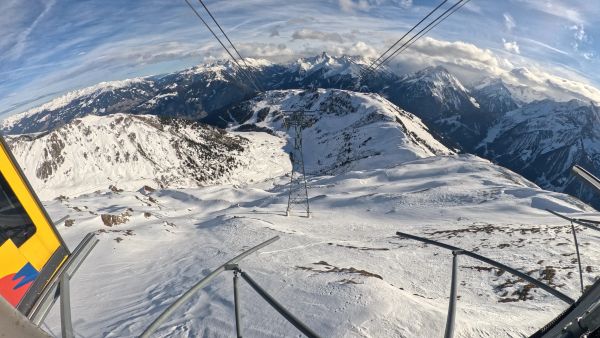
Alps Snow Forecast: Cold Front Brings Thursday Snow to the High Alps
The Alps look a lot more like winter today, for a day or so. A cold front is moving west to east, dropping up to 35 cm on high glaciers and peaks, with snow levels falling to around 1,500-1,800 m at times. Don’t plan a trip around it: mid-elevation snow will be thin and wet, every area is closed bar a limited Sölden glacier opening tomorrow, and warmer weather returns by Monday.
8 Oct 2026
California Ski Resort Opening Dates 2026-27: Mammoth Leads, Tahoe Follows
Mammoth Mountain is first up in California, targeting Friday 13 November after a dusting of September snow. Heavenly and Northstar follow on 20 November, Palisades Tahoe on Wednesday 25 November and Sugar Bowl on 27 November, with Kirkwood on 4 December and June Mountain on 19 December. Plenty of smaller areas have no date yet. A super El Niño favours the Sierra, but a warmer storm track is the catch.
7 Oct 2026
Colorado Ski Resort Opening Dates 2026-27: A-Basin and Keystone Race to Be First
Arapahoe Basin, Keystone and Winter Park are all chasing an October start, though none has a firm date yet. The first dated openers are Breckenridge and Copper on Friday 6 November, then Vail on 13 November, with most of the rest bunched around US Thanksgiving. Hesperus did not open at all last season. A super El Niño offers hope but no guarantee, and forecasters say the southern mountains have the better odds.
5 Oct 2026
Dolomiti Superski 2026-27: Four New Gondolas, New Reservoirs and an €89 Peak Day Pass
Dolomiti Superski is spending around €100 million across its 12 areas before winter. Kronplatz gets a new 10-passenger gondola with a middle station, 3 Zinnen gets Helmissimo, and Val di Fassa swaps a chairlift for a gondola above Col Valvacin. New water-storage basins and upgraded snowmaking follow, and construction has started on the San Martino to Passo Rolle link. A peak adult day pass is €89.
4 Oct 2026
Tignes Webcams
8 live angles across the mountain. Tap any camera to go full-screen.
About Tignes's live webcams
Check live conditions across Tignes with 8 real-time webcams showing snow, weather, and lift operations, updated every 10 minutes. Check high-elevation cams for powder visibility and base-area cams for crowd levels before you head up.
Camera guide
- Grande Motte3653m
- Perched at a breathtaking 3653m elevation atop the Grande Motte glacier, this Tignes webcam offers spectacular panoramic views of the resort's highest skiing terrain. Check this live feed to monitor high-alpine conditions and visibility before tackling Tignes' legendary glacier runs that offer skiing nearly year-round.
- Le Lac2100m
- Located in the heart of Tignes at 2100m elevation, this Tignes web cam provides extensive views of the central Le Lac village area and its surrounding slopes. Monitor snow conditions and activity levels at this bustling resort hub where multiple pistes converge and many skiers begin their mountain adventures.
- Val Claret2150m
- Positioned at 2150m in Tignes' highest village, this Tignes webcam captures the vibrant Val Claret area and its direct access to the Grande Motte glacier. Check real-time conditions at this premium location that serves as the gateway to some of the resort's most impressive high-altitude terrain.
- Tignes 18001800m
- The Tignes 1800 live cam showcases this modern resort neighborhood at its namesake elevation, offering excellent views of the lower mountain slopes and connecting runs. Monitor conditions at this quieter section of the resort, perfect for families and those seeking a more relaxed mountain experience.
- Brévières 15501550m
- Situated at Tignes' lowest elevation point (1550m), this Tignes webcam provides charming views of the traditional Les Brévières village and its surrounding tree-lined slopes. Check this feed to monitor snow coverage at lower elevations and conditions on the beautiful wooded runs leading down to this authentic alpine village.
- Chaudannes2438m
- The Chaudannes Tignes web cam at 2438m elevation delivers expansive views of this important mid-mountain hub connecting multiple skiing sectors. Monitor conditions in this central area that offers access to a diverse range of terrain suitable for intermediate and advanced skiers exploring the Espace Killy domain.
- Tovière2704m
- Perched at a commanding 2704m at the Tovière peak, this Tignes webcams offers spectacular panoramic views across both Tignes and neighboring Val d'Isère. Check this strategic viewpoint to assess visibility and conditions before traversing between these connected resorts that form the massive Espace Killy ski domain.
- Snowpark2600m
- Located at 2600m, this Tignes live cam focuses on the resort's impressive snowpark area, showcasing its features and current conditions. Perfect for freestyle enthusiasts looking to check out the park setup, including jumps, rails and half-pipe before heading up to test their skills on this high-altitude terrain park.
Tignes snow cams FAQ
How often do Tignes snow cams update?
All Tignes snow cams and webcams update every 10 minutes with fresh images showing current mountain conditions. This frequent update schedule ensures you have access to near real-time conditions for planning your ski day at Tignes.
Which Tignes webcam shows the best powder conditions?
The high-elevation Grande Motte webcam at 3,653m provides the clearest view of powder conditions and snowfall. These Tignes webcams capture fresh snow accumulation and visibility better than base area cameras.
Can I see Tignes lift queues on the webcams?
Yes. Multiple Tignes snow cams specifically show lift queue areas and chairlift operations, helping you time your arrival and avoid peak queue periods.
When is the best time to check Tignes snow cams?
Check Tignes webcams early morning (7-8am) for overnight snowfall assessment, and mid-afternoon for current crowd levels and weather. The live cams are most useful after storm events to assess fresh powder.
How can I check current conditions before buying Tignes lift tickets?
Use our Tignes webcams alongside the live snow report to assess conditions before purchasing lift tickets. The webcams show real-time visibility, snow quality, and operational status.
Do Tignes webcams work on mobile devices?
Yes. All Tignes snow cams and webcams are optimized for mobile viewing, so you can check live conditions from anywhere using your phone or tablet.
More Tignes intelligence: snow report, lift tickets, trail map, resort overview.