
The Overview
Michael Fulton
Melbourne-based skier and snowboarder with 50+ resorts across 5 continents. Specialises in Australian resorts and international resort comparisons.
Val d'Isère operates between 1,850 and 3,456 metres, delivering 150 kilometres of marked piste across a vertical drop of 1,606 metres. Combined with neighbouring Tignes via the Espace Killy ski area, the domain offers 300 kilometres of piste served by 80 lifts across more than 10,000 hectares. The Pisaillas glacier provides skiing to 3,141 metres and summer access each July, whilst the Grande Motte glacier on the Tignes side extends the combined area to 3,456 metres on a joint pass. Val d'Isère hosted the men's downhill and alpine combined at the 1992 Albertville Winter Olympics and has held the Critérium de la Première Neige FIS Alpine World Cup since 1955.
The ski area divides into four main sectors: Bellevarde above the village and La Daille, Solaise to the south of the resort centre, Le Fornet at the upper valley, and the Pisaillas glacier. Val d'Isère divides terrain into approximately 14% beginner, 40% intermediate, 30% advanced and 16% expert — the terrain skews towards the upper end of the ability spectrum, reinforcing the resort's reputation as a destination for confident intermediates and experts. The Face de Bellevarde black run descends 1,000 vertical metres from 2,826 metres to La Daille and forms the men's Olympic downhill course; the OK run on the same sector hosts the women's World Cup speed events. Two snowparks, dedicated mogul fields, a boardercross course and the wide Pisaillas glacier complete the off-piste and freestyle offering.
The village of Val d'Isère sits at 1,850 metres in a broad bowl at the head of the Haute-Tarentaise, with traditional stone and wooden chalet architecture lining the main pedestrian avenue — giving the resort more Alpine character than purpose-built neighbours. The resort holds approximately 7,500 tourist beds across hotels, catered chalets and self-catered apartments, with a high concentration of four-star and luxury properties drawing a consistent international clientele. The La Folie Douce slope-side venue at La Daille is among the Alps' most celebrated après-ski destinations. Free shuttle buses connect La Daille, the village centre and Le Fornet throughout the ski day, with the last departures after midnight during peak periods.
A joint Tignes–Val d'Isère pass costs €64 to €75 per day for adults in the 2025-26 season, whilst Val d'Isère-only passes run €58 to €68. Season passes cost €1,125 for the combined Espace Killy area and €899 for Val d'Isère alone. Children under 8 and seniors over 75 ski free, and a beginner one-ride pass provides single-lift Solaise access for €22. The resort suits confident intermediates seeking varied high-altitude terrain and experts targeting the renowned off-piste routes including the Banane couloir, the Charvet face and the Vallon de la Sache itinerary descending to Les Brévières in the Tignes valley.
1354m
Vertical
154
Runs
150 km
Piste
6m
Annual snow
The Terrain
154 runs across 150 km of piste
Val d'Isère is built for stronger skiers, with 150 kilometres of piste across 154 runs between 1,850 and 3,204 metres, a vertical drop of 1,354 metres. Only 14% is beginner, against 40% intermediate, 30% advanced and 16% expert, so almost half of its runs are black or harder. Four sectors split the skiing: Bellevarde above the village, Solaise on the sunny side, Le Fornet at the head of the valley and the Pisaillas glacier. Lifts run from gondolas and six-packs to a tram and a train, with T-bars on the higher ground.
The Face de Bellevarde is the Olympic downhill, steep and often icy, dropping into La Daille, with the OK run alongside it. Intermediates tend to prefer Solaise, which has wide blues and good afternoon sun, while Santons is a blue gully that returns skiers to the village. Le Fornet and the Pisaillas glacier are higher and quieter, and the best-known off-piste lines include the Banane couloir and the Couloir des Pisteurs. Take a guide for all of them. The resort suits confident intermediates through to experts, and beginners will find only limited space.
Terrain split
154
runs
154 runs across 4 grades
Beginner22 runs · 14%
Intermediate62 runs · 40%
Advanced46 runs · 30%
Expert25 runs · 16%
Time it right
When to visit Val d'Isère
The 2025-26 season runs from 29 November 2025 to 3 May 2026, spanning 155 days. The Pisaillas glacier and high-altitude Bellevarde terrain open first in late November, with the full Val d'Isère ski area typically operational by the Critérium weekend in mid-December. The Espace Killy link to Tignes opens once connecting slopes receive sufficient snow cover, usually by late November or early December. Summer skiing on the Pisaillas glacier operates from July to late August, offering up to 20 kilometres of groomed runs at 3,141 metres for national squad training and recreational skiers.
Annual snowfall averages approximately six metres at resort level, with the 2024-25 season delivering an exceptional 9.3 metres at altitude across the Tignes–Val d'Isère area. The resort's position at the head of the Haute-Tarentaise captures both Atlantic storm systems tracking through the Rhône corridor and Mediterranean low-pressure systems lifting moisture over the Maritime Alps. Natural snow cover at 1,850 metres typically reaches 1.5 to 2 metres by mid-January, with the upper slopes and the Pisaillas glacier receiving consistent accumulation from December through April. Over 900 snow cannons cover approximately 50% of the marked piste network as a guarantee against early-season and late-season thin cover.
December sees the Critérium de la Première Neige World Cup in mid-month, and snowfall can be limited on lower pistes until Christmas. January and February deliver the coldest temperatures, deepest powder accumulations and most consistent off-piste conditions across the Bellevarde, Fornet and Pisaillas sectors. March provides the ideal combination of long days, established base depths and warming temperatures for spring carving — widely considered the best all-round month on the mountain. April and early May offer excellent glacier conditions and quieter slopes, with late-season lift pass prices significantly below the high-season rate from 25 April.
The Critérium de la Première Neige FIS World Cup runs 12-14 December 2025 with men's Giant Slalom and Slalom on the Face de Bellevarde, marking the event's 70th anniversary. The Women's Alpine Ski World Cup follows 20-21 December 2025 with Downhill and Super-G on the Oreiller-Killy slope at La Daille. New Year festivities include free outdoor concerts on the Avenue Olympique, with international DJ acts and local events continuing through January and February. The resort's closing weekend on 3 May 2026 features the traditional end-of-season spring festival with mountain performances and the last ski days of the Espace Killy winter season.
Season 2026 - 2027
28 Nov 2026
Opens
2 May 2027
Closes
155
Days open
6 m
Annual snow
Getting there
Getting to Val d'Isère, and where to stay
Val d'Isère occupies the Haute-Tarentaise valley at the head of the D902 road in the Savoie department of south-eastern France, 30 kilometres south of Bourg-Saint-Maurice. The resort sits in a broad glacial bowl enclosed by the Tête du Solaise at 2,551 metres, the Rochers de Bellevarde at 2,827 metres, and the Col de l'Iseran ridge at 2,770 metres — the highest paved road pass in the Alps — which forms the natural boundary with the adjacent Maurienne valley. The Isère river rises near the resort and flows north through the Tarentaise towards Albertville and eventually the Rhône. The surrounding massif falls within the Vanoise National Park, protecting the upper valley from development beyond the ski area boundary.
Bourg-Saint-Maurice serves as the nearest major town, 30 kilometres and 40 minutes north, offering supermarkets, a TGV station and the regional hospital. Moutiers lies 60 kilometres north via the N90 with further retail and hospital facilities, whilst Albertville sits 90 kilometres distant at the foot of the Tarentaise valley. Tignes occupies the adjacent valley 12 kilometres west, connected by lift and piste throughout the ski season via the Espace Killy link. Les Arcs and La Plagne — forming the Paradiski area — are within an hour by road for day trips or multi-resort ski safaris.
The D902 from Bourg-Saint-Maurice provides the sole road access, climbing 1,400 metres over 30 kilometres through the Tarentaise past Sainte-Foy-Tarentaise and the Tignes dam. Geneva Airport lies 215 kilometres and approximately three hours west via the A40 autoroute through Annecy and the N90. Chambéry Airport sits 140 kilometres and two hours south via the A43 motorway and N90, making it the closest airport option with the shortest transfer time. Lyon-Saint-Exupéry is 240 kilometres and three hours southeast, while Turin Caselle in Italy sits just 130 kilometres via the Mont Blanc or Fréjus tunnels — often the fastest option for early-season arrivals.
Bourg-Saint-Maurice station receives direct TGV services from Paris-Lyon in just under five hours and seasonal Eurostar services from London on Saturdays throughout the main winter season. Local Altibus coaches cover the 30 kilometres from station to resort in approximately 40 minutes, with departures timed to meet TGV arrivals and adult tickets costing €12. The resort centre is fully pedestrianised along the Avenue Olympique, with multi-storey underground parking and satellite car parks at La Daille and Le Fornet freeing the village of traffic during the ski day. Free shuttle buses operate on a loop connecting La Daille, the resort centre and Le Fornet throughout the ski season until late evening.
Where to stay
Search all stays →Hotels and lodges near Val d'Isère, powered by Stay22.
Latest News
From the SnowStash desk

Vermont Ski Resort Opening Dates 2026-27: Few Dates Set, Killington Waits on the Cold
Vermont's season is slow to take shape. Stratton is tentatively targeting 18 November and Sugarbush 21 November, while Pico has Friday 11 December on the calendar. Killington never sets a date and opens when the snowmaking allows, and Vail Resorts has yet to name days for Stowe, Okemo and Mount Snow. The forecasts disagree about snow, and the main El Niño worry for the Green Mountains is warmth.
9 Oct 2026

Crans-Montana 2027 World Championships President Resigns Ahead of Fraud Hearing
Less than four months out from the Crans-Montana 2027 World Championships, the man running the organising committee has stepped down. Claude-Alain Schmidhalter resigned as Swiss-Ski vice president and OC president after being indicted over a business dispute unrelated to skiing. He denies the allegations and faces court on October 27. Interim leaders are in place for the February 1-14 event.
9 Oct 2026

Kelly Canyon, Idaho, Adds Snowmaking, a Bigger Terrain Park and More Parking for 2026-27
Kelly Canyon had a rough 2025-26, and the Idaho resort has spent the summer making sure it doesn’t repeat. Snowmaking now reaches the top of Goldrush, the terrain park is doubling in size with a stereo system, lights and a snack shack, and the car park is getting bigger. Grooming is stepping up too. Target opening is December 4, conditions permitting.
9 Oct 2026

Valle Nevado Extends Season to November 8 After 108 cm in 48 Hours
Winter was meant to be winding down in Chile. Then Valle Nevado took 108 cm in 48 hours in early October, and the resort has pushed its closing date out to November 8 - its latest in 38 years of operation. That makes 143 days of skiing since opening day on June 19, with 690 cm banked for the season. Only part of the mountain is running while the storm settles, so check the mountain report before you plan a trip.
9 Oct 2026

Alps Snow Forecast: Cold Front Brings Thursday Snow to the High Alps
The Alps look a lot more like winter today, for a day or so. A cold front is moving west to east, dropping up to 35 cm on high glaciers and peaks, with snow levels falling to around 1,500-1,800 m at times. Don’t plan a trip around it: mid-elevation snow will be thin and wet, every area is closed bar a limited Sölden glacier opening tomorrow, and warmer weather returns by Monday.
8 Oct 2026

California Ski Resort Opening Dates 2026-27: Mammoth Leads, Tahoe Follows
Mammoth Mountain is first up in California, targeting Friday 13 November after a dusting of September snow. Heavenly and Northstar follow on 20 November, Palisades Tahoe on Wednesday 25 November and Sugar Bowl on 27 November, with Kirkwood on 4 December and June Mountain on 19 December. Plenty of smaller areas have no date yet. A super El Niño favours the Sierra, but a warmer storm track is the catch.
7 Oct 2026

Colorado Ski Resort Opening Dates 2026-27: A-Basin and Keystone Race to Be First
Arapahoe Basin, Keystone and Winter Park are all chasing an October start, though none has a firm date yet. The first dated openers are Breckenridge and Copper on Friday 6 November, then Vail on 13 November, with most of the rest bunched around US Thanksgiving. Hesperus did not open at all last season. A super El Niño offers hope but no guarantee, and forecasters say the southern mountains have the better odds.
5 Oct 2026
Dolomiti Superski 2026-27: Four New Gondolas, New Reservoirs and an €89 Peak Day Pass
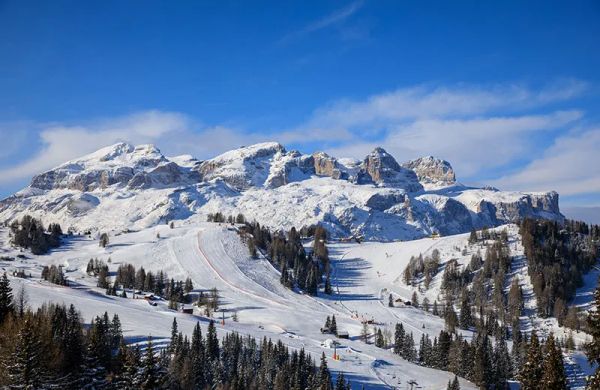
Dolomiti Superski is spending around €100 million across its 12 areas before winter. Kronplatz gets a new 10-passenger gondola with a middle station, 3 Zinnen gets Helmissimo, and Val di Fassa swaps a chairlift for a gondola above Col Valvacin. New water-storage basins and upgraded snowmaking follow, and construction has started on the San Martino to Passo Rolle link. A peak adult day pass is €89.
4 Oct 2026
Val d'Isère Trail Map
Downloadable Val d'Isère trail map
Terrain split
154
runs
Beginner14%
Intermediate40%
Advanced30%
Expert16%
150 km of piste
Resort Stats
Elevation
Base1850m
Summit3204m
Annual snowfall
6m
Season
2026 - 2027
28 Nov 2026 - 2 May 2027
Trail coverage
154 runs
150 km
About Val d'Isère's trail map
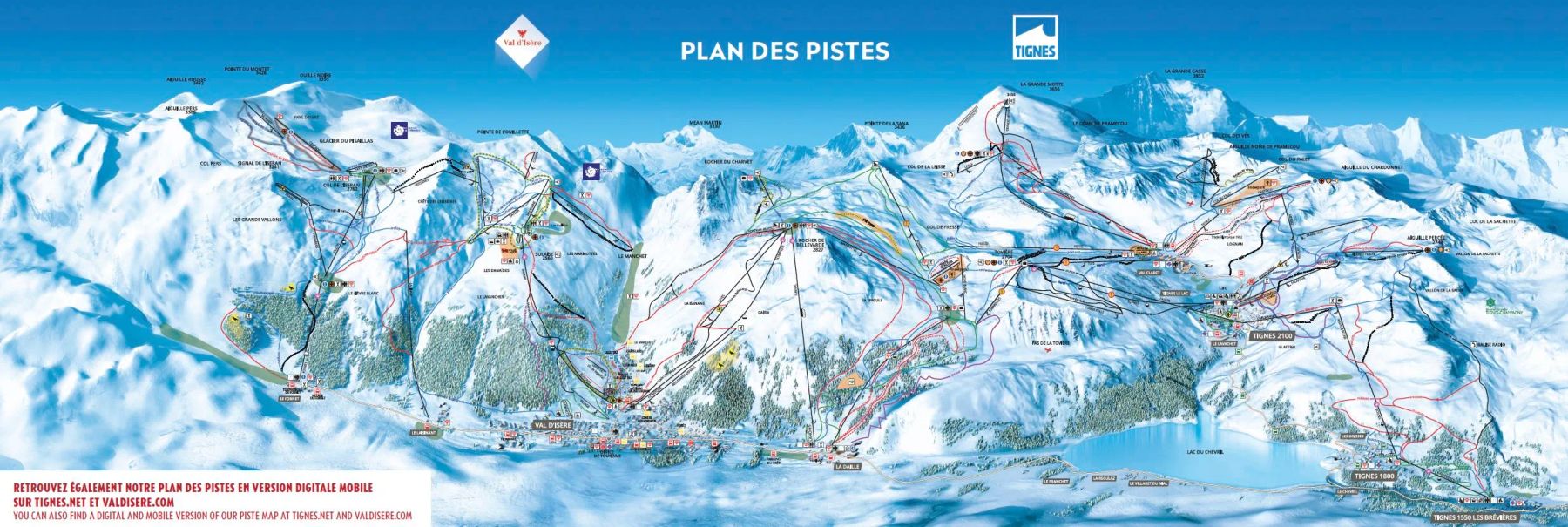
Explore Val d'Isère's full trail map with 154 runs across the mountain, colour-coded by difficulty and shown alongside the terrain split. Use it to plan a day that matches your ability, find lift-served pockets of your favourite grade, and see how the resort links together. Download the piste map (PDF) ↗
More Val d'Isère intelligence: snow report, lift system, webcams, resort overview.