
Madonna di Campiglio
Ski 155km of connected slopes in Madonna di Campiglio. UNESCO Brenta Dolomites terrain, World Cup runs, and 1550m altitude.
Season 2026 - 2027
Opens
21 Nov 2026
Closes
11 Apr 2027
Days open
141
Annual snow
4m
The Overview
Michael Fulton
Melbourne-based skier and snowboarder with 50+ resorts across 5 continents. Specialises in Australian resorts and international resort comparisons.
Madonna di Campiglio serves as the central hub of the Val Rendena, positioned at 1,550m within the Brenta Dolomites UNESCO World Heritage site. The resort provides the primary access point to an expansive 155km network of interconnected pistes that link directly with the neighbouring sectors of Pinzolo, Folgarida, and Marilleva. This integrated domain features 41 named runs, with a technical terrain distribution of 32% beginner, 46% intermediate, and 22% advanced slopes, ensuring a logical progression for skiers moving between the high-alpine plateaus and the sheltered valley descents.
The village maintains a refined character rooted in its history as a 19th-century retreat for the Austrian Habsburg aristocracy, notably Emperor Franz Joseph and Empress Sissi. Today, that heritage is reflected in a pedestrian-friendly centre that balances traditional stone-and-timber architecture with modern infrastructure. Unlike many purpose-built stations, the resort is a genuine mountain town where the ski lifts depart directly from the village streets, leading to four distinct mountain sectors: Grostè, Spinale, Pradalago, and Cinque Laghi.
Technical skiers are drawn to the resort’s racing pedigree, most notably the Canalone Miramonti—a floodlit slope that hosts the legendary 3Tre FIS Alpine Ski World Cup night slalom. For those seeking sustained gradients, the Spinale Direttissima offers one of the steepest descents in Italy, with pitches reaching 70%. Beyond the technical pistes, the resort’s integration into the Skirama Dolomiti Adamello Brenta network provides a strategic base for exploring 380km of terrain across eight western Trentino stations.
1652m
Vertical
41
Runs
155 km
Piste
4m
Annual snow
The Terrain
41 runs across 155 km of piste
Madonna di Campiglio is the main base of a large Trentino ski network, with 155 kilometres of piste across 41 runs between 852 and 2,504 metres. The 1,652 metre vertical is among the biggest in the Dolomites. Grading is 32% beginner, 46% intermediate and 22% advanced, with no expert pistes, and the slopes are mostly wide, groomed and well linked. Four sectors, Grostè, Spinale, Pradalago and Cinque Laghi, spread around the Brenta Dolomites, and the network links with Pinzolo, Folgarida and Marilleva. It suits mixed-ability groups who want variety over several days.
Canalone Miramonti is the floodlit World Cup slalom slope, with a maximum pitch of around 60%, and the Spinale Direttissima finishes with the steep Schumacher Streif wall. Graffer at Grostè is a favourite red, and Grostè also has off-piste routes for experienced riders travelling with a guide. A nursery area sits at the top of the Fortini lift. Strong intermediates and advanced skiers get the biggest challenge, while beginners will find easy slopes near the village. Snowpark riders have two parks to choose from, and the mix of long cruisers and a few serious pitches keeps most groups happy.
Terrain split
41
runs
41 runs across 4 grades
Beginner13 runs · 32%
Intermediate19 runs · 46%
Advanced9 runs · 22%
Expert0 runs · 0%
Time it right
When to visit Madonna di Campiglio
The winter season in Madonna di Campiglio typically runs from late November through to late April. The resort’s high base altitude of 1,550m provides a natural advantage for snow preservation, particularly in the Grostè sector where skiing takes place on a high-alpine plateau reaching 2,500m. Annual snowfall averages around 3.5m, but the resort’s reputation for consistent conditions is bolstered by one of the most sophisticated snowmaking systems in Europe, capable of covering 150km of trails in a matter of days during cold snaps.
Mid-winter, from December to February, offers the most reliable "powder" conditions, particularly on the north-facing slopes of the Cinque Laghi and Pradalago sectors. This period also coincides with the major sporting and cultural events that define the Campiglio calendar, including the 3Tre World Cup in late December. Despite the cold temperatures typical of the Brenta Dolomites in January, the orientation of the four mountain faces ensures that skiers can always find a sun-exposed slope regardless of the time of day.
Spring skiing in March and April is notably popular due to the Grostè sector’s elevation, which maintains firm snow long after the lower valley runs have softened. The professional grooming teams are a critical component of the resort's success, operating a vast fleet of snowcats to maintain the "perfect corduroy" that has become a signature of the Trentino ski experience. The season concludes in late April, often coinciding with the final spring festivals and the softening of the high-altitude glacial terrain.
Season 2026 - 2027
21 Nov 2026
Opens
11 Apr 2027
Closes
141
Days open
4 m
Annual snow
Getting there
Getting to Madonna di Campiglio, and where to stay
Madonna di Campiglio is situated in a high mountain pass between the Brenta Dolomites and the Adamello-Presanella Alps in the Trentino region of Northern Italy. The resort is accessible via the Val Rendena from the south or the Val di Sole from the north. The closest major airport is Verona Villafranca (VRN), located 160km away, with transfer times typically around 2.5 hours. For international travellers, Milan Bergamo (BGY) is 175km to the west, while Milan Malpensa (MXP) is 220km away, both providing reliable shuttle bus services during the winter months.
Road access is straightforward via the A22 Brenner Motorway, exiting at Trento Nord before following the SS45 and SS237 through the Rendena valley. This route avoids high-pass navigation, making it a reliable drive even during heavy snow cycles. For those preferring rail travel, the nearest mainline station is Trento, 73km away, which is connected to the resort by a frequent bus network and the Dolomiti Express train, which runs as far as Malè in the neighbouring Val di Sole.
The village's location within the Parco Naturale Adamello Brenta means it is surrounded by protected wilderness, limiting urban sprawl and preserving the dramatic views of the dolomite spires. This positioning makes it an ideal base for regional touring; the city of Trento is within 90 minutes for cultural day trips, while the shores of Lake Garda are roughly two hours to the south. The proximity to the Tonale Pass and the Val di Fiemme further positions Madonna di Campiglio at the heart of the western Italian alpine circuit.
Where to stay
Search all stays →Hotels and lodges near Madonna di Campiglio, powered by Stay22.
Latest News
From the SnowStash desk
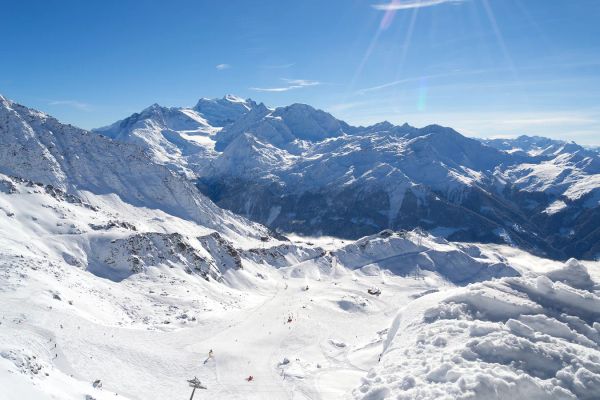
Alps Snow Forecast: Up to 64 cm Headed for the High Glaciers as the Snow Line Drops
The Alps are about to swap mild, sunny October weather for something far more wintry. A cold front arrives Tuesday, and SnowStash forecasts have Monterosa Ski out in front with 64 cm over 14 days, ahead of Blatten Belalp (55 cm) and Verbier (43 cm). The snow line should fall below 2000 metres by Wednesday night, and glaciers across Switzerland, Italy and Austria are in line for the best of it. The wind will have a say too.
20 Oct 2026
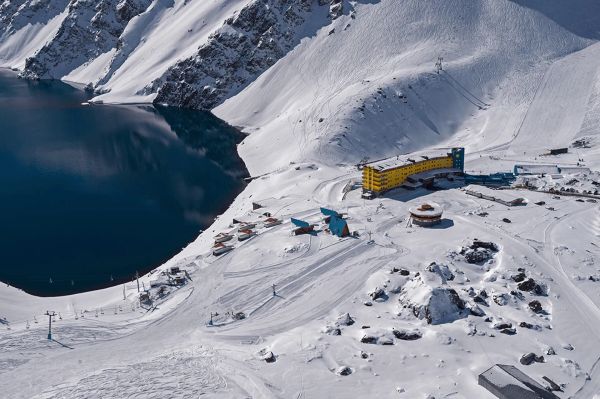
Four Dead After Avalanche Near Ski Portillo in Chile
A large avalanche struck near Laguna del Inca adjacent to Ski Portillo on Saturday afternoon, killing four people and injuring four others. The group were day visitors mountaineering in the backcountry after reportedly being warned about elevated avalanche risk by resort staff.
18 Oct 2026
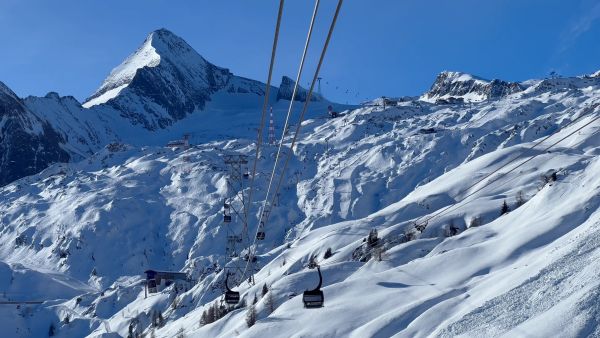
Europe Ski Resorts Open Now: What Is Skiable in Mid-October 2026
Europe’s ski season is open, technically. After a record-warm summer, glaciers in Austria, Switzerland and Italy are running a few pistes apiece, Sölden, Stubai and Kitzsteinhorn started late, Titlis has pushed back to 24 October, and Zermatt reopens a few lifts on 14 October after more than two months shut. Finland’s Levi and Ruka are skiing on stored snow. Here is what is open, and what you actually get at each.
14 Oct 2026
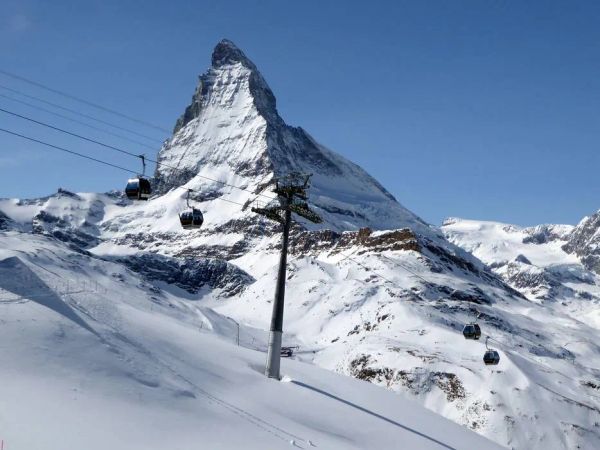
Zermatt Plans World Cup Downhill Return on the Gornergrat for 2028
Zermatt is having another crack at a World Cup downhill, and this time nobody has to cross a border. Around 13 million Swiss francs is going into rebuilding the Gornergrat piste, including a jump fed by a roughly 300-metre in-run across the roof of the Gornergrat Railway gallery, with the Matterhorn lined up behind it for the TV cameras. First men’s race is pencilled in for March 2028, pending FIS homologation.
14 Oct 2026
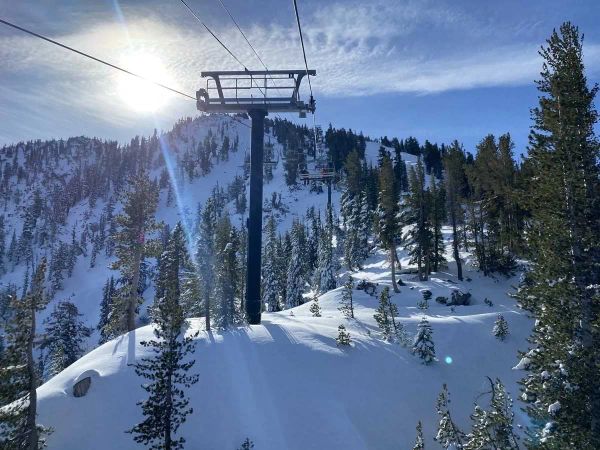
Mt. Rose Begins Snowmaking for the 2026-27 Season at Lake Tahoe
Lake Tahoe’s highest base elevation is paying off early: Mt. Rose has started making snow for 2026-27 after the first flurries and a cold snap. The Nevada resort is backing it with nearly US$2 million in upgrades, including a replacement snowmaking main line, a new PistenBully groomer and restraint bars on every lift. Opening day is yet to be confirmed, though Heavenly and Northstar are already eyeing 20 November.
13 Oct 2026
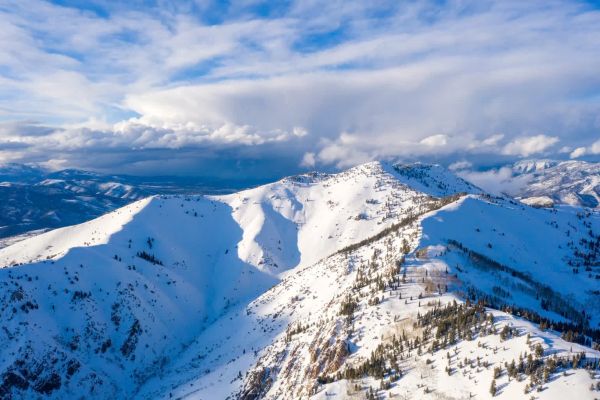
Utah Ski Resorts 2026-27: What’s New at Alta, Deer Valley, Powder Mountain and More
Utah is still building flat out. For 2026-27, Powder Mountain opens a steep new Skytrac chair into more than 1,000 acres of advanced terrain, Deer Valley adds 200 acres on Hail Peak, Sundance gets a new quad and Park City adds a gondola from its new parking structure. Snowmaking is expanding almost everywhere, Eagle Point stays closed after the Cottonwood Fire, and the 2034 Games are setting the pace. Here’s what’s new, resort by resort.
13 Oct 2026
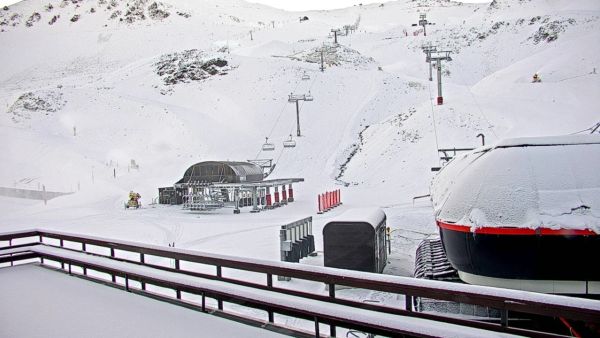
Mt Hutt Invests NZ$12 Million in Base Area, Tripling Its Sun Deck
Mt Hutt is getting busier, and its base lodge is about to catch up. NZ$12 million goes into a heated sun deck roughly three times the current size (430 m² to 1,300 m²), plus a new toilet block, heated steps down to snow level, extra storage and a new food and beverage outlet. Building starts after the 2026 season, with everything due for winter 2027.
11 Oct 2026
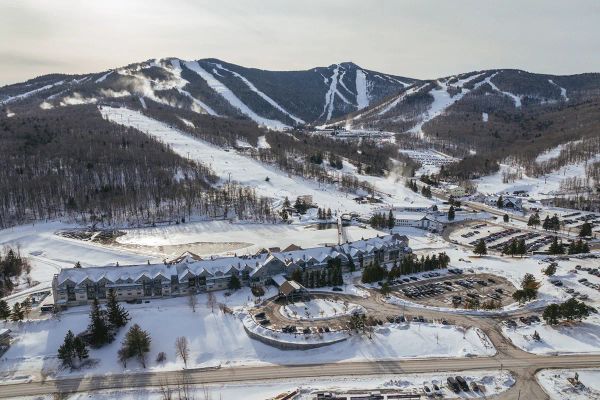
Vermont Ski Resort Opening Dates 2026-27: Few Dates Set, Killington Waits on the Cold
Vermont's season is slow to take shape. Stratton is tentatively targeting 18 November and Sugarbush 21 November, while Pico has Friday 11 December on the calendar. Killington never sets a date and opens when the snowmaking allows, and Vail Resorts has yet to name days for Stowe, Okemo and Mount Snow. The forecasts disagree about snow, and the main El Niño worry for the Green Mountains is warmth.
9 Oct 2026