
Meran 2000
Ski 40km of sunny South Tyrolean slopes above Merano, 1,609–2,350m, with Ortler Skiarena access and 100% snowmaking.
Season 2026 - 2027
Opens
27 Nov 2026
Closes
14 Mar 2027
Days open
107
Annual snow
4m
The Overview
Michael Fulton
Melbourne-based skier and snowboarder with 50+ resorts across 5 continents. Specialises in Australian resorts and international resort comparisons.
Meran 2000 sits on a broad, sun-exposed plateau above the spa town of Merano in South Tyrol, spanning 1,609m at the base to 2,350m at the summit across 40km of pistes. The terrain skews heavily intermediate — 63% of runs are red — with wide-open groomers on the upper plateau giving way to tree-lined descents through larch forest on the lower sections.
The mountain faces south and catches exceptional sunshine hours by Alpine standards, which is both its character-defining quality and the reason 100% of its marked runs are covered by snowmaking. On a clear day, the panorama from the top sweeps west to the Ortler massif above 3,000m, east to the Dolomite peaks, and south across the Po plain.
The resort is part of the Ortler Skiarena, a network spanning 123 pistes and 79 lifts across 14 linked areas in South Tyrol — a single area pass covers resorts including Sulden am Ortler, Schnalstal and Reinswald. On-mountain, the longest descent runs to 5km and the most demanding piste — the Mittager Steilhang — is the resort's steepest challenge.
The Alpin Bob, a 1.1km rail-guided toboggan run, and a 3km natural toboggan run operate alongside the ski area. A dedicated children's snow park at the Piffing mountain station and the Terme & Ski combination ticket — pairing lift access with entry to Merano's thermal baths — complete an unusually broad off-slope offering for a resort of this size.
741m
Vertical
11
Runs
40 km
Piste
4m
Annual snow
The Terrain
11 runs across 40 km of piste
Meran 2000 is a sun-soaked South Tyrol ski area built on gentle plateau slopes above the spa town of Merano. Its 40 kilometres of piste run between 1,609 and 2,350 metres, a 741-metre drop spread over 11 runs. The grading is easygoing: 30% beginner, 63% intermediate and 7% advanced, with nothing rated expert. Red cruising is the main business, with broad groomers across the upper plateau and forested lines lower down. Three gondolas, a tram and a handful of chairlifts move people around quickly, so the area around Piffing rarely clogs, and the modest vertical still fills a full day comfortably.
The steepest pitch is the Mittager Steilhang, the one run here that really tests an advanced skier. Wallpach and Falzeben carry the wide, forgiving pistes, while forest runs between Piffing and Falzeben drop towards the valley at easy, medium and harder grades. A snow park gives freestylers their own corner. Off-piste options are thin, so freeriders will want to look elsewhere. Meran 2000 suits families, beginners finding their feet and intermediates after sunshine, long views and an unhurried day, ideally finished with a soak in the thermal baths back in town.
Terrain split
11
runs
11 runs across 4 grades
Beginner3 runs · 30%
Intermediate7 runs · 63%
Advanced1 run · 7%
Expert0 runs · 0%
Time it right
When to visit Meran 2000
Meran 2000 operates from late November through to mid-March, with the 2025–26 season running from 29 November 2025 to 16 March 2026. The season length reflects the resort's southerly aspect and mid-range altitude rather than glacier positioning, with the closure date sitting earlier than higher South Tyrolean areas.
Annual snowfall averages 3.5 metres, and the resort compensates for its sun-heavy orientation with full snowmaking coverage across all marked runs — a practical necessity at an area where natural accumulation can be variable through January and February. The combination keeps the pistes in reliable condition across the core season window.
The south-facing plateau means Meran 2000 offers some of the most consistently sunny skiing in South Tyrol, with the mountain long marketed as the "sun terrace of Merano." This makes it particularly well suited to spring-style ski days even in midwinter, and the surrounding landscape within the Texel Group Nature Park adds an accessible touring and snowshoeing network for non-ski days.
A 2.7km cross-country track at Falzeben and a network of 25km of marked ski touring routes in the surrounding area broaden the season appeal beyond piste skiing. The proximity to Merano means evenings can be spent in a city rather than a resort village — an unusual characteristic for an Alpine ski area.
Season 2026 - 2027
27 Nov 2026
Opens
14 Mar 2027
Closes
107
Days open
4 m
Annual snow
Getting there
Getting to Meran 2000, and where to stay
Meran 2000 sits directly above the city of Merano in the Burggrafenamt district of South Tyrol, in the predominantly German-speaking autonomous province of Alto Adige in north-east Italy. The ski area plateau is reached from the city's edge, with the cable car valley station on Via Val di Nova accessible from Merano's centre in under 20 minutes by local bus.
The nearest airport with practical connectivity is Bolzano Airport, approximately 30km to the south-east — around 30 minutes by car via the SS38 MEBO highway. Innsbruck Airport in Austria is the closest major international gateway, roughly 112km to the north via the Brenner Pass and A22 motorway, with a drive time of around 90 minutes in good conditions.
Merano is served by regional rail with connections from Bolzano, which in turn has direct services from Innsbruck, Verona and other major Italian and Austrian cities. From Merano train station, bus line 225 runs to the Falzeben gondola valley station in around 45 minutes, and bus 227 connects to the cable car station. Drivers approaching from Germany can route via Munich and Innsbruck across the Brenner, or via the Reschenpass from the west.
The urban setting is a genuine point of difference — Merano is a substantial spa town of around 40,000 people with Belle Époque architecture, a thermal baths complex, restaurants and a historic centre, all within a short journey of the slopes. The Terme & Ski ticket formalises this combination, bundling lift access with entry to the Therme Merano baths.
Where to stay
Search all stays →Hotels and lodges near Meran 2000, powered by Stay22.
Latest News
From the SnowStash desk
Alps Snow Forecast: Up to 64 cm Headed for the High Glaciers as the Snow Line Drops
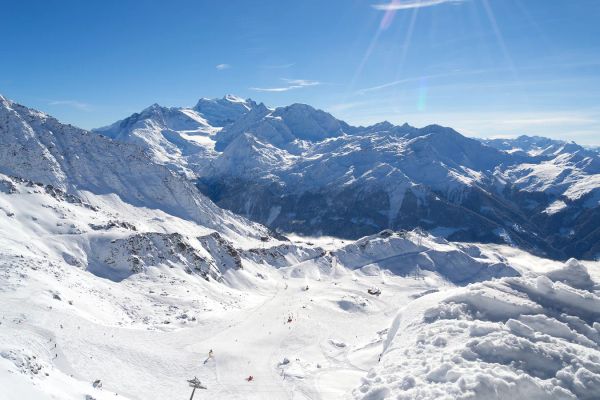
The Alps are about to swap mild, sunny October weather for something far more wintry. A cold front arrives Tuesday, and SnowStash forecasts have Monterosa Ski out in front with 64 cm over 14 days, ahead of Blatten Belalp (55 cm) and Verbier (43 cm). The snow line should fall below 2000 metres by Wednesday night, and glaciers across Switzerland, Italy and Austria are in line for the best of it. The wind will have a say too.
20 Oct 2026
Four Dead After Avalanche Near Ski Portillo in Chile
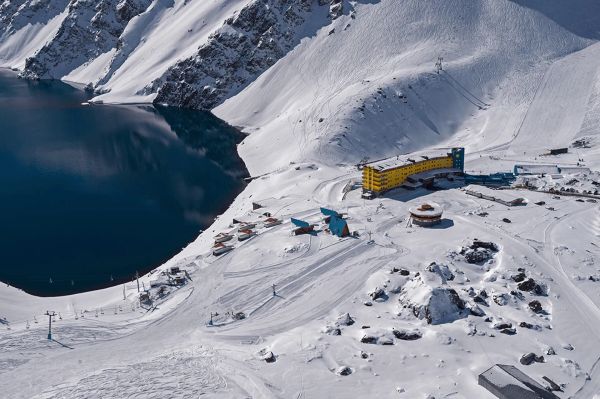
A large avalanche struck near Laguna del Inca adjacent to Ski Portillo on Saturday afternoon, killing four people and injuring four others. The group were day visitors mountaineering in the backcountry after reportedly being warned about elevated avalanche risk by resort staff.
18 Oct 2026

Europe Ski Resorts Open Now: What Is Skiable in Mid-October 2026
Europe’s ski season is open, technically. After a record-warm summer, glaciers in Austria, Switzerland and Italy are running a few pistes apiece, Sölden, Stubai and Kitzsteinhorn started late, Titlis has pushed back to 24 October, and Zermatt reopens a few lifts on 14 October after more than two months shut. Finland’s Levi and Ruka are skiing on stored snow. Here is what is open, and what you actually get at each.
14 Oct 2026

Zermatt Plans World Cup Downhill Return on the Gornergrat for 2028
Zermatt is having another crack at a World Cup downhill, and this time nobody has to cross a border. Around 13 million Swiss francs is going into rebuilding the Gornergrat piste, including a jump fed by a roughly 300-metre in-run across the roof of the Gornergrat Railway gallery, with the Matterhorn lined up behind it for the TV cameras. First men’s race is pencilled in for March 2028, pending FIS homologation.
14 Oct 2026

Mt. Rose Begins Snowmaking for the 2026-27 Season at Lake Tahoe
Lake Tahoe’s highest base elevation is paying off early: Mt. Rose has started making snow for 2026-27 after the first flurries and a cold snap. The Nevada resort is backing it with nearly US$2 million in upgrades, including a replacement snowmaking main line, a new PistenBully groomer and restraint bars on every lift. Opening day is yet to be confirmed, though Heavenly and Northstar are already eyeing 20 November.
13 Oct 2026

Utah Ski Resorts 2026-27: What’s New at Alta, Deer Valley, Powder Mountain and More
Utah is still building flat out. For 2026-27, Powder Mountain opens a steep new Skytrac chair into more than 1,000 acres of advanced terrain, Deer Valley adds 200 acres on Hail Peak, Sundance gets a new quad and Park City adds a gondola from its new parking structure. Snowmaking is expanding almost everywhere, Eagle Point stays closed after the Cottonwood Fire, and the 2034 Games are setting the pace. Here’s what’s new, resort by resort.
13 Oct 2026

Mt Hutt Invests NZ$12 Million in Base Area, Tripling Its Sun Deck
Mt Hutt is getting busier, and its base lodge is about to catch up. NZ$12 million goes into a heated sun deck roughly three times the current size (430 m² to 1,300 m²), plus a new toilet block, heated steps down to snow level, extra storage and a new food and beverage outlet. Building starts after the 2026 season, with everything due for winter 2027.
11 Oct 2026

Vermont Ski Resort Opening Dates 2026-27: Few Dates Set, Killington Waits on the Cold
Vermont's season is slow to take shape. Stratton is tentatively targeting 18 November and Sugarbush 21 November, while Pico has Friday 11 December on the calendar. Killington never sets a date and opens when the snowmaking allows, and Vail Resorts has yet to name days for Stowe, Okemo and Mount Snow. The forecasts disagree about snow, and the main El Niño worry for the Green Mountains is warmth.
9 Oct 2026