
Rosskopf (Monte Cavallo)
20km of slopes above medieval Sterzing in South Tyrol, 960-2,120m. Home to Italy's longest toboggan run. Ortler Skiarena pass valid.
Season 2025 - 2026
Opens
6 Dec 2026
Closes
29 Mar 2027
Days open
113
Annual snow
4m
The Overview
Michael Fulton
Melbourne-based skier and snowboarder with 50+ resorts across 5 continents. Specialises in Australian resorts and international resort comparisons.
Rosskopf (Monte Cavallo) rises directly above Sterzing/Vipiteno in the Eisacktal valley of South Tyrol, offering 20km of slopes between 960m and 2,120m across 10 marked runs. The mountain sits on the sunny side of the main Alpine divide, roughly 20km south of the Brenner Pass and 50km from the Austrian border - a position that delivers more winter sunshine than many nearby resorts, with views extending across the Stubai Alps, Zillertal Alps and out to the Dolomites.
The terrain leans heavily intermediate, with seven of the ten runs graded red and a bias toward open, well-groomed pistes on the upper mountain. A dedicated beginner area with carpet conveyors sits at the gondola top station, and a new funslope added for the 2025-26 season introduces jumps, waves and banked turns for those looking for something beyond standard groomed runs.
Rosskopf is also home to Italy's longest illuminated and artificially snow-covered toboggan run - a 10km descent dropping 900m of vertical from the gondola mountain station through forest back to the valley base in Sterzing. Singled out by ADAC testing in 2011 as the best toboggan trail in German-speaking Europe, the run operates on Tuesday and Friday nights until midnight.
The resort is part of two pass networks - the Ortler Skiarena, which connects 15 South Tyrolean ski areas across more than 300km of pistes, and the Wipptal Skiverbund, which links Rosskopf with Ladurns, Ratschings-Jaufen and Kalcher Alm for a combined 50km on one pass. Children aged five and under ski free when accompanied by a paying adult.
1160m
Vertical
10
Runs
20 km
Piste
4m
Annual snow
The Terrain
10 runs across 20 km of piste
Rosskopf is the small ski area above Sterzing, South Tyrol's northernmost town, with 20 kilometres of piste across 10 runs. The mountain climbs from 960 to 2,120 metres, giving a 1,160-metre vertical that suits its size better than the numbers suggest. Grading is firmly intermediate: 30% beginner, 65% intermediate and 5% advanced, with no expert pistes. The slopes face the sun and are mostly open and well groomed, with a beginner zone at the gondola top station. Just five lifts cover everything, so the area is easy to learn and quick to ski, and it rarely feels crowded.
The main trail is the long valley run of roughly 5.5 kilometres, which finishes beneath the concrete pillars of the Brenner motorway on its way back to town, a surprisingly memorable sight. The Telemix Panorama lift mixes chairs and cabins to reach the summit, and a funslope adds jumps and banked turns. Freeriders and advanced skiers will find almost nothing here. Rosskopf suits families, beginners and relaxed intermediates, and it pairs neatly with the 10-kilometre toboggan run for an evening out, plus the easy train link from Innsbruck or Bolzano.
Terrain split
10
runs
10 runs across 4 grades
Beginner3 runs · 30%
Intermediate7 runs · 65%
Advanced1 run · 5%
Expert0 runs · 0%
Time it right
When to visit Rosskopf (Monte Cavallo)
The 2025-26 season at Rosskopf ran from 5 December 2025 to 6 April 2026, a compact winter window typical of a south-facing mid-altitude South Tyrolean resort. Snowmaking covers 100% of the ski area's slopes, which is the critical factor in maintaining consistent conditions across the 960m base - one of the lower valley bases in the region - and ensuring the toboggan run operates from opening day.
Average annual snowfall at Rosskopf sits at 3.7 metres, with the upper mountain around 2,100m holding natural snow reliably through February. Snow depth peaks in February, when the upper mountain averages around 85cm. The resort records 59 sunny days per season on average, slightly below the Italian average of 63 but consistent with its exposure on the Eisacktal's eastern ridgeline.
January and February are the most reliable months for all-mountain conditions, with cold temperatures keeping the groomed red runs in good shape and the beginner zones well covered. The combination of snowmaking coverage and altitude means Rosskopf typically holds serviceable conditions through to early April even in moderate-snow seasons.
The proximity to Sterzing means the resort suits a short-stay skiing format as much as a dedicated ski week - a morning on the slopes can be combined with an afternoon in the town's medieval streets, which host a well-regarded Christmas market from late November through early January.
Season 2025 - 2026
6 Dec 2026
Opens
29 Mar 2027
Closes
113
Days open
4 m
Annual snow
Getting there
Getting to Rosskopf (Monte Cavallo), and where to stay
Rosskopf sits directly above Sterzing/Vipiteno in the Wipptal (Eisack valley), the natural corridor connecting the Brenner Pass to the rest of South Tyrol. Sterzing is Italy's northernmost town, positioned at 948m at the foot of the pass and less than 20km from the Austrian border. The gondola base station sits a five-minute walk from the town's pedestrian zone, making Rosskopf one of the most walkable ski resorts in South Tyrol.
Innsbruck is the closest city, approximately 58km north via the A22 Brennero-Modena motorway - around 45 minutes by road. Bolzano is roughly 59km to the south, and the regional hub of Bressanone/Brixen sits 30km down the valley. Milan is accessible in approximately three hours via the A22.
Rail access is among the best of any ski resort in northern Italy. Sterzing station sits on the main Brenner rail corridor, served by regional trains from both Innsbruck and Bolzano as well as intercity services. The gondola base is a short walk from the station, making a car-free visit straightforward. Neighbouring stations at Gossensass/Colle Isarco (5km) and Freienfeld/Campo di Trens (6km) also connect to the valley bus network.
Drivers approaching from the north take the A22 motorway from Innsbruck over the Brenner Pass, exiting at Sterzing. From the south, the same motorway connects via Bolzano and Bressanone. Parking is available near the gondola valley station, a short distance from the town centre pedestrian zone.
Where to stay
Search all stays →Hotels and lodges near Rosskopf (Monte Cavallo), powered by Stay22.
Latest News
From the SnowStash desk
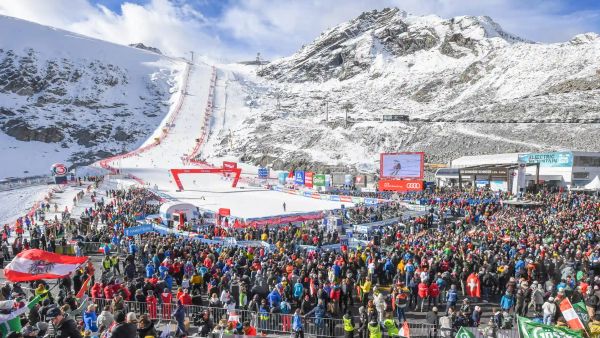
Pinheiro Braathen Wins Sölden Giant Slalom Opener by 0.48 Seconds
Two days at Sölden, two races decided by a hundredth somewhere on the podium, and one very quick Brazilian. Lucas Pinheiro Braathen led from the first run to win the men’s World Cup opener by 0.48 seconds, with Loïc Meillard second and Marco Odermatt third. River Radamus charged from 15th to fourth on a rutted course, and Britain’s Freddy Carrick-Smith banked his first World Cup points. Braathen still hasn’t lost a giant slalom since Olympic gold.
25 Oct 2026
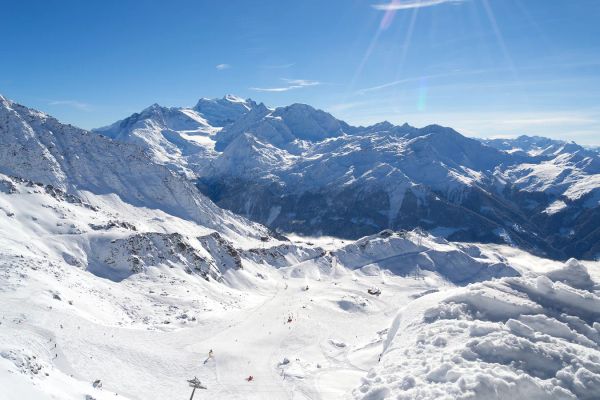
Alps Snow Forecast: Up to 64 cm Headed for the High Glaciers as the Snow Line Drops
The Alps are about to swap mild, sunny October weather for something far more wintry. A cold front arrives Tuesday, and SnowStash forecasts have Monterosa Ski out in front with 64 cm over 14 days, ahead of Blatten Belalp (55 cm) and Verbier (43 cm). The snow line should fall below 2000 metres by Wednesday night, and glaciers across Switzerland, Italy and Austria are in line for the best of it. The wind will have a say too.
20 Oct 2026
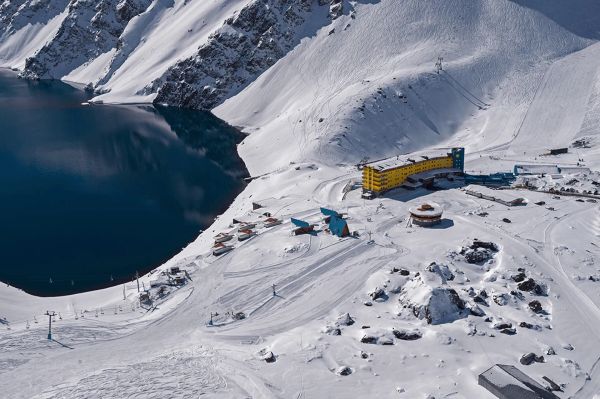
Four Dead After Avalanche Near Ski Portillo in Chile
A large avalanche struck near Laguna del Inca adjacent to Ski Portillo on Saturday afternoon, killing four people and injuring four others. The group were day visitors mountaineering in the backcountry after reportedly being warned about elevated avalanche risk by resort staff.
18 Oct 2026
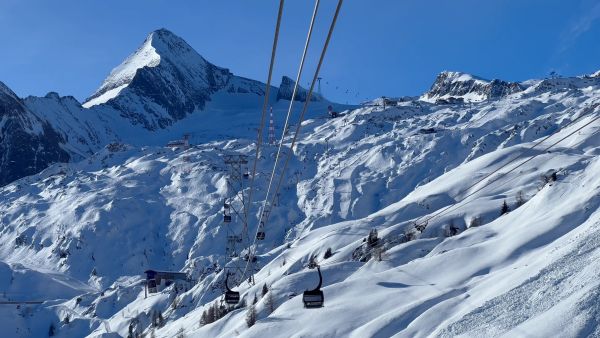
Europe Ski Resorts Open Now: What Is Skiable in Mid-October 2026
Europe’s ski season is open, technically. After a record-warm summer, glaciers in Austria, Switzerland and Italy are running a few pistes apiece, Sölden, Stubai and Kitzsteinhorn started late, Titlis has pushed back to 24 October, and Zermatt reopens a few lifts on 14 October after more than two months shut. Finland’s Levi and Ruka are skiing on stored snow. Here is what is open, and what you actually get at each.
14 Oct 2026
Zermatt Plans World Cup Downhill Return on the Gornergrat for 2028
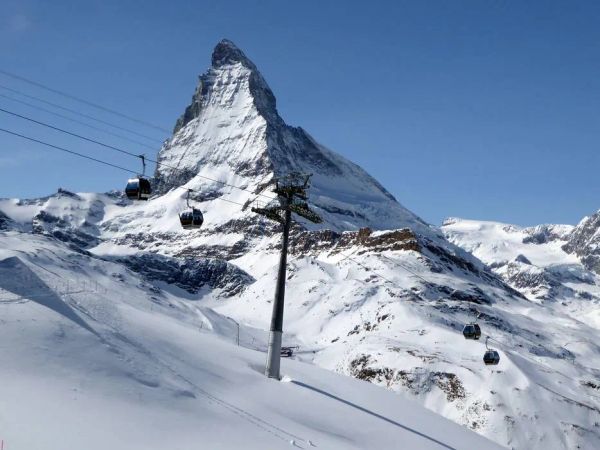
Zermatt is having another crack at a World Cup downhill, and this time nobody has to cross a border. Around 13 million Swiss francs is going into rebuilding the Gornergrat piste, including a jump fed by a roughly 300-metre in-run across the roof of the Gornergrat Railway gallery, with the Matterhorn lined up behind it for the TV cameras. First men’s race is pencilled in for March 2028, pending FIS homologation.
14 Oct 2026
Mt. Rose Begins Snowmaking for the 2026-27 Season at Lake Tahoe
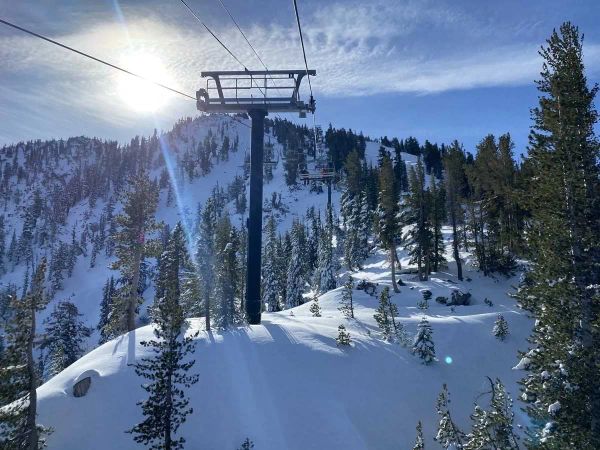
Lake Tahoe’s highest base elevation is paying off early: Mt. Rose has started making snow for 2026-27 after the first flurries and a cold snap. The Nevada resort is backing it with nearly US$2 million in upgrades, including a replacement snowmaking main line, a new PistenBully groomer and restraint bars on every lift. Opening day is yet to be confirmed, though Heavenly and Northstar are already eyeing 20 November.
13 Oct 2026

Utah Ski Resorts 2026-27: What’s New at Alta, Deer Valley, Powder Mountain and More
Utah is still building flat out. For 2026-27, Powder Mountain opens a steep new Skytrac chair into more than 1,000 acres of advanced terrain, Deer Valley adds 200 acres on Hail Peak, Sundance gets a new quad and Park City adds a gondola from its new parking structure. Snowmaking is expanding almost everywhere, Eagle Point stays closed after the Cottonwood Fire, and the 2034 Games are setting the pace. Here’s what’s new, resort by resort.
13 Oct 2026
Mt Hutt Invests NZ$12 Million in Base Area, Tripling Its Sun Deck
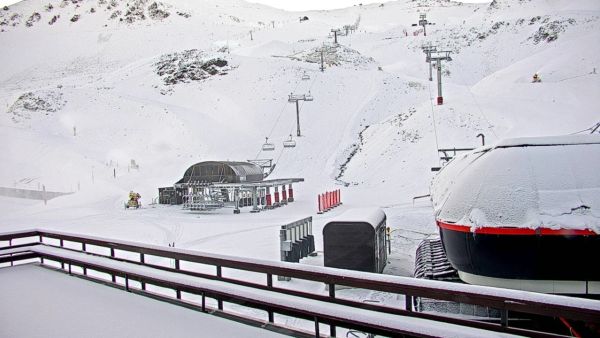
Mt Hutt is getting busier, and its base lodge is about to catch up. NZ$12 million goes into a heated sun deck roughly three times the current size (430 m² to 1,300 m²), plus a new toilet block, heated steps down to snow level, extra storage and a new food and beverage outlet. Building starts after the 2026 season, with everything due for winter 2027.
11 Oct 2026
Rosskopf (Monte Cavallo) Webcams
5 live angles across the mountain. Tap any camera to go full-screen.
About Rosskopf (Monte Cavallo)'s live webcams
Check live conditions across Rosskopf (Monte Cavallo) with 5 real-time webcams showing snow, weather, and lift operations, updated every 10 minutes. Check high-elevation cams for powder visibility and base-area cams for crowd levels before you head up.
Camera guide
- Rosskopf Mid Mountain1860m
- Survey the beating heart of Rosskopf ski resort through this sweeping Rosskopf webcam positioned at the gondola summit station at 1,860 meters above Sterzing/Vipiteno. This live cam pans across the ski area toward the Sterzing valley basin, capturing real-time conditions on the main pistes alongside the Telemix Panorama combination lift and the Mountain Chalet Stern. Essential for planning your day on these South Tyrolean slopes, this Rosskopf live snow cam delivers the full mountain picture from the central hub where all of the resort's terrain connects.
- Chalet Stern1900m
- Check upper-mountain conditions at Rosskopf ski resort through this Rosskopf webcam mounted at the atmospheric Chalet Stern at 1,900 meters elevation. This Rosskopf live cam captures the sunny mountain plateau that defines this South Tyrolean resort - a ridge-top position that earns it a reputation for more winter sunshine than many neighbouring areas, with views extending across the Stubai and Zillertal Alps toward the Dolomites. A reliable read on snow quality and visibility in the upper ski area, this Rosskopf web cam helps skiers time their journey up from Sterzing's medieval streets just a few minutes below.
- Rosskopf Gondola North1860m
- Look north toward the Austrian border through this Rosskopf webcam fixed at the gondola mountain station at 1,860 meters elevation. This directional live snow cam captures the dramatic landscape of the upper Eisacktal corridor stretching toward the Brenner Pass, just 20km from this point, providing a real-time read on incoming weather from the north. For skiers assessing visibility and conditions before committing to a day on Rosskopf's 20km of predominantly red-graded terrain, this Rosskopf snowcam is the clearest early indicator of what the mountain has in store.
- Rosskopf Gondola North East1860m
- Scan Rosskopf's primary skiing terrain through this northeast-facing Rosskopf webcam positioned at the gondola top station at 1,860 meters. This Rosskopf live cam looks directly across the resort's main slope network and the Telemix Panorama lift corridor, giving a ground-level view of snow conditions on the red runs that make up the bulk of the 20km ski area. Perfect for checking piste surface and crowd levels before heading up from Sterzing, this live snow cam is the most practical pre-ski conditions check for the resort's core intermediate terrain.
- Rosskopf Gondola South East1860m
- Look back toward Italy's northernmost town through this southeast-facing Rosskopf webcam at the gondola summit at 1,860 meters - a vantage point that captures the full 900-meter vertical drop back to Sterzing/Vipiteno below. This Rosskopf live cam reveals current conditions on the lower mountain and the valley run that descends almost to the historic old town, making it ideal for assessing snow quality across the descent before you ride up. For anyone combining a ski day with time in Sterzing's medieval streets, this Rosskopf web cam shows exactly what to expect on the way back down.
Rosskopf (Monte Cavallo) snow cams FAQ
How often do Rosskopf (Monte Cavallo) snow cams update?
All Rosskopf (Monte Cavallo) snow cams and webcams update every 10 minutes with fresh images showing current mountain conditions. This frequent update schedule ensures you have access to near real-time conditions for planning your ski day at Rosskopf (Monte Cavallo).
Which Rosskopf (Monte Cavallo) webcam shows the best powder conditions?
The high-elevation Chalet Stern webcam at 1,900m provides the clearest view of powder conditions and snowfall. These Rosskopf (Monte Cavallo) webcams capture fresh snow accumulation and visibility better than base area cameras.
Can I see Rosskopf (Monte Cavallo) lift queues on the webcams?
Yes. Multiple Rosskopf (Monte Cavallo) snow cams specifically show lift queue areas and chairlift operations, helping you time your arrival and avoid peak queue periods.
When is the best time to check Rosskopf (Monte Cavallo) snow cams?
Check Rosskopf (Monte Cavallo) webcams early morning (7-8am) for overnight snowfall assessment, and mid-afternoon for current crowd levels and weather. The live cams are most useful after storm events to assess fresh powder.
How can I check current conditions before buying Rosskopf (Monte Cavallo) lift tickets?
Use our Rosskopf (Monte Cavallo) webcams alongside the live snow report to assess conditions before purchasing lift tickets. The webcams show real-time visibility, snow quality, and operational status.
Do Rosskopf (Monte Cavallo) webcams work on mobile devices?
Yes. All Rosskopf (Monte Cavallo) snow cams and webcams are optimized for mobile viewing, so you can check live conditions from anywhere using your phone or tablet.
More Rosskopf (Monte Cavallo) intelligence: snow report, lift tickets, trail map, resort overview.