
The Overview
Michael Fulton
Melbourne-based skier and snowboarder with 50+ resorts across 5 continents. Specialises in Australian resorts and international resort comparisons.
Valchiavenna occupies a compelling position in the Lombardy Alps, spanning 37 kilometres of piste between the village of Madesimo at 1,550 metres and the summit of Pizzo Groppera at 2,948 metres. This 1,398-metre vertical drop ranks among the largest in Lombardy, and the ski area's proximity to the Swiss border creates a microclimate that delivers an average of 350 centimetres of annual snowfall. The resort comprises 39 marked runs across the interconnected villages of Madesimo, Campodolcino, and Motta, served by a modern lift network that includes Italy's first underground funicular railway.
Terrain splits heavily towards cruising and progression, with 41 percent blue runs and 51 percent red runs making up the bulk of skiable terrain. Advanced skiers account for just 8 percent of marked pistes, though the resort's signature attraction transcends such categorisation - the Canalone descent from Pizzo Groppera drops 940 vertical metres over nearly three kilometres and has been described by Italian writer Dino Buzzati as one of the most beautiful slopes in the Alps. The Val di Lei sector extends skiing into a high alpine bowl with north-facing aspects that preserve snow quality between storms.
Madesimo village functions as the primary base, a traditional mountain settlement of roughly 600 permanent residents where ski lifts depart directly from the pedestrianised main street. The atmosphere skews authentically Italian rather than international - weekend crowds from Milan create buzzing energy on Saturdays, whilst midweek visitors encounter uncrowded slopes and genuine local character. Mountain restaurants serve regional specialities including pizzoccheri, polenta taragna, and bresaola from the Valtellina, with several traditional crotti - natural rock cellars - operating as restaurants in nearby Chiavenna.
The resort operates independently without major pass affiliations, keeping lift ticket prices notably lower than neighbouring Swiss resorts. Adult day passes start at EUR 54 during regular periods and EUR 57 at peak times, with season passes available for EUR 851. The terrain suits confident intermediates and families with progressing skiers, whilst the Canalone and off-piste possibilities above the treeline provide genuine challenge for advanced riders willing to explore beyond groomed trails.
1398m
Vertical
39
Runs
37 km
Piste
4m
Annual snow
The Terrain
39 runs across 37 km of piste
Valchiavenna, the Madesimo and Campodolcino ski area in Lombardy, has a substantial vertical of 1,398 metres, from 1,550 metres at Madesimo up to 2,948 metres on Pizzo Groppera. It offers 39 runs over 37 kilometres, graded 41% beginner, 51% intermediate and 8% advanced, with no expert-rated pistes. The headline altitude is high for the grade, so the terrain is easy to ski while still giving a good day out. The lift system is modern and compact, with a gondola, two six-seat chairs, five quads and a Sky Express funicular from Campodolcino.
Madesimo is the main base, where the Larici gondola climbs to the mid-mountain slopes. The Sky Express climbs from Campodolcino to the Motta plateau, which opens up the second side of the area. The area is best known for the Canalone, a steep ungroomed descent from Pizzo Groppera that suits experts only, and the Val di Lei sector adds high, open terrain. MadePark offers a terrain park for freestylers. Valchiavenna suits intermediates, families and Milan weekenders, and ambitious skiers will want a local guide to explore the off-piste lines above the treeline.
Terrain split
39
runs
39 runs across 4 grades
Beginner16 runs · 41%
Intermediate20 runs · 51%
Advanced3 runs · 8%
Expert0 runs · 0%
Time it right
When to visit Valchiavenna
Valchiavenna's 2025-2026 season runs from 29 November through 6 April, spanning approximately 19 weeks of continuous operation. The resort traditionally opens in late November when early-season snowfall combines with extensive snowmaking to establish base coverage, and operations continue into early April when spring conditions dominate the higher elevations. Opening day skiing is offered free as an annual tradition to welcome the season.
Snowfall patterns favour the ski area's location on the southern side of the main Alpine ridge, where weather systems arriving from both the Mediterranean and northern Europe deliver consistent precipitation. Annual snowfall averages between 334 and 391 centimetres depending on measurement methodology, placing Valchiavenna among the snowier Italian resorts outside the Dolomites. The summit elevation approaching 3,000 metres ensures reliable coverage even during lean periods, whilst snowmaking covers approximately 32 kilometres of piste - over 75 percent of the marked terrain - using 60 snow cannons positioned throughout the lower and mid-mountain sectors.
January through early March typically offers the most consistent conditions, with average base depths exceeding two metres at summit elevation and mid-mountain accumulations of around one metre. The snowiest week historically falls in early March. December attracts strong visitation due to proximity to Milan's Christmas holiday period, whilst February sees notably lighter crowds as Italian schools lack the week-long mid-winter break common elsewhere in Europe. Late March and early April bring spring skiing conditions with softer afternoon snow and longer daylight hours.
Night skiing operates throughout the winter season on the illuminated Pianello-Montalto slope, with sessions running Wednesday and Saturday evenings from 6:30pm to 10:45pm. The Larici gondola opens for evening access, allowing skiers to combine après-ski dining at the mountain restaurant with floodlit descents back to the village. Notable seasonal events include the Fiaccolata della Scuola Sci Madesimo Vallespluga - a torchlit procession by ski school instructors that takes place between Christmas and Epiphany, followed by fireworks and mulled wine in the village.
Season 2026 - 2027
27 Nov 2026
Opens
11 Apr 2027
Closes
135
Days open
4 m
Annual snow
Getting there
Getting to Valchiavenna, and where to stay
Valchiavenna sits within the Valle Spluga, a north-south valley in the Province of Sondrio that connects Lombardy to Switzerland via the Splügen Pass. The main ski village of Madesimo occupies a forested position at 1,550 metres elevation, whilst Campodolcino lies 600 metres lower in the valley at 1,082 metres. The town of Chiavenna, the valley's administrative centre with a population of around 7,000, sits 20 kilometres south at an elevation of 333 metres where the Valchiavenna meets the road to Lake Como. The Swiss resort of St Moritz lies approximately 45 minutes northeast by road.
The Valchiavenna has served as a trans-Alpine trade route since Roman times, with the Splügen Pass providing one of the principal connections between the Italian lakes and the Swiss Engadine. This heritage remains evident in the architecture and cuisine of local settlements, where traditional stone buildings house the region's famous crotti - natural rock cellars used for centuries to age cheese and preserve meats. The area's mineral springs attracted visitors from the 19th century onwards, with winter tourism emerging around 1910. Madesimo's ski school, established in 1934, was among Italy's first.
Road access from Milan follows the Strada Statale 36 northward through Lecco and along the western shore of Lake Como to Colico, then the SS37 up the Valchiavenna to Chiavenna and continuing on the SP1 to Madesimo - a total distance of approximately 140 kilometres taking around two hours in clear conditions. Winter tyres or chains are mandatory throughout the season. From the Swiss side, the Splügen Pass opens seasonally from May to November; winter access from Switzerland requires the longer route via the Julier and Maloja passes from the Engadine.
Milan Malpensa Airport provides the primary international gateway, located approximately 135 kilometres southwest with a driving time of around one hour fifty minutes. Milan Bergamo sits slightly closer at 95 kilometres, whilst Zurich Airport lies 140 kilometres north across the Swiss border. Train connections run from Milan Centrale to Chiavenna via Colico, with a journey time of approximately two and a half hours including one change. Shuttle buses connect Chiavenna station to Madesimo and Campodolcino, timed to meet arriving trains.
Where to stay
Search all stays →Hotels and lodges near Valchiavenna, powered by Stay22.
Latest News
From the SnowStash desk
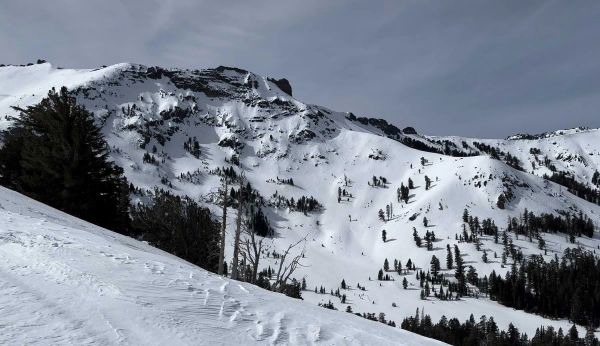
California Ski Resort Opening Dates 2026-27: Mammoth Leads, Tahoe Follows
Mammoth Mountain is first up in California, targeting Friday 13 November after a dusting of September snow. Heavenly and Northstar follow on 20 November, Palisades Tahoe on Wednesday 25 November and Sugar Bowl on 27 November, with Kirkwood on 4 December and June Mountain on 19 December. Plenty of smaller areas have no date yet. A super El Niño favours the Sierra, but a warmer storm track is the catch.
7 Oct 2026
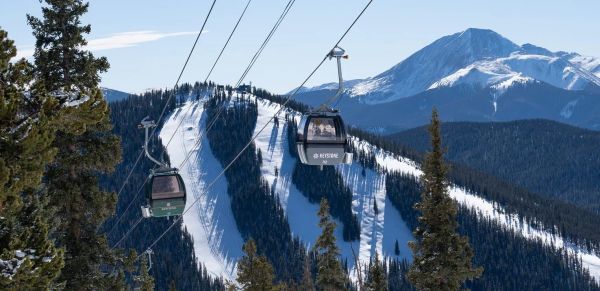
Colorado Ski Resort Opening Dates 2026-27: A-Basin and Keystone Race to Be First
Arapahoe Basin, Keystone and Winter Park are all chasing an October start, though none has a firm date yet. The first dated openers are Breckenridge and Copper on Friday 6 November, then Vail on 13 November, with most of the rest bunched around US Thanksgiving. Hesperus did not open at all last season. A super El Niño offers hope but no guarantee, and forecasters say the southern mountains have the better odds.
5 Oct 2026
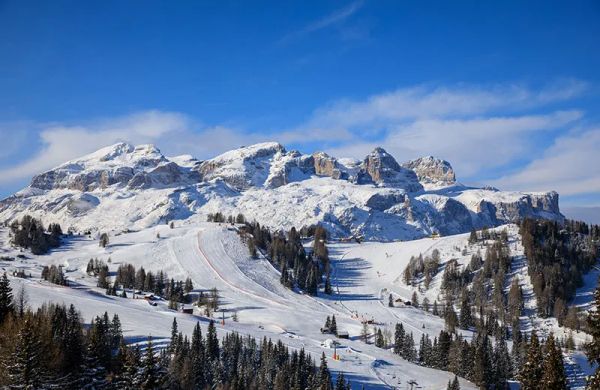
Dolomiti Superski 2026-27: Four New Gondolas, New Reservoirs and an €89 Peak Day Pass
Dolomiti Superski is spending around €100 million across its 12 areas before winter. Kronplatz gets a new 10-passenger gondola with a middle station, 3 Zinnen gets Helmissimo, and Val di Fassa swaps a chairlift for a gondola above Col Valvacin. New water-storage basins and upgraded snowmaking follow, and construction has started on the San Martino to Passo Rolle link. A peak adult day pass is €89.
4 Oct 2026
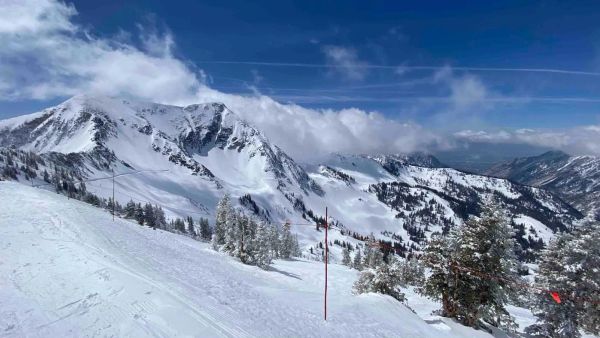
Utah Ski Resort Opening Dates 2026-27: Brian Head First, Eagle Point Out
Brian Head is targeting 6 November, though last year it aimed for 7 November and did not open until the 25th. Park City, Alta and Solitude are pencilled in for 20 November, Snowbird and Snowbasin for 27 November, and Deer Valley for 5 December. Eagle Point will stay closed after the Cottonwood Fire. A super El Niño is forecast, but the big snow is not expected until January.
4 Oct 2026
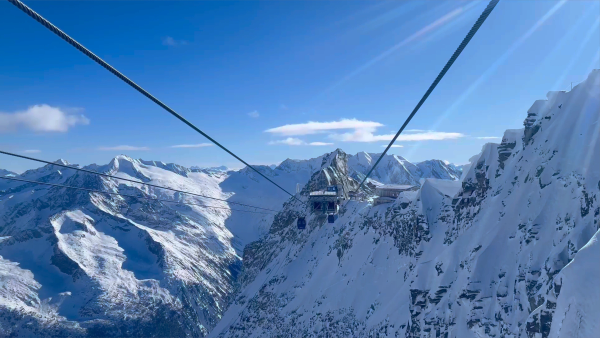
Hintertux Glacier Opens for 2026-27 With 12 Kilometres of Piste
Hintertux became Austria's second glacier to open for 2026-27 on Friday 2 October, after the Pitztal Glacier. Twelve kilometres of piste are running around the Olperer and Gefrorene Wand, served by one gondola and two drag lifts, with the Betterpark also open. Lifts officially run 8:15 am to 4:30 pm, but skiing stops at 2 pm for now.
4 Oct 2026
Vail Resorts Counts the Cost of a Thin Winter as Pass Sales Slide Further
A historically poor western winter cut Vail Resorts' annual net income from $280 million to $147.5 million and skier visits by 13.4 per cent. Now 2026-27 pass units are down 12 per cent as of 18 September, worse than the 10 per cent flagged in spring. Vail blames the weather and thinks some buyers are simply waiting, and it forecasts a rebound if the snow behaves.
3 Oct 2026
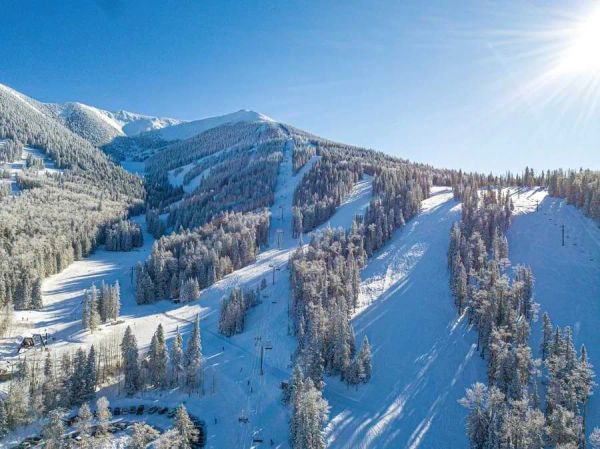
Arizona Snowbowl's $1 Lift Tickets Are Hard to Find, but $9 Days Are Not
Arizona Snowbowl advertised eight $1 lift ticket days this winter. Go looking and only three are showing - 10 March, 1 April and 10 April - so the rest may already have gone. The consolation is a calendar full of $9 days, including all but one day in April. Opening day is 20 November, weather permitting, and opening weekend is $19.
2 Oct 2026
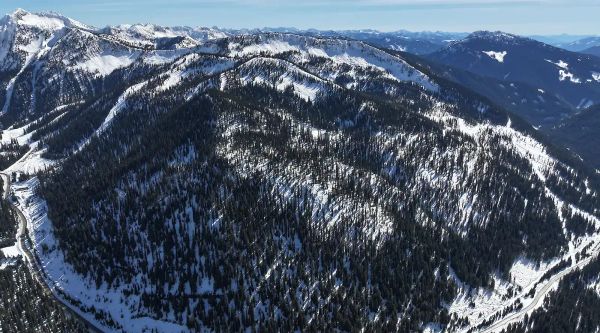
Whitewater Brings Its Short Side Inbounds, With Six New Runs for 2026-27
For years, Whitewater's Short Side was where you ducked a rope and hoped for the best: unmapped, ungroomed and unpatrolled. This winter it's inbounds. Six new runs of glades and fall-line skiing add 190 acres (about 77 hectares), taking the resort past 1,400 acres in total. F2 Logging spent a month in the trees to make it happen, and opening day is pencilled in for 4 December. Bonanza now needs less snow to groom, too.
1 Oct 2026
Valchiavenna Lift System
Valchiavenna's lift network comprises 10 installations that move skiers efficiently across the ski area's three interconnected sectors. The system includes one eight-person gondola, two six-person high-speed chairlifts, five four-person chairlifts, one double chairlift, and the Sky Express funicular - a unique underground railway connecting Campodolcino to the slopes at Motta. All chairlifts feature automatic coupling systems that allow smooth loading and unloading across ability levels.
The Larici gondola serves as Madesimo's primary access point, rising from the village centre to 1,878 metres in an eight-person cabin built in 2005. This lift accesses the MadePark terrain park at 1,800 metres and connects to the mid-mountain network. The Sky Express funicular stands as the system's most distinctive installation - inaugurated in 1996 as Italy's first completely underground funicular, it climbs 639 metres through 1,406 metres of tunnel in just three minutes, transporting approximately 2,500 passengers per hour from Campodolcino at 1,082 metres to Motta at 1,721 metres.
Base-to-summit access follows two main routes. From Madesimo village, skiers use the Larici gondola combined with successive chairlifts through the Cima Sole sector to reach upper elevations. From Campodolcino, the Sky Express delivers skiers directly to the Motta plateau, from where chairlifts fan out towards both the Madesimo side and the higher terrain beneath Pizzo Groppera. The sectors connect via linking runs that require intermediate ability - a notable flat traverse between Larici and Motta challenges snowboarders and requires attention to momentum.
The resort has undertaken significant infrastructure investment, with the Groppera cable car and Val di Lei chairlift currently closed for modernisation works. Planned upgrades include an 80-person aerial tramway to replace the existing Groppera installation and a new four-person bubble chairlift for the Val di Lei sector. When complete, these improvements will restore access to the highest terrain and the famous Canalone descent, which remains closed pending completion of the new lifts.
10lifts across 5 types
1
Gondola
1
8-Person Chair
2
6-Person Chairs
5
Quad Chairs
1
Double Chair
Valchiavenna lift system
Valchiavenna is served by 10 lifts, listed here by type. Check which lifts are turning against the live conditions before you plan your first laps - early lifts and high-speed chairs get you to the best snow fastest.
More Valchiavenna intelligence: trail map, snow report, webcams, resort overview.