
Valchiavenna
Valchiavenna offers 37km of piste from 1,550m to 2,948m in Lombardy, Italy. Home to the famous Canalone descent.
Season 2026 - 2027
Opens
27 Nov 2026
Closes
11 Apr 2027
Days open
135
Annual snow
4m
The Overview
Michael Fulton
Melbourne-based skier and snowboarder with 50+ resorts across 5 continents. Specialises in Australian resorts and international resort comparisons.
Valchiavenna occupies a compelling position in the Lombardy Alps, spanning 37 kilometres of piste between the village of Madesimo at 1,550 metres and the summit of Pizzo Groppera at 2,948 metres. This 1,398-metre vertical drop ranks among the largest in Lombardy, and the ski area's proximity to the Swiss border creates a microclimate that delivers an average of 350 centimetres of annual snowfall. The resort comprises 39 marked runs across the interconnected villages of Madesimo, Campodolcino, and Motta, served by a modern lift network that includes Italy's first underground funicular railway.
Terrain splits heavily towards cruising and progression, with 41 percent blue runs and 51 percent red runs making up the bulk of skiable terrain. Advanced skiers account for just 8 percent of marked pistes, though the resort's signature attraction transcends such categorisation - the Canalone descent from Pizzo Groppera drops 940 vertical metres over nearly three kilometres and has been described by Italian writer Dino Buzzati as one of the most beautiful slopes in the Alps. The Val di Lei sector extends skiing into a high alpine bowl with north-facing aspects that preserve snow quality between storms.
Madesimo village functions as the primary base, a traditional mountain settlement of roughly 600 permanent residents where ski lifts depart directly from the pedestrianised main street. The atmosphere skews authentically Italian rather than international - weekend crowds from Milan create buzzing energy on Saturdays, whilst midweek visitors encounter uncrowded slopes and genuine local character. Mountain restaurants serve regional specialities including pizzoccheri, polenta taragna, and bresaola from the Valtellina, with several traditional crotti - natural rock cellars - operating as restaurants in nearby Chiavenna.
The resort operates independently without major pass affiliations, keeping lift ticket prices notably lower than neighbouring Swiss resorts. Adult day passes start at EUR 54 during regular periods and EUR 57 at peak times, with season passes available for EUR 851. The terrain suits confident intermediates and families with progressing skiers, whilst the Canalone and off-piste possibilities above the treeline provide genuine challenge for advanced riders willing to explore beyond groomed trails.
1398m
Vertical
39
Runs
37 km
Piste
4m
Annual snow
The Terrain
39 runs across 37 km of piste
Valchiavenna, the Madesimo and Campodolcino ski area in Lombardy, has a substantial vertical of 1,398 metres, from 1,550 metres at Madesimo up to 2,948 metres on Pizzo Groppera. It offers 39 runs over 37 kilometres, graded 41% beginner, 51% intermediate and 8% advanced, with no expert-rated pistes. The headline altitude is high for the grade, so the terrain is easy to ski while still giving a good day out. The lift system is modern and compact, with a gondola, two six-seat chairs, five quads and a Sky Express funicular from Campodolcino.
Madesimo is the main base, where the Larici gondola climbs to the mid-mountain slopes. The Sky Express climbs from Campodolcino to the Motta plateau, which opens up the second side of the area. The area is best known for the Canalone, a steep ungroomed descent from Pizzo Groppera that suits experts only, and the Val di Lei sector adds high, open terrain. MadePark offers a terrain park for freestylers. Valchiavenna suits intermediates, families and Milan weekenders, and ambitious skiers will want a local guide to explore the off-piste lines above the treeline.
Terrain split
39
runs
39 runs across 4 grades
Beginner16 runs · 41%
Intermediate20 runs · 51%
Advanced3 runs · 8%
Expert0 runs · 0%
Time it right
When to visit Valchiavenna
Valchiavenna's 2025-2026 season runs from 29 November through 6 April, spanning approximately 19 weeks of continuous operation. The resort traditionally opens in late November when early-season snowfall combines with extensive snowmaking to establish base coverage, and operations continue into early April when spring conditions dominate the higher elevations. Opening day skiing is offered free as an annual tradition to welcome the season.
Snowfall patterns favour the ski area's location on the southern side of the main Alpine ridge, where weather systems arriving from both the Mediterranean and northern Europe deliver consistent precipitation. Annual snowfall averages between 334 and 391 centimetres depending on measurement methodology, placing Valchiavenna among the snowier Italian resorts outside the Dolomites. The summit elevation approaching 3,000 metres ensures reliable coverage even during lean periods, whilst snowmaking covers approximately 32 kilometres of piste - over 75 percent of the marked terrain - using 60 snow cannons positioned throughout the lower and mid-mountain sectors.
January through early March typically offers the most consistent conditions, with average base depths exceeding two metres at summit elevation and mid-mountain accumulations of around one metre. The snowiest week historically falls in early March. December attracts strong visitation due to proximity to Milan's Christmas holiday period, whilst February sees notably lighter crowds as Italian schools lack the week-long mid-winter break common elsewhere in Europe. Late March and early April bring spring skiing conditions with softer afternoon snow and longer daylight hours.
Night skiing operates throughout the winter season on the illuminated Pianello-Montalto slope, with sessions running Wednesday and Saturday evenings from 6:30pm to 10:45pm. The Larici gondola opens for evening access, allowing skiers to combine après-ski dining at the mountain restaurant with floodlit descents back to the village. Notable seasonal events include the Fiaccolata della Scuola Sci Madesimo Vallespluga - a torchlit procession by ski school instructors that takes place between Christmas and Epiphany, followed by fireworks and mulled wine in the village.
Season 2026 - 2027
27 Nov 2026
Opens
11 Apr 2027
Closes
135
Days open
4 m
Annual snow
Getting there
Getting to Valchiavenna, and where to stay
Valchiavenna sits within the Valle Spluga, a north-south valley in the Province of Sondrio that connects Lombardy to Switzerland via the Splügen Pass. The main ski village of Madesimo occupies a forested position at 1,550 metres elevation, whilst Campodolcino lies 600 metres lower in the valley at 1,082 metres. The town of Chiavenna, the valley's administrative centre with a population of around 7,000, sits 20 kilometres south at an elevation of 333 metres where the Valchiavenna meets the road to Lake Como. The Swiss resort of St Moritz lies approximately 45 minutes northeast by road.
The Valchiavenna has served as a trans-Alpine trade route since Roman times, with the Splügen Pass providing one of the principal connections between the Italian lakes and the Swiss Engadine. This heritage remains evident in the architecture and cuisine of local settlements, where traditional stone buildings house the region's famous crotti - natural rock cellars used for centuries to age cheese and preserve meats. The area's mineral springs attracted visitors from the 19th century onwards, with winter tourism emerging around 1910. Madesimo's ski school, established in 1934, was among Italy's first.
Road access from Milan follows the Strada Statale 36 northward through Lecco and along the western shore of Lake Como to Colico, then the SS37 up the Valchiavenna to Chiavenna and continuing on the SP1 to Madesimo - a total distance of approximately 140 kilometres taking around two hours in clear conditions. Winter tyres or chains are mandatory throughout the season. From the Swiss side, the Splügen Pass opens seasonally from May to November; winter access from Switzerland requires the longer route via the Julier and Maloja passes from the Engadine.
Milan Malpensa Airport provides the primary international gateway, located approximately 135 kilometres southwest with a driving time of around one hour fifty minutes. Milan Bergamo sits slightly closer at 95 kilometres, whilst Zurich Airport lies 140 kilometres north across the Swiss border. Train connections run from Milan Centrale to Chiavenna via Colico, with a journey time of approximately two and a half hours including one change. Shuttle buses connect Chiavenna station to Madesimo and Campodolcino, timed to meet arriving trains.
Where to stay
Search all stays →Hotels and lodges near Valchiavenna, powered by Stay22.
Latest News
From the SnowStash desk

Europe Ski Resorts Open Now: What Is Skiable in Mid-October 2026
Europe’s ski season is open, technically. After a record-warm summer, glaciers in Austria, Switzerland and Italy are running a few pistes apiece, Sölden, Stubai and Kitzsteinhorn started late, Titlis has pushed back to 24 October, and Zermatt reopens a few lifts on 14 October after more than two months shut. Finland’s Levi and Ruka are skiing on stored snow. Here is what is open, and what you actually get at each.
14 Oct 2026

Zermatt Plans World Cup Downhill Return on the Gornergrat for 2028
Zermatt is having another crack at a World Cup downhill, and this time nobody has to cross a border. Around 13 million Swiss francs is going into rebuilding the Gornergrat piste, including a jump fed by a roughly 300-metre in-run across the roof of the Gornergrat Railway gallery, with the Matterhorn lined up behind it for the TV cameras. First men’s race is pencilled in for March 2028, pending FIS homologation.
14 Oct 2026

Mt. Rose Begins Snowmaking for the 2026-27 Season at Lake Tahoe
Lake Tahoe’s highest base elevation is paying off early: Mt. Rose has started making snow for 2026-27 after the first flurries and a cold snap. The Nevada resort is backing it with nearly US$2 million in upgrades, including a replacement snowmaking main line, a new PistenBully groomer and restraint bars on every lift. Opening day is yet to be confirmed, though Heavenly and Northstar are already eyeing 20 November.
13 Oct 2026

Utah Ski Resorts 2026-27: What’s New at Alta, Deer Valley, Powder Mountain and More
Utah is still building flat out. For 2026-27, Powder Mountain opens a steep new Skytrac chair into more than 1,000 acres of advanced terrain, Deer Valley adds 200 acres on Hail Peak, Sundance gets a new quad and Park City adds a gondola from its new parking structure. Snowmaking is expanding almost everywhere, Eagle Point stays closed after the Cottonwood Fire, and the 2034 Games are setting the pace. Here’s what’s new, resort by resort.
13 Oct 2026

Mt Hutt Invests NZ$12 Million in Base Area, Tripling Its Sun Deck
Mt Hutt is getting busier, and its base lodge is about to catch up. NZ$12 million goes into a heated sun deck roughly three times the current size (430 m² to 1,300 m²), plus a new toilet block, heated steps down to snow level, extra storage and a new food and beverage outlet. Building starts after the 2026 season, with everything due for winter 2027.
11 Oct 2026

Vermont Ski Resort Opening Dates 2026-27: Few Dates Set, Killington Waits on the Cold
Vermont's season is slow to take shape. Stratton is tentatively targeting 18 November and Sugarbush 21 November, while Pico has Friday 11 December on the calendar. Killington never sets a date and opens when the snowmaking allows, and Vail Resorts has yet to name days for Stowe, Okemo and Mount Snow. The forecasts disagree about snow, and the main El Niño worry for the Green Mountains is warmth.
9 Oct 2026

Crans-Montana 2027 World Championships President Resigns Ahead of Fraud Hearing
Less than four months out from the Crans-Montana 2027 World Championships, the man running the organising committee has stepped down. Claude-Alain Schmidhalter resigned as Swiss-Ski vice president and OC president after being indicted over a business dispute unrelated to skiing. He denies the allegations and faces court on October 27. Interim leaders are in place for the February 1-14 event.
9 Oct 2026
Kelly Canyon, Idaho, Adds Snowmaking, a Bigger Terrain Park and More Parking for 2026-27
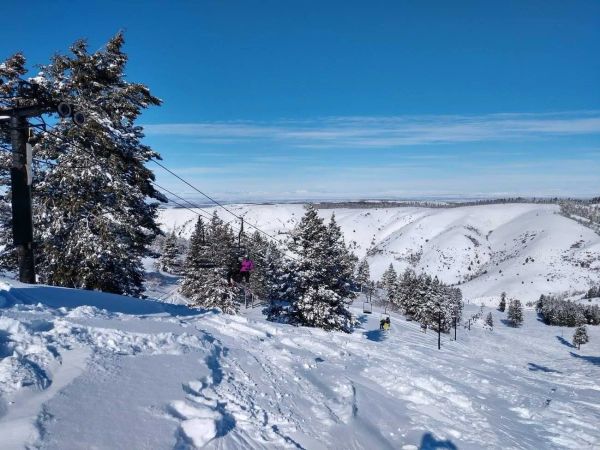
Kelly Canyon had a rough 2025-26, and the Idaho resort has spent the summer making sure it doesn’t repeat. Snowmaking now reaches the top of Goldrush, the terrain park is doubling in size with a stereo system, lights and a snack shack, and the car park is getting bigger. Grooming is stepping up too. Target opening is December 4, conditions permitting.
9 Oct 2026
Valchiavenna Webcams
4 live angles across the mountain. Tap any camera to go full-screen.
About Valchiavenna's live webcams
Check live conditions across Valchiavenna with 4 real-time webcams showing snow, weather, and lift operations, updated every 10 minutes. Check high-elevation cams for powder visibility and base-area cams for crowd levels before you head up.
Camera guide
- Madesimo - Andossi 360Madesimo - Andossi 360
- Madesimo - Andossi 360Madesimo - Andossi 360 is home to this Valchiavenna webcam, showing sweeping views of the surrounding slopes.
- Madesimo - PianazzoMadesimo - Pianazzo
- From Madesimo - PianazzoMadesimo - Pianazzo, you can check real-time conditions with this Valchiavenna cam popular trails and lift operations.
- IsolaIsola
- IsolaIsola is home to this Valchiavenna webcam, showing sweeping views of the surrounding slopes.
- Montespluga - LagoMontespluga - Lago
- Streaming live from Montespluga - LagoMontespluga - Lago, this cam shows a high-altitude perspective of the terrain.
Valchiavenna snow cams FAQ
How often do Valchiavenna snow cams update?
All Valchiavenna snow cams and webcams update every 10 minutes with fresh images showing current mountain conditions. This frequent update schedule ensures you have access to near real-time conditions for planning your ski day at Valchiavenna.
Which Valchiavenna webcam shows the best powder conditions?
High-elevation webcams at Valchiavenna typically provide the clearest view of powder conditions and snowfall. These cams capture fresh snow accumulation and visibility better than base area cameras.
Can I see Valchiavenna lift queues on the webcams?
Yes. Multiple Valchiavenna snow cams specifically show lift queue areas and chairlift operations, helping you time your arrival and avoid peak queue periods.
When is the best time to check Valchiavenna snow cams?
Check Valchiavenna webcams early morning (7-8am) for overnight snowfall assessment, and mid-afternoon for current crowd levels and weather. The live cams are most useful after storm events to assess fresh powder.
How can I check current conditions before buying Valchiavenna lift tickets?
Use our Valchiavenna webcams alongside the live snow report to assess conditions before purchasing lift tickets. The webcams show real-time visibility, snow quality, and operational status.
Do Valchiavenna webcams work on mobile devices?
Yes. All Valchiavenna snow cams and webcams are optimized for mobile viewing, so you can check live conditions from anywhere using your phone or tablet.
More Valchiavenna intelligence: snow report, lift tickets, trail map, resort overview.