
Brigels (Waltensburg/Andiast)
Brigels: 40km of uncrowded pistes, 1,316m vertical, CHF 42-60 day passes. Family-friendly Graubünden skiing in Surselva.
Season 2026 - 2027
Opens
19 Dec 2026
Closes
14 Mar 2027
Days open
85
Annual snow
4m
The Overview
Michael Fulton
Melbourne-based skier and snowboarder with 50+ resorts across 5 continents. Specialises in Australian resorts and international resort comparisons.
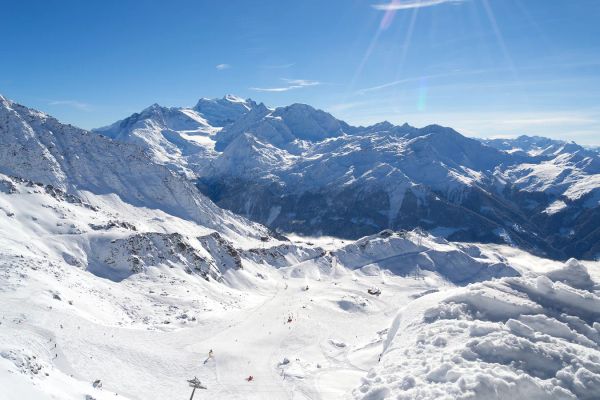
Brigels spans 1,102 to 2,418 metres across the slopes of Pez d'Artgas in the Surselva region of Graubünden, delivering 1,316 metres of vertical drop over 40 kilometres of piste. The resort divides its 23 runs between 28% beginner, 65% intermediate and 7% advanced terrain, with wide treeless slopes characterising the upper mountain. At 4.3 metres annually, snowfall is reliable, though the south-facing aspect requires snowmaking coverage across 26 kilometres of the network. Brigels operates independently without major pass affiliation, maintaining affordable daily rates between CHF 42 and CHF 60.
Intermediate terrain dominates the ski area, with flowing runs that stretch beyond 7 kilometres from Fil summit to the valley stations at Brigels and Waltensburg. The terrain fans across two base areas linked by chairlifts accessing Alp Dado at 1,850 metres, the area's central mountain hub. Mostly treeless above mid-mountain, the slopes offer unobstructed descents, whilst lower elevations feature light forest skiing through traditional hay barn terrain. A terrain park, Funslope and Skimovie piste provide freestyle options.
The villages of Brigels, Waltensburg and Andiast sit on a sunny plateau 1,200 metres above the Vorderrhein valley, preserving Sursilvan Romansh language and rural character. Mountain restaurants include Alp Dado, Burleun and the valley-side La Famusa, serving regional specialities without après-ski crowds. The compact ski area rarely sees lift queues. Brigels base sits 160 metres from Pradas Resort apartments, with traditional guesthouses scattered across the three villages.
The 2025-26 season runs 7 December to 30 March, with daily operations from late December and weekend extensions through Whitsun. Adult day tickets range CHF 42 to CHF 60 via dynamic pricing, with CHF 950 annual passes available. Families receive discounts on groups of three or more tickets. The resort suits intermediates seeking uncrowded pistes, families wanting manageable terrain and off-piste skiers willing to hike for untracked powder on most days.
1316m
Vertical
23
Runs
40 km
Piste
4m
Annual snow
The Terrain
23 runs across 40 km of piste
Wide, treeless slopes above the Vorderrhein define Brigels, which shares its mountain with Waltensburg and Andiast in Graubünden's Surselva region. The area rises from 1,102 to 2,418 metres, giving 1,316 metres of vertical across 40 kilometres of piste and 23 runs. Two thirds of the terrain, 65%, is graded intermediate, with 28% beginner and 7% advanced and nothing rated expert. Visibility is good on the open upper mountain, the network is simple to learn, and the long descents back to the valley give the area more bite than its modest size suggests.
Alp Dado is the central mid-mountain junction where the Brigels and Waltensburg lifts meet, and the longest run of the area goes from Fil, the high point, down to Waltensburg at about 7 kilometres. A snowpark sits between Alp Dado and the Parli lift, and a freeskiing zone beyond the pistes gives experienced riders untracked options, though conditions and avalanche risk should always be checked locally first. Light crowds and straightforward links make it appealing to families and intermediates who want long, easy laps. Experts will want steeper terrain than is on offer.
Terrain split
23
runs
23 runs across 4 grades
Beginner6 runs · 28%
Intermediate15 runs · 65%
Advanced2 runs · 7%
Expert0 runs · 0%
Time it right
When to visit Brigels (Waltensburg/Andiast)
The 2025-26 season operates 7 December 2025 through 30 March 2026, with daily service commencing 20 December. Weekend operations extend beyond closing with Whitsun (23-25 May) and other holiday periods adding intermittent lift service into late spring. Operating hours run 8.30am to 4.30pm. Early-season snowmaking typically establishes base depths before Christmas, with natural accumulation building through midwinter.
Brigels receives 4.3 metres of snowfall annually, concentrated in January when week two averages 45 centimetres across 3.4 snowy days. February offers peak coverage, averaging 104 centimetres at 2,418 metres and 58 centimetres at base elevations. South-facing slopes above 1,700 metres hold snow quality better than lower terrain, where spring conditions develop earlier. Current season statistics show 388 centimetres total accumulation with 70-centimetre base depth.
January through mid-March delivers optimal conditions, combining reliable snowfall with cold temperatures that preserve powder on shaded upper slopes. Off-piste skiing remains largely untracked throughout winter given minimal competition for fresh lines. December and late March require checking lower-mountain coverage as sun exposure affects runs below Alp Dado. The resort's high-altitude terrain maintains skiability even during lean snow years.
No major events calendar dominates the season, though the Surselva Snowpark hosts occasional freestyle sessions. Night skiing is not offered. The resort focuses on uncomplicated daily skiing rather than programmed activities. The Snowli Park provides beginner progression terrain, whilst two toboggan runs exceeding 4 kilometres offer alternative snow activities from mountain restaurants.
Season 2026 - 2027
19 Dec 2026
Opens
14 Mar 2027
Closes
85
Days open
4 m
Annual snow
Getting there
Getting to Brigels (Waltensburg/Andiast), and where to stay
Brigels occupies a sunny terrace above the Vorderrhein valley in the Surselva region of Graubünden, eastern Switzerland. The three merged municipalities of Brigels (Breil in Romansh), Waltensburg and Andiast spread across a plateau 1,200 to 1,300 metres elevation, north of the Anterior Rhine. The ski area climbs the slopes of Pez d'Artgas peak, which rises to 2,785 metres, with lift-served terrain topping out at 2,418 metres on Fil.
The nearest town is Ilanz, 15 kilometres east, known as the first city on the Rhine. Chur, capital of Graubünden and reputedly Switzerland's oldest town, sits 48 kilometres southeast. Larger resorts Flims-Laax lies 25 kilometres northeast, whilst Disentis operates 20 kilometres southwest up the valley. The villages sit midway between these established destinations. The area speaks primarily Sursilvan Romansh, with German as secondary language.
Road access follows the A13 motorway to Chur-Reichenau, then continues on Route 19 through Ilanz toward Disentis. From Chur, the 48-kilometre drive takes approximately 50 minutes. Zurich lies 165 kilometres away via A3 and A13, requiring 2 hours 10 minutes. From Basel, the 220-kilometre journey takes roughly 3 hours. The Oberalp Pass west of Brigels closes in winter, requiring train transfers from that direction.
Zurich Airport sits 130 kilometres northeast, the primary international gateway at approximately 2 hours by car. Train connections run from Zurich Airport to Chur, then onward via Rhaetian Railway to Tavanasa-Breil/Brigels station, totalling 2 hours 36 minutes with two changes. Local buses connect the station to resort villages. St Gallen-Altenrhein Airport is 102 minutes away, whilst Friedrichshafen and Lugano offer alternative access within three hours.
Where to stay
Search all stays →Hotels and lodges near Brigels (Waltensburg/Andiast), powered by Stay22.
Latest News
From the SnowStash desk
Alps Snow Forecast: Up to 64 cm Headed for the High Glaciers as the Snow Line Drops
The Alps are about to swap mild, sunny October weather for something far more wintry. A cold front arrives Tuesday, and SnowStash forecasts have Monterosa Ski out in front with 64 cm over 14 days, ahead of Blatten Belalp (55 cm) and Verbier (43 cm). The snow line should fall below 2000 metres by Wednesday night, and glaciers across Switzerland, Italy and Austria are in line for the best of it. The wind will have a say too.
20 Oct 2026

Four Dead After Avalanche Near Ski Portillo in Chile
A large avalanche struck near Laguna del Inca adjacent to Ski Portillo on Saturday afternoon, killing four people and injuring four others. The group were day visitors mountaineering in the backcountry after reportedly being warned about elevated avalanche risk by resort staff.
18 Oct 2026

Europe Ski Resorts Open Now: What Is Skiable in Mid-October 2026
Europe’s ski season is open, technically. After a record-warm summer, glaciers in Austria, Switzerland and Italy are running a few pistes apiece, Sölden, Stubai and Kitzsteinhorn started late, Titlis has pushed back to 24 October, and Zermatt reopens a few lifts on 14 October after more than two months shut. Finland’s Levi and Ruka are skiing on stored snow. Here is what is open, and what you actually get at each.
14 Oct 2026

Zermatt Plans World Cup Downhill Return on the Gornergrat for 2028
Zermatt is having another crack at a World Cup downhill, and this time nobody has to cross a border. Around 13 million Swiss francs is going into rebuilding the Gornergrat piste, including a jump fed by a roughly 300-metre in-run across the roof of the Gornergrat Railway gallery, with the Matterhorn lined up behind it for the TV cameras. First men’s race is pencilled in for March 2028, pending FIS homologation.
14 Oct 2026

Mt. Rose Begins Snowmaking for the 2026-27 Season at Lake Tahoe
Lake Tahoe’s highest base elevation is paying off early: Mt. Rose has started making snow for 2026-27 after the first flurries and a cold snap. The Nevada resort is backing it with nearly US$2 million in upgrades, including a replacement snowmaking main line, a new PistenBully groomer and restraint bars on every lift. Opening day is yet to be confirmed, though Heavenly and Northstar are already eyeing 20 November.
13 Oct 2026

Utah Ski Resorts 2026-27: What’s New at Alta, Deer Valley, Powder Mountain and More
Utah is still building flat out. For 2026-27, Powder Mountain opens a steep new Skytrac chair into more than 1,000 acres of advanced terrain, Deer Valley adds 200 acres on Hail Peak, Sundance gets a new quad and Park City adds a gondola from its new parking structure. Snowmaking is expanding almost everywhere, Eagle Point stays closed after the Cottonwood Fire, and the 2034 Games are setting the pace. Here’s what’s new, resort by resort.
13 Oct 2026

Mt Hutt Invests NZ$12 Million in Base Area, Tripling Its Sun Deck
Mt Hutt is getting busier, and its base lodge is about to catch up. NZ$12 million goes into a heated sun deck roughly three times the current size (430 m² to 1,300 m²), plus a new toilet block, heated steps down to snow level, extra storage and a new food and beverage outlet. Building starts after the 2026 season, with everything due for winter 2027.
11 Oct 2026

Vermont Ski Resort Opening Dates 2026-27: Few Dates Set, Killington Waits on the Cold
Vermont's season is slow to take shape. Stratton is tentatively targeting 18 November and Sugarbush 21 November, while Pico has Friday 11 December on the calendar. Killington never sets a date and opens when the snowmaking allows, and Vail Resorts has yet to name days for Stowe, Okemo and Mount Snow. The forecasts disagree about snow, and the main El Niño worry for the Green Mountains is warmth.
9 Oct 2026