
Hoch-Ybrig
50km of slopes, 791m vertical, 12 lifts. 50 minutes from Zürich in Canton Schwyz. Beginner-friendly with NBC Snowpark.
Season 2026 - 2027
Opens
28 Nov 2026
Closes
18 Apr 2027
Days open
141
Annual snow
4m
The Overview
Michael Fulton
Melbourne-based skier and snowboarder with 50+ resorts across 5 continents. Specialises in Australian resorts and international resort comparisons.
Hoch-Ybrig operates between 1,040 and 1,831 metres across 50 kilometres of piste and 17 marked runs in the Canton of Schwyz. The resort delivers 791 metres of vertical drop across mostly treeless slopes, with terrain split 30 per cent beginner, 60 per cent intermediate and 10 per cent advanced. An aerial tram connects the Weglosen base to Seebli at 1,462 metres, where four quad chairlifts and one six-seat chair serve the upper mountain. February typically sees the deepest snowpack, averaging 109 centimetres at summit.
The ski area stretches between the villages of Unteriberg and Oberiberg, with slopes flowing across open alpine terrain that offers visibility from base to summit. Intermediate cruisers dominate the mountain, with the longest run extending 5.3 kilometres. The Sternen chairlift reaches the highest point at 1,856 metres, whilst the Hesisbol six-seater accesses mid-mountain terrain at 1,820 metres. Two base stations at Weglosen and Laucheren provide separate entry points into the ski area.
The NBC Snowpark at Hesisbol runs 1.6 kilometres alongside the six-seat chairlift, featuring over 20 obstacles maintained by a dedicated shaping team. An Audi Skicross Park beside the Sternen lift adds race-format terrain. Mountain restaurants including Bergrestaurant Sternen at 1,856 metres and Füederegg at mid-mountain serve traditional fare. Weekend queues form at Seebli during peak periods, though the spread across two base stations helps disperse crowds.
The Schneepass Zentralschweiz season pass grants access to 15 Central Swiss resorts for CHF 695. Day tickets cost CHF 57 for adults, with half-day and multi-day options available. The 2025-26 season runs 29 November through 6 April. The resort sits 50 minutes from Zürich and caters primarily to intermediate skiers, families and Zürich day-trippers seeking accessible alpine terrain.
791m
Vertical
17
Runs
50 km
Piste
4m
Annual snow
The Terrain
17 runs across 50 km of piste
Hoch-Ybrig has 17 runs and 50 kilometres of piste in the Schwyz Alps, dropping 791 metres from 1,831 metres down to 1,040 metres. The vertical is modest, but the mix is practical: 60% intermediate, 30% beginner and 10% advanced, with no expert terrain. The system is compact, built around one aerial tram, a six-seat chair, four quad chairs, three T-bars and three surface lifts, and roughly 4 metres of annual snowfall supports a mostly treeless area that is easy to read from base to summit.
The tram from Weglosen reaches Seebli, where chairs fan out to Sternen, Hesisbol and Spirstock, and a separate entry from Laucheren in Oberiberg reaches Laucherenstöckli. The Sternen chair tops out at 1,856 metres. The NBC Snowpark runs alongside the Hesisbol six-seat chair with over 20 obstacles, and a skicross course sits beside the Sternen quad. From Spirstock, Lake Lucerne is visible on a clear day. Saturday mornings at Seebli are the busy point. It suits Zurich day-trippers, families and intermediates looking for varied, uncomplicated skiing close to the city.
Terrain split
17
runs
17 runs across 4 grades
Beginner5 runs · 30%
Intermediate10 runs · 60%
Advanced2 runs · 10%
Expert0 runs · 0%
Time it right
When to visit Hoch-Ybrig
The 2025-26 season opens 29 November and closes 6 April, spanning 19 weeks. Hoch-Ybrig typically operates mid-season length compared to higher Swiss resorts, with snow reliability dependent on natural accumulation rather than glacier terrain. The resort averages 404 centimetres of annual snowfall, with the snowiest week historically falling in the second week of January when 47 centimetres typically accumulates. Operations run daily between 7:00 and 17:30 during official season dates.
Snow depth at the 1,831-metre summit averages 38 inches mid-season, with base depth at 1,040 metres reaching 22 inches. February delivers optimal conditions when snowpack peaks at 43 inches summit and 25 inches base. The resort records an average of 66 sunny days per season, with March the sunniest month averaging 17 clear days. North-facing aspects preserve powder longer than south-facing terrain, particularly following January storms.
January and February offer peak snow conditions, whilst March balances deeper base with longer daylight and warmer temperatures. April skiing proves variable as the 1,040-metre base elevation limits late-season reliability. The resort benefits from a microclimate that occasionally delivers snow when lower-elevation areas receive rain. December conditions depend heavily on early-season storms, with full terrain opening typically by mid-month if snowfall cooperates.
No night skiing operates at Hoch-Ybrig. The resort hosts family ski days through partnerships with Migros, offering subsidised packages including lift tickets, lunch and racing for CHF 85 per family. Winter hiking trails total 10 kilometres when marked, with routes circling the frozen Seebli lake. The NBC Snowpark hosts freestyle events throughout winter, though the resort maintains a lower profile than major competition venues in the Swiss calendar.
Season 2026 - 2027
28 Nov 2026
Opens
18 Apr 2027
Closes
141
Days open
4 m
Annual snow
Getting there
Getting to Hoch-Ybrig, and where to stay
Hoch-Ybrig sits in the Waag valley between Unteriberg and Oberiberg in Canton Schwyz, Central Switzerland. The Weglosen base station stands at 1,035 metres, surrounded by the Drusberg, Forstberg and Twäriberg peaks of the Schwyzer Alps, which separate the area from Muotathal valley to the south and Canton Glarus to the east. The Ibergeregg mountain pass at 1,406 metres links the Ybrig region to Schwyz, the cantonal capital. Canton Schwyz ranks among Switzerland's three founding cantons.
Einsiedeln, a pilgrimage town known for its Benedictine abbey, lies 18 kilometres northwest and serves as the nearest major settlement. The villages of Unteriberg at 925 metres and Oberiberg at similar elevation provide accommodation and services within five kilometres of the lifts. Schwyz sits 25 kilometres north via the Ibergeregg pass. The resort operates in a traditional farming region where the Ybrig dialect persists among locals.
From Zürich, drivers follow the A3 motorway south through Wädenswil, exiting at Pfäffikon before continuing via Einsiedeln to reach Weglosen in approximately 70 minutes covering 59 kilometres. The route bypasses Einsiedeln's centre, following signage toward Ybrig. From Schwyz, the Ibergeregg pass road provides direct access in 30 minutes, though this route closes in heavy snow. Free parking at both Weglosen and Laucheren base stations accommodates day visitors.
Zürich Airport lies 82 minutes by car covering approximately 80 kilometres. Train passengers travel to Einsiedeln station via Wädenswil or Rapperswil, then transfer to PostAuto bus line 556, which reaches Weglosen in 31 minutes with five daily departures. Bus line 555 serves Laucheren from Einsiedeln. Basel Airport sits 143 kilometres distant requiring 2 hours driving. The resort's proximity to Zürich makes it popular for spontaneous day trips when fresh snow falls.
Where to stay
Search all stays →Hotels and lodges near Hoch-Ybrig, powered by Stay22.
Latest News
From the SnowStash desk
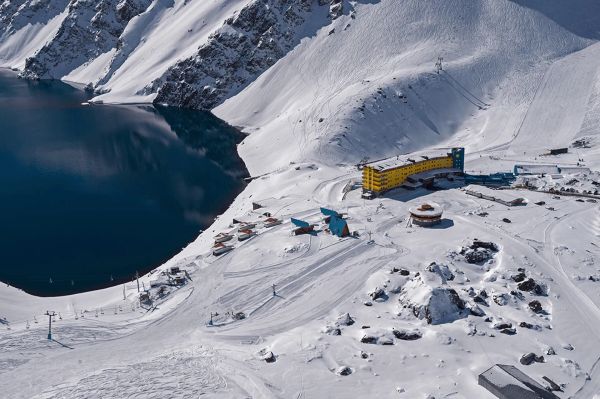
Four Dead After Avalanche Near Ski Portillo in Chile
A large avalanche struck near Laguna del Inca adjacent to Ski Portillo on Saturday afternoon, killing four people and injuring four others. The group were day visitors mountaineering in the backcountry after reportedly being warned about elevated avalanche risk by resort staff.
18 Oct 2026
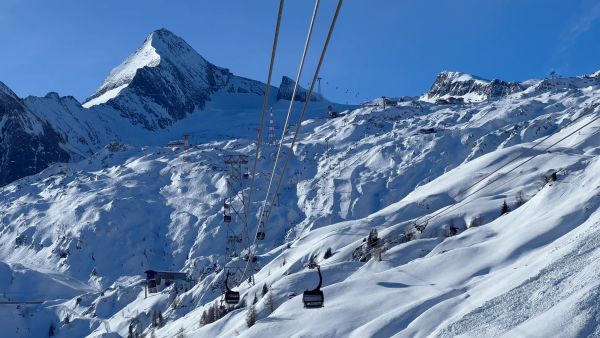
Europe Ski Resorts Open Now: What Is Skiable in Mid-October 2026
Europe’s ski season is open, technically. After a record-warm summer, glaciers in Austria, Switzerland and Italy are running a few pistes apiece, Sölden, Stubai and Kitzsteinhorn started late, Titlis has pushed back to 24 October, and Zermatt reopens a few lifts on 14 October after more than two months shut. Finland’s Levi and Ruka are skiing on stored snow. Here is what is open, and what you actually get at each.
14 Oct 2026
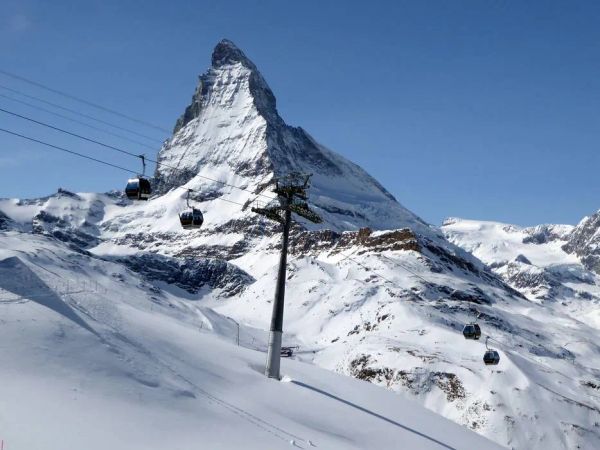
Zermatt Plans World Cup Downhill Return on the Gornergrat for 2028
Zermatt is having another crack at a World Cup downhill, and this time nobody has to cross a border. Around 13 million Swiss francs is going into rebuilding the Gornergrat piste, including a jump fed by a roughly 300-metre in-run across the roof of the Gornergrat Railway gallery, with the Matterhorn lined up behind it for the TV cameras. First men’s race is pencilled in for March 2028, pending FIS homologation.
14 Oct 2026
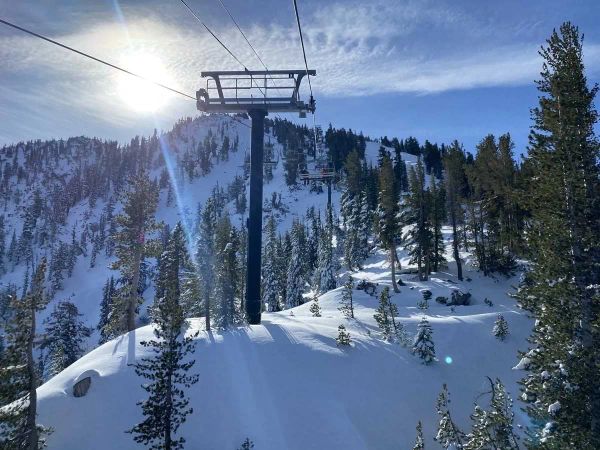
Mt. Rose Begins Snowmaking for the 2026-27 Season at Lake Tahoe
Lake Tahoe’s highest base elevation is paying off early: Mt. Rose has started making snow for 2026-27 after the first flurries and a cold snap. The Nevada resort is backing it with nearly US$2 million in upgrades, including a replacement snowmaking main line, a new PistenBully groomer and restraint bars on every lift. Opening day is yet to be confirmed, though Heavenly and Northstar are already eyeing 20 November.
13 Oct 2026
Utah Ski Resorts 2026-27: What’s New at Alta, Deer Valley, Powder Mountain and More
Utah is still building flat out. For 2026-27, Powder Mountain opens a steep new Skytrac chair into more than 1,000 acres of advanced terrain, Deer Valley adds 200 acres on Hail Peak, Sundance gets a new quad and Park City adds a gondola from its new parking structure. Snowmaking is expanding almost everywhere, Eagle Point stays closed after the Cottonwood Fire, and the 2034 Games are setting the pace. Here’s what’s new, resort by resort.
13 Oct 2026
Mt Hutt Invests NZ$12 Million in Base Area, Tripling Its Sun Deck
Mt Hutt is getting busier, and its base lodge is about to catch up. NZ$12 million goes into a heated sun deck roughly three times the current size (430 m² to 1,300 m²), plus a new toilet block, heated steps down to snow level, extra storage and a new food and beverage outlet. Building starts after the 2026 season, with everything due for winter 2027.
11 Oct 2026
Vermont Ski Resort Opening Dates 2026-27: Few Dates Set, Killington Waits on the Cold
Vermont's season is slow to take shape. Stratton is tentatively targeting 18 November and Sugarbush 21 November, while Pico has Friday 11 December on the calendar. Killington never sets a date and opens when the snowmaking allows, and Vail Resorts has yet to name days for Stowe, Okemo and Mount Snow. The forecasts disagree about snow, and the main El Niño worry for the Green Mountains is warmth.
9 Oct 2026
Crans-Montana 2027 World Championships President Resigns Ahead of Fraud Hearing
Less than four months out from the Crans-Montana 2027 World Championships, the man running the organising committee has stepped down. Claude-Alain Schmidhalter resigned as Swiss-Ski vice president and OC president after being indicted over a business dispute unrelated to skiing. He denies the allegations and faces court on October 27. Interim leaders are in place for the February 1-14 event.
9 Oct 2026