
Les Portes du Soleil
580km across 12 French-Swiss villages. 163 lifts, 2,254m summit, Geneva 80km. €65-75 day pass. Home of the Swiss Wall.
Season 2026 - 2027
Opens
28 Nov 2026
Closes
18 Apr 2027
Days open
141
Annual snow
4m
The Overview
Michael Fulton
Melbourne-based skier and snowboarder with 50+ resorts across 5 continents. Specialises in Australian resorts and international resort comparisons.
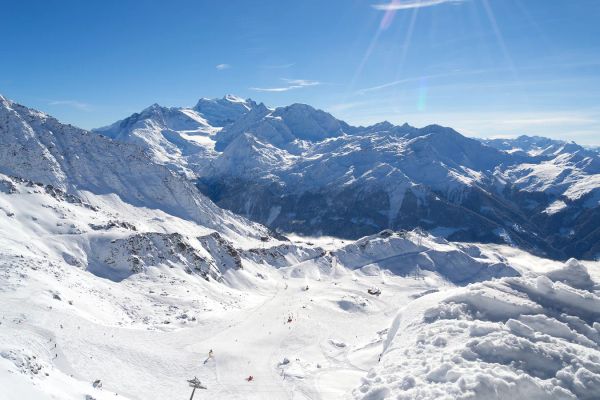
Les Portes du Soleil spans 580 kilometres of marked piste across 277 runs, spreading between 985 and 2,254 metres elevation with 1,269 metres of vertical drop. The cross-border ski area links 12 villages in France's Haute-Savoie and Switzerland's Valais, making it one of the two largest ski areas in the world alongside Les Trois Vallées. Eight French resorts including Morzine, Avoriaz, Châtel and Les Gets connect with four Swiss resorts including Champéry, Morgins and Les Crosets, all accessed on a single lift pass. The microclimate between Lake Geneva and Mont Blanc generates substantial snowfall from November to April, typically enabling operations from early December through mid-to-late April.
Terrain distribution favours progression, with 53 per cent beginner slopes, 36 per cent intermediate and 11 per cent advanced across 14 valleys covering 1,036 square kilometres. The Pas de Chavanette, known as the Swiss Wall, descends 331 metres over one kilometre with a 40-degree pitch and car-sized moguls, earning an orange classification beyond the standard black rating. The Linga sector connects Châtel to Avoriaz whilst the Grand Paradis run drops beneath the Dents du Midi peaks. Tree-lined runs dominate below 1,800 metres whilst open bowls characterise the upper elevations near Pointe de Mossettes at 2,260 metres.
Most base villages retain traditional Chablais architecture with wood chalets and working market towns, whilst Avoriaz at 1,800 metres remains Europe's largest purpose-built car-free resort with 18,000 beds. Morzine anchors the French side as the largest town and most central access point to the entire circuit. The Swiss villages of Champéry, Morgins and Torgon offer quieter alternatives with views of the Dents du Midi range. Free shuttle buses connect outlying areas including Abondance and Saint-Jean-d'Aulps to the main lift network.
The full Portes du Soleil pass unlocks all 12 resorts across both countries, with individual sector passes available for Avoriaz, Morzine-Les Gets and the Swiss valleys. Adult day tickets range from €65 to €75 depending on season, with youth season passes from €470. The area suits intermediates exploring varied terrain across two countries, families seeking gentle tree-lined progressions, and advanced skiers tackling the Swiss Wall and Linga sectors. Eight French and four Swiss resorts provide accommodation from traditional chalets to modern ski-in developments.
1269m
Vertical
277
Runs
580 km
Piste
4m
Annual snow
The Terrain
277 runs across 580 km of piste
Les Portes du Soleil is among the largest linked ski domains in the Alps, with 277 runs over 580 kilometres between 985 and 2,254 metres, a vertical of 1,269 metres. The split is 53% beginner, 36% intermediate and 11% advanced, with nothing graded expert. Roughly 160 lifts keep the circuit turning, including 38 six-seat chairs, 28 quads, 10 gondolas and 73 T-bars. Snowmaking tops up natural cover on the lower slopes, and the scale of the place means a week rarely repeats itself. Distances are big, so plan your day around where you intend to finish.
On the Swiss side, the villages of Champéry, Les Crosets, Champoussin and Morgins feed a long run of linked slopes towards France. The best-known stretch is the Swiss Wall off the Pas de Chavanette, a steep mogul field that regularly draws onlookers from the chairlift beside it. Away from that, most of the area is cruising terrain, with gentle tree-lined runs below about 1,800 metres and open slopes higher up. It suits intermediates and families who like variety and range, though genuinely steep skiing is limited to a handful of runs.
Terrain split
277
runs
277 runs across 4 grades
Beginner147 runs · 53%
Intermediate100 runs · 36%
Advanced30 runs · 11%
Expert0 runs · 0%
Time it right
When to visit Les Portes du Soleil
The 2025-2026 season runs from 30 November 2025 to 21 April 2026, with some lower Swiss sectors closing earlier depending on snow conditions. Typical operations span early December through mid-to-late April, offering approximately 20 weeks of skiing. The Geneva-Mont Blanc microclimate between Lake Geneva and Europe's highest peak creates consistent snowfall patterns, with Châtel averaging 400 centimetres annually at 2,200 metres summit elevation. This geographic positioning generates reliable accumulation despite modest summit heights compared to higher French resorts.
Annual snowfall averages vary between 320 and 381 centimetres depending on aspect, with the French sectors averaging 8 metres total winter accumulation according to some measurements. The relatively low elevations from 985 to 2,254 metres benefit from moisture-laden systems crossing Lake Geneva, whilst pasture-covered lower slopes require only 20 centimetres of base to become skiable. Snowmaking covers lower elevations including Morzine at 1,000 metres, Morgins and the key valley connections. Base depths typically peak in February and March rather than January.
January and February deliver the most reliable powder and coldest temperatures, whilst December offers early-season conditions with shorter daylight. March combines deep snowpack with longer days and warmer temperatures, ideal for circuit touring between villages. April brings spring conditions with corn snow by afternoon, though north-facing Swiss sectors hold powder longer. The area opens some lifts for autumn glacier-free operations and extends through the French Easter holidays regardless of date.
The Pass'Portes mountain bike event runs 26-28 June 2026 in Avoriaz, marking the transition to summer operations beginning mid-May. No notable on-snow festivals feature prominently beyond local village celebrations. Night skiing does not operate across the main Portes du Soleil network. The shoulder seasons see reduced lift operations with Swiss valleys often closing connections by early April whilst French sectors maintain access through the final weekend.
Season 2026 - 2027
28 Nov 2026
Opens
18 Apr 2027
Closes
141
Days open
4 m
Annual snow
Getting there
Getting to Les Portes du Soleil, and where to stay
Les Portes du Soleil occupies the Chablais Alps straddling Haute-Savoie in France and Valais canton in Switzerland, positioned between Lake Geneva 30 kilometres north and Mont Blanc 50 kilometres south. The French villages sit in the Abondance and Aulps valleys whilst Swiss resorts occupy the Val d'Illiez and overlook the Rhône valley. Morzine anchors the network at 1,000 metres elevation, Avoriaz sits at 1,800 metres, Châtel at 1,200 metres, and Champéry at 1,050 metres in the shadow of the Dents du Midi peaks reaching 3,257 metres.
The nearest major centre is Geneva, 80 kilometres northwest, with Montreux and Lausanne on Lake Geneva's northern shore 40 kilometres from the Swiss valleys. Thonon-les-Bains lies 30 kilometres north as the main French lakeside town. Cluses sits 30 kilometres west as the closest French railhead whilst Aigle provides Swiss rail connections 25 kilometres north. The Franco-Swiss border runs along the ridgeline between Avoriaz and Les Crosets, with the Pas de Morgins mountain pass linking Châtel to Morgins by road in winter.
Road access from France follows the A40 Autoroute Blanche from Geneva and Lyon, exiting at Cluses 22 kilometres from Morzine or continuing to Thonon-les-Bains. The drive from Geneva takes 80 minutes to Morzine, 90 minutes to Châtel via the D902 through the Abondance valley. From Switzerland, the A9 motorway exits at Aigle or Monthey, with 20 minutes' drive to Champéry and Morgins. The Pas de Morgins provides the only winter road connection between French and Swiss sectors.
Geneva International Airport sits one hour from most resorts, served by 49 airlines with 388 daily flights. Direct buses operate from Geneva to Les Prodains below Avoriaz in under two hours. Train connections reach Cluses and Thonon-les-Bains from Geneva in 90 minutes via the Léman Express cross-border service, with onward buses to Morzine, Châtel and Les Gets. The Swiss side connects via train to Aigle station, then the S36 regional line directly to Champéry in two hours 30 minutes total from Geneva, with bus connections to Morgins from Troistorrents.
Where to stay
Search all stays →Hotels and lodges near Les Portes du Soleil, powered by Stay22.
Latest News
From the SnowStash desk
Alps Snow Forecast: Up to 64 cm Headed for the High Glaciers as the Snow Line Drops
The Alps are about to swap mild, sunny October weather for something far more wintry. A cold front arrives Tuesday, and SnowStash forecasts have Monterosa Ski out in front with 64 cm over 14 days, ahead of Blatten Belalp (55 cm) and Verbier (43 cm). The snow line should fall below 2000 metres by Wednesday night, and glaciers across Switzerland, Italy and Austria are in line for the best of it. The wind will have a say too.
20 Oct 2026

Four Dead After Avalanche Near Ski Portillo in Chile
A large avalanche struck near Laguna del Inca adjacent to Ski Portillo on Saturday afternoon, killing four people and injuring four others. The group were day visitors mountaineering in the backcountry after reportedly being warned about elevated avalanche risk by resort staff.
18 Oct 2026

Europe Ski Resorts Open Now: What Is Skiable in Mid-October 2026
Europe’s ski season is open, technically. After a record-warm summer, glaciers in Austria, Switzerland and Italy are running a few pistes apiece, Sölden, Stubai and Kitzsteinhorn started late, Titlis has pushed back to 24 October, and Zermatt reopens a few lifts on 14 October after more than two months shut. Finland’s Levi and Ruka are skiing on stored snow. Here is what is open, and what you actually get at each.
14 Oct 2026

Zermatt Plans World Cup Downhill Return on the Gornergrat for 2028
Zermatt is having another crack at a World Cup downhill, and this time nobody has to cross a border. Around 13 million Swiss francs is going into rebuilding the Gornergrat piste, including a jump fed by a roughly 300-metre in-run across the roof of the Gornergrat Railway gallery, with the Matterhorn lined up behind it for the TV cameras. First men’s race is pencilled in for March 2028, pending FIS homologation.
14 Oct 2026

Mt. Rose Begins Snowmaking for the 2026-27 Season at Lake Tahoe
Lake Tahoe’s highest base elevation is paying off early: Mt. Rose has started making snow for 2026-27 after the first flurries and a cold snap. The Nevada resort is backing it with nearly US$2 million in upgrades, including a replacement snowmaking main line, a new PistenBully groomer and restraint bars on every lift. Opening day is yet to be confirmed, though Heavenly and Northstar are already eyeing 20 November.
13 Oct 2026

Utah Ski Resorts 2026-27: What’s New at Alta, Deer Valley, Powder Mountain and More
Utah is still building flat out. For 2026-27, Powder Mountain opens a steep new Skytrac chair into more than 1,000 acres of advanced terrain, Deer Valley adds 200 acres on Hail Peak, Sundance gets a new quad and Park City adds a gondola from its new parking structure. Snowmaking is expanding almost everywhere, Eagle Point stays closed after the Cottonwood Fire, and the 2034 Games are setting the pace. Here’s what’s new, resort by resort.
13 Oct 2026

Mt Hutt Invests NZ$12 Million in Base Area, Tripling Its Sun Deck
Mt Hutt is getting busier, and its base lodge is about to catch up. NZ$12 million goes into a heated sun deck roughly three times the current size (430 m² to 1,300 m²), plus a new toilet block, heated steps down to snow level, extra storage and a new food and beverage outlet. Building starts after the 2026 season, with everything due for winter 2027.
11 Oct 2026

Vermont Ski Resort Opening Dates 2026-27: Few Dates Set, Killington Waits on the Cold
Vermont's season is slow to take shape. Stratton is tentatively targeting 18 November and Sugarbush 21 November, while Pico has Friday 11 December on the calendar. Killington never sets a date and opens when the snowmaking allows, and Vail Resorts has yet to name days for Stowe, Okemo and Mount Snow. The forecasts disagree about snow, and the main El Niño worry for the Green Mountains is warmth.
9 Oct 2026