
Leukerbad
47.5km terrain, 1199m vertical, 13 lifts above Switzerland's largest Alpine thermal spa. Valais skiing with natural hot springs.
Season 2026 - 2027
Opens
5 Dec 2026
Closes
11 Apr 2027
Days open
127
Annual snow
4m
The Overview
Michael Fulton
Melbourne-based skier and snowboarder with 50+ resorts across 5 continents. Specialises in Australian resorts and international resort comparisons.
The Torrent ski area spans 1411 to 2610 metres across 47.5 kilometres of terrain, delivering 1199 metres of vertical drop above Switzerland's largest thermal spa village. 16 marked runs divide into 7% beginner, 57% intermediate and 36% advanced, with the demanding Rinderhalde FIS run anchoring technical terrain and the 11-kilometre valley run to Leukerbad ranking among Switzerland's longest descents. Annual snowfall averages 4.3 metres, supplemented by snowmaking coverage on 10 kilometres of piste, whilst western-facing slopes preserve midday powder and the resort's 2350-metre Rinderhütte hub enjoys views across 20 Valais four-thousand-metre peaks. The base village at 1411 metres holds distinction as the Alps' largest thermal spa destination, with 65 springs producing 3.9 million litres of 51°C mineral water daily into 30 public and hotel pools that define après-ski culture here.
Terrain focuses heavily on red-graded intermediates across west-facing bowls and ridges, with blues limited to 7% of the network and advanced runs including tree skiing below Rinderhütte and marked freeride routes down Torrentstaffel. The Schwalbennest six-pack accesses the 2610-metre summit and steep upper terrain, whilst lower slopes feature groomed cruisers through larch forests including piste 12 past Plandri and the technical Feuillerette descent into town. Beginners concentrate at the separate Snowpark Sportarena in Leukerbad village, offering five surface lifts on sheltered nursery terrain below dramatic limestone cliffs. Off-piste possibilities expand significantly in good snow years, with two marked ungroomed routes and extensive sidecountry accessible to those with local knowledge, though the nearby Gemmi cable car serves ski touring and Nordic terrain rather than downhill skiing.
The Torrent sector operates separately from the compact village centre, requiring a bus connection or 800-metre walk from most accommodation to either the Torrentbahn cable car or Flaschen gondola base. Rinderhütte at 2350 metres functions as the resort's social and operational heart, where the cable car and two-stage gondola converge beneath the Panoramic Rinderhutte restaurant's glass facade and outdoor umbrella bar. Lift queues remain minimal outside peak morning periods, and the resort maintains a low-key family atmosphere distinct from Valais mega-resorts like Verbier, attracting guests who prioritise thermal bathing over extensive mileage. The village's pedestrian centre, thermal bath complexes and historic spa hotels retain authentic Swiss mountain character despite modern wellness developments.
Leukerbad joins the Magic Pass network covering 103 Swiss, French and Italian resorts, offering season-long access across the Valais alongside destinations including Saas-Fee, Grimentz-Zinal and Crans-Montana. The 2025-26 winter season runs 19 December to 12 April, with two pre-season weekends in early December, whilst the Gemmi sector operates 20 December to 19 April. The resort suits intermediates seeking variety, families requiring nursery facilities and spa enthusiasts combining skiing with thermal bathing, though experts will exhaust the limited advanced terrain within two days unless venturing into extensive backcountry options above treeline.
1199m
Vertical
16
Runs
47.5 km
Piste
4m
Annual snow
The Terrain
16 runs across 47.5 km of piste
Leukerbad has 16 runs over 47.5 kilometres above its Valais thermal village, falling 1,199 metres from 2,610 metres to a base of 1,411 metres. It skews steeper than most Swiss areas: 7% beginner, 57% intermediate and 36% advanced, and nothing graded expert. The lift line-up is two gondolas, an aerial tram, three six-seat chairs and a few T-bars and surface lifts. With so few runs, the appeal is steady, rewarding laps rather than variety, and the west-facing slopes catch the afternoon light. Numbers are modest, so lift queues are rarely a worry.
The cable car to Torrent leads up to the Rinderhütte area, and from there the Rinderhalde, a former FIS run, is the technical test anchoring the advanced terrain. A long valley run, roughly 11 kilometres, returns skiers to the village at the end of the day. Beginners are poorly served, so this is a better choice for confident intermediates and strong skiers after a quiet, steep-leaning day, ideally followed by an evening in the thermal baths the village is known for. Sidecountry is available for those with local knowledge.
Terrain split
16
runs
16 runs across 4 grades
Beginner1 run · 7%
Intermediate9 runs · 57%
Advanced6 runs · 36%
Expert0 runs · 0%
Time it right
When to visit Leukerbad
The 2025-26 winter season opens with pre-season weekends 6-8 and 13-14 December 2025 before commencing full operations 19 December, running through 12 April 2026 for the Torrent ski area. The Gemmi cable car operates a slightly extended schedule from 20 December 2025 to 19 April 2026, whilst the village Snowpark Sportarena opens 13 December and continues through 22 March. This four-month season aligns with typical Valais timing, though the resort's high base elevation at 1411 metres and 2610-metre summit provide elevation insurance when lower resorts struggle. Pre-season openings depend on early snowfall, with 2025-26 benefiting from exceptional December conditions allowing early access.
Leukerbad receives 4.3 metres of annual snowfall on average, distributed primarily between December and March, with historical data showing 106 centimetres in January as the peak accumulation month. The resort's west-facing aspect and position in a dramatic limestone amphitheater create a microclimate that captures moisture from Rhone Valley weather systems, though morning skiing often waits for sun to hit slopes after 10:00. Snowmaking covers 10 kilometres of critical terrain including valley descents and lower connectors, utilising 10 snow cannons to supplement natural accumulation. Base depths typically range 50 to 200 centimetres throughout winter, with the current 2025-26 season recording 268 centimetres at summit and 121 centimetres mid-mountain by early January following heavy December snowfall totalling 451 inches season-to-date.
January through March delivers the most consistent skiing conditions, with January and February offering peak powder potential and March providing longer days with improving weather whilst maintaining good coverage above 2000 metres. Early December and late March see variable conditions as shoulder season periods, though spring skiing extends reliably into April at elevation. Western exposure means morning shadows delay softening, making afternoon sessions particularly attractive as sun warms west-facing bowls. Quieter periods fall mid-January between holiday peaks and weekdays throughout February, when Swiss school schedules concentrate crowds on weekends and Geneva/Zürich day-trippers favour Saturday visits over midweek skiing.
Night skiing operates at the Snowpark Sportarena on select Friday and Saturday evenings, whilst the Sunset Editions music programme launches in 2025-26, offering monthly musical events at sunset on Torrent mountain. The resort participates in the international Indy Pass network from 2025-26, complementing Magic Pass coverage with two free days for international passholders across 270 worldwide independent resorts. Special programmes include the free Kids on Ski initiative for children aged 3-5, and winter highlights such as tobogganing on the 11-kilometre valley run when conditions permit. Cross-country enthusiasts access 18 kilometres of Nordic trails including the high-alpine Daubensee route on the Gemmi plateau, whilst winter hiking paths total 50 kilometres across both valley and mountain sectors.
Season 2026 - 2027
5 Dec 2026
Opens
11 Apr 2027
Closes
127
Days open
4 m
Annual snow
Getting there
Getting to Leukerbad, and where to stay
Leukerbad occupies a south-facing natural amphitheater in the Dalatal at 1411 metres elevation, where the narrow valley terminates against dramatic limestone walls rising vertically on three sides in the Valais canton of southwestern Switzerland. The village sits in the Leuk district approximately 30 kilometres north of the main Rhone Valley spine, enclosed by the Gemmi Pass massif to the north and the Torrent ridge to the west. Geological springs emerge from depths beneath surrounding peaks including the Wildstrubel, Balmhorn and Rinderhorn, producing the thermal waters that defined settlement here since Roman times. This dramatic cirque setting creates both spectacular scenery and the natural basin that concentrates Switzerland's richest thermal water sources in one compact village footprint.
The nearest significant town is Leuk at 731 metres in the Rhone Valley, positioned 15 kilometres and 25 minutes downhill via winding mountain road through Inden, with an alternative summer route via Albinen adding cultural interest. Sierre lies 30 kilometres west along the valley floor, whilst Brig sits 48 kilometres east serving as the regional rail hub. The German-speaking village maintains traditional Valais mountain character despite spa development, with the historic church dating to 1484 reconstruction and centuries-old chalets interspersed between Belle Époque hotels and modern wellness facilities. Neighbouring mountain villages Albinen at 1300 metres and Inden at 1050 metres preserve agricultural traditions and blackened-timber Valais architecture, accessed via scenic connecting roads that challenge winter drivers.
Road access from Lake Geneva follows the A9 Autoroute up the Rhone Valley to its terminus at Sierre, continuing 10 kilometres on national routes south of the Rhone River to Leuk, then climbing the winding 15-kilometre mountain road through Inden to Leukerbad. Drive time from Geneva measures 2 hours 10 minutes covering 204 kilometres, whilst Zürich requires 3 hours 20 minutes over 321 kilometres. Travellers from northern Switzerland utilise the Lötschberg tunnel car-loading train between Kandersteg and Goppenstein, reducing transit time and avoiding mountain pass crossings, with the tunnel toll running approximately CHF 31 one-way. The Leuk-Leukerbad road receives winter clearing and accommodates full-size buses, though chains may be required during heavy snowfall.
Geneva Airport at 200 kilometres and Zürich Airport at 239 kilometres serve as primary international gateways, both requiring approximately 3 hours by train following the Lötschberg tunnel route. Sion Airport lies just 52 kilometres distant with 48-minute transfers, though limited airline service makes this option impractical for most visitors. Rail passengers take frequent trains to Leuk station in the Rhone Valley, where the LLB shuttle bus departs hourly for the 30-minute, 15-kilometre climb to Leukerbad's central bus terminal near the Leukerbad Therme. Inter-Regio trains connect Geneva Airport directly to Leuk in 2 hours 25 minutes, whilst Zürich routing requires a change at Visp with total journey times of 3 hours 10 to 3 hours 30 minutes including the bus connection. The bus stop in Leukerbad serves as the village transport hub, with many hotels offering complimentary guest pickups.
Where to stay
Search all stays →Hotels and lodges near Leukerbad, powered by Stay22.
Latest News
From the SnowStash desk
Alps Snow Forecast: Up to 64 cm Headed for the High Glaciers as the Snow Line Drops
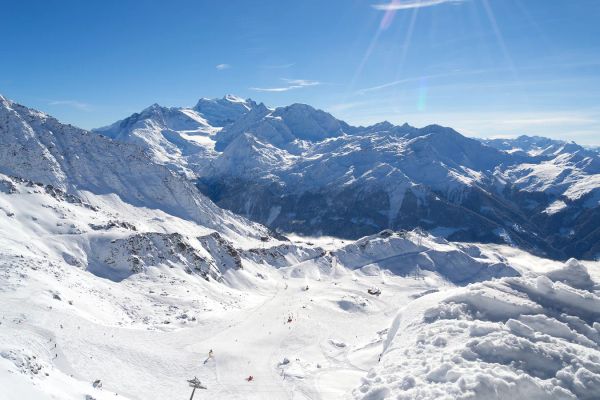
The Alps are about to swap mild, sunny October weather for something far more wintry. A cold front arrives Tuesday, and SnowStash forecasts have Monterosa Ski out in front with 64 cm over 14 days, ahead of Blatten Belalp (55 cm) and Verbier (43 cm). The snow line should fall below 2000 metres by Wednesday night, and glaciers across Switzerland, Italy and Austria are in line for the best of it. The wind will have a say too.
20 Oct 2026
Four Dead After Avalanche Near Ski Portillo in Chile
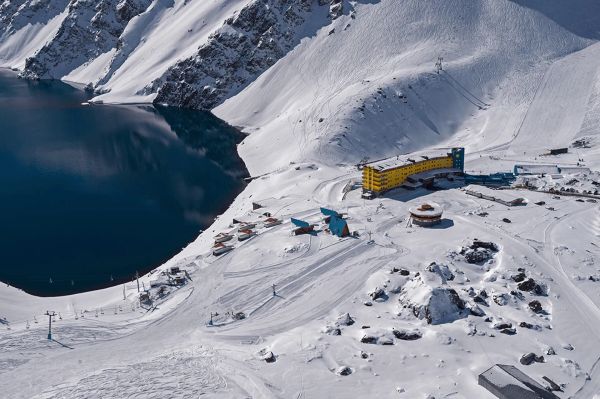
A large avalanche struck near Laguna del Inca adjacent to Ski Portillo on Saturday afternoon, killing four people and injuring four others. The group were day visitors mountaineering in the backcountry after reportedly being warned about elevated avalanche risk by resort staff.
18 Oct 2026

Europe Ski Resorts Open Now: What Is Skiable in Mid-October 2026
Europe’s ski season is open, technically. After a record-warm summer, glaciers in Austria, Switzerland and Italy are running a few pistes apiece, Sölden, Stubai and Kitzsteinhorn started late, Titlis has pushed back to 24 October, and Zermatt reopens a few lifts on 14 October after more than two months shut. Finland’s Levi and Ruka are skiing on stored snow. Here is what is open, and what you actually get at each.
14 Oct 2026

Zermatt Plans World Cup Downhill Return on the Gornergrat for 2028
Zermatt is having another crack at a World Cup downhill, and this time nobody has to cross a border. Around 13 million Swiss francs is going into rebuilding the Gornergrat piste, including a jump fed by a roughly 300-metre in-run across the roof of the Gornergrat Railway gallery, with the Matterhorn lined up behind it for the TV cameras. First men’s race is pencilled in for March 2028, pending FIS homologation.
14 Oct 2026

Mt. Rose Begins Snowmaking for the 2026-27 Season at Lake Tahoe
Lake Tahoe’s highest base elevation is paying off early: Mt. Rose has started making snow for 2026-27 after the first flurries and a cold snap. The Nevada resort is backing it with nearly US$2 million in upgrades, including a replacement snowmaking main line, a new PistenBully groomer and restraint bars on every lift. Opening day is yet to be confirmed, though Heavenly and Northstar are already eyeing 20 November.
13 Oct 2026

Utah Ski Resorts 2026-27: What’s New at Alta, Deer Valley, Powder Mountain and More
Utah is still building flat out. For 2026-27, Powder Mountain opens a steep new Skytrac chair into more than 1,000 acres of advanced terrain, Deer Valley adds 200 acres on Hail Peak, Sundance gets a new quad and Park City adds a gondola from its new parking structure. Snowmaking is expanding almost everywhere, Eagle Point stays closed after the Cottonwood Fire, and the 2034 Games are setting the pace. Here’s what’s new, resort by resort.
13 Oct 2026

Mt Hutt Invests NZ$12 Million in Base Area, Tripling Its Sun Deck
Mt Hutt is getting busier, and its base lodge is about to catch up. NZ$12 million goes into a heated sun deck roughly three times the current size (430 m² to 1,300 m²), plus a new toilet block, heated steps down to snow level, extra storage and a new food and beverage outlet. Building starts after the 2026 season, with everything due for winter 2027.
11 Oct 2026

Vermont Ski Resort Opening Dates 2026-27: Few Dates Set, Killington Waits on the Cold
Vermont's season is slow to take shape. Stratton is tentatively targeting 18 November and Sugarbush 21 November, while Pico has Friday 11 December on the calendar. Killington never sets a date and opens when the snowmaking allows, and Vail Resorts has yet to name days for Stowe, Okemo and Mount Snow. The forecasts disagree about snow, and the main El Niño worry for the Green Mountains is warmth.
9 Oct 2026