
Leysin
60km of pistes, 948m vertical, 72% beginner terrain. South-facing slopes in Canton Vaud with Magic Pass access.
Season 2026 - 2027
Opens
28 Nov 2026
Closes
11 Apr 2027
Days open
134
Annual snow
4m
The Overview
Michael Fulton
Melbourne-based skier and snowboarder with 50+ resorts across 5 continents. Specialises in Australian resorts and international resort comparisons.
Leysin operates from 1,250 to 2,198 metres across 60 kilometres of pistes and 948 metres of vertical drop in the Vaud Alps. The resort combines with Les Mosses and La Lécherette via shuttle bus to form a 100-kilometre ski area. Snowmaking covers a portion of the terrain, whilst the south-facing slopes deliver 1,900 hours of annual sunshine. Magic Pass holders access the full network without additional day tickets.
Beginner terrain dominates with 72 per cent of marked runs, leaving 25 per cent for intermediates and three per cent rated advanced. The ski area fans across two main sectors accessed from Leysin village: the Berneuse gondola serves wide upper slopes and tree-lined descents, whilst the Tête d'Aï chairlift opens terrain towards the 2,331-metre Tour d'Aï peak. Les Chaux and La Berneuse rank among the most frequented descents. Off-piste routes from La Berneuse at 2,048 metres attract experienced riders.
Leysin hosts several international boarding schools and maintains a youthful, diverse atmosphere on the mountain. The Kuklos revolving restaurant at 2,048 metres completes a 360-degree rotation in 90 minutes with views across Lake Geneva, Mont Blanc, the Matterhorn and the Eiger. Terrain parks traditionally featured half-pipes and jump lines, though conditions vary seasonally. The village sprawls across a sunny plateau at 1,260 metres above the Rhone Valley.
The Alpes Vaudoises regional pass extends access to Villars, Gryon, Les Diablerets and Glacier 3000, covering more than 225 kilometres of terrain within a 30-minute radius. The 2025-26 season runs from 7 December to 6 April. Leysin suits learners, families and intermediates seeking accessible Swiss skiing without the scale or price point of larger resorts. Limited expert pistes and moderate elevation require attention to snow forecasts in marginal conditions.
948m
Vertical
0
Runs
60 km
Piste
4m
Annual snow
The Terrain
0 runs across 60 km of piste
Leysin offers 60 kilometres of piste above the Rhône valley, dropping 948 metres from 2,198 metres to a village base at 1,250 metres. The terrain is gentle, at 72% beginner, 25% intermediate and 3% advanced, with no expert runs. One gondola, a six-seat chair, four quads and two double chairs carry the traffic, and the south-facing slopes soak up plenty of sun. It is a straightforward area to read, with few surprises for anyone arriving from a flatter ski background, and a handy base for learners who want views and space.
The area splits into the Berneuse and Tête d'Aï sectors, both reached from the village, and the Berneuse summit looks across the Rhône valley, with the revolving Kuklos restaurant a handy lunch stop. A shuttle bus connects to Les Mosses and La Lécherette, and the Alpes Vaudoises passes stretch the range further for those who buy them. Steep skiing is scarce, though some off-piste leaves the Berneuse ridge for experienced riders. Families, beginners and intermediates after relaxed cruising in the Vaud Alps will get the most from a stay.
Terrain split
0
runs
0 runs across 4 grades
Beginner0 runs · 72%
Intermediate0 runs · 25%
Advanced0 runs · 3%
Expert0 runs · 0%
Time it right
When to visit Leysin
The 2025-26 season operates from 7 December 2025 to 6 April 2026, spanning four months. Typical opening lands in early December, with closures extending into mid-April depending on snow cover. Historical records show opening dates as early as late November in strong snow years. Late and early season quality suffers due to the 1,250-metre base elevation and south-facing exposure.
Annual snowfall averages 4.3 metres, with week two of December historically the snowiest period, delivering 40 centimetres across 3.4 snowy days. February provides the deepest mid-season base, averaging 145 centimetres at summit elevation and 40 centimetres at the base. Snowmaking equipment covers five kilometres of priority runs with 68 snow cannons, focusing on lower slopes and high-traffic zones. Natural accumulation remains the primary source, with elevation and aspect influencing reliability.
January through March offer the most consistent conditions, with February delivering peak depth and cold temperatures. December suits early-season visitors willing to accept limited terrain, whilst March combines longer daylight and spring snow with the resort's famed sunshine. Weekday skiing avoids the school groups and weekend crowds that frequent Leysin due to its proximity to international schools. Midweek visits in January and February provide the best balance of snow quality and empty pistes.
Night skiing operates on floodlit slopes near the village, with tobogganing open from 10:00 to 20:00. The Giant X Tour snowboard and ski event finals traditionally occur at Leysin. Terrain park features remain condition-dependent, with recent seasons seeing closures in January. Cross-country trails extend 10 kilometres within the immediate area, with 39 kilometres across the broader region. The resort officially holds Swiss Tourism Federation family-friendly certification since 2001.
Season 2026 - 2027
28 Nov 2026
Opens
11 Apr 2027
Closes
134
Days open
4 m
Annual snow
Getting there
Getting to Leysin, and where to stay
Leysin sits in the Aigle district of Canton Vaud at 1,260 metres on a south-facing plateau above the Rhone Valley. The village occupies a natural terrace beneath the Tour d'Aï massif at 2,331 metres, with views extending across Lake Geneva to the Dents du Midi, Mont Blanc and the Bernese Alps. The Grande-Eau river runs through the valley below. Leysin forms part of the Vaud Alps in western Switzerland, positioned at the eastern end of Lac Léman.
Aigle lies 14 kilometres downhill in the Rhone Valley, serving as the primary rail hub and connecting point for regional trains. Montreux sits 20 kilometres west along the lake shore, nine minutes by train from Aigle. Lausanne is 45 kilometres northwest, whilst Geneva sits 97 kilometres west. The resort village itself spreads across three kilometres of mountainside with hamlets at Veyges, Feydey, Aï and Mayen. Several international schools and former sanatorium buildings occupy the lower slopes.
Road access follows the cantonal route from Aigle via Le Sépey, climbing through switchbacks to Leysin village. From Geneva, the A1 and A9 motorways connect via exit 17 at Aigle, with total drive time of 90 minutes covering 97 kilometres. Bern lies 120 minutes northeast via the A12 to Lausanne, then A9 towards Montreux. The route passes vineyards in the Chablais wine region and Aigle Castle. Parking concentrates near lift bases.
Geneva Airport is 122 kilometres west with transfers averaging 90 minutes by road or two hours 18 minutes by train via Aigle. Bern Airport sits two hours away, Zurich 150 minutes. Direct Swiss Federal Railway trains from Geneva to Aigle depart hourly, taking 80 minutes. The Aigle-Leysin cog railway climbs to the resort in 27 minutes, stopping at Leysin Village, Versmont and Leysin-Feydey stations. Trains run hourly at 56 minutes past. Free shuttle buses 170 and 171 link stations to gondola terminals.
Where to stay
Search all stays →Hotels and lodges near Leysin, powered by Stay22.
Latest News
From the SnowStash desk

Vermont Ski Resort Opening Dates 2026-27: Few Dates Set, Killington Waits on the Cold
Vermont's season is slow to take shape. Stratton is tentatively targeting 18 November and Sugarbush 21 November, while Pico has Friday 11 December on the calendar. Killington never sets a date and opens when the snowmaking allows, and Vail Resorts has yet to name days for Stowe, Okemo and Mount Snow. The forecasts disagree about snow, and the main El Niño worry for the Green Mountains is warmth.
9 Oct 2026
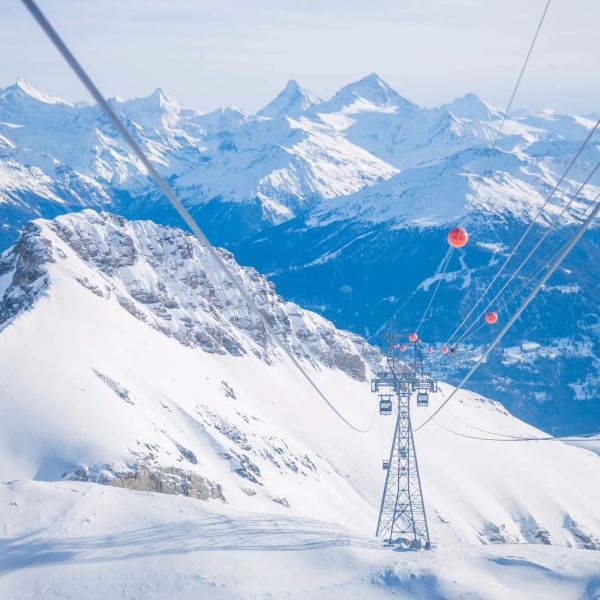
Crans-Montana 2027 World Championships President Resigns Ahead of Fraud Hearing
Less than four months out from the Crans-Montana 2027 World Championships, the man running the organising committee has stepped down. Claude-Alain Schmidhalter resigned as Swiss-Ski vice president and OC president after being indicted over a business dispute unrelated to skiing. He denies the allegations and faces court on October 27. Interim leaders are in place for the February 1-14 event.
9 Oct 2026
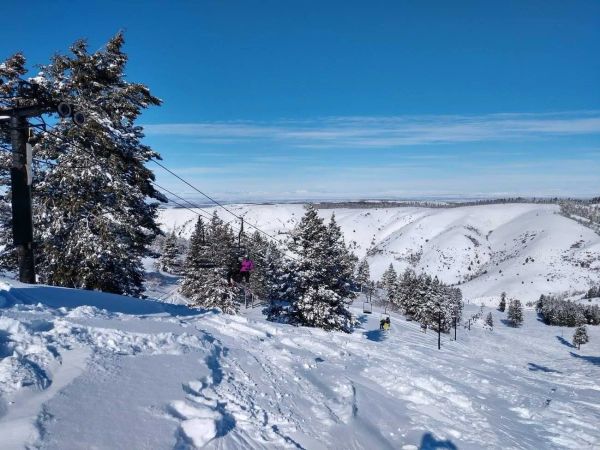
Kelly Canyon, Idaho, Adds Snowmaking, a Bigger Terrain Park and More Parking for 2026-27
Kelly Canyon had a rough 2025-26, and the Idaho resort has spent the summer making sure it doesn’t repeat. Snowmaking now reaches the top of Goldrush, the terrain park is doubling in size with a stereo system, lights and a snack shack, and the car park is getting bigger. Grooming is stepping up too. Target opening is December 4, conditions permitting.
9 Oct 2026
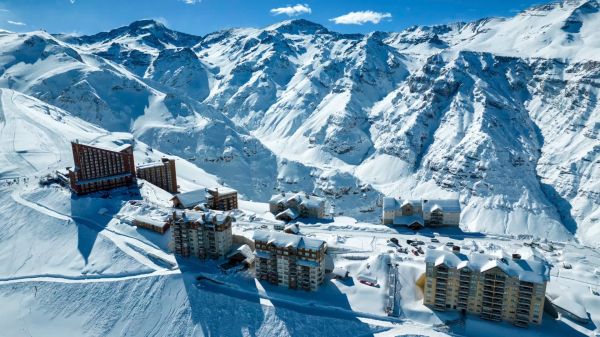
Valle Nevado Extends Season to November 8 After 108 cm in 48 Hours
Winter was meant to be winding down in Chile. Then Valle Nevado took 108 cm in 48 hours in early October, and the resort has pushed its closing date out to November 8 - its latest in 38 years of operation. That makes 143 days of skiing since opening day on June 19, with 690 cm banked for the season. Only part of the mountain is running while the storm settles, so check the mountain report before you plan a trip.
9 Oct 2026
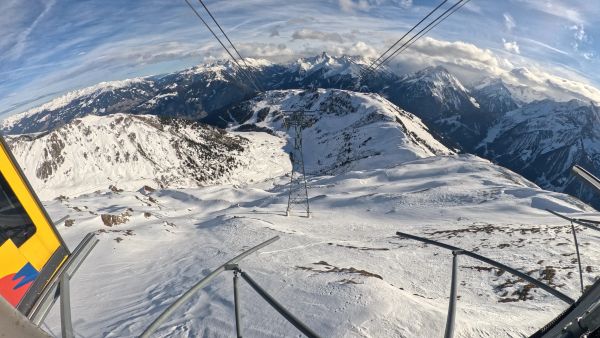
Alps Snow Forecast: Cold Front Brings Thursday Snow to the High Alps
The Alps look a lot more like winter today, for a day or so. A cold front is moving west to east, dropping up to 35 cm on high glaciers and peaks, with snow levels falling to around 1,500-1,800 m at times. Don’t plan a trip around it: mid-elevation snow will be thin and wet, every area is closed bar a limited Sölden glacier opening tomorrow, and warmer weather returns by Monday.
8 Oct 2026
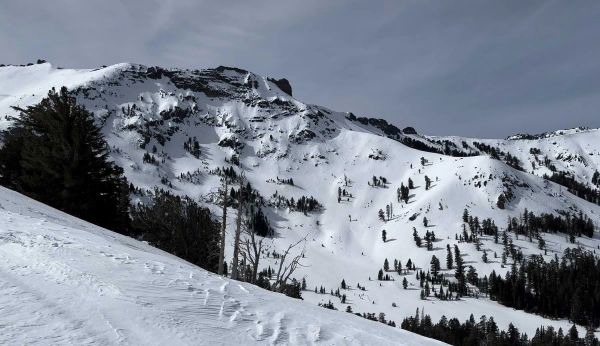
California Ski Resort Opening Dates 2026-27: Mammoth Leads, Tahoe Follows
Mammoth Mountain is first up in California, targeting Friday 13 November after a dusting of September snow. Heavenly and Northstar follow on 20 November, Palisades Tahoe on Wednesday 25 November and Sugar Bowl on 27 November, with Kirkwood on 4 December and June Mountain on 19 December. Plenty of smaller areas have no date yet. A super El Niño favours the Sierra, but a warmer storm track is the catch.
7 Oct 2026
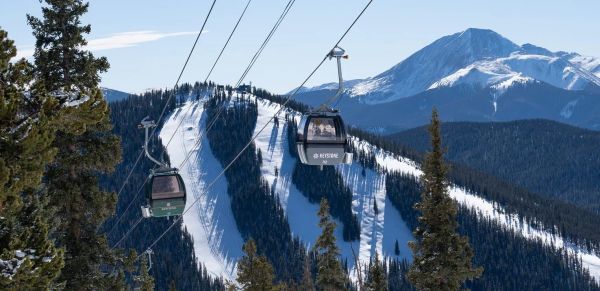
Colorado Ski Resort Opening Dates 2026-27: A-Basin and Keystone Race to Be First
Arapahoe Basin, Keystone and Winter Park are all chasing an October start, though none has a firm date yet. The first dated openers are Breckenridge and Copper on Friday 6 November, then Vail on 13 November, with most of the rest bunched around US Thanksgiving. Hesperus did not open at all last season. A super El Niño offers hope but no guarantee, and forecasters say the southern mountains have the better odds.
5 Oct 2026
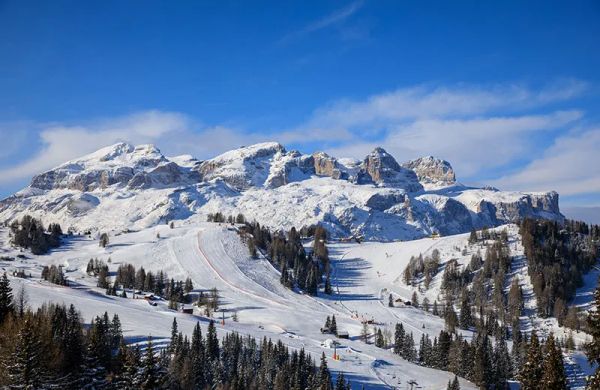
Dolomiti Superski 2026-27: Four New Gondolas, New Reservoirs and an €89 Peak Day Pass
Dolomiti Superski is spending around €100 million across its 12 areas before winter. Kronplatz gets a new 10-passenger gondola with a middle station, 3 Zinnen gets Helmissimo, and Val di Fassa swaps a chairlift for a gondola above Col Valvacin. New water-storage basins and upgraded snowmaking follow, and construction has started on the San Martino to Passo Rolle link. A peak adult day pass is €89.
4 Oct 2026
Leysin Webcams
3 live angles across the mountain. Tap any camera to go full-screen.
About Leysin's live webcams
Check live conditions across Leysin with 3 real-time webcams showing snow, weather, and lift operations, updated every 10 minutes. Check high-elevation cams for powder visibility and base-area cams for crowd levels before you head up.
Camera guide
- La Berneuse - Kuklos2048m
- This Leysin webcam sits at the Kuklos restaurant at 2,048 metres on La Berneuse, capturing a full 360-degree panorama across the Vaud Alps - from Lake Geneva to Mont Blanc and the Dents du Midi. Use this Leysin live cam to assess visibility and snow coverage across the upper mountain before committing to a day on the slopes. Essential for planning at this south-facing resort, the live snow cam view reveals whether the high-altitude terrain above Leysin village is holding firm winter conditions.
- Snowpark - LeysinPark1909m
- The Leysin snowpark webcam monitors LeysinPark at 1,909 metres, giving freestyle riders a live look at jump lines, rails, and step-ups before heading out. This Leysin live cam updates regularly so you can check current snow conditions and whether features are in shape across the terrain park. A useful snowcam for planning your session at one of the Vaud Alps' most active freestyle venues, set against the dramatic backdrop of the Tour d'Aï massif.
- Tobogganing Park1300m
- This Leysin web cam covers the Tobogganing Park at 1,300 metres in the village zone, showing live conditions on Leysin's popular snow tubing and tobogganing runs. Check this Leysin live cam to gauge activity levels and snow quality on the park's dedicated runs before bringing the family down. A practical live snow cam for non-skiers and families - the park operates until 20:00 and is one of the resort's signature après-ski attractions in the Alpes Vaudoises.
Leysin snow cams FAQ
How often do Leysin snow cams update?
All Leysin snow cams and webcams update every 10 minutes with fresh images showing current mountain conditions. This frequent update schedule ensures you have access to near real-time conditions for planning your ski day at Leysin.
Which Leysin webcam shows the best powder conditions?
The high-elevation La Berneuse - Kuklos webcam at 2,048m provides the clearest view of powder conditions and snowfall. These Leysin webcams capture fresh snow accumulation and visibility better than base area cameras.
Can I see Leysin lift queues on the webcams?
Yes. Multiple Leysin snow cams specifically show lift queue areas and chairlift operations, helping you time your arrival and avoid peak queue periods.
When is the best time to check Leysin snow cams?
Check Leysin webcams early morning (7-8am) for overnight snowfall assessment, and mid-afternoon for current crowd levels and weather. The live cams are most useful after storm events to assess fresh powder.
How can I check current conditions before buying Leysin lift tickets?
Use our Leysin webcams alongside the live snow report to assess conditions before purchasing lift tickets. The webcams show real-time visibility, snow quality, and operational status.
Do Leysin webcams work on mobile devices?
Yes. All Leysin snow cams and webcams are optimized for mobile viewing, so you can check live conditions from anywhere using your phone or tablet.
More Leysin intelligence: snow report, lift tickets, trail map, resort overview.