
Pizol Bad Ragaz
43.1km of piste from 509-2,250m. Two gondola bases 5min from motorway. Night skiing Fridays. Eastern Switzerland.
Season 2026 - 2027
Opens
20 Nov 2026
Closes
4 Apr 2027
Days open
135
Annual snow
4m
The Overview
Michael Fulton
Melbourne-based skier and snowboarder with 50+ resorts across 5 continents. Specialises in Australian resorts and international resort comparisons.
Pizol spans 1,741 vertical metres from 509 to 2,250 metres across the Heidiland region of eastern Switzerland, with 43.1 kilometres of marked piste served by 13 lifts. The terrain splits 43 per cent beginner, 43 per cent intermediate and 14 per cent advanced, with 6.4 kilometres of ski routes adding off-piste options. The Snowmaking 4.0 system equipped with 111 snow cannons covers 40 per cent of the ski area, ensuring reliable coverage on all main and connecting runs from December through April. The 2,844-metre Pizol massif rises above the ski area, providing views across the Eastern Swiss and Vorarlberg Alps to Lake Constance.
Two eight-person gondolas access the mountain from separate valley bases at Bad Ragaz and Wangs, each five minutes from motorway exits on the A13 and A3 respectively. The ski area sits predominantly above 1,400 metres, with beginner zones at Pardiel (1,633 metres on the Bad Ragaz side) and Furt (1,521 metres from Wangs). The descent from Pizolhütte at 2,227 metres to Wangs valley station covers 1,700 vertical metres, ranking amongst the longest continuous runs in eastern Switzerland. Wide blue runs circle Pardiel whilst red and black runs traverse the Pizol high plateau between Laufböden and Pizolhütte.
The Riderpark Pizol offers varied terrain park features alongside a funslope, speed measurement track and race course with timing. Night skiing operates Friday evenings on 3.5 kilometres of floodlit terrain from Furt to Maienberg, with Saturday evening gondola operations from Bad Ragaz including mountain restaurant dining programmes. The Kinderland at Pardiel features practice lifts and Heidi-themed runs, whilst the 3.5-kilometre toboggan run from Furt to Maienberg provides non-skiing options. Bad Ragaz's thermal spa facilities in the valley complement the on-mountain experience.
The resort operates independently without major pass affiliations, running from early December to early April each season. Proximity to Zurich (60 minutes) and St. Gallen (60 minutes) positions Pizol as accessible day-trip terrain. The manageable 50-kilometre ski area suits families, intermediates seeking varied cruising terrain and locals wanting consistent snow conditions above frequent valley fog. February delivers peak snowfall whilst March offers the sunniest conditions, averaging 72 sunny days per season across the resort's cloud-breaking elevation.
1741m
Vertical
0
Runs
43.1 km
Piste
4m
Annual snow
The Terrain
0 runs across 43.1 km of piste
Pizol Bad Ragaz packs 1,741 vertical metres into a modest footprint, running from 509 metres in the Rhine valley up to 2,250 metres on the high plateau. The 43.1 kilometres of piste divide evenly between beginner and intermediate at 43% each, with the remaining 14% graded advanced and nothing rated expert. Two eight-seat chairs, a six-seater, three quads and two gondolas do most of the work, backed by four T-bars and a surface lift. It is a gentle, family-friendly mountain where the vertical is far bigger than the piste length would suggest.
The standout is the descent from Pizolhütte down to Wangs, which covers about 1,700 vertical metres and ranks among the longest continuous runs in eastern Switzerland when snow reaches the valley. Gondolas leave from both Bad Ragaz and Wangs, so you can choose your approach. Wide blues circle the beginner zone at Pardiel, while the reds and blacks traverse the high plateau between Laufböden and Pizolhütte. Pizol suits learners, families and cruisers wanting a big day of mileage above the valley fog, with enough steeper pitches to keep confident intermediates interested.
Terrain split
0
runs
0 runs across 4 grades
Beginner0 runs · 43%
Intermediate0 runs · 43%
Advanced0 runs · 14%
Expert0 runs · 0%
Time it right
When to visit Pizol Bad Ragaz
The 2025/26 season runs from 7 December 2025 to 6 April 2026, with partial weekend operations from Wangs starting 22-23 November 2025 when early snowfall permits. Full daily operations across all lifts commence 13 December 2025, continuing through Easter Monday 2026. The season typically spans 17 weeks, with operating hours from 08:15 to 16:45 for gondolas and marginally earlier closures for chairlifts. This positions Pizol amongst moderate-length Swiss seasons, dependent on spring snow retention at mid-mountain elevations.
Average annual snowfall reaches 4.3 metres, with the snowiest period occurring during week two of January when an average 33 centimetres falls across 2.8 snowy days. February ranks as the snowiest month overall, whilst the resort's elevation to 2,250 metres captures consistent natural accumulation. The Snowmaking 4.0 system equipped with 111 cannons supplements natural snow across 40 per cent of terrain, guaranteeing coverage on primary descents and connections even during lean cycles. High-elevation terrain between Pardiel and Gaffia (above 1,600 metres) holds natural snow from November through April.
January through March delivers the most consistent conditions, with the resort frequently operating above valley cloud inversions that blanket the St. Gallen Rhine Valley below 1,000 metres. March averages 20 sunny days, ranking Pizol amongst the three sunniest resorts in eastern Switzerland. Weekday skiing offers quieter slopes compared to Zurich-proximity resorts, whilst Christmas, New Year and February half-term bring peak visitor numbers. December and early April suit skiers prioritising value over guaranteed coverage, though main runs remain operational through shoulder periods.
Friday night skiing from Furt to Maienberg operates from late December through early March, with 3.5 kilometres illuminated from 18:00 to 22:30 via the Wangs gondola. Saturday evening operations run the Bad Ragaz gondola to Pardiel with similar hours, featuring dining programmes and fondue gondola experiences. The resort hosts no major competitive events but maintains public race tracks with electronic timing. Cross-country skiing spans 27 kilometres of trails including the four-kilometre Christa Jäger high-elevation route between Laufböden and Pizolhütte at 2,227 metres.
Season 2026 - 2027
20 Nov 2026
Opens
4 Apr 2027
Closes
135
Days open
4 m
Annual snow
Getting there
Getting to Pizol Bad Ragaz, and where to stay
Pizol occupies the northeastern slopes of the 2,844-metre Pizol massif in the Heidiland region of eastern Switzerland, bridging the municipalities of Bad Ragaz (elevation 509 metres) and Wangs in the St. Gallen Rhine Valley. The ski area sits at the confluence of three valleys - Taminatal, Weisstannental and Calfeisental - with base stations positioned 100 kilometres southeast of Zurich. The historic spa town of Bad Ragaz anchors the southern access whilst Wangs provides the primary northern entry, both villages serving as functional bases rather than alpine resort centres. Sargans lies three kilometres from Wangs, offering additional accommodation and services.
Bad Ragaz developed as a thermal spa destination with the Tamina Therme complex predating ski tourism, creating a wellness-focused valley atmosphere distinct from purpose-built ski stations. Wangs and neighbouring Vilters, Valens and Pfäfers form a distributed settlement pattern in Sarganserland. The area inspired Johanna Spyri's Heidi novels, with the Bündner Herrschaft wine region extending south towards Maienfeld. Cultural heritage centres on spa traditions and pastoral Alpine farming rather than ski resort architecture, maintaining authentic village character across the operational area.
Motorway A13 (St. Margrethen-Bellinzona) serves Bad Ragaz via the Bad Ragaz Nord exit, two kilometres and four minutes from the gondola base station. The A3 (Zurich-Sarganserland) reaches Wangs through the Sargans exit, similarly two kilometres distant. Zurich lies 104 kilometres northwest (75 minutes), St. Gallen 60 minutes northeast and Lake Constance 45 minutes north. Parking costs six francs daily at both valley stations (45 minutes free), with over 700 spaces in Bad Ragaz and 500 in Wangs plus 350 overflow positions served by free shuttle buses.
Zurich Airport (ZRH) sits 104 kilometres away with 77-minute transfer times, whilst Friedrichshafen Airport (FDH) in Germany lies 103 kilometres distant (78 minutes). Bad Ragaz railway station on the Zurich-Chur main line offers hourly connections, with postbus line 456 running half-hourly to the gondola base (included in lift tickets during winter). Sargans station serves Wangs via bus routes 429 and 430, operating four times hourly on weekdays. The main Wangs base sits directly along the Zurich-Chur railway corridor, enabling car-free access. SBB general abonnement holders receive 50 per cent discounts on single gondola journeys year-round.
Where to stay
Search all stays →Hotels and lodges near Pizol Bad Ragaz, powered by Stay22.
Latest News
From the SnowStash desk
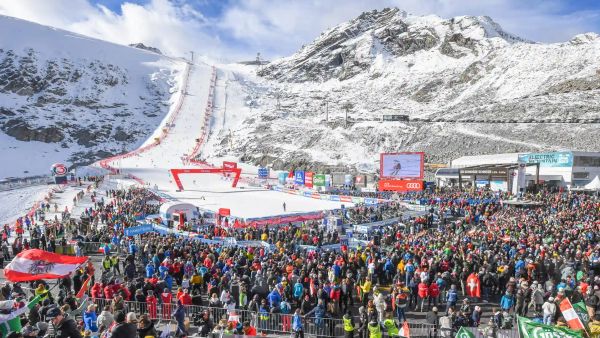
Pinheiro Braathen Wins Sölden Giant Slalom Opener by 0.48 Seconds
Two days at Sölden, two races decided by a hundredth somewhere on the podium, and one very quick Brazilian. Lucas Pinheiro Braathen led from the first run to win the men’s World Cup opener by 0.48 seconds, with Loïc Meillard second and Marco Odermatt third. River Radamus charged from 15th to fourth on a rutted course, and Britain’s Freddy Carrick-Smith banked his first World Cup points. Braathen still hasn’t lost a giant slalom since Olympic gold.
25 Oct 2026
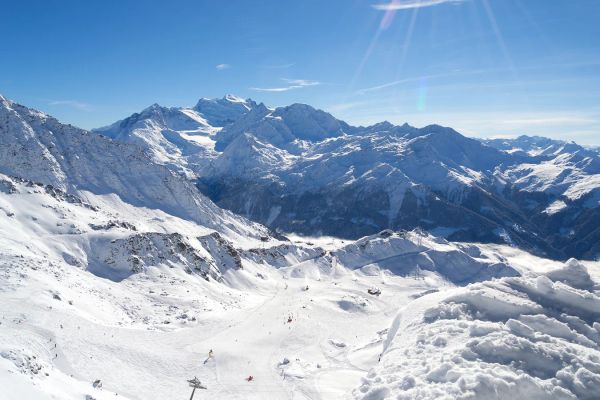
Alps Snow Forecast: Up to 64 cm Headed for the High Glaciers as the Snow Line Drops
The Alps are about to swap mild, sunny October weather for something far more wintry. A cold front arrives Tuesday, and SnowStash forecasts have Monterosa Ski out in front with 64 cm over 14 days, ahead of Blatten Belalp (55 cm) and Verbier (43 cm). The snow line should fall below 2000 metres by Wednesday night, and glaciers across Switzerland, Italy and Austria are in line for the best of it. The wind will have a say too.
20 Oct 2026
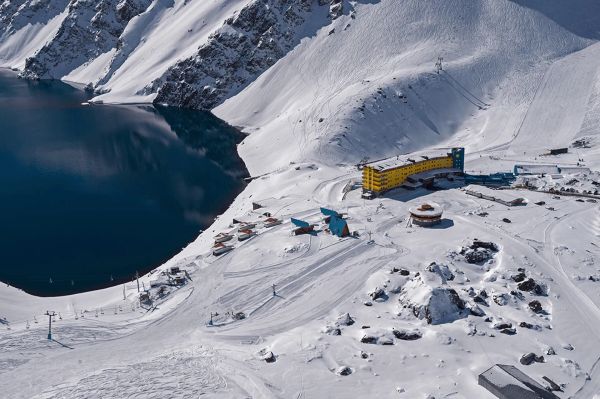
Four Dead After Avalanche Near Ski Portillo in Chile
A large avalanche struck near Laguna del Inca adjacent to Ski Portillo on Saturday afternoon, killing four people and injuring four others. The group were day visitors mountaineering in the backcountry after reportedly being warned about elevated avalanche risk by resort staff.
18 Oct 2026
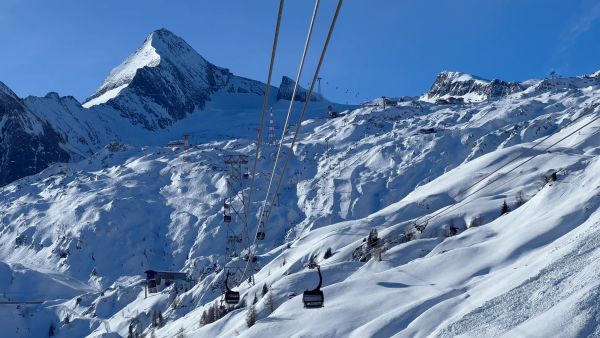
Europe Ski Resorts Open Now: What Is Skiable in Mid-October 2026
Europe’s ski season is open, technically. After a record-warm summer, glaciers in Austria, Switzerland and Italy are running a few pistes apiece, Sölden, Stubai and Kitzsteinhorn started late, Titlis has pushed back to 24 October, and Zermatt reopens a few lifts on 14 October after more than two months shut. Finland’s Levi and Ruka are skiing on stored snow. Here is what is open, and what you actually get at each.
14 Oct 2026
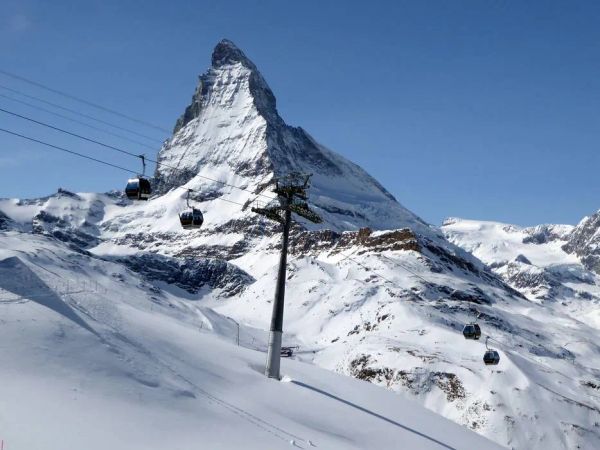
Zermatt Plans World Cup Downhill Return on the Gornergrat for 2028
Zermatt is having another crack at a World Cup downhill, and this time nobody has to cross a border. Around 13 million Swiss francs is going into rebuilding the Gornergrat piste, including a jump fed by a roughly 300-metre in-run across the roof of the Gornergrat Railway gallery, with the Matterhorn lined up behind it for the TV cameras. First men’s race is pencilled in for March 2028, pending FIS homologation.
14 Oct 2026
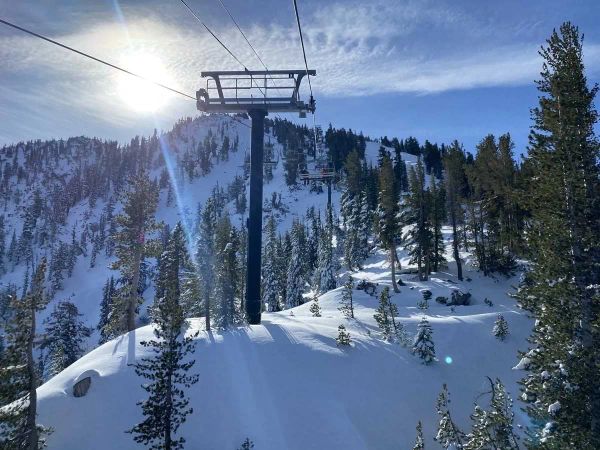
Mt. Rose Begins Snowmaking for the 2026-27 Season at Lake Tahoe
Lake Tahoe’s highest base elevation is paying off early: Mt. Rose has started making snow for 2026-27 after the first flurries and a cold snap. The Nevada resort is backing it with nearly US$2 million in upgrades, including a replacement snowmaking main line, a new PistenBully groomer and restraint bars on every lift. Opening day is yet to be confirmed, though Heavenly and Northstar are already eyeing 20 November.
13 Oct 2026
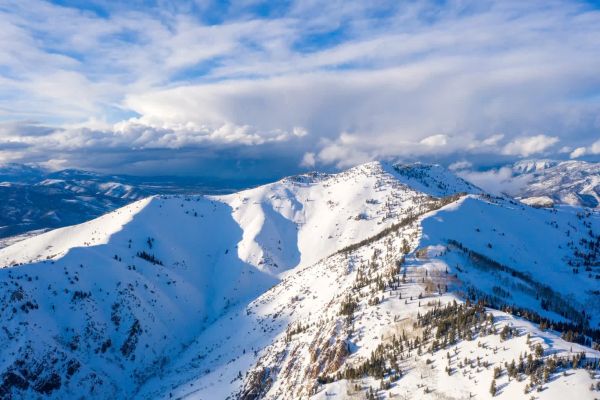
Utah Ski Resorts 2026-27: What’s New at Alta, Deer Valley, Powder Mountain and More
Utah is still building flat out. For 2026-27, Powder Mountain opens a steep new Skytrac chair into more than 1,000 acres of advanced terrain, Deer Valley adds 200 acres on Hail Peak, Sundance gets a new quad and Park City adds a gondola from its new parking structure. Snowmaking is expanding almost everywhere, Eagle Point stays closed after the Cottonwood Fire, and the 2034 Games are setting the pace. Here’s what’s new, resort by resort.
13 Oct 2026
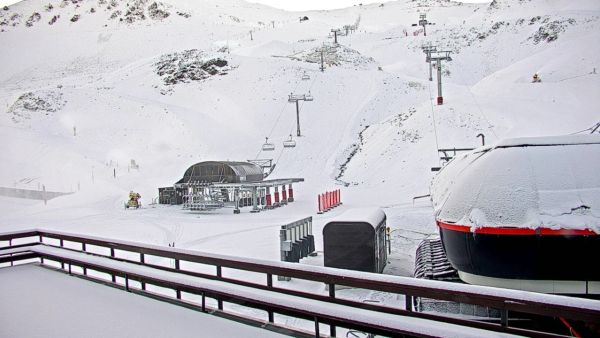
Mt Hutt Invests NZ$12 Million in Base Area, Tripling Its Sun Deck
Mt Hutt is getting busier, and its base lodge is about to catch up. NZ$12 million goes into a heated sun deck roughly three times the current size (430 m² to 1,300 m²), plus a new toilet block, heated steps down to snow level, extra storage and a new food and beverage outlet. Building starts after the 2026 season, with everything due for winter 2027.
11 Oct 2026
Pizol Bad Ragaz Lift Tickets
Pizol Bad Ragaz lift tickets & passes
Opening day for the winter 2026 - 2027 season is scheduled for Nov 20, 2026 (subject to change). Lift tickets at Pizol Bad Ragaz typically go on sale well before the start of the ski season.
Lift tickets FAQ
How much does a Pizol Bad Ragaz day pass cost?
Pizol Bad Ragaz day pass pricing varies by date and advance booking - see the full breakdown in the tickets panel.
Can I buy Pizol Bad Ragaz lift tickets online?
Yes, you can purchase tickets online or at the resort ticket office.
Are there discounts for multi-day passes?
Yes, multi-day packages typically offer significant savings compared to individual day passes. The per-day cost decreases with longer stays.
What is included with a Pizol Bad Ragaz lift ticket?
Full access to all lifts and trails at Pizol Bad Ragaz, including mountain safety and patrol services.
What is the difference between Pizol Bad Ragaz lift tickets and ski passes?
"Lift tickets" and "ski passes" refer to the same thing at Pizol Bad Ragaz - your access to the mountain's lifts and trails for your chosen duration.
When should I buy Pizol Bad Ragaz lift tickets for the best price?
Purchase tickets at least 7 days in advance for the best rates, and consider weekday visits for further savings over weekend rates.
Does Pizol Bad Ragaz offer group discounts on lift tickets?
Group discounts are typically available for parties of 10 or more. Contact Pizol Bad Ragaz directly for group booking information and rates.
How can I check current conditions before buying tickets?
Before purchasing, check the live snow report and mountain webcams to see current weather, snow conditions, and lift operations at Pizol Bad Ragaz.
More Pizol Bad Ragaz intelligence: snow report, webcams, resort overview.