
Gala Yuzawa
Gala Yuzawa: 16 runs, 823m vertical, 75 mins from Tokyo by bullet train. Japan's only resort with dedicated shinkansen station.
Season 2026 - 2027
Opens
19 Dec 2026
Closes
5 May 2027
Days open
137
Annual snow
8m
The Overview
Michael Fulton
Melbourne-based skier and snowboarder with 50+ resorts across 5 continents. Specialises in Australian resorts and international resort comparisons.
Gala Yuzawa spreads across 823 metres of vertical drop between 358 and 1,181 metres elevation, offering 16 runs across 173 acres of terrain. The resort divides terrain into 35 per cent beginner, 45 per cent intermediate, and 20 per cent advanced runs, with the steepest pitch reaching 33 degrees on the 2.6 Million Dollar course. Annual snowfall averages 8 metres, and the resort's mid-elevation position in Niigata's heavy snowfall zone delivers reliable coverage from December through early May. Operated by JR East since opening in 1990, the resort maintains the distinction of being the only ski area in the world with a dedicated shinkansen station at its base.
The mountain divides into three sectors radiating from the gondola summit station and Cheers rest house. Central Area features wide beginner runs including Swan and Roman Holiday, alongside intermediate terrain on Broadway and off-piste options in the snow park. Northern Area delivers four runs including advanced off-piste courses 2.6 Million Dollar and Bronco, plus Eliza for free running. Southern Area houses the Snow Enjoyment Park with covered snow escalator for sledding, whilst Falcon run descends 2,500 metres back to the ski centre with views across Yuzawa town.
The base ski centre connects directly to Gala Yuzawa Station's ticket gates, housing rental facilities, locker rooms, ticket counters, and Spa Gala-no-yu with hot spring baths and outdoor jacuzzi. Weekends and holidays draw heavy crowds from Tokyo, creating substantial gondola queues during morning arrivals and lunch periods. Midweek visits offer quieter slopes and faster lift access. The resort includes English and Chinese-speaking staff across most facilities, catering to the significant international day-tripper demographic.
Gala Yuzawa anchors the Yuzawa Snow Link interconnect system, linking via chairlift to Ishiuchi Maruyama's northern boundary and ropeway to Yuzawa Kogen from the southern sector. The three-mountain pass adds access to 30 total lifts for 3,000 yen beyond single-resort tickets during connection periods from late December through March. The 2025-2026 season runs 20 December through 6 May. The resort suits day-trippers prioritising convenience, families seeking comprehensive facilities, and beginners to intermediate skiers wanting groomed, predictable terrain within easy reach of Tokyo.
823m
Vertical
16
Runs
173 acres
Skiable
8m
Annual snow
The Terrain
16 runs across 173 acres skiable
Gala Yuzawa is a Niigata ski area built around its own Shinkansen station, so it works as a short day trip from Tokyo. The 70-hectare mountain drops 823 metres, from a 358-metre base to 1,181 metres, across 16 runs. Sanity grades them 35% beginner, 45% intermediate and 20% advanced, with no expert-rated terrain. Roughly 8 metres of snow arrives each season. The gondola and an aerial tram move skiers up to the three areas, and the intermediate share means most visitors will find a comfortable range of long, flowing cruisers.
The Central Area holds the wide beginner slopes, the Northern Area has Broadway and its intermediate runs, and the Southern Area is where the ungroomed courses 2.6 Million Dollar and Bronco sit. Bronco reaches about 30 degrees at its steepest and stays soft after a storm. Eliza is the run to try for moguls. Gala Yuzawa also links through the Yuzawa Snow Link to Ishiuchi Maruyama and Yuzawa Kogen, which widens the options on a multi-day stay. It suits intermediates, groups of mixed ability and anyone short on time. Experts will find the steep terrain limited.
Terrain split
16
runs
16 runs across 4 grades
Beginner6 runs · 35%
Intermediate7 runs · 45%
Advanced3 runs · 20%
Expert0 runs · 0%
Time it right
When to visit Gala Yuzawa
The 2025-2026 season operates from 20 December 2025 through 6 May 2026, spanning nearly five months of skiing. This extended window exceeds most Honshu resorts, capitalising on Gala Yuzawa's elevation range and Niigata's prolonged snowfall season. Slopes typically open at 8:00am and close at 4:30pm through early April, shifting to 4:00pm closures during the spring period from 7 April onward. The ski centre building maintains longer hours from 7:00am to 7:15pm through March, accommodating early shinkansen arrivals and late departures.
Annual snowfall averages 8 metres across the elevation range, with Niigata Prefecture's position along the Sea of Japan generating consistent northwest storm systems throughout winter. January and February deliver peak accumulation, with the first week of January historically recording 66 centimetres in a typical week. Base depth reliability benefits from the resort's mid-elevation position between 800 and 1,181 metres, though lower slopes occasionally require snowmaking support during marginal early-season conditions. The region's heavy, moisture-laden snow differs from Hokkaido's drier powder, packing well for grooming but offering excellent off-piste riding after fresh dumps.
Prime powder conditions run January through early March, when storm frequency peaks and temperatures stay cold enough to preserve snow quality. Late December through New Year attracts maximum crowds with corresponding lift queues and tracked-out snow. Spring skiing from April onward offers corn snow conditions, softer temperatures, and reduced visitor numbers, though southern sector operations become weather-dependent. Tuesdays and Wednesdays deliver the quietest slopes based on visitor patterns, whilst Saturdays and Sundays see gondola wait times exceeding 30 minutes during morning arrivals.
The resort does not operate night skiing, unlike neighbouring Ishiuchi Maruyama which lights slopes until 9:00pm on select dates. Seasonal programming remains limited compared to larger destination resorts, focusing primarily on day-visit efficiency rather than events calendars. Winter fireworks displays occur periodically across various Yuzawa-area resorts, though not consistently at Gala itself. The season-long operation window and reliable transport access make timing flexible for visitors, though avoiding weekends and holidays dramatically improves the on-mountain experience.
Season 2026 - 2027
19 Dec 2026
Opens
5 May 2027
Closes
137
Days open
8 m
Annual snow
Getting there
Getting to Gala Yuzawa, and where to stay
Gala Yuzawa sits in Yuzawa town within Minamiuonuma District, Niigata Prefecture, approximately 200 kilometres northwest of Tokyo in the Chubu region of Honshu. The resort occupies the mountain slopes directly above its namesake station at 358 metres base elevation, rising to 1,181 metres summit within the Japan Alps' eastern ranges. Yuzawa town spreads through a valley corridor between mountain ranges, historically famous as the setting for Yasunari Kawabata's Nobel Prize-winning novel Yukiguni (Snow Country), celebrating the region's exceptional winter snowfall.
Echigo-Yuzawa Station serves as the main town centre 3.4 kilometres from Gala's base, housing onsen facilities, the Ponshukan sake museum with 100-plus Niigata sake varieties, and accommodation options. The town has supported winter tourism for decades, with 10 ski resorts operating within the broader Yuzawa area including Naeba, Kagura, and Joetsu Kokusai. Free shuttle buses connect Echigo-Yuzawa Station to Gala Yuzawa in under 5 minutes for visitors arriving on Toki shinkansen services that bypass Gala's seasonal station. The surrounding valley retains traditional onsen town character, contrasting with the purpose-built efficiency of Gala's ski centre complex.
Road access follows Route 17 from Tokyo via the Kan-Etsu Expressway, exiting at Yuzawa Interchange just 5 kilometres from the resort. Drive time from Tokyo typically requires 3 to 3.5 hours covering 240 kilometres, though winter conditions and weekend traffic extend journey times. The expressway crosses mountain passes subject to chain restrictions and occasional closures during heavy snowfall. Parking at Gala accommodates day visitors, though spaces fill quickly on peak weekends. Most visitors bypass road travel entirely, capitalising on the shinkansen's weather-independent reliability.
Tokyo's Narita Airport lies 240 kilometres southeast, requiring 2.5 hours via Narita Express to Tokyo Station then Joetsu Shinkansen to Gala Yuzawa. Haneda Airport sits closer at 210 kilometres, cutting 30 minutes from the journey. Niigata Airport operates 150 kilometres north with bus connections to Niigata Station, then 45-minute shinkansen service to Echigo-Yuzawa. The Joetsu Shinkansen Tanigawa service departs Tokyo Station hourly, reaching Gala Yuzawa Station in 75 to 80 minutes. JR East sells integrated Ski & Shinkansen packages bundling round-trip rail and lift passes at discounted rates, optimising the resort's unique station-to-slope model for Tokyo day-trippers.
Where to stay
Search all stays →Hotels and lodges near Gala Yuzawa, powered by Stay22.
Latest News
From the SnowStash desk
Alps Snow Forecast: Up to 64 cm Headed for the High Glaciers as the Snow Line Drops
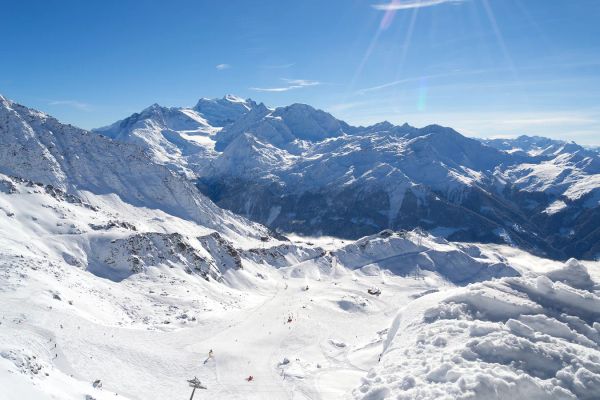
The Alps are about to swap mild, sunny October weather for something far more wintry. A cold front arrives Tuesday, and SnowStash forecasts have Monterosa Ski out in front with 64 cm over 14 days, ahead of Blatten Belalp (55 cm) and Verbier (43 cm). The snow line should fall below 2000 metres by Wednesday night, and glaciers across Switzerland, Italy and Austria are in line for the best of it. The wind will have a say too.
20 Oct 2026
Four Dead After Avalanche Near Ski Portillo in Chile
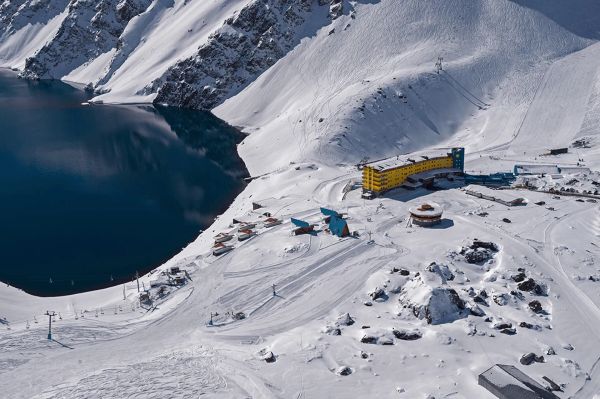
A large avalanche struck near Laguna del Inca adjacent to Ski Portillo on Saturday afternoon, killing four people and injuring four others. The group were day visitors mountaineering in the backcountry after reportedly being warned about elevated avalanche risk by resort staff.
18 Oct 2026

Europe Ski Resorts Open Now: What Is Skiable in Mid-October 2026
Europe’s ski season is open, technically. After a record-warm summer, glaciers in Austria, Switzerland and Italy are running a few pistes apiece, Sölden, Stubai and Kitzsteinhorn started late, Titlis has pushed back to 24 October, and Zermatt reopens a few lifts on 14 October after more than two months shut. Finland’s Levi and Ruka are skiing on stored snow. Here is what is open, and what you actually get at each.
14 Oct 2026

Zermatt Plans World Cup Downhill Return on the Gornergrat for 2028
Zermatt is having another crack at a World Cup downhill, and this time nobody has to cross a border. Around 13 million Swiss francs is going into rebuilding the Gornergrat piste, including a jump fed by a roughly 300-metre in-run across the roof of the Gornergrat Railway gallery, with the Matterhorn lined up behind it for the TV cameras. First men’s race is pencilled in for March 2028, pending FIS homologation.
14 Oct 2026

Mt. Rose Begins Snowmaking for the 2026-27 Season at Lake Tahoe
Lake Tahoe’s highest base elevation is paying off early: Mt. Rose has started making snow for 2026-27 after the first flurries and a cold snap. The Nevada resort is backing it with nearly US$2 million in upgrades, including a replacement snowmaking main line, a new PistenBully groomer and restraint bars on every lift. Opening day is yet to be confirmed, though Heavenly and Northstar are already eyeing 20 November.
13 Oct 2026

Utah Ski Resorts 2026-27: What’s New at Alta, Deer Valley, Powder Mountain and More
Utah is still building flat out. For 2026-27, Powder Mountain opens a steep new Skytrac chair into more than 1,000 acres of advanced terrain, Deer Valley adds 200 acres on Hail Peak, Sundance gets a new quad and Park City adds a gondola from its new parking structure. Snowmaking is expanding almost everywhere, Eagle Point stays closed after the Cottonwood Fire, and the 2034 Games are setting the pace. Here’s what’s new, resort by resort.
13 Oct 2026

Mt Hutt Invests NZ$12 Million in Base Area, Tripling Its Sun Deck
Mt Hutt is getting busier, and its base lodge is about to catch up. NZ$12 million goes into a heated sun deck roughly three times the current size (430 m² to 1,300 m²), plus a new toilet block, heated steps down to snow level, extra storage and a new food and beverage outlet. Building starts after the 2026 season, with everything due for winter 2027.
11 Oct 2026

Vermont Ski Resort Opening Dates 2026-27: Few Dates Set, Killington Waits on the Cold
Vermont's season is slow to take shape. Stratton is tentatively targeting 18 November and Sugarbush 21 November, while Pico has Friday 11 December on the calendar. Killington never sets a date and opens when the snowmaking allows, and Vail Resorts has yet to name days for Stowe, Okemo and Mount Snow. The forecasts disagree about snow, and the main El Niño worry for the Green Mountains is warmth.
9 Oct 2026
Gala Yuzawa Snow Report
Snow Report
Awaiting live data
1181m
summit
+0cm
new snow · last 24 hours
-°C / -°C · - -
Snowfall
24 hours
0cm
48 hours
0cm
7 days
0cm
Base depth
-
Season total
-
Total lifts11
Live open status isn’t available right now.
19 Dec 2026 - 5 May 2027
Hour by Hour
Next 43 hours· Updated Oct 22, 2026 at 5:02 AM
Scroll for the full outlook · Open-Meteo
7-Day Outlook
1,181 mUpdated Oct 22, 2026 at 5:02 AMOpen-Meteo
Days 1–7
6.7cm
Days 8–14
0.0cm
Thu, Oct 22
Slight Rain
Temp11° / 4°°C
Snow0.0cm(100%)
Wind11 km/h NW
Live snow from the resort feed; forecast from Open-Meteo, via Supabase.
Understanding the Gala Yuzawa snow report
Track current conditions at Gala Yuzawa in Chubu. This report covers snowfall totals, base and summit depth, and the forecast across 16 runs.
Snow measurements
Our snow reports measure snowfall in centimeters over multiple time windows — last 24 hours, last 7 days, and the season total. Base depth reflects accumulation at the 358m base area, while summit depth captures conditions 823m higher at 1181m, where snow typically stays colder and lingers longer. Imperial conversions are shown alongside for convenience.
Weather conditions
Snow quality tracks closely with temperature and wind. We surface both alongside the snowfall data so you can judge whether conditions at Gala Yuzawa are holding up or starting to soften.
Data sources
We pull Gala Yuzawa's conditions from on-the-ground mountain reporting, then layer in forecast data so you get a fuller picture than either source alone. The mountain is served by 11 lifts, including an aerial tram and 3 quad chairlifts.
When to check
Conditions can change overnight, so mornings and late afternoons are the best times to check back on Gala Yuzawa.