
The Overview
Michael Fulton
Melbourne-based skier and snowboarder with 50+ resorts across 5 continents. Specialises in Australian resorts and international resort comparisons.
Myoko Ikenotaira operates between 760 and 1500 metres across 740 vertical metres on the foothills of Mount Myoko, one of Japan's 100 famous mountains. The resort offers 10 courses served by 6 lifts spanning 60 hectares of skiable terrain. The area receives approximately 14 metres of average annual snowfall, positioning it among Honshu's heaviest snowfall destinations. The resort is also marketed as Alpen Blick Snow Resort, though locals still refer to it as Ike.
Terrain breaks down as 35 per cent beginner, 45 per cent intermediate and 20 per cent advanced, with no designated expert terrain. The wide, mellow slopes make Ikenotaira particularly suited to developing powder skills without the pitch found at neighbouring resorts. Tree runs through beech and aspen glades provide progression terrain for intermediates learning to ride off-piste. The Mavericks Park is regarded as one of Myoko's best terrain parks, with features built throughout the season.
The resort atmosphere remains distinctly Japanese and relaxed, with significantly fewer crowds than Akakura Onsen. Ikenotaira Onsen village at the base is spread out, comprising mostly small pensions, ryokan and mid-sized hotels rather than a concentrated centre. The clientele skews younger, with Japanese snowboarders forming the core market on weekends. Hotel Alpen Blick offers ski-in ski-out access and houses an on-site craft brewery producing Myoko-Kogen Beer.
Ikenotaira operates independently with its own lift pass, though shuttle buses connect to Akakura, Suginohara and Seki within the greater Myoko Kogen area. The 2025-26 season runs from 5 December 2025 to 29 March 2026. Best suited to families, beginners building confidence in powder, intermediate cruisers and park riders. The quieter slopes and forgiving gradient make it less appealing to advanced skiers seeking steep terrain.
740m
Vertical
10
Runs
148 acres
Skiable
14m
Annual snow
The Terrain
10 runs across 148 acres skiable
Myoko Ikenotaira, also marketed as Alpen Blick, is a quieter Niigata ski area on the foothills of Mount Myoko, spread over about 60 hectares. It drops 740 metres, from 1,500 metres to a 760-metre base, with 10 runs graded 35% beginner, 45% intermediate and 20% advanced. There is no expert-rated terrain, which suits the relaxed character of the place. Myoko's 14 metres of annual snow reaches here as well, and with fewer visitors than the busier Akakura areas next door, the powder tends to last well into the afternoon on weekdays.
The pistes are wide and mellow, and the lower half is mostly green runs, some of them lined with trees. That makes Ikenotaira a good place to learn, and a gentle introduction to Japan's deep snow. Beech and aspen glades give intermediates a low-pressure way to try off-piste skiing without the pitch found on neighbouring mountains. The area suits families, beginners, and intermediates building powder confidence, especially anyone put off by crowds. Experts will find limited steep terrain, so strong skiers are better placed at Akakura Kanko or further afield, and may want to treat Ike as a rest day option.
Terrain split
10
runs
10 runs across 4 grades
Beginner4 runs · 35%
Intermediate5 runs · 45%
Advanced2 runs · 20%
Expert0 runs · 0%
Time it right
When to visit Myoko Ikenotaira
The 2025-26 season opens 5 December 2025 and closes 29 March 2026, running approximately 16 weeks. Recent seasons have varied slightly, with December 2024 seeing a 13 December opening. Myoko Kogen's season typically extends from early December through late March across all resorts. Spring skiing can continue into April at higher elevations within the broader Myoko area.
The Myoko Kogen region receives 13 to 15 metres of average annual snowfall, with Ikenotaira benefiting from the same moisture-laden Siberian winds crossing the Sea of Japan. Peak season base depths of 2 to 3 metres are typical between January and February. The southeast-facing aspect means slopes don't preserve snow quality as well as north-facing terrain when temperatures rise. Snowmaking is not extensively deployed given the natural snow reliability.
January delivers the deepest snowfall, with consecutive dumps of 40 to 90 centimetres common throughout the month. February maintains excellent coverage with slightly more stable weather and occasional bluebird days. Late February sees peak accumulated depth before March brings spring conditions. The resort receives less traffic than Akakura and Suginohara, making it advantageous for untracked powder on storm days.
The resort hosts CAT tours including First Track, Twilight and Night CAT experiences from late December through late March. An Alpenblick Winter Costume Festival runs in late February, with participants receiving facility vouchers. No night skiing operates, with lifts closing by 4:30pm. The quieter evenings suit soaking in onsen at Hotel Alpen Blick or Landmark Myoko-kogen rather than après activity.
Season 2026 - 2027
19 Dec 2026
Opens
28 Mar 2027
Closes
99
Days open
14 m
Annual snow
Getting there
Getting to Myoko Ikenotaira, and where to stay
Ikenotaira sits in the Joetsu region of Niigata Prefecture on the eastern foothills of Mount Myoko, a 2454-metre active volcano within Myoko-Togakushi Renzan National Park. The base village of Ikenotaira Onsen sits at 760 metres, 4 kilometres from Myoko Kogen town and 3.5 kilometres from Akakura Onsen village. The resort lies within Myoko City, formed in 2005 from the merger of several towns and villages. The broader Myoko Kogen highland sits at approximately 1200 metres elevation.
Myoko-Kogen Station on the Kita-Shinano Line is 10 minutes by car or shuttle from the resort base. Akakura Onsen, the main accommodation hub for foreign visitors, is approximately 15 minutes by shuttle. Nagano City lies one hour south and serves as the regional transport hub. The area sits near the Niigata-Nagano prefectural border, with the Sea of Japan coast roughly one hour northwest.
From Tokyo, take the Joshinetsu Expressway to Myoko-Kogen Interchange, then Route 18 and 39 to the resort, totalling approximately 3 hours 15 minutes. The expressway journey from Nerima via Fujioka Junction typically takes around 3 hours depending on conditions. Local shuttle buses connect Myoko-Kogen Station to Ikenotaira, with taxis costing 2800 to 3300 yen for the 10-minute journey. Most accommodation offers station transfers.
Tokyo Narita and Haneda airports are the primary international gateways, approximately 3.5 to 4 hours by train or 6 hours by direct shuttle bus. Take the Hokuriku Shinkansen from Tokyo Station to Nagano Station (80 to 110 minutes), then transfer to the Kita-Shinano Line to Myoko-Kogen Station (45 minutes). Direct overnight shuttle buses operate from both Tokyo airports during winter season. Niigata Airport lies 3 hours away with limited international services to China, Taiwan, Korea and Russia.
Where to stay
Search all stays →Hotels and lodges near Myoko Ikenotaira, powered by Stay22.
Latest News
From the SnowStash desk
California Ski Resort Opening Dates 2026-27: Mammoth Leads, Tahoe Follows
Mammoth Mountain is first up in California, targeting Friday 13 November after a dusting of September snow. Heavenly and Northstar follow on 20 November, Palisades Tahoe on Wednesday 25 November and Sugar Bowl on 27 November, with Kirkwood on 4 December and June Mountain on 19 December. Plenty of smaller areas have no date yet. A super El Niño favours the Sierra, but a warmer storm track is the catch.
7 Oct 2026
Colorado Ski Resort Opening Dates 2026-27: A-Basin and Keystone Race to Be First
Arapahoe Basin, Keystone and Winter Park are all chasing an October start, though none has a firm date yet. The first dated openers are Breckenridge and Copper on Friday 6 November, then Vail on 13 November, with most of the rest bunched around US Thanksgiving. Hesperus did not open at all last season. A super El Niño offers hope but no guarantee, and forecasters say the southern mountains have the better odds.
5 Oct 2026
Dolomiti Superski 2026-27: Four New Gondolas, New Reservoirs and an €89 Peak Day Pass
Dolomiti Superski is spending around €100 million across its 12 areas before winter. Kronplatz gets a new 10-passenger gondola with a middle station, 3 Zinnen gets Helmissimo, and Val di Fassa swaps a chairlift for a gondola above Col Valvacin. New water-storage basins and upgraded snowmaking follow, and construction has started on the San Martino to Passo Rolle link. A peak adult day pass is €89.
4 Oct 2026
Utah Ski Resort Opening Dates 2026-27: Brian Head First, Eagle Point Out
Brian Head is targeting 6 November, though last year it aimed for 7 November and did not open until the 25th. Park City, Alta and Solitude are pencilled in for 20 November, Snowbird and Snowbasin for 27 November, and Deer Valley for 5 December. Eagle Point will stay closed after the Cottonwood Fire. A super El Niño is forecast, but the big snow is not expected until January.
4 Oct 2026
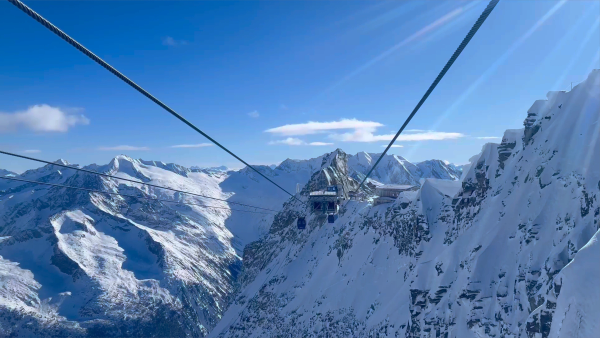
Hintertux Glacier Opens for 2026-27 With 12 Kilometres of Piste
Hintertux became Austria's second glacier to open for 2026-27 on Friday 2 October, after the Pitztal Glacier. Twelve kilometres of piste are running around the Olperer and Gefrorene Wand, served by one gondola and two drag lifts, with the Betterpark also open. Lifts officially run 8:15 am to 4:30 pm, but skiing stops at 2 pm for now.
4 Oct 2026
Vail Resorts Counts the Cost of a Thin Winter as Pass Sales Slide Further
A historically poor western winter cut Vail Resorts' annual net income from $280 million to $147.5 million and skier visits by 13.4 per cent. Now 2026-27 pass units are down 12 per cent as of 18 September, worse than the 10 per cent flagged in spring. Vail blames the weather and thinks some buyers are simply waiting, and it forecasts a rebound if the snow behaves.
3 Oct 2026
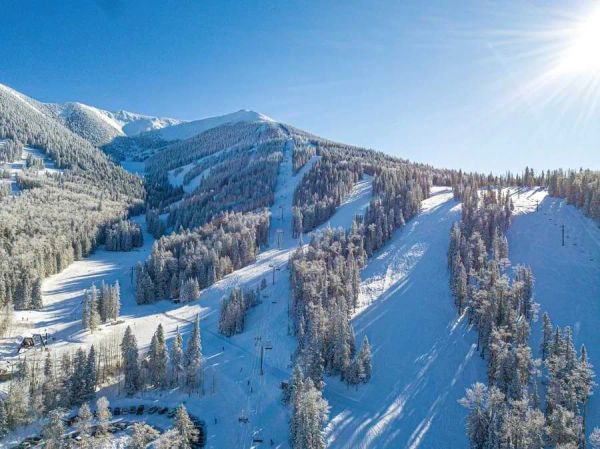
Arizona Snowbowl's $1 Lift Tickets Are Hard to Find, but $9 Days Are Not
Arizona Snowbowl advertised eight $1 lift ticket days this winter. Go looking and only three are showing - 10 March, 1 April and 10 April - so the rest may already have gone. The consolation is a calendar full of $9 days, including all but one day in April. Opening day is 20 November, weather permitting, and opening weekend is $19.
2 Oct 2026
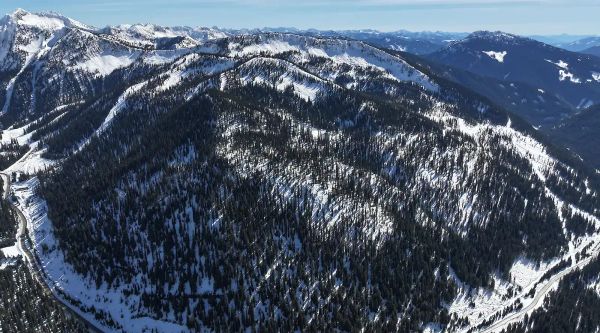
Whitewater Brings Its Short Side Inbounds, With Six New Runs for 2026-27
For years, Whitewater's Short Side was where you ducked a rope and hoped for the best: unmapped, ungroomed and unpatrolled. This winter it's inbounds. Six new runs of glades and fall-line skiing add 190 acres (about 77 hectares), taking the resort past 1,400 acres in total. F2 Logging spent a month in the trees to make it happen, and opening day is pencilled in for 4 December. Bonanza now needs less snow to groom, too.
1 Oct 2026
Myoko Ikenotaira Lift System
Six lifts service the mountain, comprising one quad chair, five double chairs and no surface lifts or gondolas. The main quad chair provides the primary uphill route from the central base area. Three of the double chairs are slow fixed-grip installations, whilst two feature detachable hoods for weather protection. Total uphill capacity reaches approximately 3000 riders per hour across all installations.
The Shirakaba Capsule Pair lift serves the central area's wide beginner and intermediate terrain. A hooded detachable quad chair accesses the summit at 1500 metres, whilst a hooded detachable double operates from the main base. The Alpen Blick side of the resort, above Hotel Alpen Blick, runs a particularly slow double chair that receives lighter traffic. This secondary base area remains significantly quieter than the main precinct.
The lift network is straightforward, with the mountain configured as a long vertical rather than wide horizontal spread. Lifts serve distinct zones rather than creating multiple route options between top and bottom. Lift queues remain minimal even on weekends and holidays, though the slower chairs can make lap times lengthy. The upper lifts access the steeper intermediate terrain and tree run zones.
An abandoned lift near the summit indicates previous financial constraints, though the resort has since stabilised. Proposed developments include a gondola installation to increase vertical and expand the ski area, though no construction timeline has been confirmed. Operating hours run from 8:30am to 4:30pm until mid-January, then 9:30am to 4:15pm through late March. No night skiing is offered.
6lifts across 2 types
1
Quad Chair
5
Double Chairs
Myoko Ikenotaira lift system
Myoko Ikenotaira is served by 6 lifts, listed here by type. Check which lifts are turning against the live conditions before you plan your first laps - early lifts and high-speed chairs get you to the best snow fastest.
More Myoko Ikenotaira intelligence: trail map, snow report, webcams, resort overview.