
Myoko Ikenotaira
740m vertical, 10 runs, 14m annual snowfall. Quiet slopes, terrain park & tree runs in Niigata Prefecture, Japan.
Season 2026 - 2027
Opens
19 Dec 2026
Closes
28 Mar 2027
Days open
99
Annual snow
14m
The Overview
Michael Fulton
Melbourne-based skier and snowboarder with 50+ resorts across 5 continents. Specialises in Australian resorts and international resort comparisons.
Myoko Ikenotaira operates between 760 and 1500 metres across 740 vertical metres on the foothills of Mount Myoko, one of Japan's 100 famous mountains. The resort offers 10 courses served by 6 lifts spanning 60 hectares of skiable terrain. The area receives approximately 14 metres of average annual snowfall, positioning it among Honshu's heaviest snowfall destinations. The resort is also marketed as Alpen Blick Snow Resort, though locals still refer to it as Ike.
Terrain breaks down as 35 per cent beginner, 45 per cent intermediate and 20 per cent advanced, with no designated expert terrain. The wide, mellow slopes make Ikenotaira particularly suited to developing powder skills without the pitch found at neighbouring resorts. Tree runs through beech and aspen glades provide progression terrain for intermediates learning to ride off-piste. The Mavericks Park is regarded as one of Myoko's best terrain parks, with features built throughout the season.
The resort atmosphere remains distinctly Japanese and relaxed, with significantly fewer crowds than Akakura Onsen. Ikenotaira Onsen village at the base is spread out, comprising mostly small pensions, ryokan and mid-sized hotels rather than a concentrated centre. The clientele skews younger, with Japanese snowboarders forming the core market on weekends. Hotel Alpen Blick offers ski-in ski-out access and houses an on-site craft brewery producing Myoko-Kogen Beer.
Ikenotaira operates independently with its own lift pass, though shuttle buses connect to Akakura, Suginohara and Seki within the greater Myoko Kogen area. The 2025-26 season runs from 5 December 2025 to 29 March 2026. Best suited to families, beginners building confidence in powder, intermediate cruisers and park riders. The quieter slopes and forgiving gradient make it less appealing to advanced skiers seeking steep terrain.
740m
Vertical
10
Runs
148 acres
Skiable
14m
Annual snow
The Terrain
10 runs across 148 acres skiable
Myoko Ikenotaira, also marketed as Alpen Blick, is a quieter Niigata ski area on the foothills of Mount Myoko, spread over about 60 hectares. It drops 740 metres, from 1,500 metres to a 760-metre base, with 10 runs graded 35% beginner, 45% intermediate and 20% advanced. There is no expert-rated terrain, which suits the relaxed character of the place. Myoko's 14 metres of annual snow reaches here as well, and with fewer visitors than the busier Akakura areas next door, the powder tends to last well into the afternoon on weekdays.
The pistes are wide and mellow, and the lower half is mostly green runs, some of them lined with trees. That makes Ikenotaira a good place to learn, and a gentle introduction to Japan's deep snow. Beech and aspen glades give intermediates a low-pressure way to try off-piste skiing without the pitch found on neighbouring mountains. The area suits families, beginners, and intermediates building powder confidence, especially anyone put off by crowds. Experts will find limited steep terrain, so strong skiers are better placed at Akakura Kanko or further afield, and may want to treat Ike as a rest day option.
Terrain split
10
runs
10 runs across 4 grades
Beginner4 runs · 35%
Intermediate5 runs · 45%
Advanced2 runs · 20%
Expert0 runs · 0%
Time it right
When to visit Myoko Ikenotaira
The 2025-26 season opens 5 December 2025 and closes 29 March 2026, running approximately 16 weeks. Recent seasons have varied slightly, with December 2024 seeing a 13 December opening. Myoko Kogen's season typically extends from early December through late March across all resorts. Spring skiing can continue into April at higher elevations within the broader Myoko area.
The Myoko Kogen region receives 13 to 15 metres of average annual snowfall, with Ikenotaira benefiting from the same moisture-laden Siberian winds crossing the Sea of Japan. Peak season base depths of 2 to 3 metres are typical between January and February. The southeast-facing aspect means slopes don't preserve snow quality as well as north-facing terrain when temperatures rise. Snowmaking is not extensively deployed given the natural snow reliability.
January delivers the deepest snowfall, with consecutive dumps of 40 to 90 centimetres common throughout the month. February maintains excellent coverage with slightly more stable weather and occasional bluebird days. Late February sees peak accumulated depth before March brings spring conditions. The resort receives less traffic than Akakura and Suginohara, making it advantageous for untracked powder on storm days.
The resort hosts CAT tours including First Track, Twilight and Night CAT experiences from late December through late March. An Alpenblick Winter Costume Festival runs in late February, with participants receiving facility vouchers. No night skiing operates, with lifts closing by 4:30pm. The quieter evenings suit soaking in onsen at Hotel Alpen Blick or Landmark Myoko-kogen rather than après activity.
Season 2026 - 2027
19 Dec 2026
Opens
28 Mar 2027
Closes
99
Days open
14 m
Annual snow
Getting there
Getting to Myoko Ikenotaira, and where to stay
Ikenotaira sits in the Joetsu region of Niigata Prefecture on the eastern foothills of Mount Myoko, a 2454-metre active volcano within Myoko-Togakushi Renzan National Park. The base village of Ikenotaira Onsen sits at 760 metres, 4 kilometres from Myoko Kogen town and 3.5 kilometres from Akakura Onsen village. The resort lies within Myoko City, formed in 2005 from the merger of several towns and villages. The broader Myoko Kogen highland sits at approximately 1200 metres elevation.
Myoko-Kogen Station on the Kita-Shinano Line is 10 minutes by car or shuttle from the resort base. Akakura Onsen, the main accommodation hub for foreign visitors, is approximately 15 minutes by shuttle. Nagano City lies one hour south and serves as the regional transport hub. The area sits near the Niigata-Nagano prefectural border, with the Sea of Japan coast roughly one hour northwest.
From Tokyo, take the Joshinetsu Expressway to Myoko-Kogen Interchange, then Route 18 and 39 to the resort, totalling approximately 3 hours 15 minutes. The expressway journey from Nerima via Fujioka Junction typically takes around 3 hours depending on conditions. Local shuttle buses connect Myoko-Kogen Station to Ikenotaira, with taxis costing 2800 to 3300 yen for the 10-minute journey. Most accommodation offers station transfers.
Tokyo Narita and Haneda airports are the primary international gateways, approximately 3.5 to 4 hours by train or 6 hours by direct shuttle bus. Take the Hokuriku Shinkansen from Tokyo Station to Nagano Station (80 to 110 minutes), then transfer to the Kita-Shinano Line to Myoko-Kogen Station (45 minutes). Direct overnight shuttle buses operate from both Tokyo airports during winter season. Niigata Airport lies 3 hours away with limited international services to China, Taiwan, Korea and Russia.
Where to stay
Search all stays →Hotels and lodges near Myoko Ikenotaira, powered by Stay22.
Latest News
From the SnowStash desk
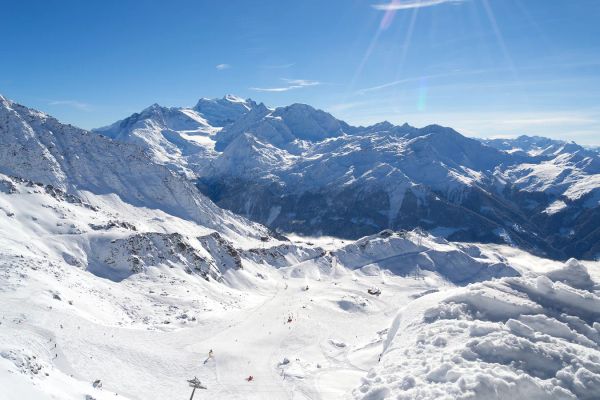
Alps Snow Forecast: Up to 64 cm Headed for the High Glaciers as the Snow Line Drops
The Alps are about to swap mild, sunny October weather for something far more wintry. A cold front arrives Tuesday, and SnowStash forecasts have Monterosa Ski out in front with 64 cm over 14 days, ahead of Blatten Belalp (55 cm) and Verbier (43 cm). The snow line should fall below 2000 metres by Wednesday night, and glaciers across Switzerland, Italy and Austria are in line for the best of it. The wind will have a say too.
20 Oct 2026

Four Dead After Avalanche Near Ski Portillo in Chile
A large avalanche struck near Laguna del Inca adjacent to Ski Portillo on Saturday afternoon, killing four people and injuring four others. The group were day visitors mountaineering in the backcountry after reportedly being warned about elevated avalanche risk by resort staff.
18 Oct 2026

Europe Ski Resorts Open Now: What Is Skiable in Mid-October 2026
Europe’s ski season is open, technically. After a record-warm summer, glaciers in Austria, Switzerland and Italy are running a few pistes apiece, Sölden, Stubai and Kitzsteinhorn started late, Titlis has pushed back to 24 October, and Zermatt reopens a few lifts on 14 October after more than two months shut. Finland’s Levi and Ruka are skiing on stored snow. Here is what is open, and what you actually get at each.
14 Oct 2026

Zermatt Plans World Cup Downhill Return on the Gornergrat for 2028
Zermatt is having another crack at a World Cup downhill, and this time nobody has to cross a border. Around 13 million Swiss francs is going into rebuilding the Gornergrat piste, including a jump fed by a roughly 300-metre in-run across the roof of the Gornergrat Railway gallery, with the Matterhorn lined up behind it for the TV cameras. First men’s race is pencilled in for March 2028, pending FIS homologation.
14 Oct 2026

Mt. Rose Begins Snowmaking for the 2026-27 Season at Lake Tahoe
Lake Tahoe’s highest base elevation is paying off early: Mt. Rose has started making snow for 2026-27 after the first flurries and a cold snap. The Nevada resort is backing it with nearly US$2 million in upgrades, including a replacement snowmaking main line, a new PistenBully groomer and restraint bars on every lift. Opening day is yet to be confirmed, though Heavenly and Northstar are already eyeing 20 November.
13 Oct 2026

Utah Ski Resorts 2026-27: What’s New at Alta, Deer Valley, Powder Mountain and More
Utah is still building flat out. For 2026-27, Powder Mountain opens a steep new Skytrac chair into more than 1,000 acres of advanced terrain, Deer Valley adds 200 acres on Hail Peak, Sundance gets a new quad and Park City adds a gondola from its new parking structure. Snowmaking is expanding almost everywhere, Eagle Point stays closed after the Cottonwood Fire, and the 2034 Games are setting the pace. Here’s what’s new, resort by resort.
13 Oct 2026

Mt Hutt Invests NZ$12 Million in Base Area, Tripling Its Sun Deck
Mt Hutt is getting busier, and its base lodge is about to catch up. NZ$12 million goes into a heated sun deck roughly three times the current size (430 m² to 1,300 m²), plus a new toilet block, heated steps down to snow level, extra storage and a new food and beverage outlet. Building starts after the 2026 season, with everything due for winter 2027.
11 Oct 2026

Vermont Ski Resort Opening Dates 2026-27: Few Dates Set, Killington Waits on the Cold
Vermont's season is slow to take shape. Stratton is tentatively targeting 18 November and Sugarbush 21 November, while Pico has Friday 11 December on the calendar. Killington never sets a date and opens when the snowmaking allows, and Vail Resorts has yet to name days for Stowe, Okemo and Mount Snow. The forecasts disagree about snow, and the main El Niño worry for the Green Mountains is warmth.
9 Oct 2026
Myoko Ikenotaira Webcams
1 live angles across the mountain. Tap any camera to go full-screen.
About Myoko Ikenotaira's live webcams
Check live conditions across Myoko Ikenotaira with 1 real-time webcams showing snow, weather, and lift operations, updated every 10 minutes. Check high-elevation cams for powder visibility and base-area cams for crowd levels before you head up.
Camera guide
- Base Area700m
- This Myoko Ikenotaira webcam sits at the base of Alpenblick Ikenotaira Onsen Ski Resort looking up toward Mount Kurohime, giving a clear read on base-level snow conditions and lower slope visibility before you head out. Use this Ikenotaira live cam to check current snowfall and lift activity at the bottom of the mountain. A useful Myoko Ikenotaira live snow cam for planning your day at this quieter Myoko Kogen resort known for its deep Japow and relaxed atmosphere.
Myoko Ikenotaira snow cams FAQ
How often do Myoko Ikenotaira snow cams update?
All Myoko Ikenotaira snow cams and webcams update every 10 minutes with fresh images showing current mountain conditions. This frequent update schedule ensures you have access to near real-time conditions for planning your ski day at Myoko Ikenotaira.
Which Myoko Ikenotaira webcam shows the best powder conditions?
The high-elevation Base Area webcam at 700m provides the clearest view of powder conditions and snowfall. These Myoko Ikenotaira webcams capture fresh snow accumulation and visibility better than base area cameras.
Can I see Myoko Ikenotaira lift queues on the webcams?
Yes. Multiple Myoko Ikenotaira snow cams specifically show lift queue areas and chairlift operations, helping you time your arrival and avoid peak queue periods.
When is the best time to check Myoko Ikenotaira snow cams?
Check Myoko Ikenotaira webcams early morning (7-8am) for overnight snowfall assessment, and mid-afternoon for current crowd levels and weather. The live cams are most useful after storm events to assess fresh powder.
How can I check current conditions before buying Myoko Ikenotaira lift tickets?
Use our Myoko Ikenotaira webcams alongside the live snow report to assess conditions before purchasing lift tickets. The webcams show real-time visibility, snow quality, and operational status.
Do Myoko Ikenotaira webcams work on mobile devices?
Yes. All Myoko Ikenotaira snow cams and webcams are optimized for mobile viewing, so you can check live conditions from anywhere using your phone or tablet.
More Myoko Ikenotaira intelligence: snow report, lift tickets, trail map, resort overview.