
Nozawa Onsen
1,085m vertical, 10m annual snowfall, 19 lifts across Mount Kenashi. Traditional onsen village in Nagano Prefecture.
Season 2026 - 2027
Opens
28 Nov 2026
Closes
6 May 2027
Days open
159
Annual snow
10m
The Overview
Michael Fulton
Melbourne-based skier and snowboarder with 50+ resorts across 5 continents. Specialises in Australian resorts and international resort comparisons.
Nozawa Onsen spans 1,085 metres of vertical drop across Mount Kenashi, from a 565-metre base to a 1,650-metre summit, with 36 runs covering 297 hectares. The resort receives 10 metres of annual snowfall and features Japan's longest continuous run at 10 kilometres from the Yamabiko summit to the village base. Challenge 39 offers the steepest pitch at 39 degrees, whilst the terrain splits 40 per cent beginner, 30 per cent intermediate and 30 per cent advanced across three distinct zones.
The ski area spreads across Yamabiko at the summit, mid-mountain Uenotaira and Paradise zones, and base-level Hikage, Nagasaka and Karasawa sectors. Skyline run winds 4.5 kilometres along an exposed ridge from 1,450 metres elevation, offering Sea of Japan views on clear days. The Schneider course connects Paradise with Hikage through ungroomed mogul fields and tree zones, whilst Yamabiko's five courses provide powder bowls between widely spaced lifts. Officially designated tree skiing zones operate beneath Yamabiko quad chairs.
The 700-year-old onsen village sits at the mountain base with 13 free public hot spring baths maintained by neighbourhood associations. Saturday night skiing operates on the Nagasaka slope until 2000 hours throughout winter. The resort hosted biathlon events at the 1998 Nagano Winter Olympics, with purpose-built firing ranges and 4-kilometre cross-country loops preserved on the southern slopes. The Dosojin Fire Festival on 15 January draws thousands to watch village men defend an 18-metre wooden shrine from torch-bearing attackers.
Nozawa operates independently without multi-resort pass connections but offers reciprocal discounts at nearby Togari Onsen, Kijimadaira and Madarao. The 2025-2026 season runs 3 December to 6 May, with north-facing Yamabiko terrain holding snow into Golden Week. The resort suits advanced skiers seeking steep ungroomed runs and families using the broad Uenotaira plateau, though intermediate cruising options remain limited outside Yamabiko's five courses and the Paradise zone.
1085m
Vertical
36
Runs
734 acres
Skiable
10m
Annual snow
The Terrain
36 runs across 734 acres skiable
Nozawa Onsen is a traditional Nagano village with 36 runs rising from 565 metres to 1,650 metres, a vertical of 1,085 metres, spanning a sizeable 297 hectares. The grading is 40% beginner, 30% intermediate and 30% advanced, with no expert-rated runs, so it works for a broad mix of skiers. Nineteen lifts, including two gondolas, five quad chairs and three surface lifts, serve three main base areas. The mountain is long and varied, with open cruising high up and steeper pitches that drop right toward the village. Few Japanese resorts pair ski terrain with onsen culture so closely.
The Yamabiko sector is the main intermediate zone, with five open courses labelled A to E and designated tree skiing beneath its quad chairs. The Skyline Course is an advanced run of about 4.5 kilometres that lets skiers return to the village from the top of the mountain, and the Nagasaka Gondola, opened in 2020, runs up to Uenotaira and the popular Paradise course. Beginners have gentle slopes in several sectors. Nozawa suits groups with a spread of abilities, powder chasers who respect the tree rules, and skiers who like finishing the day in an onsen. Weekends can be busy at the lower base.
Terrain split
36
runs
36 runs across 4 grades
Beginner14 runs · 40%
Intermediate11 runs · 30%
Advanced11 runs · 30%
Expert0 runs · 0%
Time it right
When to visit Nozawa Onsen
The 2025-2026 season opened 3 December 2025 and closes 6 May 2026, spanning five months of operation. Typical seasons run late November through early May depending on early snowfall, with the high-elevation Yamabiko zone often skiing into Golden Week whilst lower slopes close in mid-April. Full resort operations establish by mid-December once base depths exceed 200 centimetres across all elevations.
Nozawa receives an average 10 metres of annual snowfall with base depths routinely reaching 4 to 5 metres by February. The second week of January averages 72 centimetres of snowfall across 5.6 snowy days, marking peak accumulation periods. North and northwest aspects on Yamabiko and Uenotaira preserve cold snow through March, whilst west-facing Skyline and lower runs soften earlier each afternoon. The resort operates without snowmaking except recent installations on Nagasaka beginner slopes.
January and February deliver the most reliable powder and coldest temperatures, with summit readings reaching minus 11 degrees during major storm cycles. December carries marginal coverage risk but rewards with empty slopes when snow arrives early. March sees spring consolidation with corn snow developing on sun-exposed aspects, though Yamabiko maintains winter conditions through month-end. Late April and early May offer slushy lower runs with firm morning corduroy higher up.
The Dosojin Fire Festival on 15 January attracts capacity crowds requiring advance bookings months prior. New Year's Eve extends night skiing until 2330 hours with fireworks and sake service on slope. Saturday night skiing operates from early January through March on the Nagasaka quad chair and 700-metre illuminated run. Resort hours run 0830 to 1630 daily, with night sessions 1700 to 2000 on Saturdays.
Season 2026 - 2027
28 Nov 2026
Opens
6 May 2027
Closes
159
Days open
10 m
Annual snow
Getting there
Getting to Nozawa Onsen, and where to stay
Nozawa Onsen Village sits in northern Nagano Prefecture at 565 metres elevation in the Chikuma River valley, 12 kilometres east of Iiyama city beneath the western slopes of 1,650-metre Mount Kenashi. The village of 3,650 residents occupies the Shimotakai District on the Honshu island Chubu region, bordered by Kijimadaira Village to the south across Mount Kenashi's ridgeline and Iiyama City to the west across the valley floor. Hot springs here date 1,300 years with the current village formed through 1956 municipal mergers.
Iiyama Station lies 12 kilometres southwest with regular bus connections taking 25 minutes via the Nozawa Onsen Liner at 600 yen per adult. Nagano City centres 46 kilometres south with Alpico express buses running 80 minutes to the village. The nearest population centre, Iiyama, serves as the local transport hub with supermarkets and services, whilst Nagano offers urban amenities and connections to broader Nagano Prefecture attractions including the snow monkeys at Jigokudani, 90 minutes away by direct winter bus.
Road access from Tokyo follows the Joshinetsu Expressway 249 kilometres north to Toyoda-Iiyama Interchange, then 20 minutes via Route 403 through Iiyama to Nozawa. Total driving time from Tokyo averages 4 hours without traffic. From Nagano city, Route 117 runs north 60 minutes through the Chikuma valley. Winter roads require chains or snow tyres with regular avalanche control closures on mountain routes between December and March.
Tokyo Narita Airport lies 350 kilometres south with direct Nagano Snow Shuttle buses running 6 hours seasonally at 12,000 yen return. Haneda Airport sits 320 kilometres away with similar shuttle options. Train access requires the Hokuriku Shinkansen from Tokyo or Ueno stations to Iiyama, covering 230 kilometres in 110 minutes at approximately 9,000 yen, then connecting to the Liner bus. Total public transport time from Tokyo airports averages 4 hours via shinkansen or 6 hours by direct bus.
Where to stay
Search all stays →Hotels and lodges near Nozawa Onsen, powered by Stay22.
Latest News
From the SnowStash desk
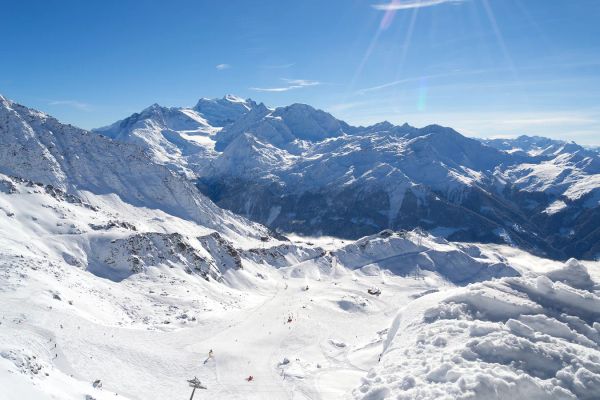
Alps Snow Forecast: Up to 64 cm Headed for the High Glaciers as the Snow Line Drops
The Alps are about to swap mild, sunny October weather for something far more wintry. A cold front arrives Tuesday, and SnowStash forecasts have Monterosa Ski out in front with 64 cm over 14 days, ahead of Blatten Belalp (55 cm) and Verbier (43 cm). The snow line should fall below 2000 metres by Wednesday night, and glaciers across Switzerland, Italy and Austria are in line for the best of it. The wind will have a say too.
20 Oct 2026
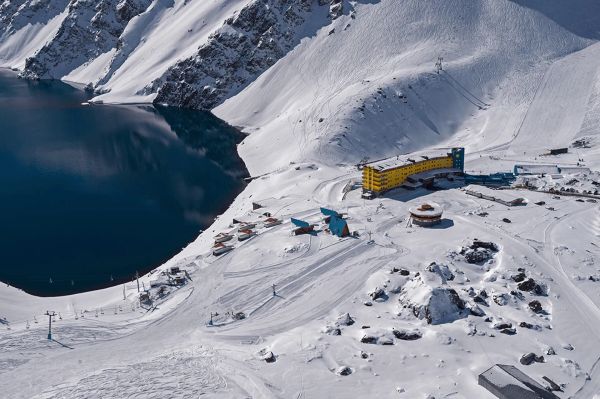
Four Dead After Avalanche Near Ski Portillo in Chile
A large avalanche struck near Laguna del Inca adjacent to Ski Portillo on Saturday afternoon, killing four people and injuring four others. The group were day visitors mountaineering in the backcountry after reportedly being warned about elevated avalanche risk by resort staff.
18 Oct 2026

Europe Ski Resorts Open Now: What Is Skiable in Mid-October 2026
Europe’s ski season is open, technically. After a record-warm summer, glaciers in Austria, Switzerland and Italy are running a few pistes apiece, Sölden, Stubai and Kitzsteinhorn started late, Titlis has pushed back to 24 October, and Zermatt reopens a few lifts on 14 October after more than two months shut. Finland’s Levi and Ruka are skiing on stored snow. Here is what is open, and what you actually get at each.
14 Oct 2026

Zermatt Plans World Cup Downhill Return on the Gornergrat for 2028
Zermatt is having another crack at a World Cup downhill, and this time nobody has to cross a border. Around 13 million Swiss francs is going into rebuilding the Gornergrat piste, including a jump fed by a roughly 300-metre in-run across the roof of the Gornergrat Railway gallery, with the Matterhorn lined up behind it for the TV cameras. First men’s race is pencilled in for March 2028, pending FIS homologation.
14 Oct 2026

Mt. Rose Begins Snowmaking for the 2026-27 Season at Lake Tahoe
Lake Tahoe’s highest base elevation is paying off early: Mt. Rose has started making snow for 2026-27 after the first flurries and a cold snap. The Nevada resort is backing it with nearly US$2 million in upgrades, including a replacement snowmaking main line, a new PistenBully groomer and restraint bars on every lift. Opening day is yet to be confirmed, though Heavenly and Northstar are already eyeing 20 November.
13 Oct 2026

Utah Ski Resorts 2026-27: What’s New at Alta, Deer Valley, Powder Mountain and More
Utah is still building flat out. For 2026-27, Powder Mountain opens a steep new Skytrac chair into more than 1,000 acres of advanced terrain, Deer Valley adds 200 acres on Hail Peak, Sundance gets a new quad and Park City adds a gondola from its new parking structure. Snowmaking is expanding almost everywhere, Eagle Point stays closed after the Cottonwood Fire, and the 2034 Games are setting the pace. Here’s what’s new, resort by resort.
13 Oct 2026

Mt Hutt Invests NZ$12 Million in Base Area, Tripling Its Sun Deck
Mt Hutt is getting busier, and its base lodge is about to catch up. NZ$12 million goes into a heated sun deck roughly three times the current size (430 m² to 1,300 m²), plus a new toilet block, heated steps down to snow level, extra storage and a new food and beverage outlet. Building starts after the 2026 season, with everything due for winter 2027.
11 Oct 2026

Vermont Ski Resort Opening Dates 2026-27: Few Dates Set, Killington Waits on the Cold
Vermont's season is slow to take shape. Stratton is tentatively targeting 18 November and Sugarbush 21 November, while Pico has Friday 11 December on the calendar. Killington never sets a date and opens when the snowmaking allows, and Vail Resorts has yet to name days for Stowe, Okemo and Mount Snow. The forecasts disagree about snow, and the main El Niño worry for the Green Mountains is warmth.
9 Oct 2026
Nozawa Onsen Lift System
The resort operates 19 lifts including 2 gondolas, 5 quad chairs, 3 triple chairs, 6 double chairs and 3 surface lifts. The Nagasaka Gondola opened in 2020 as a 10-person Nippon Cable installation running 3.1 kilometres with 789 metres vertical gain from base to the Uenotaira plateau at 1,410 metres. The Hikage Gondola, a 15-person Leitner system, parallels the village Yu Road moving walkway and services the original ski school base at 1,075 metres elevation.
The Yamabiko covered quad chair accesses the 1,650-metre summit from Uenotaira, whilst an open quad serves the slightly lower D and E course entry points at 1,366 metres. The Challenge double chair operates weekends and holidays only, accessing the 39-degree headwall and connecting steep terrain back to Hikage via triple chair. The Nagasaka Link double chair bridges the Karasawa beginner zone with the main gondola base, eliminating walking between car parks and lifts.
Base-to-summit requires either gondola to Uenotaira then the covered Yamabiko quad, or Hikage Gondola with connections via Paradise triple chair and intermediate traverses. The two gondola systems meet at mid-mountain but serve separate base areas 600 metres apart. Weekday operations see minimal queues except at Nagasaka Gondola between 0830 and 0930 hours, whilst weekends concentrate crowds on the limited Yamabiko summit access.
The Hikage Gondola dates to 1979 and the original Nagasaka system to 1990, though complete gondola replacement in 2020 modernised uphill capacity to 2,000 persons per hour. Recent infrastructure added snowmaking on lower Nagasaka slopes and LED lighting for Saturday night sessions. The compact lift network means no true bottlenecks but does concentrate traffic on the single Yamabiko summit chair during powder days.
19lifts across 5 types
2
Gondolas
5
Quad Chairs
3
Triple Chairs
6
Double Chairs
3
Surface Lifts
Nozawa Onsen lift system
Nozawa Onsen is served by 19 lifts, listed here by type. Check which lifts are turning against the live conditions before you plan your first laps - early lifts and high-speed chairs get you to the best snow fastest.
More Nozawa Onsen intelligence: trail map, snow report, webcams, resort overview.