
Hoshino Tomamu
Hoshino Tomamu: 29 runs, 585m vertical, 14m annual snowfall. Central Hokkaido's premier resort with twin tower hotels.
Season 2026 - 2027
Opens
4 Dec 2026
Closes
4 Apr 2027
Days open
121
Annual snow
14m
The Overview
Michael Fulton
Melbourne-based skier and snowboarder with 50+ resorts across 5 continents. Specialises in Australian resorts and international resort comparisons.
Hoshino Tomamu operates 29 runs across 306 acres spanning two peaks in central Hokkaido, with a vertical drop of 585 metres between its 586-metre base and 1,171-metre summit. The resort receives an average 14 metres of annual snowfall and sits within the 200-kilometre Hokkaido Powder Belt, where inland conditions and temperatures dropping to minus 30 degrees Celsius produce exceptionally dry powder. The ski area totals 21.5 kilometres of piste, including a 4,200-metre top-to-bottom descent, and participates in the Hokkaido Powder Belt Pass alongside Furano and Kamui Ski Links.
Terrain distribution favours progression, with 38 per cent beginner runs, 48 per cent intermediate and 14 per cent advanced. Tomamu Mountain and Tower Mountain form two distinct sectors connected by the Romance chairlift, with the former housing the gondola-accessed summit terrain and Powder Express quad, whilst Tower Mountain concentrates gentler slopes near the hotel towers. Registered experts access designated sidecountry zones including Powder Heaven at Tower Mountain's summit, plus snowcat operations on Mount Karifuri.
The resort anchors a 1,000-hectare development dominated by twin 40-storey hotel towers housing Tomamu the Tower and Risonare Tomamu properties, alongside Club Med Hokkaido Tomamu at mountain base. Hotaru Street provides ski-in dining and retail, whilst the Mina-Mina Beach indoor wave pool, Ice Village winter attraction and Terrace of Frost Tree at 1,088 metres elevation expand the non-skiing programme. Night skiing operates 16:00 to 18:00 on Tower Mountain from late December through March.
The 38,000-yen Hokkaido Powder Belt Pass grants five days' skiing within ten days at Tomamu, Furano and Kamui, valid throughout the December-to-March season. Adult day passes run 6,800 yen regular rate to 7,500 yen peak, with season passes priced at 85,000 yen. Tomamu suits families seeking resort infrastructure and intermediates chasing groomed cruisers, though limited steep terrain constrains experts compared to Niseko or Rusutsu.
585m
Vertical
29
Runs
306 acres
Skiable
14m
Annual snow
The Terrain
29 runs across 306 acres skiable
Hoshino Tomamu is one of the main inland ski areas in central Hokkaido, spread over about 124 hectares, with 29 runs falling 585 vertical metres from 1,171 metres to a 586-metre base. Intermediates take the biggest share at 48%, followed by 38% beginner and 14% advanced, with no expert-graded runs. Around 14 metres of dry snow falls here each year, and the cold inland air keeps it light. A gondola, three quads and two double chairs serve two linked mountains, Tomamu and Tower, so skiers can move between a mellow side and a more varied one without much effort.
Tomamu Mountain holds most of the long cruising, including a run of more than four kilometres from the top, and the quad chairs there make powder laps simple. Tower Mountain stays gentler and sits close to the hotel towers, which suits families. For skiers who want more, a registered experts-only powder zone and guided snowcat skiing on a neighbouring peak widen the options beyond the groomers. Lift tickets can be combined with Furano and Kamui on the regional powder pass, a useful angle for a multi-resort trip. Confident intermediates who like their snow dry and their runs uncrowded will get the most from it.
Terrain split
29
runs
29 runs across 4 grades
Beginner11 runs · 38%
Intermediate14 runs · 48%
Advanced4 runs · 14%
Expert0 runs · 0%
Time it right
When to visit Hoshino Tomamu
The 2025-2026 season spans 5 December 2025 to 29 March 2026, offering 116 days of operations. This four-month window aligns with Hokkaido's prolonged cold inland climate, where March temperatures remain sufficiently low to preserve snow quality into spring. Tomamu's season length exceeds coastal resorts that close earlier as temperatures rise.
Annual snowfall averages 14 metres at mid-mountain elevations, with the 2024-2025 season recording 749 centimetres total accumulation. The resort's inland position within Shimukappu Village shields it from maritime moisture, producing lighter, drier snow than coastal equivalents despite marginally lower precipitation totals. Temperatures between minus 20 and minus 30 degrees Celsius maintain powder structure throughout winter, with snowmaking supplementing natural coverage on key pistes.
January and February deliver peak powder conditions when Siberian cold fronts dominate, though the resort maintains quality snow into late March due to persistent cold. Early December offers quieter slopes as the season builds, whilst mid-season holiday periods around New Year bring maximum crowds. The Ice Village attraction operates January to February when temperatures support ice construction.
Night skiing runs two hours nightly from 26 December through 31 March on lit Tower Mountain terrain. The resort's 40 per cent probability of witnessing the Unkai sea-of-clouds phenomenon attracts summer gondola riders from May to October, extending Tomamu's calendar beyond winter operations. Spring conditions favour long groomed turns on Tomamu Mountain's extended fall-line runs.
Season 2026 - 2027
4 Dec 2026
Opens
4 Apr 2027
Closes
121
Days open
14 m
Annual snow
The record
Historical snowfall at Hoshino Tomamu
Daily snow reports at Hoshino Tomamu go back to 2025, 2 winters on the books. Open the record to compare winters, lifts and piste.
60 cm
Snowiest day
15 Dec 2025
0 cm
This winter · 2026-27
so far
634 cm
Typical winter
average of complete seasons
Winter totals
cm
Past wintersThis winter
Getting there
Getting to Hoshino Tomamu, and where to stay
Hoshino Tomamu occupies Shimukappu Village in the Yufutsu District, central Hokkaido, at the southern slopes of Mount Tomamu within the Daisetsuzan mountain range buffer zone. The base village sits at 586 metres elevation in a forested inland valley approximately 200 kilometres north-south within the designated Hokkaido Powder Belt. Shimukappu, population 1,251, gained resort status in the 1980s when Alpha Resort Tomamu opened, later acquired by Hoshino Resorts.
Tomamu Station on the JR Sekisho Line provides direct rail links, with the resort located five minutes' drive north. Sapporo lies 90 minutes north by limited express train, whilst Obihiro sits 60 minutes east on the same line. Furano resort operates 90 minutes northwest via Routes 237, 38, 1117 and 136, making multi-resort tours practical for mobile skiers.
Road access follows the Doto Expressway from New Chitose Airport via Chitose-higashi interchange, reaching Tomamu interchange in 100 minutes covering approximately 110 kilometres. Sapporo drivers take the Douou and Doutou expressways from Sapporo-kita interchange, completing 120 minutes to Tomamu interchange. Route 136 connects the interchange to resort base, with 1,500 parking spaces available.
New Chitose Airport, Hokkaido's primary international gateway, lies 90 minutes south by car or train with one transfer at Minami-Chitose Station. Hokkaido Access Network operates direct resort shuttle buses requiring two hours, departing three times daily at 5,500 yen per person. Limited express services Super Tokachi and Super Ozora stop at Tomamu Station throughout the day, with all trains requiring reserved seating and free resort shuttles meeting arrivals.
Where to stay
Search all stays →Hotels and lodges near Hoshino Tomamu, powered by Stay22.
Latest News
From the SnowStash desk
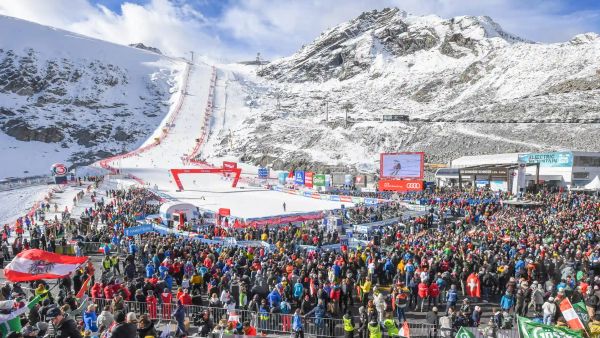
Pinheiro Braathen Wins Sölden Giant Slalom Opener by 0.48 Seconds
Two days at Sölden, two races decided by a hundredth somewhere on the podium, and one very quick Brazilian. Lucas Pinheiro Braathen led from the first run to win the men’s World Cup opener by 0.48 seconds, with Loïc Meillard second and Marco Odermatt third. River Radamus charged from 15th to fourth on a rutted course, and Britain’s Freddy Carrick-Smith banked his first World Cup points. Braathen still hasn’t lost a giant slalom since Olympic gold.
25 Oct 2026
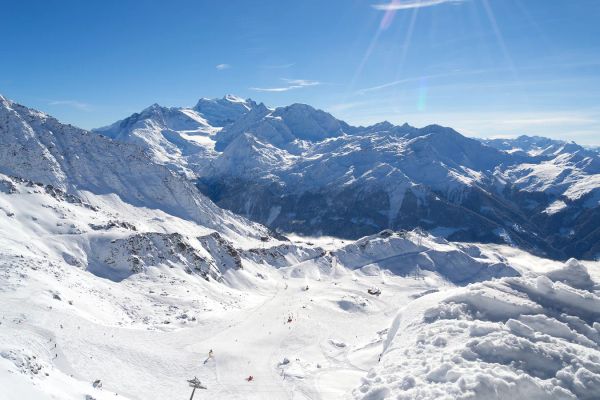
Alps Snow Forecast: Up to 64 cm Headed for the High Glaciers as the Snow Line Drops
The Alps are about to swap mild, sunny October weather for something far more wintry. A cold front arrives Tuesday, and SnowStash forecasts have Monterosa Ski out in front with 64 cm over 14 days, ahead of Blatten Belalp (55 cm) and Verbier (43 cm). The snow line should fall below 2000 metres by Wednesday night, and glaciers across Switzerland, Italy and Austria are in line for the best of it. The wind will have a say too.
20 Oct 2026
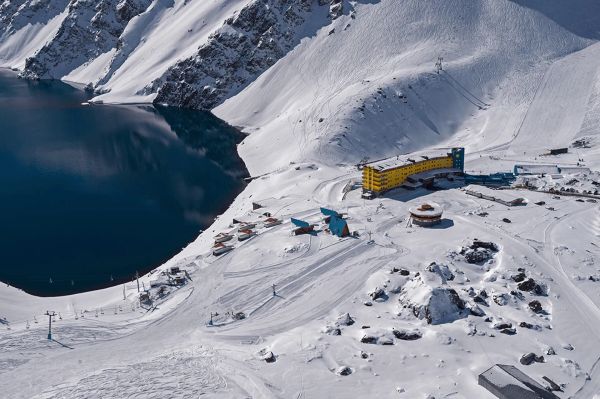
Four Dead After Avalanche Near Ski Portillo in Chile
A large avalanche struck near Laguna del Inca adjacent to Ski Portillo on Saturday afternoon, killing four people and injuring four others. The group were day visitors mountaineering in the backcountry after reportedly being warned about elevated avalanche risk by resort staff.
18 Oct 2026

Europe Ski Resorts Open Now: What Is Skiable in Mid-October 2026
Europe’s ski season is open, technically. After a record-warm summer, glaciers in Austria, Switzerland and Italy are running a few pistes apiece, Sölden, Stubai and Kitzsteinhorn started late, Titlis has pushed back to 24 October, and Zermatt reopens a few lifts on 14 October after more than two months shut. Finland’s Levi and Ruka are skiing on stored snow. Here is what is open, and what you actually get at each.
14 Oct 2026

Zermatt Plans World Cup Downhill Return on the Gornergrat for 2028
Zermatt is having another crack at a World Cup downhill, and this time nobody has to cross a border. Around 13 million Swiss francs is going into rebuilding the Gornergrat piste, including a jump fed by a roughly 300-metre in-run across the roof of the Gornergrat Railway gallery, with the Matterhorn lined up behind it for the TV cameras. First men’s race is pencilled in for March 2028, pending FIS homologation.
14 Oct 2026

Mt. Rose Begins Snowmaking for the 2026-27 Season at Lake Tahoe
Lake Tahoe’s highest base elevation is paying off early: Mt. Rose has started making snow for 2026-27 after the first flurries and a cold snap. The Nevada resort is backing it with nearly US$2 million in upgrades, including a replacement snowmaking main line, a new PistenBully groomer and restraint bars on every lift. Opening day is yet to be confirmed, though Heavenly and Northstar are already eyeing 20 November.
13 Oct 2026

Utah Ski Resorts 2026-27: What’s New at Alta, Deer Valley, Powder Mountain and More
Utah is still building flat out. For 2026-27, Powder Mountain opens a steep new Skytrac chair into more than 1,000 acres of advanced terrain, Deer Valley adds 200 acres on Hail Peak, Sundance gets a new quad and Park City adds a gondola from its new parking structure. Snowmaking is expanding almost everywhere, Eagle Point stays closed after the Cottonwood Fire, and the 2034 Games are setting the pace. Here’s what’s new, resort by resort.
13 Oct 2026

Mt Hutt Invests NZ$12 Million in Base Area, Tripling Its Sun Deck
Mt Hutt is getting busier, and its base lodge is about to catch up. NZ$12 million goes into a heated sun deck roughly three times the current size (430 m² to 1,300 m²), plus a new toilet block, heated steps down to snow level, extra storage and a new food and beverage outlet. Building starts after the 2026 season, with everything due for winter 2027.
11 Oct 2026