Back to News
Inferno Downhill Cancelled After Fatal Medical Incident at Mürren's 82nd Race

Inferno Downhill Cancelled After Fatal Medical Incident at Mürren's 82nd Race

Published Date:

Michael Fulton

Melbourne-based ski expert with 45+ resorts across 5 continents. Specialises in Australian skiing and riding and international resort comparisons.

45+ resorts visited14 years skiing

First Death in 82 Years Halts Historic Mürren Downhill Race

The 82nd International Inferno Races in Mürren ended in tragedy on 24 January 2026 when a 69-year-old competitor suffered a fatal medical incident near the finish line. After more than eight decades of racing without a single death, the event was cancelled mid-competition following the incident.

Race Cancelled After Medical Emergency

The downhill race was stopped after just over half the field had started. The competitor collapsed shortly before crossing the finish line and died at the scene despite immediate resuscitation efforts from medical personnel.

Following the incident, the organising committee made the decision to cancel the remainder of the race whilst counting the results of riders who had already completed the course.

I started at 8:56am this morning, and having only two years of skiing experience under my belt, it was genuinely one of the hardest physical challenges I've faced. The sheer distance and technical difficulty of the 12 kilometre course from Schilthorn to Winteregg pushes even experienced skiers to their limits.

The tragedy of someone dying so close to the finish line—particularly after 82 years without a fatality—casts a shadow over what should have been a celebration of amateur ski racing.


My personal video of the Inferno Race this year.

Bernese Oberland Dominates Results

Despite the shortened race format, local riders from the Bernese Oberland region claimed all podium positions. Mathias Reber from Niedersimmental took the win with a time of 7:16.47, having also won the Hexenabfahrt in Belalp the previous week.

Michel Stähli from Grund near Gstaad finished just three hundredths of a second behind Reber in second place. Third place went to Elia Saurer from Aeschlen, who crossed the line nearly four seconds behind the winner despite starting with bib number 315.

Challenging Conditions Slow Race Times

Race organisers had predicted winning times between six and seven minutes based on conditions the day before. However, several centimetres of overnight snow slowed the course considerably, adding over a minute to the fastest times.

The course difficulty became immediately apparent during the race. Even for someone with limited experience, the combination of fresh snow, technical sections, and the relentless vertical drop makes this one of the most demanding amateur downhill races globally.

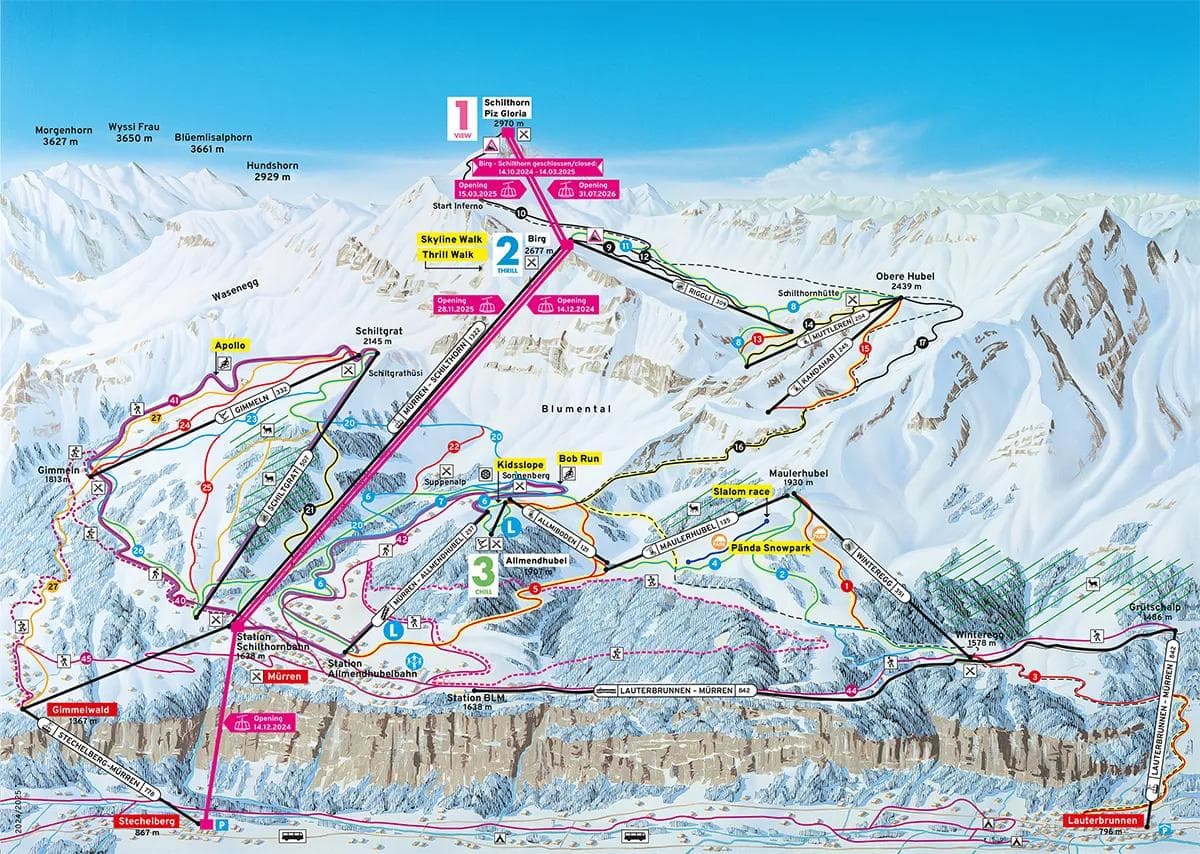
The trail map at Schilthorn ski resort in Mürren.
The trail map at Schilthorn ski resort in Mürren. Credit: Piz Gloria Ski Resort.

Historic Safety Record Broken

The Inferno Downhill has run annually since its inception, with this year marking the 82nd edition. The race had maintained a perfect safety record throughout its history until this year's tragic incident.

The event attracts hundreds of competitors ranging from experienced racers to relative newcomers testing themselves against one of skiing's most demanding amateur races. The technical difficulty combined with the extreme distance makes it a genuine endurance test.

Massive Volunteer Effort Continues

Around 400 volunteers made the race possible, with 100 working throughout Inferno Week and an additional 300 deployed specifically for the downhill event. Despite the cancellation, organisers proceeded with evening celebrations at the Alpine Sports Centre in Mürren in a modified format out of respect for the incident.

The International Inferno Races remain a significant event in the European amateur skiing calendar, typically drawing competitors from across the continent to tackle the challenging Mürren course.