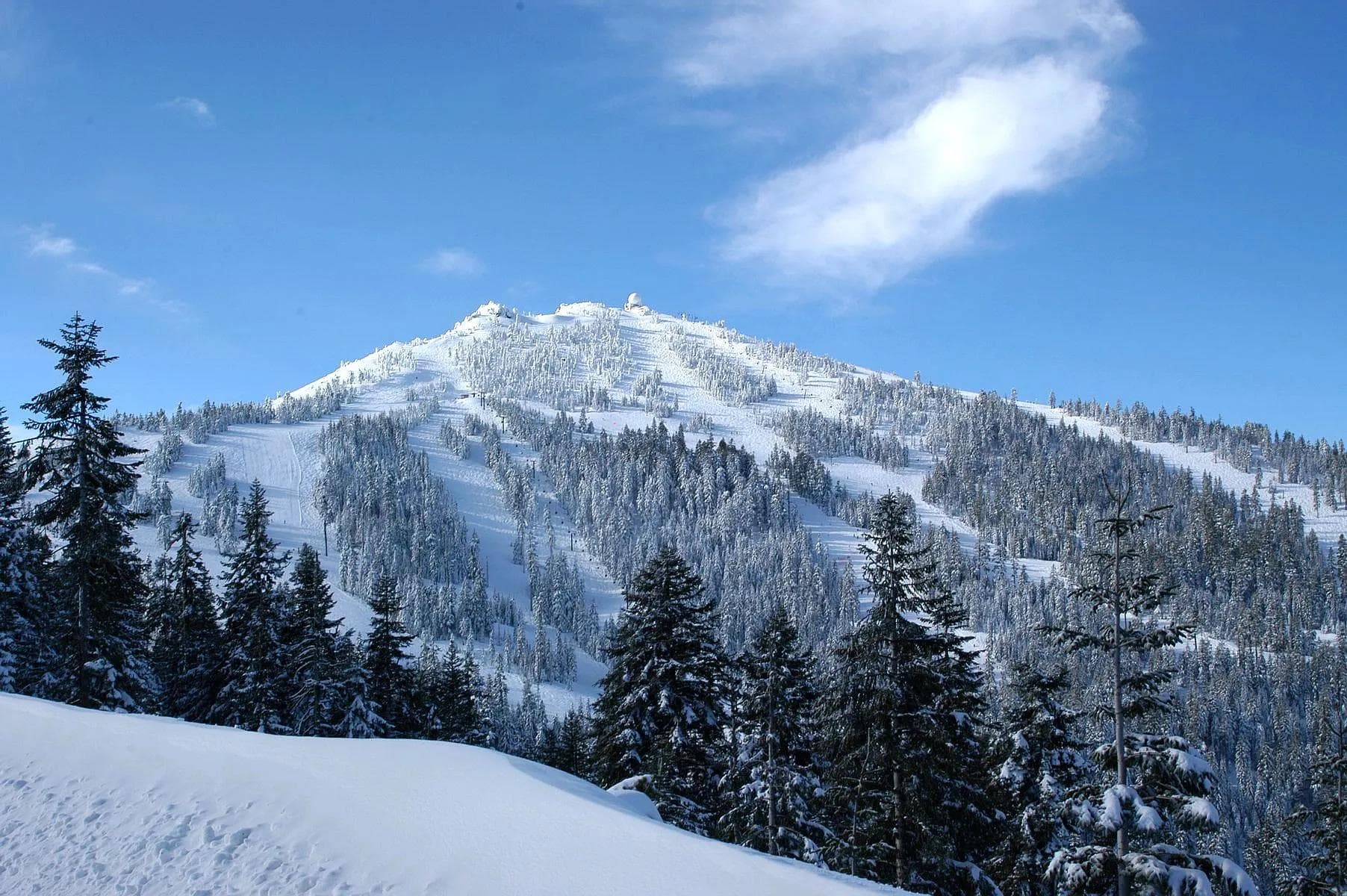
Thirty minutes from Ashland, Mt Ashland runs on community ownership and 6.7 metres of annual snowfall. With half the terrain rated advanced or expert, this Southern Oregon mountain offers proper Pacific Northwest steeps without the crowds.
Community-operated ski areas occupy an unusual space in North American skiing - they typically avoid the polish and price tags of corporate resorts whilst maintaining a focus on the skiing itself. Mt Ashland, perched in the Siskiyou Mountains since 1964, fits this model precisely. The 6.7 metres of annual snowfall and nearly half the mountain rated advanced or expert suggest the terrain warrants attention beyond its relatively modest 351-metre vertical drop.
Mt Ashland Mountain Overview
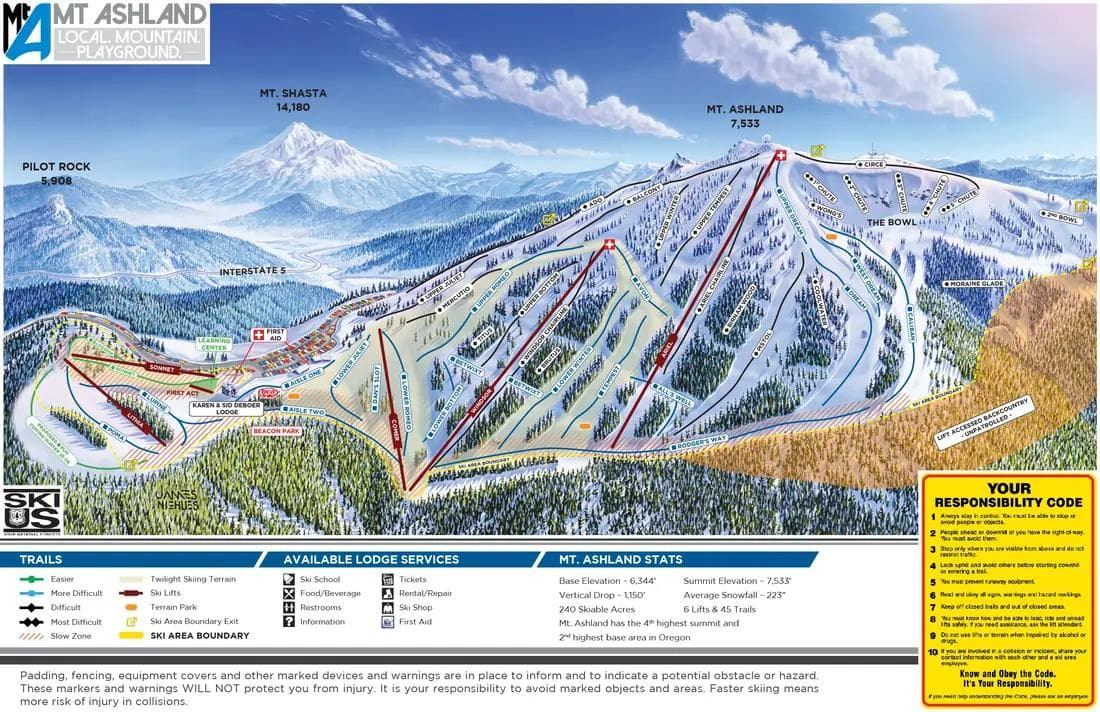
The numbers tell a straightforward story: 2,296 metres summit elevation, 44 runs across terrain that splits 12% beginner, 41% intermediate, and 47% advanced/expert. That final figure matters - many small mountains pad statistics with borderline classifications, but Mt Ashland's percentage aligns with visitor reports of genuinely steep fall lines and technical tree skiing. The Pacific Northwest hallmark of tight glades and sudden pitch changes appears throughout the upper mountain.
The 351-metre vertical drop ranks below expectations for destination skiing, though the terrain's character compensates partially. Multiple mid-mountain access points mean you can lap specific zones without riding the full vertical repeatedly. The data shows no lift count listed, which appears to be a data gap rather than reality - the mountain operates four lifts including a Poma surface lift accessing the summit bowl. Peak elevation sits just below 2,300 metres, positioning the entire mountain in a snow zone that typically holds quality through spring.
The terrain split favours confident intermediates and advanced skiers. Beginners get 12% of the mountain, which translates to adequate learning terrain but nothing extensive. The 41% intermediate terrain provides progression options, though conversations with locals suggest many blue runs lean firm rather than forgiving. Advanced and expert skiers find the value proposition here - 47% of the mountain offers proper challenge without the queues of larger resorts.
Tree skiing defines much of the advanced terrain. Pacific Northwest glades demand different skills than open bowls - constantly shifting sight lines, sudden drop-offs, and the occasional creek crossing. If your skiing background centres on groomed runs or above-treeline terrain, Mt Ashland's style may require adjustment. The community ownership model means amenities stay functional rather than luxurious. No heated seats on the lifts, no village-style base area development. This appeals to skiers who prioritise vertical metres over après infrastructure, less so to those seeking a full resort experience.
Mt Ashland Snow and Season
The 6.7-metre average annual snowfall exceeds many Pacific Northwest areas at similar elevation, benefiting from Mt Ashland's position catching storms moving inland. The Siskiyou Mountains create their own weather patterns, occasionally delivering powder whilst larger resorts to the north see rain. The 2025-26 season runs 13 December to 29 March, a 107-day window that's realistic for the elevation band. Spring conditions can deteriorate quickly once March temperatures climb.
Snow quality varies considerably by exposure. North-facing terrain holds cold snow longer, whilst south-facing aspects transform to corn snow earlier in the day. The Pacific maritime influence means wet snow events occur regularly - that 6.7-metre average includes substantial water content. Proper powder days deliver the light, dry snow that makes Pacific Northwest skiing exceptional, but they arrive between systems bringing heavier precipitation. The mountain's modest elevation means the rain/snow line occasionally rises to summit level during warm atmospheric rivers.
Medford International Airport sits 56 kilometres north, offering connections through major western hubs. The 30-minute drive from Ashland follows Interstate 5 south before turning onto Mount Ashland Road, a mountain highway that climbs through Siskiyou National Forest. Winter driving conditions require attention - the access road sees frequent snow and ice, with chains or four-wheel drive often mandatory. The community ownership model means snow removal operates on available resources rather than resort-standard immediate clearing.
The proximity to Ashland positions Mt Ashland within a university town known for theatre and dining rather than ski culture. This creates an unusual dynamic - comfortable accommodation and restaurants exist 30 minutes from the mountain, but little ski-specific infrastructure surrounds the base area. Day tripping from Ashland makes practical sense. For international visitors, the appeal likely depends on combining Mt Ashland with broader Oregon travel rather than a dedicated ski trip.
Mt Ashland Lift Tickets
Standard adult tickets run $75, rising to $89 on peak days. Youth and senior tickets at $65 and children at $55 maintain the community mountain pricing model - meaningfully below Tahoe or Whistler rates whilst remaining above purely local operations. The peak pricing at $89 sits just below the psychological $90 threshold, suggesting some awareness of market positioning. No dynamic pricing system appears active, keeping the structure straightforward.
Season passes provide the expected value for repeat visits, though specific pricing wasn't provided in the data. The ticket costs work for weekend trips from Northern California or multi-day visits based in Ashland, less so for single-day destination skiing unless other factors (uncrowded runs, specific snow conditions) justify the economics.
The Verdict on Mt Ashland
Mt Ashland delivers what community mountains do well - authentic terrain, reasonable pricing, and skiing prioritised over resort amenities. The 6.7 metres of snowfall and legitimate advanced terrain justify attention from skiers within a two-hour radius. Destination visitors need realistic expectations about vertical drop, lift infrastructure, and base facilities. For uncrowded Pacific Northwest tree skiing when the snow falls properly, Mt Ashland provides exactly that. Full resort details, webcams, and trail maps are on the Snowstash resort page.