TL;DR
Kreuzberg delivers something increasingly rare in German skiing - uncrowded slopes at sensible prices. This Rhön Mountains resort offers 318 metres of vertical across 13 kilometres of trails, targeting families and intermediates who've had enough of Alpine weekend queues.

Most German skiers point their cars toward the Alps when snow falls, which is precisely why Kreuzberg deserves attention. This northern Bavarian resort sits in the Rhön Mountains - a UNESCO Biosphere Reserve that receives proper snowfall whilst everyone else is gridlocked on the A95.
The numbers won't excite vertical junkies, but they tell an honest story: 318 metres of drop, 13 kilometres of trails, three lifts. What matters more is what those numbers deliver - consistently uncrowded skiing at €21 for an adult day ticket, which is roughly what you'd pay for motorway coffee and a pretzel driving to Garmisch.
Kreuzberg Mountain Overview
The resort spans from 610 to 928 metres, which sounds modest until you consider the Rhön's exposed plateau position catches weather systems that pass over lower terrain. North-facing slopes hold snow better than the aspect suggests, particularly in the shaded sections near the summit.
Eleven runs split 38% beginner and 62% intermediate - no advanced or expert terrain whatsoever. This isn't false modesty; the mountain simply doesn't have the pitch for it. The vertical works out to roughly 300 metres per run if you're doing the mathematics, which means confident intermediates will lap the mountain quickly. Three lifts service the area without notable bottlenecks, even during peak season weekends.
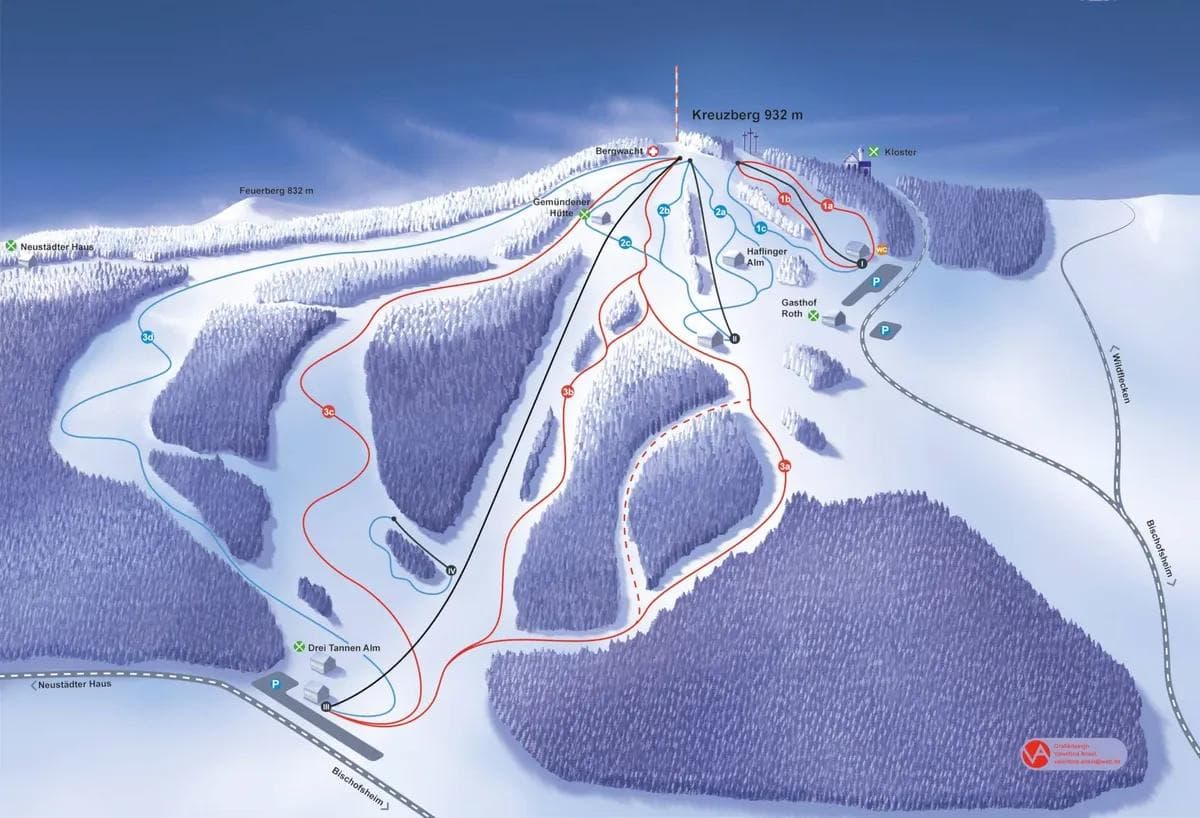
The terrain layout favours progression. Beginners have proper dedicated space rather than being shunted to the mountain's edges, whilst intermediates can work on technique without navigating around terrain park features or racing lines. The Kreuzberg Monastery sits adjacent to the base area, producing Franciscan beers since 1731 - a detail that matters more after skiing than before.
Who is Kreuzberg Best For
Families with young children will find this environment considerably less stressful than Alpine mega-resorts. The compact layout means you won't lose sight of your group, and beginners aren't navigating complex trail networks to return to base. Lift ticket prices (€16 for children) make multi-day visits financially reasonable rather than requiring a second mortgage.
Weekend skiers from Frankfurt, Würzburg, or even further afield use Kreuzberg as an antidote to Alpine crowds. The 150-kilometre drive from Frankfurt takes roughly two hours - comparable to reaching Winterberg but with better snow reliability. Intermediate skiers focused on mileage and technique refinement will appreciate the uncrowded groomers, though anyone seeking challenges beyond groomed reds should look elsewhere.
This isn't terrain for experts unless you're specifically seeking easy skiing after injury or accompanying beginners. The absence of advanced runs isn't a design oversight - the mountain simply doesn't have the gradient. Cross-country skiers will find the surrounding Rhön region offers extensive trail networks if downhill options feel limiting.
Kreuzberg Snow & Season
The resort operates December through March, with January and February offering the most consistent conditions. The 1.25-metre seasonal average sounds marginal, but the Rhön's plateau position and north-facing aspects preserve snow quality better than similar elevations elsewhere in central Germany. This season has logged 128 centimetres total with 4 centimetres in the past week - adequate for maintaining base coverage rather than delivering powder days.
Snowmaking infrastructure exists but specifics aren't published. The elevation profile (base at 610 metres) means natural snow reliability depends heavily on temperature patterns. Warmer winters will stress the operation more than resorts starting 200 metres higher. The UNESCO Biosphere Reserve designation may limit future snowmaking expansion, though current capabilities appear sufficient for the terrain size.
Plan visits around weather windows rather than hoping for powder. The Rhön receives respectable snowfall when systems track correctly, but this isn't the Alps. Check current conditions before driving - the resort's honest about coverage rather than overstating it.
Getting to Kreuzberg
The resort sits in northern Bavaria, approximately 150 kilometres east of Frankfurt and 100 kilometres from Würzburg. Road access is straightforward via the A7 autobahn, though final approach roads climb through rural areas that require winter tyres and chains during storms. Public transport options exist but involve connections through Fulda or Bad Neustadt - feasible for locals, less practical for visitors.
Parking at the base area handles weekend crowds without the chaos of larger resorts. No gondola villages or purpose-built accommodation clusters - this is day-trip skiing from regional cities rather than destination tourism. That character appeals to some and limits others, depending what you're seeking.
Kreuzberg Lift Tickets
Adult day tickets cost €21, children €16. No dynamic pricing surcharges, no mandatory apps, no tiered access levels - you pay a reasonable price and ski the mountain. Multi-day tickets and season passes offer standard discounts without requiring spreadsheet analysis to determine value.
The pricing feels refreshingly honest compared to Alpine resorts pushing €60+ day tickets. Whether that represents good value depends on what you're comparing against. For the terrain and vertical offered, it's fair. For families doing the mathematics on a weekend trip versus Alpine alternatives, it's considerably cheaper once you factor in accommodation and travel costs.
The Verdict on Kreuzberg
Kreuzberg works for specific skiing needs rather than trying to be everything for everyone. The limited vertical and intermediate terrain cap its appeal, but the uncrowded slopes, honest pricing, and proximity to central German cities create a niche that larger resorts can't fill. This isn't destination skiing - it's weekend skiing that doesn't require Alpine commitments or budgets. Full resort details, webcams, and trail maps are on the Snowstash resort page.
Full resort details, live webcams, and trail maps for Kreuzberg on Snowstash →
About the author

Michael Fulton
Melbourne-based skier and snowboarder with 50+ resorts across 5 continents. Specialises in Australian resorts and international resort comparisons.