
The Overview
Michael Fulton
Melbourne-based skier and snowboarder with 50+ resorts across 5 continents. Specialises in Australian resorts and international resort comparisons.
Aspen Mountain's summit reaches 11,212 feet, dropping 3,267 vertical feet to a base at 7,943 feet across 76 runs spread over 675 acres directly above downtown Aspen, Colorado. Terrain splits 48 per cent intermediate and 26 per cent each for advanced and expert, with no beginner-rated runs at all. Average annual snowfall runs to roughly 235 inches. The resort carries Ikon Pass and Mountain Collective affiliation. Eight lifts, including four double chairs, three quad chairs and one gondola, serve the mountain.
Aspen Mountain, known locally as Ajax, holds the genuinely rare distinction among major American ski resorts of offering no beginner terrain whatsoever, a deliberate reflection of its identity as a serious, downtown-adjacent mountain for committed skiers. Its direct access from Aspen's town centre makes it one of the most conveniently located resorts in Colorado.
Austrian ski instructor and racing champion Friedl Pfeifer, together with Chicago industrialist Walter Paepcke, Judge William E. Doyle, James J. Johnston and H.F. Klock, founded the Aspen Skiing Company in 1946. Lift-1, the resort's first chairlift, opened on 14 December 1946 as the world's longest chairlift at the time, establishing Aspen Mountain as the foundation of what would become a four-mountain skiing empire.
The Aspen Skiing Company did not pay dividends until Twentieth Century Fox purchased it in 1977, and by July 1985 ownership had passed to the Crown family of Illinois alongside a partnership called MKDG. The Crown family continues to own Aspen Skiing Company today. Adult daily tickets run from 189 to 259 US dollars.
3,264ft
Vertical
76
Runs
675 acres
Skiable
20ft
Annual snow
Ikon / Mountain Collective
Pass
The Terrain
76 runs across 675 acres skiable
Aspen Mountain rises straight from downtown Aspen, packing 675 acres (273 hectares) of terrain into 76 runs. The base sits at 7,950 ft (2,422 m) and the summit at 11,210 ft (3,417 m), a vertical drop of 3,260 ft (995 m). Intermediate runs make up 48% of the mountain, with advanced and expert at 26% each and no beginner terrain at all. Annual snowfall averages around 235 inches. Eight lifts, including a high-speed gondola, serve the mountain from the edge of town, with the Sundeck restaurant at the summit.
From the Sundeck at the summit, intermediate runs fan out on either side of Bell Mountain, through Copper Bowl and down Spar Gulch. Bell offers bump runs down its ridge and its east and west faces for mogul fans, while Walsh's, Hyrup's and Kristi are double black runs with long, steep fall lines. The Silver Queen run is the steepest at about 42 degrees, and Ruthie's Run stretches more than two miles down the west ridge, reached by the Ruthie's high-speed double chair. With so little easy terrain, this is a mountain for confident intermediates, advanced skiers and experts. Beginners should pick Buttermilk or Snowmass, and the town of Aspen sits right at the base.
Terrain split
76
runs
76 runs across 4 grades
Beginner0 runs · 0%
Intermediate36 runs · 48%
Advanced20 runs · 26%
Expert20 runs · 26%
Time it right
When to visit Aspen Mountain
The 2025-26 season at Aspen Mountain ran from 28 November 2025 to 19 April 2026, a roughly twenty-week season supported by average annual snowfall of around 235 inches. Season dates can shift depending on early and late-season weather.
Midwinter, from December through February, typically brings the most consistent conditions to Aspen Mountain's intermediate-and-expert-weighted terrain. As an Ikon Pass and Mountain Collective resort, Aspen Mountain draws a genuinely international visitor base alongside pass holders, supported by the mountain's direct access from downtown Aspen's considerable luxury lodging and dining infrastructure.
Given the complete absence of beginner terrain, Aspen Mountain's visitor base skews toward intermediate and advanced skiers, with beginners typically directed to sister mountain Buttermilk within the broader Aspen Skiing Company portfolio. School holiday periods and Aspen's storied social calendar bring substantial visitation throughout the season.
Specific event programming beyond standard operations is not confirmed in available resort information. Under continued Crown family ownership of the Aspen Skiing Company, Aspen Mountain continues building on nearly eight decades of history since Lift-1's December 1946 opening. The mountain's direct downtown access and committed-skier character remain central to its seasonal identity.
Season 2026 - 2027
27 Nov 2026
Opens
18 Apr 2027
Closes
142
Days open
20 ft
Annual snow
Getting there
Getting to Aspen Mountain, and where to stay
Aspen Mountain sits directly above downtown Aspen, Colorado, with a base elevation of 7,943 feet and a summit at 11,212 feet across a 3,267-foot vertical drop over 675 acres. This setting gives Aspen Mountain one of the most convenient downtown-to-slopes configurations of any major American ski resort.
Aspen itself offers extensive luxury lodging, dining and shopping immediately at the mountain's base, a genuinely walkable town centre renowned as one of America's premier ski destinations. The broader Roaring Fork Valley surrounds Aspen with additional recreation and scenic attractions.
Colorado State Highway 82 provides access to Aspen from the broader region. Winter driving conditions on this route can include snow and ice, particularly through Independence Pass when open, though the main approach via Glenwood Springs is well maintained. There is no need for a car once in town, given the gondola's direct downtown access.
Aspen-Pitkin County Airport, within a short drive of downtown, offers direct flights from numerous major US cities, making Aspen Mountain one of the more air-accessible ski destinations in Colorado despite its remote mountain setting.
Where to stay
Search all stays →Hotels and lodges near Aspen Mountain, powered by Stay22.
Latest News
From the SnowStash desk

Zermatt Plans World Cup Downhill Return on the Gornergrat for 2028
Zermatt is having another crack at a World Cup downhill, and this time nobody has to cross a border. Around 13 million Swiss francs is going into rebuilding the Gornergrat piste, including a jump fed by a roughly 300-metre in-run across the roof of the Gornergrat Railway gallery, with the Matterhorn lined up behind it for the TV cameras. First men’s race is pencilled in for March 2028, pending FIS homologation.
14 Oct 2026

Mt. Rose Begins Snowmaking for the 2026-27 Season at Lake Tahoe
Lake Tahoe’s highest base elevation is paying off early: Mt. Rose has started making snow for 2026-27 after the first flurries and a cold snap. The Nevada resort is backing it with nearly US$2 million in upgrades, including a replacement snowmaking main line, a new PistenBully groomer and restraint bars on every lift. Opening day is yet to be confirmed, though Heavenly and Northstar are already eyeing 20 November.
13 Oct 2026

Utah Ski Resorts 2026-27: What’s New at Alta, Deer Valley, Powder Mountain and More
Utah is still building flat out. For 2026-27, Powder Mountain opens a steep new Skytrac chair into more than 1,000 acres of advanced terrain, Deer Valley adds 200 acres on Hail Peak, Sundance gets a new quad and Park City adds a gondola from its new parking structure. Snowmaking is expanding almost everywhere, Eagle Point stays closed after the Cottonwood Fire, and the 2034 Games are setting the pace. Here’s what’s new, resort by resort.
13 Oct 2026

Mt Hutt Invests NZ$12 Million in Base Area, Tripling Its Sun Deck
Mt Hutt is getting busier, and its base lodge is about to catch up. NZ$12 million goes into a heated sun deck roughly three times the current size (430 m² to 1,300 m²), plus a new toilet block, heated steps down to snow level, extra storage and a new food and beverage outlet. Building starts after the 2026 season, with everything due for winter 2027.
11 Oct 2026

Vermont Ski Resort Opening Dates 2026-27: Few Dates Set, Killington Waits on the Cold
Vermont's season is slow to take shape. Stratton is tentatively targeting 18 November and Sugarbush 21 November, while Pico has Friday 11 December on the calendar. Killington never sets a date and opens when the snowmaking allows, and Vail Resorts has yet to name days for Stowe, Okemo and Mount Snow. The forecasts disagree about snow, and the main El Niño worry for the Green Mountains is warmth.
9 Oct 2026
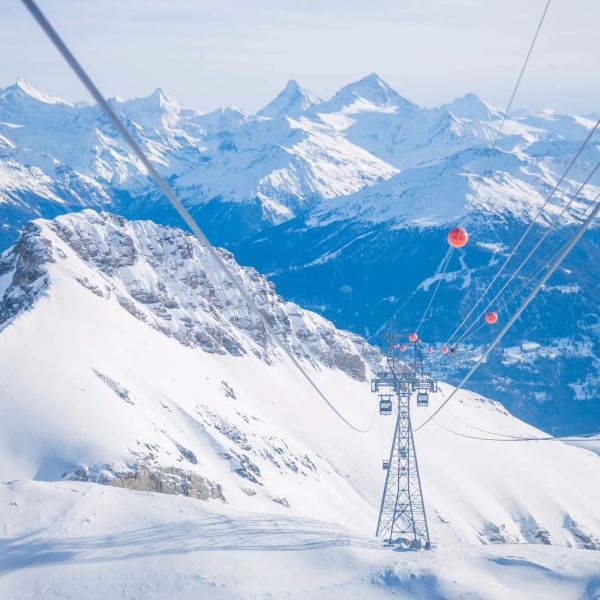
Crans-Montana 2027 World Championships President Resigns Ahead of Fraud Hearing
Less than four months out from the Crans-Montana 2027 World Championships, the man running the organising committee has stepped down. Claude-Alain Schmidhalter resigned as Swiss-Ski vice president and OC president after being indicted over a business dispute unrelated to skiing. He denies the allegations and faces court on October 27. Interim leaders are in place for the February 1-14 event.
9 Oct 2026
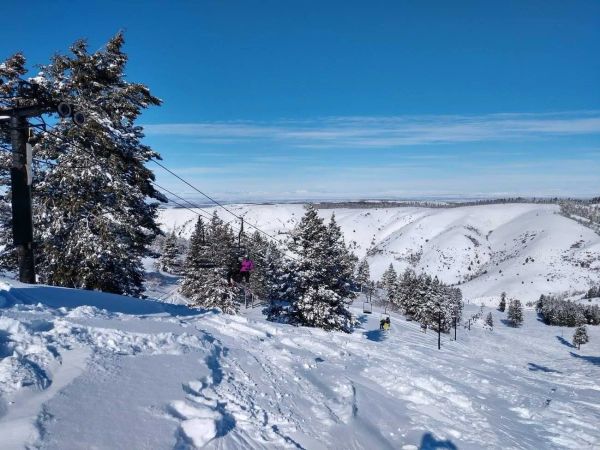
Kelly Canyon, Idaho, Adds Snowmaking, a Bigger Terrain Park and More Parking for 2026-27
Kelly Canyon had a rough 2025-26, and the Idaho resort has spent the summer making sure it doesn’t repeat. Snowmaking now reaches the top of Goldrush, the terrain park is doubling in size with a stereo system, lights and a snack shack, and the car park is getting bigger. Grooming is stepping up too. Target opening is December 4, conditions permitting.
9 Oct 2026
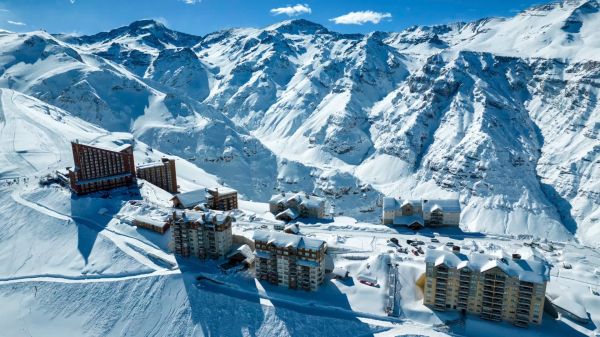
Valle Nevado Extends Season to November 8 After 108 cm in 48 Hours
Winter was meant to be winding down in Chile. Then Valle Nevado took 108 cm in 48 hours in early October, and the resort has pushed its closing date out to November 8 - its latest in 38 years of operation. That makes 143 days of skiing since opening day on June 19, with 690 cm banked for the season. Only part of the mountain is running while the storm settles, so check the mountain report before you plan a trip.
9 Oct 2026