
The Overview
Michael Fulton
Melbourne-based skier and snowboarder with 50+ resorts across 5 continents. Specialises in Australian resorts and international resort comparisons.
Lutsen Mountains' summit reaches 1,686 feet, dropping 823 vertical feet to a base at 863 feet across 95 runs spread over 1,000 acres on Lake Superior's North Shore. Terrain splits 47 per cent intermediate, 25 per cent advanced, 18 per cent beginner and 10 per cent expert. Average annual snowfall reaches roughly 120 inches. The resort operates on the Indy Pass and is the largest ski area in the Midwest by acreage.
Four mountains, Eagle, Moose, Mystery and Ullr, make up the Lutsen terrain, connected by a network of lifts including an eight-passenger gondola. The resort's 823-foot vertical drop is the largest in the Midwest, giving it a reputation beyond its Minnesota location. Views over Lake Superior from the upper mountain are a signature feature not matched by other Midwest resorts. The mix of terrain across four peaks gives more variety than most regional hills of similar scale.
George Nelson, grandson of Swedish immigrant C.A.A. Nelson who homesteaded the site in 1885, founded Lutsen Mountains in 1948 as Minnesota's first downhill ski resort. The Nelson family's ski heritage produced Cindy Nelson, George's daughter, who became the first American to win a World Cup downhill race and won bronze in downhill at the 1976 Winter Olympics. In 1989, Lutsen installed the first gondola at a mid-American ski resort, a German-built PHB Hall system connecting the base to Moose Mountain. A new 7 million US dollar Doppelmayr eight-passenger gondola between Eagle and Moose Mountains opened in 2015.
Indy Pass holders get access to Lutsen alongside dozens of other independent resorts across North America. Adult full-day tickets range from 79 to 119 US dollars depending on date, with a season pass, the Legendary Gold Pass, priced at 699 dollars. The resort suits skiers seeking the Midwest's largest vertical and most varied terrain, combined with Lake Superior scenery unavailable at flatter regional hills. Its remote North Shore location makes it more of a multi-day destination than a quick day trip for most Minnesota skiers.
823ft
Vertical
95
Runs
1,000 acres
Skiable
10ft
Annual snow
Indy
Pass
The Terrain
95 runs across 1,000 acres skiable
Lutsen Mountain is the largest ski area in the Midwest, spread over 1,000 acres (405 hectares) and 95 runs on the shore of Lake Superior in northern Minnesota. The base sits at 860 ft (263 m) and the summit at 1,690 ft (514 m), a vertical drop of 820 ft (251 m). Intermediate runs lead at 47%, followed by 25% advanced, 18% beginner and 10% expert. Four double chairs, a triple, an eight-person chair, a gondola and a surface lift serve four connected peaks. Lake effect snow and snowmaking back it up, with about 120 inches falling in an average winter.
Eagle Mountain and Moose Mountain hold much of the main skiing, with Mystery Mountain and Ullr Mountain adding further variety. The Summit Express Gondola crosses the Poplar River valley to link the main area with Moose and Mystery, and views over Lake Superior from the upper runs are a highlight. Eagle Mountain has around 21 primary runs, from groomed cruisers to steeper lines, and tree skiing adds some variety. Lutsen suits intermediates, families and Midwest skiers wanting a big-hill feel, with expert terrain limited by the vertical. Come for the lake views and mellow cruising rather than steeps.
Terrain split
95
runs
95 runs across 4 grades
Beginner17 runs · 18%
Intermediate45 runs · 47%
Advanced24 runs · 25%
Expert10 runs · 10%
Time it right
When to visit Lutsen Mountain
The 2025-26 season at Lutsen Mountains ran from 6 December 2025 to 13 April 2026, a roughly nineteen-week window, among the longer seasons of any Midwest resort. The resort's position on Lake Superior's North Shore and its snowmaking investment support a season length exceeding most other Minnesota and Wisconsin ski areas. Season dates can shift slightly year to year based on weather. The mid-April close is notably later than most regional competitors.
Average annual snowfall of roughly 120 inches benefits from Lake Superior's lake-effect influence, giving Lutsen more natural snow than many inland Midwest resorts. This lake-effect boost, combined with snowmaking, supports the resort's comparatively long season. Base depth and season totals vary year to year with Lake Superior storm activity. The North Shore's colder microclimate compared with southern Minnesota helps snow retention into spring.
January and February typically offer the most reliable conditions once lake-effect snow and snowmaking have built a consistent base. The resort's four-mountain layout means conditions can vary between peaks depending on aspect and exposure to Lake Superior weather. Late-season visits into March and April benefit from the extended operating window relative to other Midwest hills. Weekday visits are generally quieter than weekends, given the resort's role as a regional multi-day destination.
Lutsen's Olympic connection through Cindy Nelson adds to its identity within competitive Midwest skiing history, alongside its status as Minnesota's first downhill resort since 1948. Specific festival or event programming beyond standard season operations is not confirmed in available resort information. The resort's North Shore location supports broader winter tourism beyond skiing, given the area's other Lake Superior attractions. As the Midwest's largest ski area, Lutsen's calendar centres on sustaining its four-mountain, multi-day destination role.
Season 2026 - 2027
21 Nov 2026
Opens
2 May 2027
Closes
162
Days open
10 ft
Annual snow
Getting there
Getting to Lutsen Mountain, and where to stay
Lutsen Mountains sits on Lake Superior's North Shore in Cook County, Minnesota, with a base elevation of 863 feet. The summit reaches 1,686 feet across an 823-foot vertical drop, the largest in the Midwest. The resort spans four peaks, Eagle, Moose, Mystery and Ullr, within Lutsen Township. Lake Superior itself is visible from the upper mountain, a rare feature for a Midwest ski area.
Lutsen, the small township for which the resort is named, traces its origins to Swedish immigrant C.A.A. Nelson's 1885 homestead claim at the mouth of the Poplar River, which grew into Minnesota's first resort. Grand Marais, a larger North Shore town, sits further up the highway, providing additional lodging and services. The broader North Shore region carries a rugged, lake-focused identity distinct from the rest of Minnesota. Duluth, the nearest sizeable city, lies roughly 90 miles southwest.
Minnesota State Highway 61 runs the length of the North Shore, providing the main access route from Duluth and the Twin Cities. The drive from Duluth takes around two hours, while the Twin Cities are roughly four hours away by road. Winter driving along Highway 61 can include lake-effect snow squalls and icy conditions, typical of the North Shore corridor. No public transport service reaches Lutsen, making a car the standard way to arrive.
Duluth International Airport is the nearest airport with scheduled commercial service, roughly 90 miles southwest of the resort. Minneapolis-St. Paul International Airport offers substantially more flight options but sits around four hours away by road. Thunder Bay, Ontario, across the Canadian border, provides a further regional alternative for some travellers. Most visitors drive the full length of Highway 61 from Duluth or the Twin Cities rather than flying into a closer regional airport.
Where to stay
Search all stays →Hotels and lodges near Lutsen Mountain, powered by Stay22.
Latest News
From the SnowStash desk
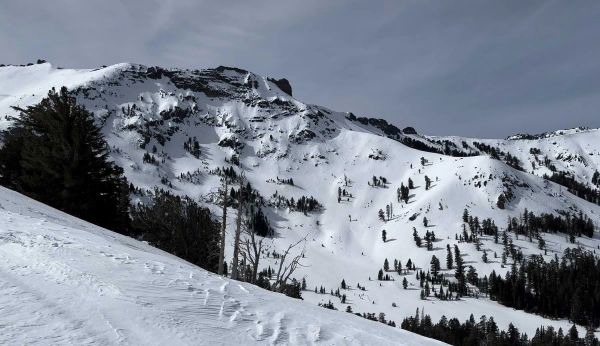
California Ski Resort Opening Dates 2026-27: Mammoth Leads, Tahoe Follows
Mammoth Mountain is first up in California, targeting Friday 13 November after a dusting of September snow. Heavenly and Northstar follow on 20 November, Palisades Tahoe on Wednesday 25 November and Sugar Bowl on 27 November, with Kirkwood on 4 December and June Mountain on 19 December. Plenty of smaller areas have no date yet. A super El Niño favours the Sierra, but a warmer storm track is the catch.
7 Oct 2026
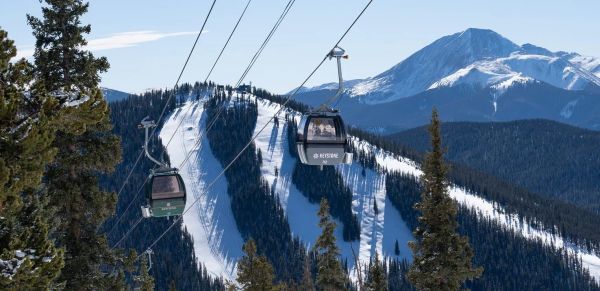
Colorado Ski Resort Opening Dates 2026-27: A-Basin and Keystone Race to Be First
Arapahoe Basin, Keystone and Winter Park are all chasing an October start, though none has a firm date yet. The first dated openers are Breckenridge and Copper on Friday 6 November, then Vail on 13 November, with most of the rest bunched around US Thanksgiving. Hesperus did not open at all last season. A super El Niño offers hope but no guarantee, and forecasters say the southern mountains have the better odds.
5 Oct 2026
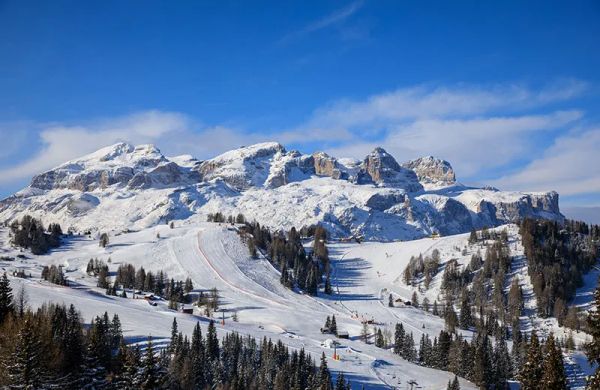
Dolomiti Superski 2026-27: Four New Gondolas, New Reservoirs and an €89 Peak Day Pass
Dolomiti Superski is spending around €100 million across its 12 areas before winter. Kronplatz gets a new 10-passenger gondola with a middle station, 3 Zinnen gets Helmissimo, and Val di Fassa swaps a chairlift for a gondola above Col Valvacin. New water-storage basins and upgraded snowmaking follow, and construction has started on the San Martino to Passo Rolle link. A peak adult day pass is €89.
4 Oct 2026
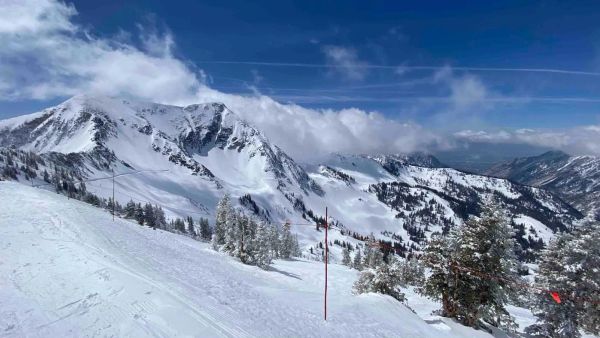
Utah Ski Resort Opening Dates 2026-27: Brian Head First, Eagle Point Out
Brian Head is targeting 6 November, though last year it aimed for 7 November and did not open until the 25th. Park City, Alta and Solitude are pencilled in for 20 November, Snowbird and Snowbasin for 27 November, and Deer Valley for 5 December. Eagle Point will stay closed after the Cottonwood Fire. A super El Niño is forecast, but the big snow is not expected until January.
4 Oct 2026
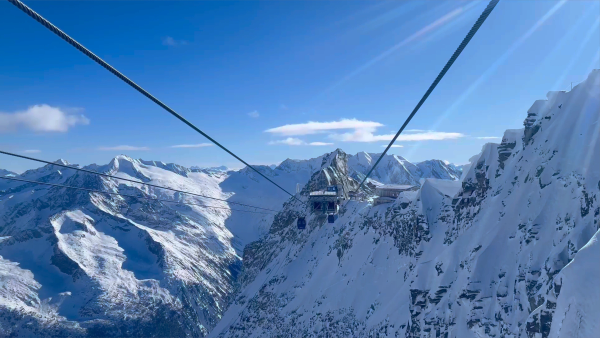
Hintertux Glacier Opens for 2026-27 With 12 Kilometres of Piste
Hintertux became Austria's second glacier to open for 2026-27 on Friday 2 October, after the Pitztal Glacier. Twelve kilometres of piste are running around the Olperer and Gefrorene Wand, served by one gondola and two drag lifts, with the Betterpark also open. Lifts officially run 8:15 am to 4:30 pm, but skiing stops at 2 pm for now.
4 Oct 2026
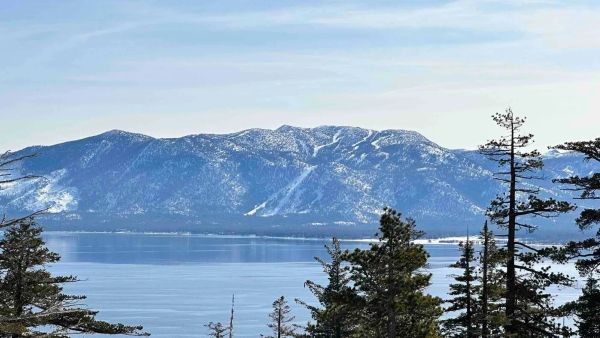
Vail Resorts Counts the Cost of a Thin Winter as Pass Sales Slide Further
A historically poor western winter cut Vail Resorts' annual net income from $280 million to $147.5 million and skier visits by 13.4 per cent. Now 2026-27 pass units are down 12 per cent as of 18 September, worse than the 10 per cent flagged in spring. Vail blames the weather and thinks some buyers are simply waiting, and it forecasts a rebound if the snow behaves.
3 Oct 2026
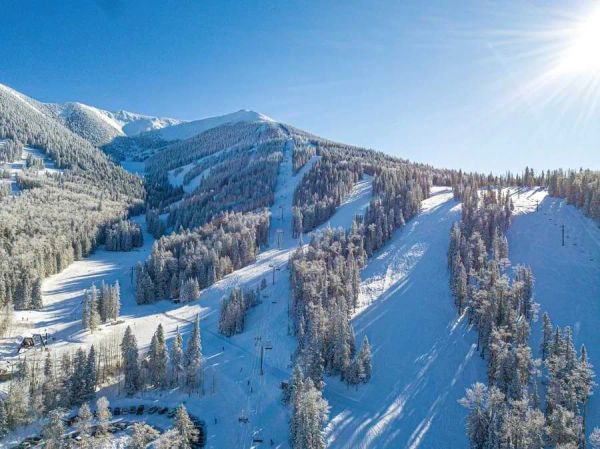
Arizona Snowbowl's $1 Lift Tickets Are Hard to Find, but $9 Days Are Not
Arizona Snowbowl advertised eight $1 lift ticket days this winter. Go looking and only three are showing - 10 March, 1 April and 10 April - so the rest may already have gone. The consolation is a calendar full of $9 days, including all but one day in April. Opening day is 20 November, weather permitting, and opening weekend is $19.
2 Oct 2026
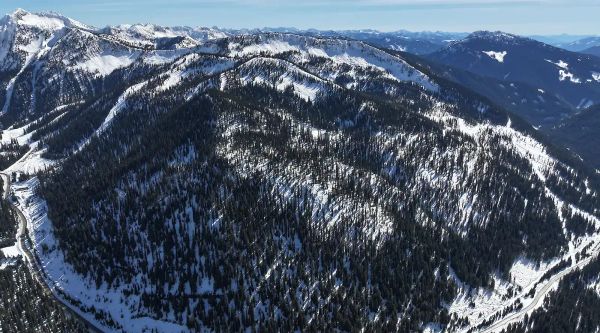
Whitewater Brings Its Short Side Inbounds, With Six New Runs for 2026-27
For years, Whitewater's Short Side was where you ducked a rope and hoped for the best: unmapped, ungroomed and unpatrolled. This winter it's inbounds. Six new runs of glades and fall-line skiing add 190 acres (about 77 hectares), taking the resort past 1,400 acres in total. F2 Logging spent a month in the trees to make it happen, and opening day is pencilled in for 4 December. Bonanza now needs less snow to groom, too.
1 Oct 2026
Lutsen Mountain Lift System
Lutsen Mountains runs eight lifts: four double chairs, one eight-passenger gondola, one triple chair, one further gondola-type installation and one surface lift, serving 95 runs across 1,000 acres and four mountains. This is one of the more complex lift networks in the Midwest, reflecting the resort's larger scale. The 2015 high-speed eight-passenger gondola connecting Eagle and Moose Mountains is the standout modern installation. Four double chairs handle much of the remaining uphill capacity across the other peaks.
The original 1989 PHB Hall gondola, a German-built system connecting the base area to Moose Mountain, was the first gondola installed at a mid-American ski resort, predating the 2015 Doppelmayr replacement between Eagle and Moose. The double chairs distribute traffic across Mystery and Ullr mountains, the resort's other two peaks. Uphill capacity has grown substantially since the original 1948 opening, when the resort operated with far more basic lift infrastructure. The mix of chair types reflects decades of incremental additions across four separate peaks.
Skiers can move between the four mountains, Eagle, Moose, Mystery and Ullr, via the lift and gondola network rather than a single continuous run system. The 2015 gondola specifically links Eagle and Moose Mountains, reducing travel time between those two peaks. There is no single base area serving all four mountains identically; skiers typically choose a starting point based on which peak they plan to ski first. This multi-peak layout is unusual for a Midwest resort and adds navigation complexity compared with single-mountain hills.
The 2014-2015 gondola project, a 7 million US dollar investment, represents Lutsen's most significant recent lift upgrade, replacing older infrastructure between Eagle and Moose Mountains. This followed the 1989 installation of the Midwest's first mid-American resort gondola. Investment has focused on connecting the resort's four-mountain layout more efficiently rather than adding entirely new terrain. Further lift expansion beyond the 2015 gondola has not been documented in available resort information.
8lifts across 5 types
1
Gondola
1
8-Person Chair
1
Triple Chair
4
Double Chairs
1
Surface Lift
Lutsen Mountain lift system
Lutsen Mountain is served by 8 lifts, listed here by type. Check which lifts are turning against the live conditions before you plan your first laps - early lifts and high-speed chairs get you to the best snow fastest.
More Lutsen Mountain intelligence: trail map, snow report, webcams, resort overview.