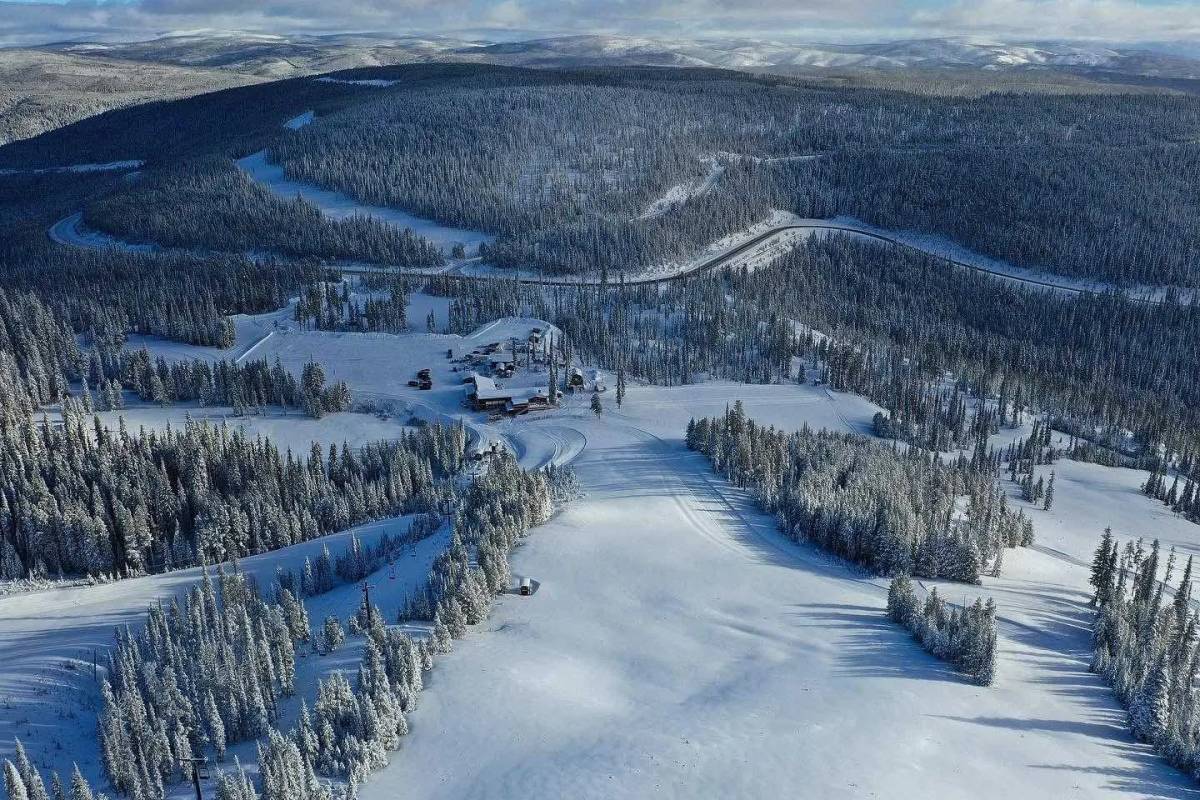
Lost Trail Powder Mountain
1,800 acres, 69 runs straddling the MT-ID border. Legendary Thursday powder, Indy Pass access.

Season 2026 - 2027
Opens
11 Dec 2026
Closes
28 Mar 2027
Days open
107
Annual snow
306in
The Overview
Michael Fulton
Melbourne-based skier and snowboarder with 50+ resorts across 5 continents. Specialises in Australian resorts and international resort comparisons.
Lost Trail Powder Mountain's summit reaches 8,196 feet, dropping 1,795 vertical feet to a base at 6,401 feet across 69 runs spread over 1,800 acres straddling the Montana-Idaho border. Terrain splits 40 per cent intermediate, and 20 per cent each for beginner, advanced and expert, with average annual snowfall of roughly 306 inches. The resort carries Indy Pass affiliation. Eight lifts, including five double chairs, serve the mountain alongside three surface lifts.
Lost Trail sits at the junction of US Highway 93 and Montana State Highway 43 at Lost Trail Pass, with Chairlift 1 running approximately along the Idaho-Montana border and terrain to its south, including Chairlift 2, actually located in Idaho. This border-straddling geography, combined with the resort's legendary Thursday powder days, has built a devoted following among skiers in the Bitterroot Valley and beyond. The evenly balanced terrain split across all four ability levels suits a genuinely broad range of skiers.
The ski area traces its origins to 1938, when it began as a modest, volunteer-operated facility on the Continental Divide. The pass itself takes its name from a local rancher's insistence, informed by his familiarity with the Lewis and Clark journals, when US Highway 93 was built through the area in the 1930s. Ownership of the ski hill changed hands roughly every three years through its early decades until the Grasser family took over.
In 1967, local resident Bill Grasser and business partner Chuck Shuland acquired the property, with Grasser buying out his partner in 1975 after operating the resort together from 1969. The mountain is now owned by Scott and Judy Grasser, continuing more than half a century of family ownership. Adult daily tickets run from 45 to 55 US dollars.
1,798ft
Vertical
69
Runs
1,800 acres
Skiable
306in
Annual snow
Indy
Pass
The Terrain
69 runs across 1,800 acres skiable
Lost Trail Powder Mountain straddles the Montana and Idaho border at Lost Trail Pass, with 69 runs across about 1,800 acres (728 hectares). The base is 6,400 ft (1,951 m) and the summit rises to 8,200 ft (2,499 m), a vertical drop of 1,800 ft (548 m). Intermediate runs make up 40% of the terrain, with 20% each for beginner, advanced and expert. The lift network is simple, with five double chairs and three surface lifts. The high pass location brings deep, dry snow, and Sanity records annual snowfall at roughly 306 inches, which explains its powder reputation across the region.
Most of the main runs and the base area sit in Montana, while Chair 1 follows the state line and the terrain served by Chair 2 lies in Idaho. Open glades, tree runs and powder-friendly pitches make up much of the expert and advanced skiing, and the groomed runs stay mellow enough for beginners and intermediates. It suits powder skiers, families and Indy Pass holders who want a low-key, old-school day without queues. Anyone expecting high-speed chairs or a big village will find none, but those who come for the snow rarely mind the double chairs and the simple, friendly feel of the place.
Terrain split
69
runs
69 runs across 4 grades
Beginner14 runs · 20%
Intermediate28 runs · 40%
Advanced14 runs · 20%
Expert14 runs · 20%
Time it right
When to visit Lost Trail Powder Mountain
The 2025-26 season at Lost Trail Powder Mountain ran from 5 December 2025 to 6 April 2026, a roughly eighteen-week season supported by average annual snowfall of around 306 inches. This substantial snowfall total underpins the resort's legendary reputation for deep, reliable powder, particularly on the Thursdays for which the mountain has become known among regional skiers.
Midwinter, from December through February, typically brings the most consistent conditions across the resort's evenly balanced terrain. Given the mountain's remote setting straddling the Montana-Idaho border at Lost Trail Pass, the resort draws primarily from the Bitterroot Valley and broader regional skier base rather than national destination traffic, keeping crowds notably lighter than more accessible resorts.
As an Indy Pass resort, Lost Trail draws some visiting skiers holding that multi-resort pass in addition to its core regional base. The resort's genuinely balanced terrain split across beginner, intermediate, advanced and expert skiing suits families and groups with mixed ability levels. School holiday periods bring increased family visitation given this broad terrain appeal.
Specific event programming beyond standard operations and the resort's Thursday powder day reputation is not confirmed in available resort information. More than fifty years of Grasser family ownership, from Bill Grasser's 1967 purchase through to the current Scott and Judy Grasser stewardship, continues to shape the resort's community-focused, family-run character each season. Lost Trail's unusual cross-border geography remains a distinctive point of interest for visitors throughout the winter.
Season 2026 - 2027
11 Dec 2026
Opens
28 Mar 2027
Closes
107
Days open
306 in
Annual snow
The record
Historical snowfall at Lost Trail Powder Mountain
Daily snow reports at Lost Trail Powder Mountain go back to 2025, 2 winters on the books. Open the record to compare winters, lifts and piste.
15 in
Snowiest day
12 Mar 2026
116 in
This winter · 2026-27
so far
261 in
Typical winter
average of complete seasons
Winter totals
in
Past wintersThis winter
Getting there
Getting to Lost Trail Powder Mountain, and where to stay
Lost Trail Powder Mountain sits at Lost Trail Pass, straddling the Montana-Idaho border at the junction of US Highway 93 and Montana State Highway 43, with a base elevation of 6,401 feet and a summit at 8,196 feet across a 1,795-foot vertical drop over 1,800 acres in the Bitterroot Range. This remote setting places the resort along one of the more scenic mountain passes in the northern Rockies.
The Bitterroot Valley, to the north in Montana, and the Salmon, Idaho area, to the south, both provide lodging and services within a reasonable drive of the resort. Missoula, the nearest larger city, lies a considerable distance north through the Bitterroot Valley. This remote location keeps the resort's visitor base genuinely regional rather than drawing from major metropolitan areas.
US Highway 93 provides direct access to Lost Trail Pass from both the Montana and Idaho sides, making the resort straightforward to reach despite its remote setting. Winter driving conditions on this mountain pass route can include snow and ice, and the substantial snowfall the area receives means chains or traction tyres are often advisable during storms. There is no direct public transport service to the resort.
Missoula International Airport, a considerable drive to the north, is the nearest airport with substantial commercial service. This distance reinforces Lost Trail's identity as a genuinely remote mountain destination reached deliberately by regional skiers rather than a convenient fly-in resort.
Where to stay
Search all stays →Stays map loads when you scroll here
Hotels and lodges near Lost Trail Powder Mountain, powered by Stay22.
Latest News
From the SnowStash desk
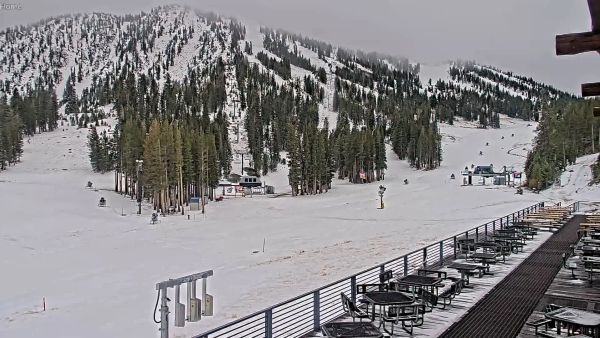
Mt Rose Aims to Open First in Tahoe on November 6
Mt Rose is going for the first-in-Tahoe title, with the Lakeview Express due to spin at 9 a.m. on Friday, November 6. One main lift, three runs and plenty of snowmaking, sitting on the highest base elevation in the region at 8,260 ft. Here is what is open, what is not (sorry, tubing fans), and how the early North American openings are stacking up.
4 Nov 2026
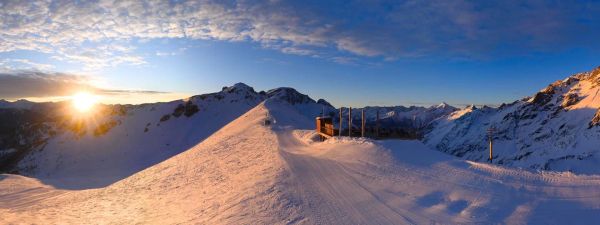
Europe Snow Forecast: Serre Chevalier Leads With 82 cm Over the Next 10 Days
Europe has had a quiet start to November, but our 10-day forecast has Serre Chevalier on 82 cm and Les 2 Alpes on 71 cm. Two pushes are lined up: a western Alps top-up from Friday, then a bigger, wider system on Thursday, November 12 and Friday, November 13 that reaches Italy and Switzerland. Full leaderboard inside.
4 Nov 2026
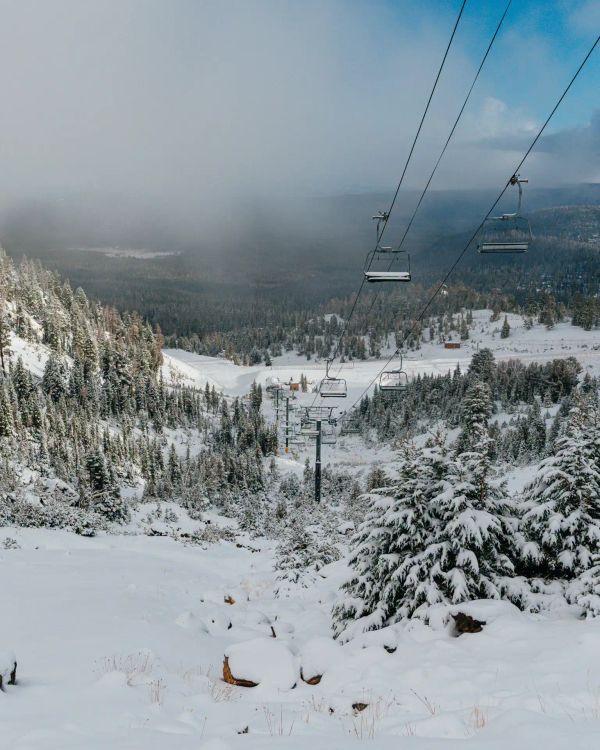
Mammoth Mountain Opens Early on November 5 With Up to 33 Inches of Snow in the Forecast
Mammoth just moved opening day forward to Thursday, November 5, eight days ahead of schedule. A snowy weekend and cold snowmaking nights did the work, and our forecast shows up to 33 inches more landing on November 13 and 14. Here is what opens, what the weather looks like and where Mammoth sits among the early Ikon Pass openers.
3 Nov 2026
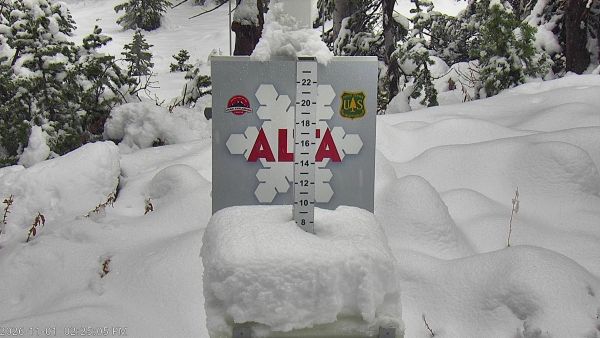
Utah Snow Storm Builds Early-Season Base Ahead of November Openings
Rain down low, snow up high, and a snow report full of zeros that mostly means ‘not updated yet’. Utah’s first proper storm of 2026-27 is rolling through the Wasatch, Snowbird’s snow stake is closing in on 10 inches, and Brian Head is five days from opening day. Early November snow rarely looks like much, but it is the layer every November opening date is built on. Here is where it stands.
1 Nov 2026
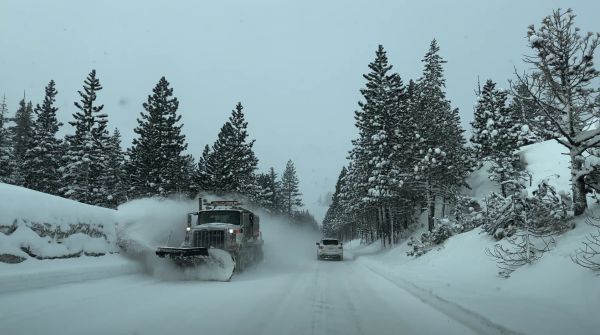
Sierra Nevada Halloween Storm: Dodge Ridge Forecast to Lead With 19 Inches
Halloween weekend brings a wet, windy storm to the Sierra Nevada. Our five-day forecast has Dodge Ridge on top with 19 in, followed by Bear Valley at 15 in and Mammoth Mountain at 12 in, with most of it landing on Saturday. A winter weather advisory covers the Tahoe Basin and Mono County until 7 AM Sunday, gusts could reach 47 mph and the freezing level swings between 4,900 and 8,700 ft, so some bases will see rain. A dry spell follows from Monday.
31 Oct 2026
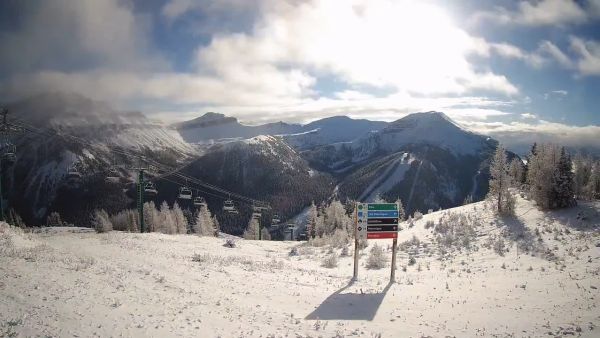
Lake Louise Opens Early on 1 November With Juniper Express and Easy Street
The Rockies get their first lift-served turns of the season early. Lake Louise opens Sunday 1 November, five days ahead of schedule, after a cold October and round-the-clock work from the snowmaking and mountain crews. Terrain is limited to Juniper Express Chair and Easy Street, with two small terrain parks and the beginner area for lessons. Opening-day tickets are over 60% off, with prices rising as more lifts open. First chair is at 9:30 am under the resort’s new lift hours.
31 Oct 2026
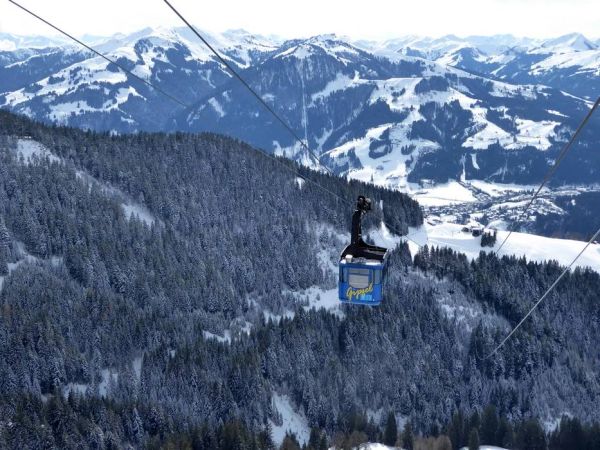
Kitzbüheler Horn Summit Cable Car to Be Replaced After 70 Years
A Tyrolean summit lift that has been carrying guests up the Kitzbüheler Horn since 1955 is on borrowed time. Its licence runs to 2045, but a new inspection rule has made refurbishment uneconomic, so Bergbahn AG Kitzbühel will spend around €15 million on a replacement on the same line. It should hold roughly 100 people and keep running in winds that would stop today’s lift. Building starts in autumn 2027, which makes this winter and next summer the last chances to ride the old one.
30 Oct 2026
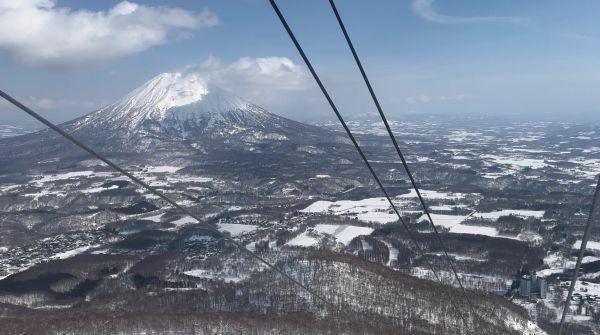
What’s New in Japan Skiing This Winter: Niseko Gondola, a Private Resort and a Bigger Ikon Pass
Niseko Village is replacing a lift from the early 1980s with an eight-person gondola, Tsugaike gets a six-person chairlift, Madarao joins the Ikon Pass and Togari opens Asia’s first private ski resort. Here’s what is actually new in Japan skiing for 2026/27, plus what is still a year or two away.
30 Oct 2026
Lost Trail Powder Mountain Webcams
1 live angles across the mountain. Tap any camera to go full-screen.
About Lost Trail Powder Mountain's live webcams
Check live conditions across Lost Trail Powder Mountain with 1 real-time webcams showing snow, weather, and lift operations, updated every 10 minutes. Check high-elevation cams for powder visibility and base-area cams for crowd levels before you head up.
Camera guide
- Chair One Cam7,083ft
- Experience the Montana-Idaho border through this Lost Trail webcam at Chair One positioned at 2159 meters elevation on the Continental Divide. This Lost Trail live cam captures conditions at this legendary powder destination straddling two states. Powder hunters use this live snow cam to monitor the deep snowfall that makes Lost Trail Powder Mountain famous for champagne powder in the Bitterroot Range.
Lost Trail Powder Mountain snow cams FAQ
How often do Lost Trail Powder Mountain snow cams update?
All Lost Trail Powder Mountain snow cams and webcams update every 10 minutes with fresh images showing current mountain conditions. This frequent update schedule ensures you have access to near real-time conditions for planning your ski day at Lost Trail Powder Mountain.
Which Lost Trail Powder Mountain webcam shows the best powder conditions?
The high-elevation Chair One Cam webcam at 2,159m provides the clearest view of powder conditions and snowfall. These Lost Trail Powder Mountain webcams capture fresh snow accumulation and visibility better than base area cameras.
Can I see Lost Trail Powder Mountain lift queues on the webcams?
Yes. Multiple Lost Trail Powder Mountain snow cams specifically show lift queue areas and chairlift operations, helping you time your arrival and avoid peak queue periods.
When is the best time to check Lost Trail Powder Mountain snow cams?
Check Lost Trail Powder Mountain webcams early morning (7-8am) for overnight snowfall assessment, and mid-afternoon for current crowd levels and weather. The live cams are most useful after storm events to assess fresh powder.
How can I check current conditions before buying Lost Trail Powder Mountain lift tickets?
Use our Lost Trail Powder Mountain webcams alongside the live snow report to assess conditions before purchasing lift tickets. The webcams show real-time visibility, snow quality, and operational status.
Do Lost Trail Powder Mountain webcams work on mobile devices?
Yes. All Lost Trail Powder Mountain snow cams and webcams are optimized for mobile viewing, so you can check live conditions from anywhere using your phone or tablet.
More Lost Trail Powder Mountain intelligence: snow report, lift tickets, trail map, resort overview.