
Red Lodge Mountain
1,635 acres, 70 runs near Billings. Beartooth Mountains setting, Indy Pass access.
Season 2026 - 2027
Opens
4 Dec 2026
Closes
11 Apr 2027
Days open
128
Annual snow
200in
The Overview
Michael Fulton
Melbourne-based skier and snowboarder with 50+ resorts across 5 continents. Specialises in Australian resorts and international resort comparisons.
Red Lodge Mountain's summit reaches 9,416 feet, dropping 2,400 vertical feet to a base at 7,015 feet across 70 runs spread over 1,635 acres along the eastern front of the Beartooth Mountains, roughly an hour from Billings, Montana. The resort carries Indy Pass affiliation. Specific detailed lift-type breakdown beyond the resort's core network is not confirmed in available resort information, though the mountain operates a substantial lift system supporting its considerable scale.
Red Lodge Mountain's position along the Beartooth Front gives it a genuinely dramatic mountain backdrop, with the historic town of Red Lodge itself, established during the region's coal-mining era, adding character to the base area. Its relative proximity to Billings, Montana's largest city, and to Yellowstone National Park's northern reaches makes it one of the more accessible substantial ski areas in southern Montana. The resort's considerable 1,635-acre footprint places it among the larger Montana ski areas.
The ski area opened on 2 January 1960 as Red Lodge Grizzly Peak, a modest beginning with a single double chairlift, three trails and a small lodge. Grizzly Peak Inc., the founding company, raised roughly 250,000 US dollars through local stock sales in the late 1950s to fund the resort's development, reflecting strong community investment in the project from the outset.
The resort expanded steadily through subsequent decades, adding the Grizzly Peak Chair in 1971 and the Miami Beach Chair in 1973, followed by a Winter Sports Center and triple chair in 1983 and a replacement Midway Lodge in 1986. In 2007, JMA Ventures, which also owns Homewood Mountain Resort in California, purchased Red Lodge Mountain, bringing the resort under its current ownership.
2,402ft
Vertical
70
Runs
1,635 acres
Skiable
200in
Annual snow
Indy
Pass
The Terrain
70 runs across 1,635 acres skiable
Red Lodge Mountain sits above the town of Red Lodge on the edge of the Beartooth Range, with 70 runs across about 1,635 acres (662 hectares). The base is 7,010 ft (2,138 m) and the summit reaches 9,420 ft (2,870 m), a vertical drop of 2,400 ft (732 m). Advanced terrain is the largest share at 36%, followed by intermediate at 25%, expert at 20% and beginner at 19%. Three double chairs, two quads, a triple and a surface lift keep the network simple. Because the base is already above 7,000 ft, snow quality stays dry and the season runs long.
The older Grizzly Peak and Willow Creek sides hold groomed cruisers, including the long arcing Lazy M, and a mix of beginner and intermediate runs. The Cole Creek expansion adds an 800 acre drainage of steeper lines, with narrow canyon runs, bumps and glades served by high-speed quads. Locals once skied into it from outside the boundary before the lifts arrived. Red Lodge suits advanced skiers wanting steeps without crowds, as well as families and Indy Pass holders exploring Montana. Views over the Great Plains to the east and the Beartooth Range to the west make a good reason to slow down.
Terrain split
70
runs
70 runs across 4 grades
Beginner13 runs · 19%
Intermediate18 runs · 25%
Advanced25 runs · 36%
Expert14 runs · 20%
Time it right
When to visit Red Lodge Mountain
The 2025-26 season at Red Lodge Mountain ran through the winter months, with the resort's considerable 2,400-foot vertical drop and elevation supporting conditions across the season. Specific opening and closing dates for the 2025-26 season are not confirmed in available resort information.
Midwinter, from December through February, typically brings the most consistent conditions to the mountain's varied 1,635-acre terrain along the Beartooth Front. Given Red Lodge Mountain's roughly one-hour drive from Billings, Montana's largest city, the resort draws a substantial regional visitor base alongside destination skiers, aided by its Indy Pass affiliation.
As an Indy Pass resort, Red Lodge Mountain attracts visiting skiers holding that multi-resort pass in addition to its core Billings-area and regional Montana visitor base. The historic town of Red Lodge itself, with its coal-mining-era character, provides a genuine mountain-town base area experience for visitors throughout the season. Weekend crowds draw substantially from Billings given the manageable drive time.
Specific event programming beyond standard operations is not confirmed in available resort information. Since JMA Ventures' 2007 purchase, the resort has continued to build on more than six decades of development dating back to its January 1960 opening as Red Lodge Grizzly Peak. The mountain's considerable scale and Beartooth Front setting remain central to its appeal throughout the season.
Season 2026 - 2027
4 Dec 2026
Opens
11 Apr 2027
Closes
128
Days open
200 in
Annual snow
Getting there
Getting to Red Lodge Mountain, and where to stay
Red Lodge Mountain sits along the eastern front of the Beartooth Mountains, west of the historic town of Red Lodge, Montana, roughly an hour's drive from Billings, with a base elevation of 7,015 feet and a summit at 9,416 feet across a 2,400-foot vertical drop over 1,635 acres. This setting places the resort within reach of Yellowstone National Park's northern reaches as well as Montana's largest city.
Red Lodge itself, a historic former coal-mining town, provides the resort's primary lodging, dining and mountain-town character, sitting a short distance from the ski area's base. Billings, Montana's largest city, lies roughly an hour away, providing a substantial population base within a manageable drive. Yellowstone National Park's northern entrance region also lies within reach of the area.
Montana Highway 78 and US Highway 212, the Beartooth Highway, provide access to Red Lodge from Billings and the surrounding region, with the resort itself a short drive further from the town. Winter driving conditions on these routes can include snow and ice, particularly given the substantial elevation and snowfall of the Beartooth Front. There is no direct public transport service to the resort.
Billings Logan International Airport, roughly an hour's drive away, is the nearest airport with substantial commercial service, making Red Lodge Mountain one of the more accessible larger ski areas in southern Montana for fly-in visitors.
Where to stay
Search all stays →Hotels and lodges near Red Lodge Mountain, powered by Stay22.
Latest News
From the SnowStash desk
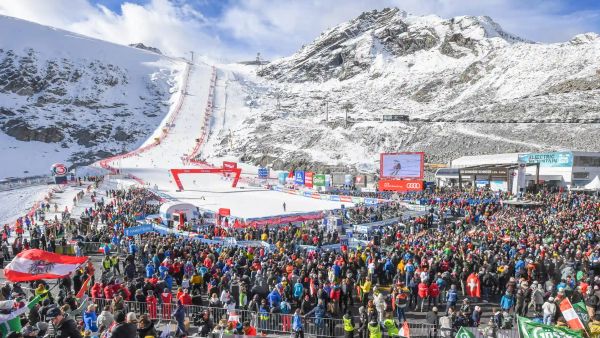
Pinheiro Braathen Wins Sölden Giant Slalom Opener by 0.48 Seconds
Two days at Sölden, two races decided by a hundredth somewhere on the podium, and one very quick Brazilian. Lucas Pinheiro Braathen led from the first run to win the men’s World Cup opener by 0.48 seconds, with Loïc Meillard second and Marco Odermatt third. River Radamus charged from 15th to fourth on a rutted course, and Britain’s Freddy Carrick-Smith banked his first World Cup points. Braathen still hasn’t lost a giant slalom since Olympic gold.
25 Oct 2026
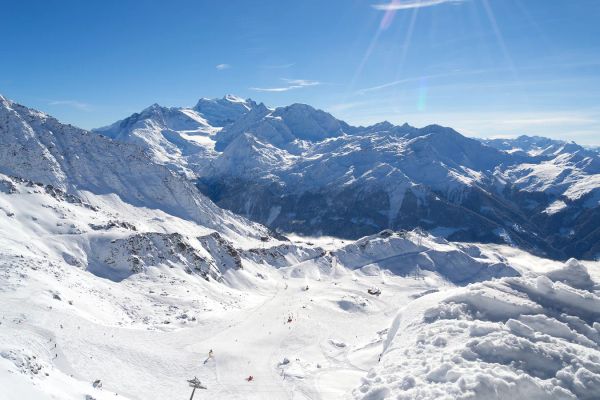
Alps Snow Forecast: Up to 64 cm Headed for the High Glaciers as the Snow Line Drops
The Alps are about to swap mild, sunny October weather for something far more wintry. A cold front arrives Tuesday, and SnowStash forecasts have Monterosa Ski out in front with 64 cm over 14 days, ahead of Blatten Belalp (55 cm) and Verbier (43 cm). The snow line should fall below 2000 metres by Wednesday night, and glaciers across Switzerland, Italy and Austria are in line for the best of it. The wind will have a say too.
20 Oct 2026

Four Dead After Avalanche Near Ski Portillo in Chile
A large avalanche struck near Laguna del Inca adjacent to Ski Portillo on Saturday afternoon, killing four people and injuring four others. The group were day visitors mountaineering in the backcountry after reportedly being warned about elevated avalanche risk by resort staff.
18 Oct 2026

Europe Ski Resorts Open Now: What Is Skiable in Mid-October 2026
Europe’s ski season is open, technically. After a record-warm summer, glaciers in Austria, Switzerland and Italy are running a few pistes apiece, Sölden, Stubai and Kitzsteinhorn started late, Titlis has pushed back to 24 October, and Zermatt reopens a few lifts on 14 October after more than two months shut. Finland’s Levi and Ruka are skiing on stored snow. Here is what is open, and what you actually get at each.
14 Oct 2026

Zermatt Plans World Cup Downhill Return on the Gornergrat for 2028
Zermatt is having another crack at a World Cup downhill, and this time nobody has to cross a border. Around 13 million Swiss francs is going into rebuilding the Gornergrat piste, including a jump fed by a roughly 300-metre in-run across the roof of the Gornergrat Railway gallery, with the Matterhorn lined up behind it for the TV cameras. First men’s race is pencilled in for March 2028, pending FIS homologation.
14 Oct 2026

Mt. Rose Begins Snowmaking for the 2026-27 Season at Lake Tahoe
Lake Tahoe’s highest base elevation is paying off early: Mt. Rose has started making snow for 2026-27 after the first flurries and a cold snap. The Nevada resort is backing it with nearly US$2 million in upgrades, including a replacement snowmaking main line, a new PistenBully groomer and restraint bars on every lift. Opening day is yet to be confirmed, though Heavenly and Northstar are already eyeing 20 November.
13 Oct 2026

Utah Ski Resorts 2026-27: What’s New at Alta, Deer Valley, Powder Mountain and More
Utah is still building flat out. For 2026-27, Powder Mountain opens a steep new Skytrac chair into more than 1,000 acres of advanced terrain, Deer Valley adds 200 acres on Hail Peak, Sundance gets a new quad and Park City adds a gondola from its new parking structure. Snowmaking is expanding almost everywhere, Eagle Point stays closed after the Cottonwood Fire, and the 2034 Games are setting the pace. Here’s what’s new, resort by resort.
13 Oct 2026

Mt Hutt Invests NZ$12 Million in Base Area, Tripling Its Sun Deck
Mt Hutt is getting busier, and its base lodge is about to catch up. NZ$12 million goes into a heated sun deck roughly three times the current size (430 m² to 1,300 m²), plus a new toilet block, heated steps down to snow level, extra storage and a new food and beverage outlet. Building starts after the 2026 season, with everything due for winter 2027.
11 Oct 2026