
Whitefish Mountain
3,000 acres, 113 runs near Glacier National Park. Famous snow ghosts, 14 lifts, big Montana terrain.
Season 2026 - 2027
Opens
4 Dec 2026
Closes
4 Apr 2027
Days open
121
Annual snow
19ft
The Overview
Michael Fulton
Melbourne-based skier and snowboarder with 50+ resorts across 5 continents. Specialises in Australian resorts and international resort comparisons.
Whitefish Mountain Resort's summit reaches 6,817 feet, dropping 2,352 vertical feet to a base at 4,465 feet across 113 runs spread over 3,000 acres above Whitefish, Montana. The resort carries no major multi-resort pass affiliation. Fourteen lifts, including four quad chairs and seven triple chairs, serve the mountain alongside one surface lift and two t-bars.
Whitefish is known throughout the skiing world for its snow ghosts, the striking rime-ice-coated trees that blanket the upper mountain, and for sweeping views toward Glacier National Park on clear days. This distinctive combination of natural features has built the resort's reputation well beyond Montana's borders. The mountain's considerable 3,000-acre footprint and 113 runs place it among the largest ski areas in the state.
Skiers first used the slopes of Big Mountain, as the resort was originally known, from 1935, with the first cabin, called Hell Roaring Ski Camp, built that year and a rope tow following by 1939. Winter Sports Inc., known as WSI, formed in 1947 as a public company owned by community shareholders, and the resort formally opened Big Mountain on 14 December 1947, with Ed Schenck and George Prentice contributing 20,000 US dollars and the local chamber of commerce raising a further 40,000. The resort hosted the 1949 US Alpine Championships, where sixteen-year-old Andrea Mead of Vermont won all three women's titles.
WSI's shares became increasingly concentrated when Budget Finance of Kalispell, owned by Richard A. Dasen, began acquiring shares in the late 1980s. William P. Foley II subsequently acquired the resort while it remained publicly traded as WSI, and it now operates as a private company with Foley as majority owner.
2,352ft
Vertical
113
Runs
3,000 acres
Skiable
19ft
Annual snow
The Terrain
113 runs across 3,000 acres skiable
Whitefish Mountain Resort, on Big Mountain above Whitefish in north-west Montana, spreads 113 runs across about 3,000 acres (1,214 hectares). The base is 4,470 ft (1,361 m) and the summit is 6,820 ft (2,078 m), a vertical drop of 2,350 ft (717 m). The split is 12% beginner, 38% intermediate, 44% advanced and 6% expert, with four quads, seven triple chairs, two T-bars and a surface lift moving skiers around the mountain. Average snowfall of around 230 inches builds in the cold, moist air off the Pacific, and the heavy frosting on the summit trees, known locally as snow ghosts, is common.
Hell Fire is the longest run on the mountain at roughly 2.5 miles from the summit to the base of Chair 8, running through Hellroaring Basin. The basin holds the steepest skiing, with cliffs, chutes and tight trees, while Toni Matt is a fast intermediate run down the front side, named after the Austrian racer who helped put the area on the map. Wide groomers and glades fill the rest of the mountain, and the town of Whitefish sits close by. It suits advanced skiers and confident intermediates wanting generous tree skiing, along with families looking for a long, varied day.
Terrain split
113
runs
113 runs across 4 grades
Beginner14 runs · 12%
Intermediate43 runs · 38%
Advanced50 runs · 44%
Expert7 runs · 6%
Time it right
When to visit Whitefish Mountain
The 2025-26 season at Whitefish Mountain Resort ran through the winter months, with the mountain's snow-ghost-forming conditions and considerable 2,352-foot vertical drop supporting skiing across the season. Specific opening and closing dates for the 2025-26 season are not confirmed in available resort information.
Midwinter, from December through February, typically brings the rime-ice conditions that create Whitefish's famous snow ghosts on the upper mountain, alongside clear-day views toward Glacier National Park. The resort's considerable 3,000-acre scale and 113 runs support a substantial visitor base drawn from across the northwestern United States and beyond.
As an independently operated resort without major multi-resort pass affiliation, Whitefish draws a mix of regional Montana skiers and destination visitors attracted by its scale, snow ghosts and Glacier National Park proximity. School holiday periods bring increased family visitation given the resort's substantial and varied terrain. The nearby town of Whitefish provides an active base for visitors throughout the season.
Specific event programming beyond standard operations and the resort's historic hosting of the 1949 US Alpine Championships is not confirmed in available resort information. Since William P. Foley II's acquisition of the formerly publicly traded Winter Sports Inc., the resort has continued to build on more than seven decades of development since its December 1947 opening. Whitefish's snow ghosts and Glacier views remain central to its seasonal identity.
Season 2026 - 2027
4 Dec 2026
Opens
4 Apr 2027
Closes
121
Days open
19 ft
Annual snow
Getting there
Getting to Whitefish Mountain, and where to stay
Whitefish Mountain Resort sits above the town of Whitefish in northwestern Montana, with a base elevation of 4,465 feet and a summit at 6,817 feet across a 2,352-foot vertical drop over 3,000 acres. This setting places the resort within reach of Glacier National Park, visible from the upper mountain on clear days.
Whitefish, a lively mountain town with extensive lodging, dining and shopping, provides the resort's primary base area experience, a short drive from the lifts themselves. Kalispell, a larger regional centre, lies nearby as well, while Glacier National Park's western entrance sits within a reasonable drive of the resort.
Local roads connect the town of Whitefish directly to the resort, a short and manageable drive given the mountain's proximity to town. Winter driving conditions on the approach can include snow and ice, though the well-travelled route is regularly maintained given the resort's status as a major regional and destination ski area. Shuttle services operate between the town and the mountain during the season.
Glacier Park International Airport in Kalispell, a short drive from both the town and the resort, offers direct flights from numerous major US cities, making Whitefish one of the more accessible destination ski areas in Montana for fly-in visitors.
Where to stay
Search all stays →Hotels and lodges near Whitefish Mountain, powered by Stay22.
Latest News
From the SnowStash desk
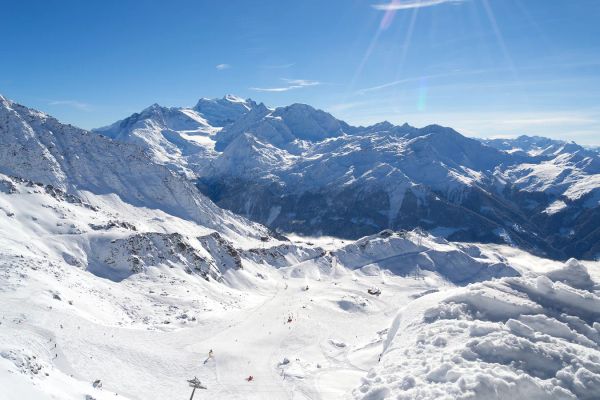
Alps Snow Forecast: Up to 64 cm Headed for the High Glaciers as the Snow Line Drops
The Alps are about to swap mild, sunny October weather for something far more wintry. A cold front arrives Tuesday, and SnowStash forecasts have Monterosa Ski out in front with 64 cm over 14 days, ahead of Blatten Belalp (55 cm) and Verbier (43 cm). The snow line should fall below 2000 metres by Wednesday night, and glaciers across Switzerland, Italy and Austria are in line for the best of it. The wind will have a say too.
20 Oct 2026

Four Dead After Avalanche Near Ski Portillo in Chile
A large avalanche struck near Laguna del Inca adjacent to Ski Portillo on Saturday afternoon, killing four people and injuring four others. The group were day visitors mountaineering in the backcountry after reportedly being warned about elevated avalanche risk by resort staff.
18 Oct 2026

Europe Ski Resorts Open Now: What Is Skiable in Mid-October 2026
Europe’s ski season is open, technically. After a record-warm summer, glaciers in Austria, Switzerland and Italy are running a few pistes apiece, Sölden, Stubai and Kitzsteinhorn started late, Titlis has pushed back to 24 October, and Zermatt reopens a few lifts on 14 October after more than two months shut. Finland’s Levi and Ruka are skiing on stored snow. Here is what is open, and what you actually get at each.
14 Oct 2026

Zermatt Plans World Cup Downhill Return on the Gornergrat for 2028
Zermatt is having another crack at a World Cup downhill, and this time nobody has to cross a border. Around 13 million Swiss francs is going into rebuilding the Gornergrat piste, including a jump fed by a roughly 300-metre in-run across the roof of the Gornergrat Railway gallery, with the Matterhorn lined up behind it for the TV cameras. First men’s race is pencilled in for March 2028, pending FIS homologation.
14 Oct 2026

Mt. Rose Begins Snowmaking for the 2026-27 Season at Lake Tahoe
Lake Tahoe’s highest base elevation is paying off early: Mt. Rose has started making snow for 2026-27 after the first flurries and a cold snap. The Nevada resort is backing it with nearly US$2 million in upgrades, including a replacement snowmaking main line, a new PistenBully groomer and restraint bars on every lift. Opening day is yet to be confirmed, though Heavenly and Northstar are already eyeing 20 November.
13 Oct 2026

Utah Ski Resorts 2026-27: What’s New at Alta, Deer Valley, Powder Mountain and More
Utah is still building flat out. For 2026-27, Powder Mountain opens a steep new Skytrac chair into more than 1,000 acres of advanced terrain, Deer Valley adds 200 acres on Hail Peak, Sundance gets a new quad and Park City adds a gondola from its new parking structure. Snowmaking is expanding almost everywhere, Eagle Point stays closed after the Cottonwood Fire, and the 2034 Games are setting the pace. Here’s what’s new, resort by resort.
13 Oct 2026

Mt Hutt Invests NZ$12 Million in Base Area, Tripling Its Sun Deck
Mt Hutt is getting busier, and its base lodge is about to catch up. NZ$12 million goes into a heated sun deck roughly three times the current size (430 m² to 1,300 m²), plus a new toilet block, heated steps down to snow level, extra storage and a new food and beverage outlet. Building starts after the 2026 season, with everything due for winter 2027.
11 Oct 2026

Vermont Ski Resort Opening Dates 2026-27: Few Dates Set, Killington Waits on the Cold
Vermont's season is slow to take shape. Stratton is tentatively targeting 18 November and Sugarbush 21 November, while Pico has Friday 11 December on the calendar. Killington never sets a date and opens when the snowmaking allows, and Vail Resorts has yet to name days for Stowe, Okemo and Mount Snow. The forecasts disagree about snow, and the main El Niño worry for the Green Mountains is warmth.
9 Oct 2026
Whitefish Mountain Webcams
4 live angles across the mountain. Tap any camera to go full-screen.
About Whitefish Mountain's live webcams
Check live conditions across Whitefish Mountain with 4 real-time webcams showing snow, weather, and lift operations, updated every 10 minutes. Check high-elevation cams for powder visibility and base-area cams for crowd levels before you head up.
Camera guide
- Summit Panorama6,775ft
- Experience spectacular 360-degree summit views through this Whitefish Mountain webcam positioned at 2065 meters elevation. This innovative Whitefish live cam offers breathtaking panoramas across Glacier National Park and the surrounding Montana Rockies. Perfect for assessing visibility across the entire resort, this live snow cam showcases the dramatic scenery that defines northwest Montana's premier ski destination.
- Storm Cam6,483ft
- Track incoming weather through this Whitefish Mountain webcam at the Storm Cam positioned at 1976 meters elevation. This Whitefish web cam monitors approaching weather systems and current snowfall. Powder hunters rely on this live snow cam to watch storms roll in across Whitefish's 3,000+ skiable acres in the shadow of Glacier National Park.
- Base Lodge4,754ft
- Monitor base village activity through this Whitefish Mountain webcam at the main lodge positioned at 1449 meters elevation. This Whitefish live cam captures the bustling base area and current snow conditions at northwest Montana's largest resort. Families use this Whitefish web cam to check weather before exploring the charming ski town and legendary terrain.
- Lift Plaza4,754ft
- Experience the lift plaza energy through this Whitefish Mountain webcam at 1449 meters elevation. This Whitefish live cam shows current activity around the main lift loading areas. Visitors use this live snow cam to assess crowd levels and base conditions before skiing at Montana's premier destination resort near Glacier National Park.
Whitefish Mountain snow cams FAQ
How often do Whitefish Mountain snow cams update?
All Whitefish Mountain snow cams and webcams update every 10 minutes with fresh images showing current mountain conditions. This frequent update schedule ensures you have access to near real-time conditions for planning your ski day at Whitefish Mountain.
Which Whitefish Mountain webcam shows the best powder conditions?
The high-elevation Summit Panorama webcam at 2,065m provides the clearest view of powder conditions and snowfall. These Whitefish Mountain webcams capture fresh snow accumulation and visibility better than base area cameras.
Can I see Whitefish Mountain lift queues on the webcams?
Yes. Multiple Whitefish Mountain snow cams specifically show lift queue areas and chairlift operations, helping you time your arrival and avoid peak queue periods.
When is the best time to check Whitefish Mountain snow cams?
Check Whitefish Mountain webcams early morning (7-8am) for overnight snowfall assessment, and mid-afternoon for current crowd levels and weather. The live cams are most useful after storm events to assess fresh powder.
How can I check current conditions before buying Whitefish Mountain lift tickets?
Use our Whitefish Mountain webcams alongside the live snow report to assess conditions before purchasing lift tickets. The webcams show real-time visibility, snow quality, and operational status.
Do Whitefish Mountain webcams work on mobile devices?
Yes. All Whitefish Mountain snow cams and webcams are optimized for mobile viewing, so you can check live conditions from anywhere using your phone or tablet.
More Whitefish Mountain intelligence: snow report, lift tickets, trail map, resort overview.