
Red River
Ski 209 acres from New Mexico's authentic mining-town main street. 64 runs, 1,600ft vertical and 215 inches of annual snowfall in the Sangre de Cristos.
Season 2026 - 2027
Opens
26 Nov 2026
Closes
21 Mar 2027
Days open
115
Annual snow
18ft
The Overview
Michael Fulton
Melbourne-based skier and snowboarder with 50+ resorts across 5 continents. Specialises in Australian resorts and international resort comparisons.
Red River Ski Area occupies 209 acres of terrain in the Carson National Forest within the Sangre de Cristo Mountains of northern New Mexico, rising from a base of 8,750 feet to a summit of 10,350 feet across a 1,600-foot vertical. The 64 runs break down as 31% beginner, 31% intermediate and 38% advanced — a distribution that reflects the resort's genuine appeal across ability levels, with no expert classification in the trail grading and a notably high proportion of challenging terrain for a resort of this scale.
Three terrain parks, including the "Hollywood" park running beneath the Platinum Chair, extend the mountain's appeal for freestyle skiers and snowboarders. Children five and under ski free, seniors 70 and over ski free, and lift tickets remain significantly below the pricing of the larger New Mexico resorts in the region.
What distinguishes Red River from the majority of ski resorts in the American Southwest is its origin and layout: the town was founded in the 1890s as a gold and silver mining settlement, and the ski area was built directly into it in the late 1950s, with chairlifts rising from Main Street rather than from a purpose-built resort village.
The Platinum Chair and Gold Chair both depart from the town centre, making Red River one of a small number of US ski towns — alongside Park City and Aspen — where the lift infrastructure integrates directly with a functioning historic main street. The town's permanent population of around 540 gives it a character that purpose-built ski stations rarely replicate, with local bars, restaurants and accommodation concentrated within easy walking distance of the base lifts.
1,601ft
Vertical
64
Runs
209 acres
Skiable
18ft
Annual snow
The Terrain
64 runs across 209 acres skiable
Red River is a compact ski area of 209 acres (85 hectares) in the Sangre de Cristo Mountains, with 64 runs on a 1,600-foot vertical (488 m). The base sits at 8,750 feet and the summit at 10,350 feet (3,155 m). The grading is unusually steep for the size: 38% advanced, 31% intermediate and 31% beginner, with no expert-graded terrain. Seven lifts, from triple chairs to T-bars, cover the area, and snowfall averages around 215 inches a year. The lifts start from the edge of the old mining town itself, so there is no separate resort village to drive to.
The Face is the run everyone notices, a steep black diamond that stares down at the town from the base of the Platinum Chair. Hollywood, one of the mountain's terrain parks, runs beneath the same lift, so freestyle riders get a lot of laps in front of an audience. The Gold Chair also leaves from the town centre. With close to four in ten runs graded advanced, Red River suits confident intermediates and strong families who want a walkable ski town over a purpose-built village, but anyone chasing true expert terrain should look elsewhere.
Terrain split
64
runs
64 runs across 4 grades
Beginner20 runs · 31%
Intermediate20 runs · 31%
Advanced24 runs · 38%
Expert0 runs · 0%
Time it right
When to visit Red River
Red River operates from late November through to mid-April, with the 2025/26 season running 27 November to 13 April. The resort averages approximately 215 inches of annual snowfall, among the higher totals in the New Mexico Sangre de Cristo range, driven by the mountain's position in the Carson National Forest at an elevation where cold arctic air masses frequently collide with moisture systems from the south and west.
The north-facing aspects across much of the ski area preserve snow quality between storm cycles and slow the rate of melt on the lower runs during the warmer daylight hours that the high-altitude, high-sunshine New Mexico climate produces. The current 2025/26 season has recorded a base depth of around 20 inches as of early March with a season total approaching 48 inches.
January is historically the most reliable month for cold temperatures and consistent snowfall, though the resort's snowmaking infrastructure supports coverage from opening day through the spring shoulder period regardless of natural accumulation. Red River holds a Saturday night torchlight parade and fireworks during the peak winter season — a tradition that draws visitors specifically for the spectacle and gives the mountain a community atmosphere that larger, more commercially focused resorts in the region rarely match.
Spring skiing through March and into April takes advantage of long daylight hours, stable weather and firm morning snow on the upper mountain, with afternoon temperatures warming the lower runs to soft, forgiving conditions suited to families and beginner progression.
Season 2026 - 2027
26 Nov 2026
Opens
21 Mar 2027
Closes
115
Days open
18 ft
Annual snow
Getting there
Getting to Red River, and where to stay
Red River sits in Taos County in northern New Mexico, 36 miles from Taos and approximately three hours by road from Albuquerque via US-64 and NM-38. The town of Red River lies along the Enchanted Circle Scenic Byway — a 84-mile loop through the Sangre de Cristo Mountains that connects Red River, Taos, Angel Fire and Eagle Nest — making it a natural stop on a broader northern New Mexico road trip that covers some of the most dramatic high-desert mountain scenery in the American Southwest.
The drive from Albuquerque International Sunport, the region's principal airport with direct connections from major US hubs, takes around three hours under normal conditions. Taos Ski Valley, one of the most technically demanding ski resorts in the US, is 36 miles to the southwest and reachable on the same Enchanted Circle route for those looking to combine visits across the northern New Mexico ski region.
The Sangre de Cristo Mountains take their name from a 1719 observation by Spanish explorer Antonio Valverde y Cosio, who saw the snow-covered peaks at sunrise lit deep red — "Blood of Christ" — a name that has stayed with the range for three centuries and gives the region a distinct cultural and historical identity beyond its ski terrain.
The Carson National Forest surrounds the Red River valley on all sides, and the mountains above the ski area support populations of deer, elk and bighorn sheep that are regularly visible from the upper lifts. The Enchanted Forest Cross Country Ski Area operates adjacent to Red River and provides an additional 35 kilometres of groomed Nordic trails for those looking to extend activity beyond the downhill terrain, making the broader Red River valley a more complete winter destination than the ski area statistics alone suggest.
Where to stay
Search all stays →Hotels and lodges near Red River, powered by Stay22.
Latest News
From the SnowStash desk
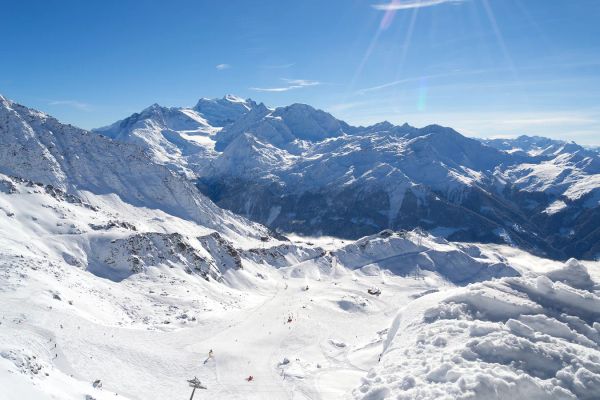
Alps Snow Forecast: Up to 64 cm Headed for the High Glaciers as the Snow Line Drops
The Alps are about to swap mild, sunny October weather for something far more wintry. A cold front arrives Tuesday, and SnowStash forecasts have Monterosa Ski out in front with 64 cm over 14 days, ahead of Blatten Belalp (55 cm) and Verbier (43 cm). The snow line should fall below 2000 metres by Wednesday night, and glaciers across Switzerland, Italy and Austria are in line for the best of it. The wind will have a say too.
20 Oct 2026
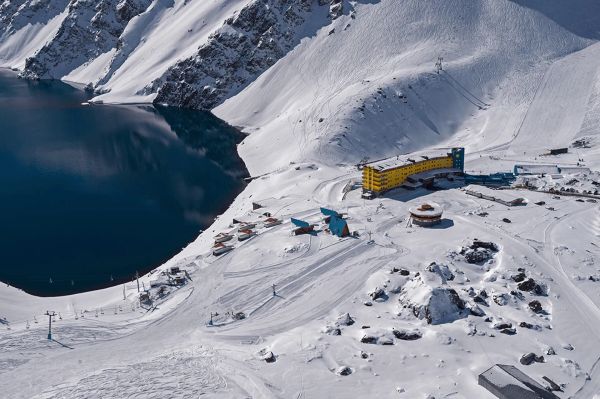
Four Dead After Avalanche Near Ski Portillo in Chile
A large avalanche struck near Laguna del Inca adjacent to Ski Portillo on Saturday afternoon, killing four people and injuring four others. The group were day visitors mountaineering in the backcountry after reportedly being warned about elevated avalanche risk by resort staff.
18 Oct 2026
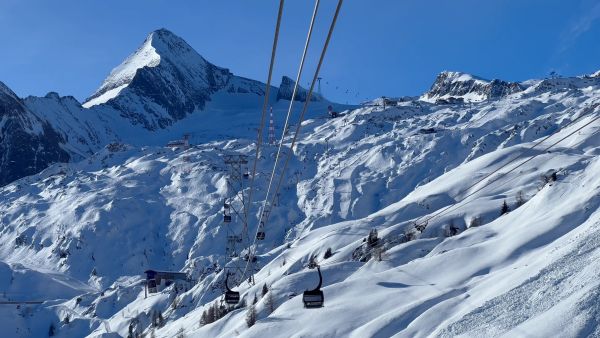
Europe Ski Resorts Open Now: What Is Skiable in Mid-October 2026
Europe’s ski season is open, technically. After a record-warm summer, glaciers in Austria, Switzerland and Italy are running a few pistes apiece, Sölden, Stubai and Kitzsteinhorn started late, Titlis has pushed back to 24 October, and Zermatt reopens a few lifts on 14 October after more than two months shut. Finland’s Levi and Ruka are skiing on stored snow. Here is what is open, and what you actually get at each.
14 Oct 2026
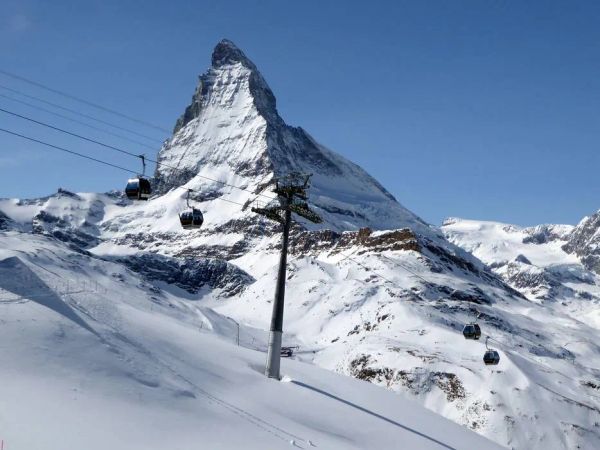
Zermatt Plans World Cup Downhill Return on the Gornergrat for 2028
Zermatt is having another crack at a World Cup downhill, and this time nobody has to cross a border. Around 13 million Swiss francs is going into rebuilding the Gornergrat piste, including a jump fed by a roughly 300-metre in-run across the roof of the Gornergrat Railway gallery, with the Matterhorn lined up behind it for the TV cameras. First men’s race is pencilled in for March 2028, pending FIS homologation.
14 Oct 2026
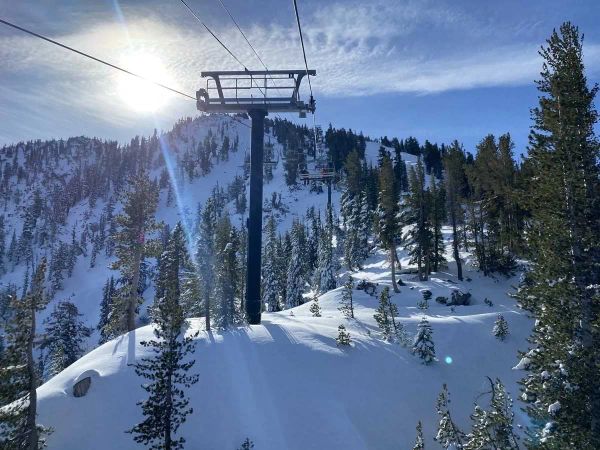
Mt. Rose Begins Snowmaking for the 2026-27 Season at Lake Tahoe
Lake Tahoe’s highest base elevation is paying off early: Mt. Rose has started making snow for 2026-27 after the first flurries and a cold snap. The Nevada resort is backing it with nearly US$2 million in upgrades, including a replacement snowmaking main line, a new PistenBully groomer and restraint bars on every lift. Opening day is yet to be confirmed, though Heavenly and Northstar are already eyeing 20 November.
13 Oct 2026

Utah Ski Resorts 2026-27: What’s New at Alta, Deer Valley, Powder Mountain and More
Utah is still building flat out. For 2026-27, Powder Mountain opens a steep new Skytrac chair into more than 1,000 acres of advanced terrain, Deer Valley adds 200 acres on Hail Peak, Sundance gets a new quad and Park City adds a gondola from its new parking structure. Snowmaking is expanding almost everywhere, Eagle Point stays closed after the Cottonwood Fire, and the 2034 Games are setting the pace. Here’s what’s new, resort by resort.
13 Oct 2026
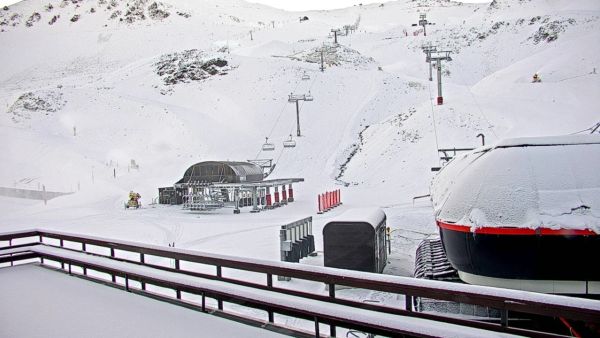
Mt Hutt Invests NZ$12 Million in Base Area, Tripling Its Sun Deck
Mt Hutt is getting busier, and its base lodge is about to catch up. NZ$12 million goes into a heated sun deck roughly three times the current size (430 m² to 1,300 m²), plus a new toilet block, heated steps down to snow level, extra storage and a new food and beverage outlet. Building starts after the 2026 season, with everything due for winter 2027.
11 Oct 2026

Vermont Ski Resort Opening Dates 2026-27: Few Dates Set, Killington Waits on the Cold
Vermont's season is slow to take shape. Stratton is tentatively targeting 18 November and Sugarbush 21 November, while Pico has Friday 11 December on the calendar. Killington never sets a date and opens when the snowmaking allows, and Vail Resorts has yet to name days for Stowe, Okemo and Mount Snow. The forecasts disagree about snow, and the main El Niño worry for the Green Mountains is warmth.
9 Oct 2026
Red River Snow Report
Snow Report
Updated 21 Oct 2026
10,351ft
summit
+0in
new snow · last 24 hours
Partly Cloudy34°F / 59°F · W 9mph
Snowfall
24 hours
0in
48 hours
0in
7 days
0in
Base depth
0in
Season total
0in
Total lifts7
Live open status isn’t available right now.
26 Nov 2026 - 21 Mar 2027
Hour by Hour
Next 42 hours· Updated Oct 21, 2026 at 6:02 AM
Scroll for the full outlook · Open-Meteo
7-Day Outlook
10,351 ftUpdated Oct 21, 2026 at 6:02 AMOpen-Meteo
Days 1–7
2.8"
Days 8–14
0.0"
Wed, Oct 21
Overcast
Temp59° / 34°°F
Snow0.0"(10%)
Wind9 mph W
Live snow from the resort feed; forecast from Open-Meteo, via Supabase.
Understanding the Red River snow report
Planning a day at Red River? Our snow report combines official mountain data with live weather so you know exactly what conditions look like right now, from the 2667m base to the 3155m summit.
Snow measurements
Our snow reports measure snowfall in centimeters over multiple time windows — last 24 hours, last 7 days, and the season total. Base depth reflects accumulation at the 2667m base area, while summit depth captures conditions 488m higher at 3155m, where snow typically stays colder and lingers longer. Imperial conversions are shown alongside for convenience.
Weather conditions
Snow quality tracks closely with temperature and wind. We surface both alongside the snowfall data so you can judge whether conditions at Red River are holding up or starting to soften.
Data sources
Red River snow data is collected through a combination of on-mountain reports and weather forecasting services, giving you both official resort updates and independent forecast data in one place. The mountain is served by 7 lifts, including a quad chairlift.
When to check
The biggest swings usually happen right after a storm. Check Red River's report in the morning for the freshest numbers, and again in the afternoon as conditions evolve.