
Holiday Valley
Ski 290 acres across five mountain faces in Ellicottville, NY. 60 trails, 39 lit for night skiing and 180 inches of lake-effect snow annually.
Season 2026 - 2027
Opens
27 Nov 2026
Closes
4 Apr 2027
Days open
128
Annual snow
11ft
The Overview
Michael Fulton
Melbourne-based skier and snowboarder with 50+ resorts across 5 continents. Specialises in Australian resorts and international resort comparisons.
Holiday Valley opened on 7 January 1958 with four trails and a single T-bar, funded by shares sold for $100 each from a card table in an Ellicottville car park. The Win-Sum Ski Corporation raised enough to purchase 30 acres for $1,050, and from that modest beginning the resort has grown into the largest ski area in Western New York — now covering 290 acres across five mountain faces, with 60 runs served by 13 lifts.
The terrain profile is notably beginner-friendly at 37% green, 25% intermediate, 36% advanced and 2% expert, but the wide footprint across two valleys creates a ski area that skis considerably larger than its vertical of 750 feet suggests, with the five distinct terrain pods — each with its own character — giving the mountain genuine variety from the tight deciduous woods of the Snowpine area to the manicured pine-lined runs of the Tannenbaum zone. Ski Magazine has ranked Holiday Valley in its top ten Eastern resorts consistently, and two Holiday Valley products — freestyle skiers Jill Vogtli and Travis Mayer — competed in moguls at the 2002 Salt Lake City Winter Olympics.
The resort's night skiing operation is one of the most extensive in the Eastern United States, with 39 of the 60 trails lit for evening sessions — a figure that reflects Holiday Valley's orientation toward the regional day-trip and after-work market between Buffalo, Toronto, Pittsburgh and Cleveland.
The Sky High Mountain Coaster near the Tannenbaum Lodge runs a 2,490-foot track through the woods and operates year-round, adding a non-ski activity that extends the resort's appeal across seasons. The Lounsbury Adaptive Program provides tailored ski and snowboard instruction for visitors with physical and cognitive disabilities, and with approximately 500,000 annual visitors, Holiday Valley is Cattaraugus County's principal tourist attraction.
820ft
Vertical
60
Runs
290 acres
Skiable
11ft
Annual snow
The Terrain
60 runs across 290 acres skiable
Holiday Valley is the biggest ski area in western New York, covering 290 acres (117 hectares) over five mountain faces at Ellicottville. A base at 1,500 ft (457 m) rises to 2,320 ft (707 m), a vertical of about 820 ft (250 m). Terrain across the 60 runs is split 37% beginner, 25% intermediate, 36% advanced and 2% expert. Eleven quad chairs and two surface lifts do the work, which is an unusually quad-heavy lineup, so lines stay moving and you can cover a lot of ground in a day.
Each of the five pods has its own personality. Snowpine has the tight woods and The Wall, a double black diamond, while Tannenbaum and Mistletoe run through pines near the main lodge. The original 1957 runs, Yodeler, Champagne, Holiday Run and Edelweiss, are still on the map. Holiday Valley suits families, groups and intermediates most of all, and advanced skiers get a healthy share of steeper trails to work through. Day visitors from Buffalo, Toronto, Pittsburgh and Cleveland make it a busy resort, and many of the trails are open for night skiing.
Terrain split
60
runs
60 runs across 4 grades
Beginner22 runs · 37%
Intermediate15 runs · 25%
Advanced22 runs · 36%
Expert1 run · 2%
Time it right
When to visit Holiday Valley
Holiday Valley operates from early December through to mid-April, with the 2025/26 season running 6 December to 13 April. The resort averages approximately 180 inches of annual snowfall — roughly double the annual totals recorded at competing resorts in Pennsylvania and the Catskills — driven by its position approximately 30 miles from Lake Erie, which delivers lake-effect snow systems reliably from late autumn through early spring.
Lake-effect events at this latitude produce high-frequency, moderate-intensity snowfall that accumulates steadily across the season and supplements the extensive snowmaking system to maintain a consistent base across all 290 acres. The current 2025/26 season has logged a base depth of around 24 inches with a season total approaching 88 inches as of early March, reflecting the reliable mid-winter accumulation the Western New York snowbelt regularly produces.
The combination of 180 inches of natural snowfall and 95% snowmaking coverage gives Holiday Valley one of the more dependable operating records of any Eastern US resort, with conditions remaining skiable well into April most years. The après-ski culture around Holiday Valley is well established, with the village of Ellicottville one mile from the base offering a concentration of restaurants, bars and accommodation that the resort directly benefits from — and which Ski Magazine has ranked among the better après destinations in the Eastern US, not far behind Tremblant and Killington in reader surveys.
College students access the mountain at a reduced rate on Sunday through Thursday evenings, and the Locals Sunday programme provides discounted access for residents within a one-hour radius including Buffalo, Erie and the Southern Ontario communities that make up a significant share of the resort's repeat visitor base.
Season 2026 - 2027
27 Nov 2026
Opens
4 Apr 2027
Closes
128
Days open
11 ft
Annual snow
Getting there
Getting to Holiday Valley, and where to stay
Holiday Valley sits in Ellicottville in Cattaraugus County in the Southern Tier of New York State, on the edge of the Allegheny Plateau at the intersection of US Route 219 and the Western New York ski country belt. The resort is approximately 60 miles south of Buffalo, 90 miles from Rochester and around three hours from Toronto, placing it within a catchment area of some 10 million people in the Buffalo–Toronto–Pittsburgh–Cleveland corridor.
Buffalo Niagara International Airport is the primary air gateway, around 65 miles north via Route 219, with a drive of under 90 minutes from the terminal to the resort base lodge under normal conditions. The Southern Ontario market is substantial enough that the resort operates dedicated information for Canadian visitors, and the strengthened cross-border ski traffic in this corridor reflects Holiday Valley's proximity to Hamilton, Toronto and the Greater Golden Horseshoe.
The village of Ellicottville, a one-mile walk or short drive from the ski area, functions as a genuine mountain town rather than a purpose-built resort development — restaurants, bars, rental shops, accommodation and galleries occupy a compact main street that predates the resort and retains its own character independent of it.
Holimont, the other ski area in Ellicottville and one of the largest private ski clubs in North America, occupies the opposite side of town from Holiday Valley and is open to the public on weekdays, giving visitors to the area access to a second distinct mountain without driving. The Inn at Holiday Valley, which opened in 1995 and sits directly at the ski area base, provides ski-in accommodation for guests who prefer immediate slope access, and the resort's year-round calendar — golf, mountain biking, Sky High Adventure Park and the mountain coaster through spring and summer — gives Ellicottville material to draw visitors beyond the ski season.
Where to stay
Search all stays →Hotels and lodges near Holiday Valley, powered by Stay22.
Latest News
From the SnowStash desk
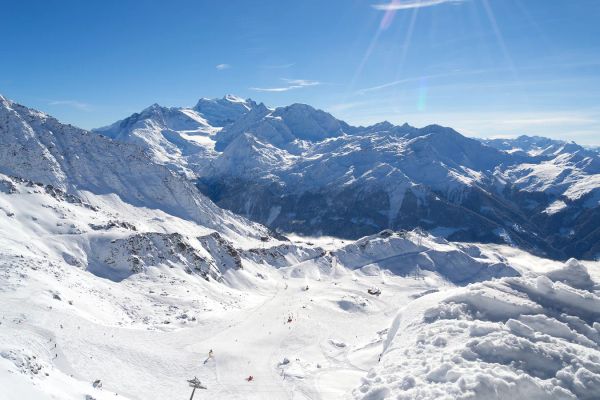
Alps Snow Forecast: Up to 64 cm Headed for the High Glaciers as the Snow Line Drops
The Alps are about to swap mild, sunny October weather for something far more wintry. A cold front arrives Tuesday, and SnowStash forecasts have Monterosa Ski out in front with 64 cm over 14 days, ahead of Blatten Belalp (55 cm) and Verbier (43 cm). The snow line should fall below 2000 metres by Wednesday night, and glaciers across Switzerland, Italy and Austria are in line for the best of it. The wind will have a say too.
20 Oct 2026
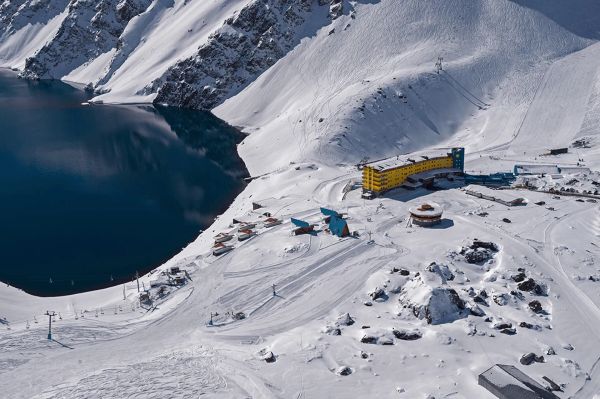
Four Dead After Avalanche Near Ski Portillo in Chile
A large avalanche struck near Laguna del Inca adjacent to Ski Portillo on Saturday afternoon, killing four people and injuring four others. The group were day visitors mountaineering in the backcountry after reportedly being warned about elevated avalanche risk by resort staff.
18 Oct 2026

Europe Ski Resorts Open Now: What Is Skiable in Mid-October 2026
Europe’s ski season is open, technically. After a record-warm summer, glaciers in Austria, Switzerland and Italy are running a few pistes apiece, Sölden, Stubai and Kitzsteinhorn started late, Titlis has pushed back to 24 October, and Zermatt reopens a few lifts on 14 October after more than two months shut. Finland’s Levi and Ruka are skiing on stored snow. Here is what is open, and what you actually get at each.
14 Oct 2026

Zermatt Plans World Cup Downhill Return on the Gornergrat for 2028
Zermatt is having another crack at a World Cup downhill, and this time nobody has to cross a border. Around 13 million Swiss francs is going into rebuilding the Gornergrat piste, including a jump fed by a roughly 300-metre in-run across the roof of the Gornergrat Railway gallery, with the Matterhorn lined up behind it for the TV cameras. First men’s race is pencilled in for March 2028, pending FIS homologation.
14 Oct 2026

Mt. Rose Begins Snowmaking for the 2026-27 Season at Lake Tahoe
Lake Tahoe’s highest base elevation is paying off early: Mt. Rose has started making snow for 2026-27 after the first flurries and a cold snap. The Nevada resort is backing it with nearly US$2 million in upgrades, including a replacement snowmaking main line, a new PistenBully groomer and restraint bars on every lift. Opening day is yet to be confirmed, though Heavenly and Northstar are already eyeing 20 November.
13 Oct 2026

Utah Ski Resorts 2026-27: What’s New at Alta, Deer Valley, Powder Mountain and More
Utah is still building flat out. For 2026-27, Powder Mountain opens a steep new Skytrac chair into more than 1,000 acres of advanced terrain, Deer Valley adds 200 acres on Hail Peak, Sundance gets a new quad and Park City adds a gondola from its new parking structure. Snowmaking is expanding almost everywhere, Eagle Point stays closed after the Cottonwood Fire, and the 2034 Games are setting the pace. Here’s what’s new, resort by resort.
13 Oct 2026

Mt Hutt Invests NZ$12 Million in Base Area, Tripling Its Sun Deck
Mt Hutt is getting busier, and its base lodge is about to catch up. NZ$12 million goes into a heated sun deck roughly three times the current size (430 m² to 1,300 m²), plus a new toilet block, heated steps down to snow level, extra storage and a new food and beverage outlet. Building starts after the 2026 season, with everything due for winter 2027.
11 Oct 2026

Vermont Ski Resort Opening Dates 2026-27: Few Dates Set, Killington Waits on the Cold
Vermont's season is slow to take shape. Stratton is tentatively targeting 18 November and Sugarbush 21 November, while Pico has Friday 11 December on the calendar. Killington never sets a date and opens when the snowmaking allows, and Vail Resorts has yet to name days for Stowe, Okemo and Mount Snow. The forecasts disagree about snow, and the main El Niño worry for the Green Mountains is warmth.
9 Oct 2026
Holiday Valley Snow Report
Snow Report
Updated 22 Oct 2026
2,320ft
summit
+0in
new snow · last 24 hours
Clear34°F / 56°F · NW 12mph
Snowfall
24 hours
0in
48 hours
0in
7 days
0in
Base depth
15in
Season total
0in
Total lifts13
Live open status isn’t available right now.
27 Nov 2026 - 4 Apr 2027
Hour by Hour
Next 48 hours· Updated Oct 22, 2026 at 4:02 PM
Scroll for the full outlook · Open-Meteo
7-Day Outlook
2,320 ftUpdated Oct 22, 2026 at 4:02 PMOpen-Meteo
Days 1–7
0.0"
Days 8–14
0.0"
Thu, Oct 22
Overcast
Temp56° / 34°°F
Snow0.0"
Wind12 mph NW
Live snow from the resort feed; forecast from Open-Meteo, via Supabase.
Understanding the Holiday Valley snow report
Track current conditions at Holiday Valley in New York. This report covers snowfall totals, base and summit depth, and the forecast across 60 runs.
Snow measurements
Snow depth at Holiday Valley is tracked at both the base and summit, since the two elevations often see different totals — roughly a 250m difference here. We report fresh snowfall over the last 24 hours and 7 days alongside the running season total, in both metric and imperial units.
Weather conditions
Current weather conditions affect snow quality. Cold temperatures with low wind typically preserve snow quality, while warm temperatures or rain can impact conditions negatively — something worth watching closely at Holiday Valley's 457m base elevation, where temperatures run milder than the summit.
Data sources
Holiday Valley snow data is collected through a combination of on-mountain reports and weather forecasting services, giving you both official resort updates and independent forecast data in one place. The mountain is served by 13 lifts, including 11 quad chairlifts.
When to check
The biggest swings usually happen right after a storm. Check Holiday Valley's report in the morning for the freshest numbers, and again in the afternoon as conditions evolve.