
Brian Head
Brian Head: 650 acres, 71 runs, 9.1m annual snowfall. Utah's highest base elevation resort 3 hours from Las Vegas.
Season 2026 - 2027
Opens
20 Nov 2026
Closes
2 May 2027
Days open
163
Annual snow
29ft
The Overview
Michael Fulton
Melbourne-based skier and snowboarder with 50+ resorts across 5 continents. Specialises in Australian resorts and international resort comparisons.
Brian Head operates across 650 acres with 71 runs and a vertical drop of 402 metres, spanning elevations from 2,926 to 3,343 metres. The resort holds Utah's highest base elevation at 2,926 metres and receives 9.1 metres of annual snowfall. Children aged 12 and under ski free, whilst lift tickets start from $19 on select dates through dynamic pricing.
Terrain splits 30% beginner, 35% intermediate, 32% advanced and 3% expert across two interconnected peaks, Navajo and Brian Head. Navajo Peak serves beginners and intermediates with gentle groomers accessed by the Navajo Express quad, whilst Brian Head Peak delivers steeper terrain off lifts including Roulette, The Dunes and Giant Steps Express. A ski bridge crosses Highway 143 to link the two areas. Runs like Engens and Georg's Rock provide challenge for confident skiers, though the resort suits families and progressing intermediates more than experts seeking steep terrain.
The base elevation creates cold, dry conditions that preserve powder quality days after storms, despite lower snowfall than northern Utah resorts. Two base lodges serve the mountain: Giant Steps Lodge on the main peak and Navajo Lodge on the learning zone. The Last Chair Saloon offers après atmosphere with live music most Saturdays during season. Uncrowded slopes define the Brian Head experience outside holiday periods, with minimal lift queues and fresh tracks available well after snowfalls.
Mountain Capital Partners acquired the resort in 2019. Power Pass season passes starting at $749 grant access to nine additional resorts across the Mountain Capital Partners network, including Nordic Valley and Lee Canyon. The 2025-26 season runs 7 November to 26 April. Brian Head appeals to families seeking affordable skiing, Las Vegas weekenders, and intermediates prioritising value and space over extreme terrain.
1,368ft
Vertical
71
Runs
650 acres
Skiable
29ft
Annual snow
The Terrain
71 runs across 650 acres skiable
Brian Head sits on the Markagunt Plateau in southern Utah, with a base elevation of 9,600 ft (2,926 m) that is high even by Utah standards. The summit reaches 10,970 ft (3,343 m), giving 1,370 ft (417 m) of vertical across 650 acres (263 hectares) and 71 runs. Terrain splits 30% beginner, 35% intermediate, 32% advanced and 3% expert, so the mountain favours progressing skiers and families over steep-seekers. The resort is divided between two mountains, Navajo Peak and Brian Head Peak, with eight lifts between them, so it pays to decide which side suits your group before heading out for the day.
Navajo Peak is the gentler side, where the Navajo Express quad serves wide groomed runs for beginners and intermediates. Brian Head Peak holds the rest of the lifts, including the flagship Giant Steps Express, installed in 2014 with a ride of roughly five minutes. Roulette offers long, flowing descents at a moderate pitch, while The Dunes carries steeper runs with natural rollers and tighter turns that suit experienced skiers. The Blackfoot triple serves night skiing and terrain parks on Friday and Saturday evenings from 4pm to 9pm. Brian Head suits families and intermediates who want a high-altitude day on friendly terrain, while experts will want more challenge elsewhere.
Terrain split
71
runs
71 runs across 4 grades
Beginner21 runs · 30%
Intermediate25 runs · 35%
Advanced23 runs · 32%
Expert2 runs · 3%
Time it right
When to visit Brian Head
The 2025-26 season operates 7 November 2025 through 26 April 2026. Brian Head typically runs mid-November to mid-April, with the 2024-25 season achieving 181 operational days. Operating hours are 10am-4pm Monday-Friday and 9:30am-4:30pm weekends and holidays. Night skiing runs Friday-Saturday 4pm-9pm on the Blackfoot lift, expanding to seven days weekly during peak periods.
The resort averages 9.1 metres annual snowfall, with the 2,926-metre base elevation delivering cold, dry powder. Snowmaking covers 170 acres, concentrated on Navajo Mountain and key runs. February averages the heaviest snowfall with 1.35 metres, whilst December and January each deliver approximately 1.1 metres. Storms depositing over 12 centimetres occur 27 times annually on average. The high elevation preserves snow quality better than lower resorts, maintaining coverage into late April during strong seasons.
January and February offer peak powder conditions, though the uncrowded nature means untracked snow lingers days after storms. March delivers spring skiing with warmer temperatures and long sunny days. Weekday visits from December through March provide the best value and emptiest slopes. Holiday periods see increased traffic from Las Vegas and Southern California, particularly Christmas through New Year and Presidents Day weekend.
The resort hosts monthly Star Parties with Cedar Breaks National Monument rangers providing stargazing sessions with telescopes at Navajo Lodge. Summer operations run weekends mid-June through mid-October, offering chairlift-accessed mountain biking, disc golf, archery and tubing. Events include Fourth of July celebrations, classic rock festivals and car shows. Two terrain parks and tubing hills operate during winter, with tubing requiring advance reservations by calling 435-677-2035.
Season 2026 - 2027
20 Nov 2026
Opens
2 May 2027
Closes
163
Days open
29 ft
Annual snow
Getting there
Getting to Brian Head, and where to stay
Brian Head sits in the Dixie National Forest in southern Utah's Markagunt Plateau at 2,926 metres base elevation. The resort occupies a high desert mesa surrounded by red rock formations, pine forests and distant views toward Cedar Breaks National Monument. Utah Highway 143 climbs steeply through the small town of Brian Head, population 120, which spreads along the access road between the two base areas. Cedar Breaks National Monument lies 8 kilometres south, whilst red rock hoodoos visible from upper lifts create scenery unlike typical alpine resorts.
Cedar City sits 47 kilometres southwest via Highway 143, a 40-minute drive descending 1,220 vertical metres through switchbacks. The town offers additional lodging, dining and services 29 miles from the slopes. Parowan, 23 kilometres west on Interstate 15, provides the highway exit for mountain access. Bryce Canyon National Park lies 98 kilometres east (90 minutes), Zion National Park 117 kilometres southwest (90 minutes) and St George 135 kilometres southwest (90 minutes). The location enables combined ski and national park itineraries during winter when crowds thin.
Interstate 15 provides primary access, with Exit 75 at Parowan connecting to Highway 143 for the final 23-kilometre ascent. From Las Vegas, the drive runs 325 kilometres northeast (3 hours) via I-15. Salt Lake City sits 395 kilometres north (3.5 to 4 hours), also via I-15. The steep Highway 143 approach requires winter driving preparation; four-wheel drive or traction devices become mandatory during storms. Road conditions via UDOT should be checked before departure as the climb gains over 1,200 metres elevation.
Las Vegas Harry Reid International Airport lies 340 kilometres southwest (3 hours driving), offering the most flight options. Salt Lake City International Airport sits 403 kilometres north (4 hours). Cedar City Regional Airport, 53 kilometres away (35-45 minutes), provides limited Delta Connection service primarily linking Salt Lake City. St George Regional Airport, 129 kilometres distant (90 minutes), serves flights from Denver, Phoenix, Dallas-Fort Worth and Salt Lake City. The St George Shuttle and Brian Head Express Shuttle operate weekend service from Cedar City to the resort, whilst rental cars suit visitors combining skiing with regional exploration.
Where to stay
Search all stays →Hotels and lodges near Brian Head, powered by Stay22.
Latest News
From the SnowStash desk
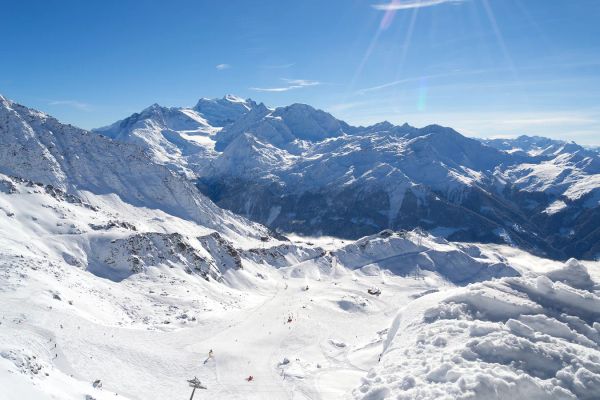
Alps Snow Forecast: Up to 64 cm Headed for the High Glaciers as the Snow Line Drops
The Alps are about to swap mild, sunny October weather for something far more wintry. A cold front arrives Tuesday, and SnowStash forecasts have Monterosa Ski out in front with 64 cm over 14 days, ahead of Blatten Belalp (55 cm) and Verbier (43 cm). The snow line should fall below 2000 metres by Wednesday night, and glaciers across Switzerland, Italy and Austria are in line for the best of it. The wind will have a say too.
20 Oct 2026
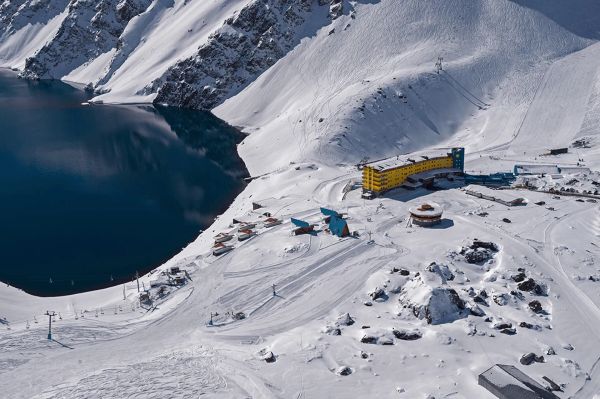
Four Dead After Avalanche Near Ski Portillo in Chile
A large avalanche struck near Laguna del Inca adjacent to Ski Portillo on Saturday afternoon, killing four people and injuring four others. The group were day visitors mountaineering in the backcountry after reportedly being warned about elevated avalanche risk by resort staff.
18 Oct 2026

Europe Ski Resorts Open Now: What Is Skiable in Mid-October 2026
Europe’s ski season is open, technically. After a record-warm summer, glaciers in Austria, Switzerland and Italy are running a few pistes apiece, Sölden, Stubai and Kitzsteinhorn started late, Titlis has pushed back to 24 October, and Zermatt reopens a few lifts on 14 October after more than two months shut. Finland’s Levi and Ruka are skiing on stored snow. Here is what is open, and what you actually get at each.
14 Oct 2026

Zermatt Plans World Cup Downhill Return on the Gornergrat for 2028
Zermatt is having another crack at a World Cup downhill, and this time nobody has to cross a border. Around 13 million Swiss francs is going into rebuilding the Gornergrat piste, including a jump fed by a roughly 300-metre in-run across the roof of the Gornergrat Railway gallery, with the Matterhorn lined up behind it for the TV cameras. First men’s race is pencilled in for March 2028, pending FIS homologation.
14 Oct 2026

Mt. Rose Begins Snowmaking for the 2026-27 Season at Lake Tahoe
Lake Tahoe’s highest base elevation is paying off early: Mt. Rose has started making snow for 2026-27 after the first flurries and a cold snap. The Nevada resort is backing it with nearly US$2 million in upgrades, including a replacement snowmaking main line, a new PistenBully groomer and restraint bars on every lift. Opening day is yet to be confirmed, though Heavenly and Northstar are already eyeing 20 November.
13 Oct 2026

Utah Ski Resorts 2026-27: What’s New at Alta, Deer Valley, Powder Mountain and More
Utah is still building flat out. For 2026-27, Powder Mountain opens a steep new Skytrac chair into more than 1,000 acres of advanced terrain, Deer Valley adds 200 acres on Hail Peak, Sundance gets a new quad and Park City adds a gondola from its new parking structure. Snowmaking is expanding almost everywhere, Eagle Point stays closed after the Cottonwood Fire, and the 2034 Games are setting the pace. Here’s what’s new, resort by resort.
13 Oct 2026

Mt Hutt Invests NZ$12 Million in Base Area, Tripling Its Sun Deck
Mt Hutt is getting busier, and its base lodge is about to catch up. NZ$12 million goes into a heated sun deck roughly three times the current size (430 m² to 1,300 m²), plus a new toilet block, heated steps down to snow level, extra storage and a new food and beverage outlet. Building starts after the 2026 season, with everything due for winter 2027.
11 Oct 2026

Vermont Ski Resort Opening Dates 2026-27: Few Dates Set, Killington Waits on the Cold
Vermont's season is slow to take shape. Stratton is tentatively targeting 18 November and Sugarbush 21 November, while Pico has Friday 11 December on the calendar. Killington never sets a date and opens when the snowmaking allows, and Vail Resorts has yet to name days for Stowe, Okemo and Mount Snow. The forecasts disagree about snow, and the main El Niño worry for the Green Mountains is warmth.
9 Oct 2026