
Mad River Glen
115 acres, 52 runs in the Mad River Valley. America's only cooperatively owned ski area, legendary Single Chair.
Season 2026 - 2027
Opens
12 Dec 2026
Closes
3 Apr 2027
Days open
112
Annual snow
15ft
The Overview
Michael Fulton
Melbourne-based skier and snowboarder with 50+ resorts across 5 continents. Specialises in Australian resorts and international resort comparisons.
Mad River Glen's summit reaches 3,638 feet, dropping roughly 2,037 vertical feet to a base at 1,601 feet across 52 runs spread over 115 acres in Fayston, Vermont. Terrain splits 35 per cent each for advanced and intermediate, 20 per cent beginner and 10 per cent expert, with average annual snowfall of roughly 185 inches. Three lifts, including the legendary Single Chair, serve the mountain alongside one triple chair and one t-bar.
Mad River Glen operates as the only cooperatively owned ski area in America, a genuinely unique structure that has protected the mountain's deliberately unpretentious, skier-first character for decades. Its famous slogan, 'Ski it if you can,' reflects the resort's reputation for challenging, largely ungroomed terrain that has earned a fiercely devoted following.
Roland Palmedo, who also later helped shape skiing at Stowe, founded Mad River Glen in 1947, leading a group of investors that included members of the Rockefeller family, with the explicit intention of creating a ski area for dedicated skiers with minimal commercial development. The resort's Single Chair, a pioneering fixed-grip lift, was completed and began operating in 1948 alongside five original trails and a small base lodge, and remains today the only lift of its kind still operating in the contiguous United States, travelling at 600 feet per minute.
A group led by Truxton Pratt purchased the ski area in 1972, and his wife Betsy took controlling interest of the Mad River Corporation upon his death in 1975. Wanting to sell only to people she could trust, Betsy Pratt eventually created a cooperative ownership structure, and on 5 December 1995 the Mad River Glen Cooperative formed, giving the resort's devoted skiers direct ownership and a voice through regular Town Hall meetings. When the ageing Single Chair needed attention, more than 80 per cent of shareholders voted to restore it rather than replace it, raising the full 1.8 million US dollar cost through community donations. Adult daily tickets run from 89 to 109 US dollars, with active military skiing free.
2,037ft
Vertical
52
Runs
115 acres
Skiable
15ft
Annual snow
The Terrain
52 runs across 115 acres skiable
Mad River Glen is a compact 115 acres (47 hectares) with 52 runs in Fayston, Vermont, running from a base at 1,600 ft (488 m) to a summit of 3,640 ft (1,109 m) for a vertical of 2,040 ft (621 m). The split is 35% blue square, 35% black diamond, 20% green circle and 10% expert, which is tougher than the numbers suggest because so much is left ungroomed. About 185 inches of snow falls in an average winter, and snowmaking covers only around 15% of the mountain, all below 2,200 ft. A single chair, a double, a triple and a T-bar do the work.
The first five trails cut here were Chute, Catamount, Fall-Line, Grand Canyon and Porcupine, and Paradise and Chute remain well-known lines, with Lynx a local pick for fresh tracks. Many of the best lines carry no map marking or sign, so exploring is part of the deal. The 1948 Single Chair is the only one of its kind left in the lower 48 states, and a practice slope lift looks after beginners. Mad River Glen suits advanced skiers who value natural snow and tight tree lines over grooming.
Terrain split
52
runs
52 runs across 4 grades
Beginner10 runs · 20%
Intermediate18 runs · 35%
Advanced18 runs · 35%
Expert5 runs · 10%
Time it right
When to visit Mad River Glen
The 2025-26 season at Mad River Glen ran from 13 December 2025 to 5 April 2026, a roughly sixteen-week season supported by average annual snowfall of around 185 inches across the resort's challenging, largely natural-snow terrain. Season dates can shift depending on early and late-season weather.
Midwinter, from December through February, typically brings the most consistent conditions to Mad River's advanced-and-intermediate-weighted terrain. As a cooperatively owned resort without major multi-resort pass affiliation, Mad River draws a fiercely devoted visitor base of shareholders and dedicated skiers specifically seeking the mountain's authentic, largely ungroomed character.
The resort's famous 'Ski it if you can' ethos continues to define visitor expectations throughout the season, with limited grooming and a genuine emphasis on natural, challenging conditions. Cooperative shareholders participate in regular Town Hall meetings, giving the resort's devoted skier-owners a direct voice in seasonal operations and management decisions throughout the year.
Specific event programming beyond standard operations is not confirmed in available resort information. Since the Mad River Glen Cooperative's formation on 5 December 1995, following Betsy Pratt's decision to sell only to trusted skiers, the resort has continued operating under its unique shareholder governance model. The legendary Single Chair and the cooperative's preservation-first values remain central to Mad River's identity each season.
Season 2026 - 2027
12 Dec 2026
Opens
3 Apr 2027
Closes
112
Days open
15 ft
Annual snow
Getting there
Getting to Mad River Glen, and where to stay
Mad River Glen sits in Fayston, Vermont, in the Mad River Valley, with a base elevation of 1,601 feet and a summit at 3,638 feet across a roughly 2,037-foot vertical drop over 115 acres. This setting places the resort within one of Vermont's most storied ski valleys, alongside neighbouring Sugarbush.
Waitsfield and the broader Mad River Valley offer lodging, dining and a genuinely close-knit ski community atmosphere within a short drive of the resort. Burlington, Vermont's largest city, lies within a reasonable drive as well, providing a broader regional population base.
Vermont State Route 17 provides access to the resort through the Mad River Valley. Winter driving conditions on this route can include snow and ice, though the well-travelled road is regularly maintained given the valley's status as a significant regional ski destination. There is no direct public transport service to the mountain.
Burlington International Airport, within a reasonable drive, is the nearest airport with substantial commercial service, making Mad River Glen accessible for visitors flying into northern Vermont, though the resort's devoted visitor base is drawn primarily by its cooperative ownership and distinctive character rather than convenience.
Where to stay
Search all stays →Hotels and lodges near Mad River Glen, powered by Stay22.
Latest News
From the SnowStash desk
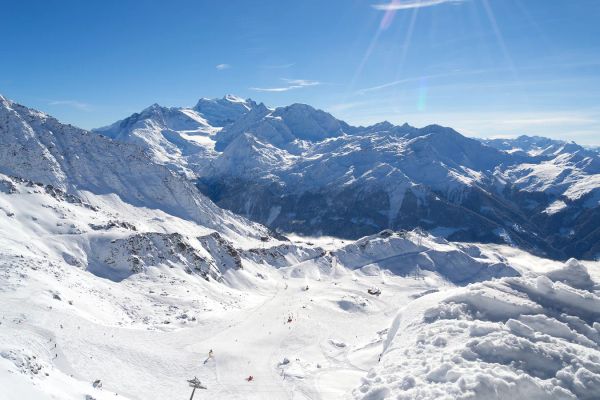
Alps Snow Forecast: Up to 64 cm Headed for the High Glaciers as the Snow Line Drops
The Alps are about to swap mild, sunny October weather for something far more wintry. A cold front arrives Tuesday, and SnowStash forecasts have Monterosa Ski out in front with 64 cm over 14 days, ahead of Blatten Belalp (55 cm) and Verbier (43 cm). The snow line should fall below 2000 metres by Wednesday night, and glaciers across Switzerland, Italy and Austria are in line for the best of it. The wind will have a say too.
20 Oct 2026
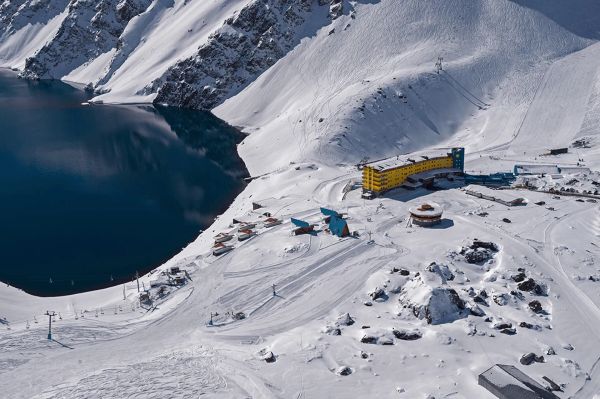
Four Dead After Avalanche Near Ski Portillo in Chile
A large avalanche struck near Laguna del Inca adjacent to Ski Portillo on Saturday afternoon, killing four people and injuring four others. The group were day visitors mountaineering in the backcountry after reportedly being warned about elevated avalanche risk by resort staff.
18 Oct 2026
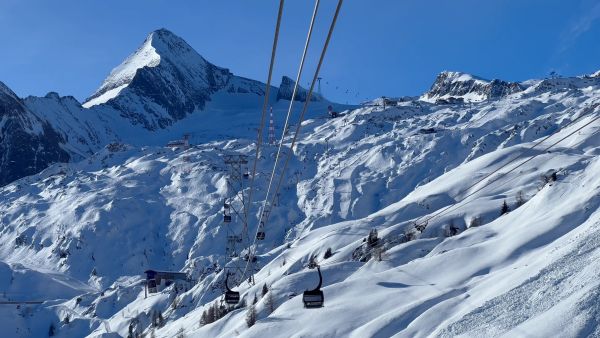
Europe Ski Resorts Open Now: What Is Skiable in Mid-October 2026
Europe’s ski season is open, technically. After a record-warm summer, glaciers in Austria, Switzerland and Italy are running a few pistes apiece, Sölden, Stubai and Kitzsteinhorn started late, Titlis has pushed back to 24 October, and Zermatt reopens a few lifts on 14 October after more than two months shut. Finland’s Levi and Ruka are skiing on stored snow. Here is what is open, and what you actually get at each.
14 Oct 2026
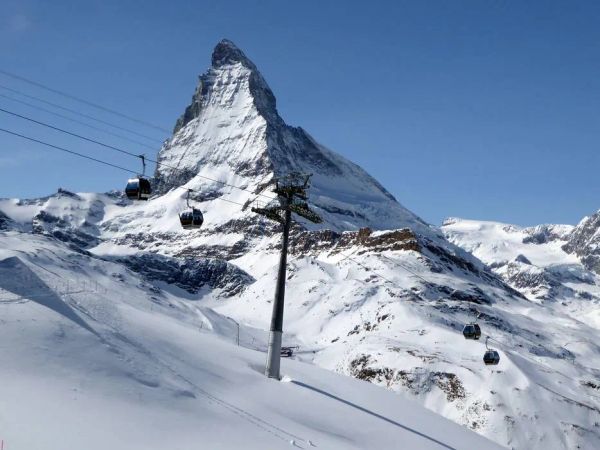
Zermatt Plans World Cup Downhill Return on the Gornergrat for 2028
Zermatt is having another crack at a World Cup downhill, and this time nobody has to cross a border. Around 13 million Swiss francs is going into rebuilding the Gornergrat piste, including a jump fed by a roughly 300-metre in-run across the roof of the Gornergrat Railway gallery, with the Matterhorn lined up behind it for the TV cameras. First men’s race is pencilled in for March 2028, pending FIS homologation.
14 Oct 2026
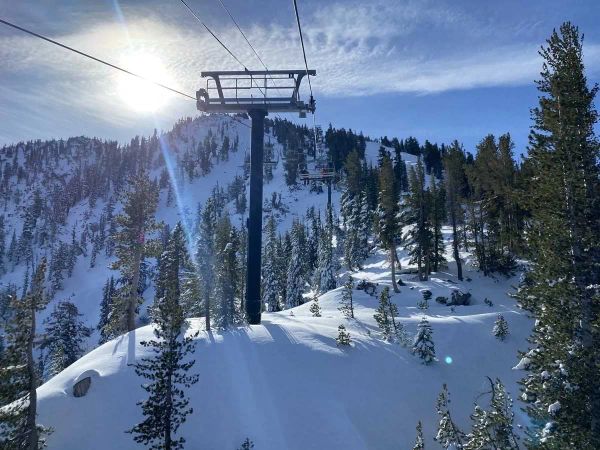
Mt. Rose Begins Snowmaking for the 2026-27 Season at Lake Tahoe
Lake Tahoe’s highest base elevation is paying off early: Mt. Rose has started making snow for 2026-27 after the first flurries and a cold snap. The Nevada resort is backing it with nearly US$2 million in upgrades, including a replacement snowmaking main line, a new PistenBully groomer and restraint bars on every lift. Opening day is yet to be confirmed, though Heavenly and Northstar are already eyeing 20 November.
13 Oct 2026
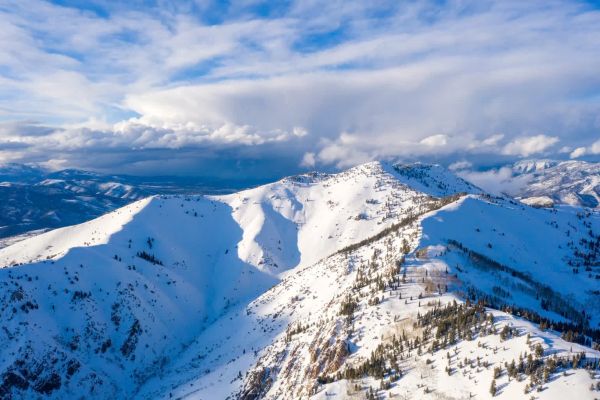
Utah Ski Resorts 2026-27: What’s New at Alta, Deer Valley, Powder Mountain and More
Utah is still building flat out. For 2026-27, Powder Mountain opens a steep new Skytrac chair into more than 1,000 acres of advanced terrain, Deer Valley adds 200 acres on Hail Peak, Sundance gets a new quad and Park City adds a gondola from its new parking structure. Snowmaking is expanding almost everywhere, Eagle Point stays closed after the Cottonwood Fire, and the 2034 Games are setting the pace. Here’s what’s new, resort by resort.
13 Oct 2026
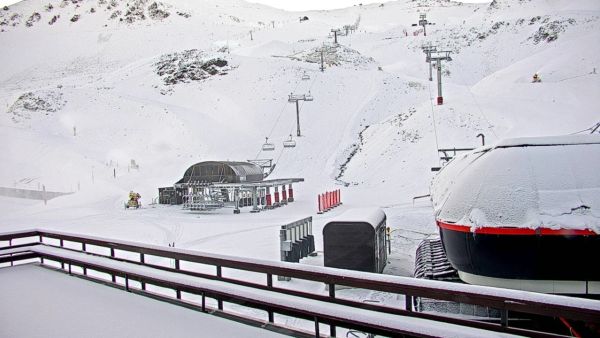
Mt Hutt Invests NZ$12 Million in Base Area, Tripling Its Sun Deck
Mt Hutt is getting busier, and its base lodge is about to catch up. NZ$12 million goes into a heated sun deck roughly three times the current size (430 m² to 1,300 m²), plus a new toilet block, heated steps down to snow level, extra storage and a new food and beverage outlet. Building starts after the 2026 season, with everything due for winter 2027.
11 Oct 2026

Vermont Ski Resort Opening Dates 2026-27: Few Dates Set, Killington Waits on the Cold
Vermont's season is slow to take shape. Stratton is tentatively targeting 18 November and Sugarbush 21 November, while Pico has Friday 11 December on the calendar. Killington never sets a date and opens when the snowmaking allows, and Vail Resorts has yet to name days for Stowe, Okemo and Mount Snow. The forecasts disagree about snow, and the main El Niño worry for the Green Mountains is warmth.
9 Oct 2026