
Mt Baker
1,000 acres, 38 runs near the Canadian border. World-record snowfall, legendary backcountry access.
Season 2026 - 2027
Opens
18 Dec 2026
Closes
18 Apr 2027
Days open
121
Annual snow
58ft
The Overview
Michael Fulton
Melbourne-based skier and snowboarder with 50+ resorts across 5 continents. Specialises in Australian resorts and international resort comparisons.
Mt Baker's summit reaches 5,000 feet, dropping 1,500 vertical feet to a base at 3,500 feet across 38 runs spread over 1,000 acres in Whatcom County, Washington. Terrain splits 45 per cent intermediate, 24 per cent beginner, 16 per cent expert and 15 per cent advanced, with average annual snowfall of roughly 702 inches, among the highest totals of any ski area in the world. The resort operates independently without major multi-resort pass affiliation.
Mt Baker holds the world record for the most snowfall recorded at a ski area in a single season: 1,140 inches during the 1998-99 winter, verified by NOAA, breaking the previous record of 1,122.5 inches set at Paradise on Mount Rainier in 1971-72. This extraordinary snowfall, combined with extensive backcountry access, has made Mt Baker legendary among powder skiers despite its comparatively modest 1,000-acre footprint. The resort's remote setting near the Canadian border adds to its authentic, unpolished character.
Skiing on the mountain traces to 1921-1926, when the Mt Baker Highway was constructed to Heather Meadows, opening the area to winter recreation. Mount Baker Lodge opened in 1927, and the Mt Baker Ski Club was organised that same year, establishing the foundations of organised skiing on the mountain nearly a century ago.
The resort's location at the end of State Route 542, roughly ten miles south of the 49th parallel and the Canadian border, keeps it relatively remote even by Washington ski area standards. Adult daily tickets run from 69 to 89 US dollars, with a season pass from 899 dollars, reflecting a resort that has deliberately avoided major destination-resort development in favour of preserving its authentic, powder-focused identity.
1,499ft
Vertical
38
Runs
1,000 acres
Skiable
58ft
Annual snow
The Terrain
38 runs across 1,000 acres skiable
Mt Baker packs 1,000 acres (405 hectares) of terrain into a compact, lift-served area near the Canadian border, with 38 runs between 3,500 ft (1,067 m) at the base and 5,000 ft (1,524 m) at the top. The vertical is 1,500 ft (457 m), and the mountain is famous for snowfall, averaging about 702 inches a winter. Intermediate runs make up 45% of the terrain, beginner 24%, expert 16% and advanced 15%. Eight quad chairs and two t-bars keep skiers moving through the snow that falls here.
Chair 8 is the longest lift, serving groomers such as Oh Zone and Daytona and opening access to the Hemispheres and Shuksan Arm backcountry. Gabl's, beneath Chair 5, and the Chute are the two double black diamond runs, with Chair 5 also reaching the Elbow backcountry. A midpoint station on Chair 1 gives quick laps on Austin, Pan Face, North Face and Chicken Ridge, and Panorama Dome sits at the top. Backcountry skills matter here, so it suits committed powder skiers more than casual visitors.
Terrain split
38
runs
38 runs across 4 grades
Beginner9 runs · 24%
Intermediate17 runs · 45%
Advanced6 runs · 15%
Expert6 runs · 16%
Time it right
When to visit Mt Baker
The 2025-26 season at Mt Baker ran from 28 November 2025 to 19 April 2026, a roughly twenty-one-week season supported by average annual snowfall of around 702 inches, among the highest totals of any ski area anywhere in the world. This extraordinary snowfall underpins the resort's legendary reputation among powder skiers and supports a long, reliable natural season without significant reliance on snowmaking.
Midwinter, from December through February, typically delivers the deepest and most frequent snowfall, with Mt Baker's 1998-99 world-record season of 1,140 inches standing as the benchmark against which extreme winters are still measured. The resort's remote location near the Canadian border keeps crowds lighter than more accessible Cascade resorts even during peak conditions, drawing dedicated powder skiers willing to make the drive.
As an independently operated resort without major pass affiliation, Mt Baker's visitor base skews heavily toward experienced Pacific Northwest skiers and backcountry enthusiasts rather than destination-pass traffic. School holiday periods bring some increase in visitation, though the resort's terrain and remote setting generally favour more experienced skiers over casual family outings.
Specific event programming beyond standard operations is not confirmed in available resort information. The resort's world-record snowfall history remains central to its identity and continues to draw powder skiers from across the country specifically hoping to experience conditions approaching those of the legendary 1998-99 season. Mt Baker's extensive backcountry access further distinguishes its seasonal character from more conventional Cascade resorts.
Season 2026 - 2027
18 Dec 2026
Opens
18 Apr 2027
Closes
121
Days open
58 ft
Annual snow
Getting there
Getting to Mt Baker, and where to stay
Mt Baker sits in Whatcom County in northwestern Washington, at the end of State Route 542, roughly ten miles south of the 49th parallel and the Canadian border, with a base elevation of 3,500 feet and a summit at 5,000 feet across a 1,500-foot vertical drop over 1,000 acres. This remote setting places the resort well north of Washington's other major ski areas.
The town of Glacier, Washington, offers the nearest lodging and services along the Mt Baker Highway, while Bellingham, a larger regional city, lies further west and provides more extensive amenities. The broader North Cascades landscape surrounding the resort offers additional recreation beyond skiing, with the area's proximity to the Canadian border adding an international dimension to the region's tourism.
State Route 542, the Mt Baker Highway, provides the sole route to the resort from Bellingham and the broader Puget Sound region. Winter driving conditions on this route can be severe given the area's extraordinary snowfall, and chains or traction tyres are frequently required during storms. There is no direct public transport service to the resort.
Bellingham International Airport is the nearest airport with commercial service, though most visitors fly into Seattle-Tacoma International Airport and make the roughly two-and-a-half-hour drive north. This distance from major air travel hubs reinforces Mt Baker's identity as a destination reached deliberately by committed powder skiers rather than a convenient day-trip resort.
Where to stay
Search all stays →Hotels and lodges near Mt Baker, powered by Stay22.
Latest News
From the SnowStash desk
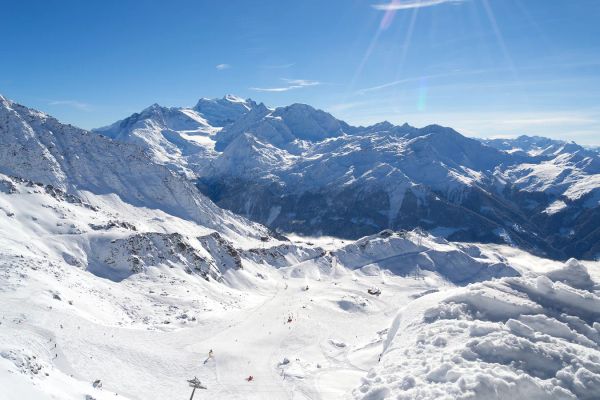
Alps Snow Forecast: Up to 64 cm Headed for the High Glaciers as the Snow Line Drops
The Alps are about to swap mild, sunny October weather for something far more wintry. A cold front arrives Tuesday, and SnowStash forecasts have Monterosa Ski out in front with 64 cm over 14 days, ahead of Blatten Belalp (55 cm) and Verbier (43 cm). The snow line should fall below 2000 metres by Wednesday night, and glaciers across Switzerland, Italy and Austria are in line for the best of it. The wind will have a say too.
20 Oct 2026

Four Dead After Avalanche Near Ski Portillo in Chile
A large avalanche struck near Laguna del Inca adjacent to Ski Portillo on Saturday afternoon, killing four people and injuring four others. The group were day visitors mountaineering in the backcountry after reportedly being warned about elevated avalanche risk by resort staff.
18 Oct 2026

Europe Ski Resorts Open Now: What Is Skiable in Mid-October 2026
Europe’s ski season is open, technically. After a record-warm summer, glaciers in Austria, Switzerland and Italy are running a few pistes apiece, Sölden, Stubai and Kitzsteinhorn started late, Titlis has pushed back to 24 October, and Zermatt reopens a few lifts on 14 October after more than two months shut. Finland’s Levi and Ruka are skiing on stored snow. Here is what is open, and what you actually get at each.
14 Oct 2026

Zermatt Plans World Cup Downhill Return on the Gornergrat for 2028
Zermatt is having another crack at a World Cup downhill, and this time nobody has to cross a border. Around 13 million Swiss francs is going into rebuilding the Gornergrat piste, including a jump fed by a roughly 300-metre in-run across the roof of the Gornergrat Railway gallery, with the Matterhorn lined up behind it for the TV cameras. First men’s race is pencilled in for March 2028, pending FIS homologation.
14 Oct 2026

Mt. Rose Begins Snowmaking for the 2026-27 Season at Lake Tahoe
Lake Tahoe’s highest base elevation is paying off early: Mt. Rose has started making snow for 2026-27 after the first flurries and a cold snap. The Nevada resort is backing it with nearly US$2 million in upgrades, including a replacement snowmaking main line, a new PistenBully groomer and restraint bars on every lift. Opening day is yet to be confirmed, though Heavenly and Northstar are already eyeing 20 November.
13 Oct 2026

Utah Ski Resorts 2026-27: What’s New at Alta, Deer Valley, Powder Mountain and More
Utah is still building flat out. For 2026-27, Powder Mountain opens a steep new Skytrac chair into more than 1,000 acres of advanced terrain, Deer Valley adds 200 acres on Hail Peak, Sundance gets a new quad and Park City adds a gondola from its new parking structure. Snowmaking is expanding almost everywhere, Eagle Point stays closed after the Cottonwood Fire, and the 2034 Games are setting the pace. Here’s what’s new, resort by resort.
13 Oct 2026

Mt Hutt Invests NZ$12 Million in Base Area, Tripling Its Sun Deck
Mt Hutt is getting busier, and its base lodge is about to catch up. NZ$12 million goes into a heated sun deck roughly three times the current size (430 m² to 1,300 m²), plus a new toilet block, heated steps down to snow level, extra storage and a new food and beverage outlet. Building starts after the 2026 season, with everything due for winter 2027.
11 Oct 2026

Vermont Ski Resort Opening Dates 2026-27: Few Dates Set, Killington Waits on the Cold
Vermont's season is slow to take shape. Stratton is tentatively targeting 18 November and Sugarbush 21 November, while Pico has Friday 11 December on the calendar. Killington never sets a date and opens when the snowmaking allows, and Vail Resorts has yet to name days for Stowe, Okemo and Mount Snow. The forecasts disagree about snow, and the main El Niño worry for the Green Mountains is warmth.
9 Oct 2026
Mt Baker Webcams
2 live angles across the mountain. Tap any camera to go full-screen.
About Mt Baker's live webcams
Check live conditions across Mt Baker with 2 real-time webcams showing snow, weather, and lift operations, updated every 10 minutes. Check high-elevation cams for powder visibility and base-area cams for crowd levels before you head up.
Camera guide
- Mt Baker Heather Meadow
- Located nearby the ski resort this Mt Baker webcam shows the conditions at Heather Meadow.
- Mount Shuksan Northwest
- Located nearby the ski resort this Mt Baker webcam shows the northwest view towards Mount Shuksan
Mt Baker snow cams FAQ
How often do Mt Baker snow cams update?
All Mt Baker snow cams and webcams update every 10 minutes with fresh images showing current mountain conditions. This frequent update schedule ensures you have access to near real-time conditions for planning your ski day at Mt Baker.
Which Mt Baker webcam shows the best powder conditions?
High-elevation webcams at Mt Baker typically provide the clearest view of powder conditions and snowfall. These cams capture fresh snow accumulation and visibility better than base area cameras.
Can I see Mt Baker lift queues on the webcams?
Yes. Multiple Mt Baker snow cams specifically show lift queue areas and chairlift operations, helping you time your arrival and avoid peak queue periods.
When is the best time to check Mt Baker snow cams?
Check Mt Baker webcams early morning (7-8am) for overnight snowfall assessment, and mid-afternoon for current crowd levels and weather. The live cams are most useful after storm events to assess fresh powder.
How can I check current conditions before buying Mt Baker lift tickets?
Use our Mt Baker webcams alongside the live snow report to assess conditions before purchasing lift tickets. The webcams show real-time visibility, snow quality, and operational status.
Do Mt Baker webcams work on mobile devices?
Yes. All Mt Baker snow cams and webcams are optimized for mobile viewing, so you can check live conditions from anywhere using your phone or tablet.
More Mt Baker intelligence: snow report, lift tickets, trail map, resort overview.