
Snow King Mountain
Wyoming's first ski area, 1936. 34 runs, 400 acres, night skiing in downtown Jackson. Indy Pass access.
Season 2026 - 2027
Opens
4 Dec 2026
Closes
21 Mar 2027
Days open
107
Annual snow
11ft
The Overview
Michael Fulton
Melbourne-based skier and snowboarder with 50+ resorts across 5 continents. Specialises in Australian resorts and international resort comparisons.
Snow King Mountain's summit reaches 7,808 feet, dropping 1,571 vertical feet to a base at 6,237 feet across 34 runs spread over 400 acres on the southeast edge of Jackson, Wyoming. Terrain splits 40 per cent advanced, 24 per cent intermediate, 18 per cent expert and 18 per cent beginner, a steep mix for a town-adjacent hill. Average annual snowfall reaches roughly 132 inches, well below the totals at nearby Jackson Hole and Grand Targhee. The resort operates on the Indy Pass.
Snow King earned its nickname 'the Town Hill' from its location directly at the edge of downtown Jackson, close enough that locals can walk from town to the base. The 40 per cent advanced and 18 per cent expert terrain share makes it steeper than its small size suggests, a legacy of its original informal ski routes from the 1920s. Night skiing extends access into evening hours, a feature not offered at Jackson Hole. The mountain also hosts an alpine slide and, since 2024, an observatory and planetarium at the summit.
Wyoming's first ski area, Snow King traces its skiing history to informal use in the 1920s, when locals hiked up for runs down what was then called Kelly's Hill. The Civilian Conservation Corps built a switchback trail to the summit in 1936, and the area was officially renamed Snow King in 1938. A 4,000-foot rope tow installed in 1939 became Wyoming's first lift-served skiing. The mountain underwent a significant renovation completed in the 2020s, adding a gondola and new summit facilities.
Indy Pass holders receive access to Snow King alongside dozens of other independent resorts across North America. Adult day tickets run from 75 to 95 US dollars depending on date, with a season pass priced at 599 dollars. The resort suits locals and value-focused visitors seeking a steep, town-adjacent alternative to Jackson Hole's larger and pricier terrain. Its position inside Jackson itself, rather than a separate base village, makes it the most accessible ski area in the valley without a car.
1,572ft
Vertical
34
Runs
400 acres
Skiable
11ft
Annual snow
Indy
Pass
The Terrain
34 runs across 400 acres skiable
Snow King Mountain rises directly above downtown Jackson, with 400 acres (162 hectares) of terrain and a vertical of 1,570 ft (479 m). The base sits at 6,240 ft (1,901 m) and the summit at 7,810 ft (2,380 m). Its 34 runs lean steep: 40% advanced, 18% expert, 24% intermediate and 18% beginner. Lifts include an eight-passenger gondola, two triple chairs, a quad and three surface lifts, so getting around is easy. Skiing straight from town makes it a handy option for Jackson visitors who want sustained pitch without a drive to Teton Village.
Black diamond trails such as Bearcat and Grizzly drop from the summit, and the Sunnyside triple chair serves the back side and access to select expert lines. Three surface lifts look after learners near the base, and three terrain parks give freestyle riders rails and jumps to play on. Because the pitch is consistent, the mountain rewards strong intermediates and advanced skiers looking for a quick, steep session between other plans. Beginners are catered for, but the real appeal is hard-charging laps with the town spread out below, and it is well suited to locals and short visits.
Terrain split
34
runs
34 runs across 4 grades
Beginner6 runs · 18%
Intermediate8 runs · 24%
Advanced14 runs · 40%
Expert6 runs · 18%
Time it right
When to visit Snow King Mountain
The 2025-26 season at Snow King ran from 6 December 2025 to 5 April 2026, a roughly seventeen-week window shorter than nearby Jackson Hole's season despite similar opening timing. The mountain's lower base elevation of 6,237 feet, relative to Jackson Hole's 6,310 feet, and lower snowfall contribute to a slightly earlier close. Night skiing extends the useful hours of the season without extending its calendar length. Season dates shift year to year based on snowpack and grooming capacity.
Average annual snowfall of roughly 132 inches is markedly lower than Jackson Hole or Grand Targhee, both of which sit higher and catch more direct storm exposure. This lower natural snowfall makes snowmaking and grooming comparatively more important to Snow King's season-long conditions, though specific snowmaking coverage is not confirmed in available resort information. Base depth typically builds more slowly than at the valley's higher-elevation resorts. The mountain's south and east-facing exposure toward town can affect snow retention compared with more sheltered aspects.
Midwinter, from January through February, offers the most reliable conditions once early-season snowpack and any snowmaking coverage have built up. Night skiing sessions run through the core of the season, giving Jackson locals an after-work skiing option not available at Jackson Hole. Late-season visits in March and early April can be more variable given the mountain's lower base elevation and snowfall. Weekday and evening visits typically carry lighter crowds than weekend daytime sessions.
Night skiing is Snow King's signature seasonal feature, distinguishing it from Jackson Hole and Grand Targhee, neither of which lights runs for evening skiing. The Snow King Observatory and Planetarium, opened at the summit in 2024, adds a non-skiing draw through the winter season. The mountain also operates an alpine slide and other activities outside the core ski season. As Jackson's historic town hill, the calendar leans toward local, after-hours use alongside standard daytime skiing.
Season 2026 - 2027
4 Dec 2026
Opens
21 Mar 2027
Closes
107
Days open
11 ft
Annual snow
Getting there
Getting to Snow King Mountain, and where to stay
Snow King Mountain sits on the southeast edge of Jackson, Wyoming, close enough to downtown that it is known locally as 'the Town Hill.' Base elevation is 6,237 feet, with the summit reaching 7,808 feet across a 1,571-foot vertical drop. Unlike Jackson Hole's purpose-built Teton Village, Snow King's base sits within walking distance of Jackson's town square. The mountain looks directly down over the streets of Jackson below.
Jackson itself is the nearest town, effectively adjoining the ski area rather than requiring a separate drive. The town retains its Western character, with a historic square and elk antler arches, alongside its ski-tourism economy. Teton Village and Jackson Hole Mountain Resort sit roughly 12 miles northwest, a separate destination from Snow King within the same valley. Grand Teton National Park lies further north again, beyond both ski areas.
Local Jackson streets and Highway 89 provide direct access to Snow King's base, with no separate mountain access road required given its in-town location. This makes Snow King the most walkable ski area in the Jackson Hole valley, reachable on foot from many in-town lodging options. Winter driving within Jackson is generally well-managed given the volume of ski season traffic. No separate shuttle service is needed to reach Snow King from central Jackson, unlike the START bus required for Teton Village.
Jackson Hole Airport (JAC) is the nearest airport, roughly 10 miles from Snow King and inside Grand Teton National Park, closer to Snow King than to Teton Village given Snow King's in-town position. The airport offers seasonal service to roughly 20 cities during ski season. Idaho Falls Regional Airport offers an alternative around two hours away by road. No rail service reaches Jackson, and most visitors combine a Snow King visit with a stay in town rather than a separate airport transfer.
Where to stay
Search all stays →Hotels and lodges near Snow King Mountain, powered by Stay22.
Latest News
From the SnowStash desk

Europe Ski Resorts Open Now: What Is Skiable in Mid-October 2026
Europe’s ski season is open, technically. After a record-warm summer, glaciers in Austria, Switzerland and Italy are running a few pistes apiece, Sölden, Stubai and Kitzsteinhorn started late, Titlis has pushed back to 24 October, and Zermatt reopens a few lifts on 14 October after more than two months shut. Finland’s Levi and Ruka are skiing on stored snow. Here is what is open, and what you actually get at each.
14 Oct 2026

Zermatt Plans World Cup Downhill Return on the Gornergrat for 2028
Zermatt is having another crack at a World Cup downhill, and this time nobody has to cross a border. Around 13 million Swiss francs is going into rebuilding the Gornergrat piste, including a jump fed by a roughly 300-metre in-run across the roof of the Gornergrat Railway gallery, with the Matterhorn lined up behind it for the TV cameras. First men’s race is pencilled in for March 2028, pending FIS homologation.
14 Oct 2026

Mt. Rose Begins Snowmaking for the 2026-27 Season at Lake Tahoe
Lake Tahoe’s highest base elevation is paying off early: Mt. Rose has started making snow for 2026-27 after the first flurries and a cold snap. The Nevada resort is backing it with nearly US$2 million in upgrades, including a replacement snowmaking main line, a new PistenBully groomer and restraint bars on every lift. Opening day is yet to be confirmed, though Heavenly and Northstar are already eyeing 20 November.
13 Oct 2026

Utah Ski Resorts 2026-27: What’s New at Alta, Deer Valley, Powder Mountain and More
Utah is still building flat out. For 2026-27, Powder Mountain opens a steep new Skytrac chair into more than 1,000 acres of advanced terrain, Deer Valley adds 200 acres on Hail Peak, Sundance gets a new quad and Park City adds a gondola from its new parking structure. Snowmaking is expanding almost everywhere, Eagle Point stays closed after the Cottonwood Fire, and the 2034 Games are setting the pace. Here’s what’s new, resort by resort.
13 Oct 2026

Mt Hutt Invests NZ$12 Million in Base Area, Tripling Its Sun Deck
Mt Hutt is getting busier, and its base lodge is about to catch up. NZ$12 million goes into a heated sun deck roughly three times the current size (430 m² to 1,300 m²), plus a new toilet block, heated steps down to snow level, extra storage and a new food and beverage outlet. Building starts after the 2026 season, with everything due for winter 2027.
11 Oct 2026

Vermont Ski Resort Opening Dates 2026-27: Few Dates Set, Killington Waits on the Cold
Vermont's season is slow to take shape. Stratton is tentatively targeting 18 November and Sugarbush 21 November, while Pico has Friday 11 December on the calendar. Killington never sets a date and opens when the snowmaking allows, and Vail Resorts has yet to name days for Stowe, Okemo and Mount Snow. The forecasts disagree about snow, and the main El Niño worry for the Green Mountains is warmth.
9 Oct 2026
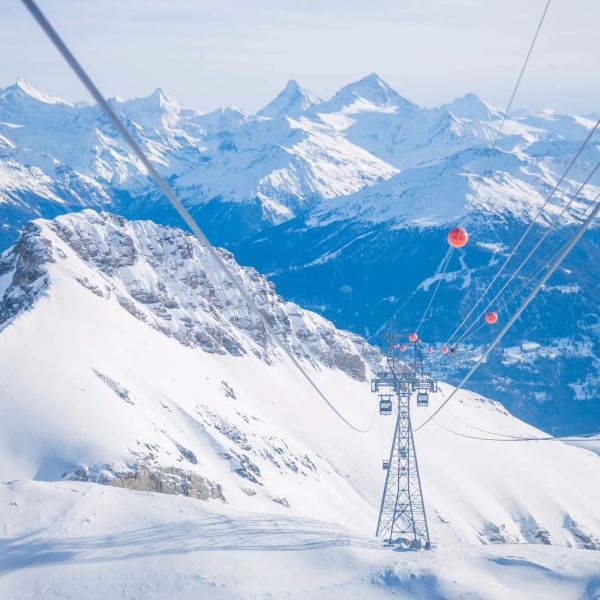
Crans-Montana 2027 World Championships President Resigns Ahead of Fraud Hearing
Less than four months out from the Crans-Montana 2027 World Championships, the man running the organising committee has stepped down. Claude-Alain Schmidhalter resigned as Swiss-Ski vice president and OC president after being indicted over a business dispute unrelated to skiing. He denies the allegations and faces court on October 27. Interim leaders are in place for the February 1-14 event.
9 Oct 2026
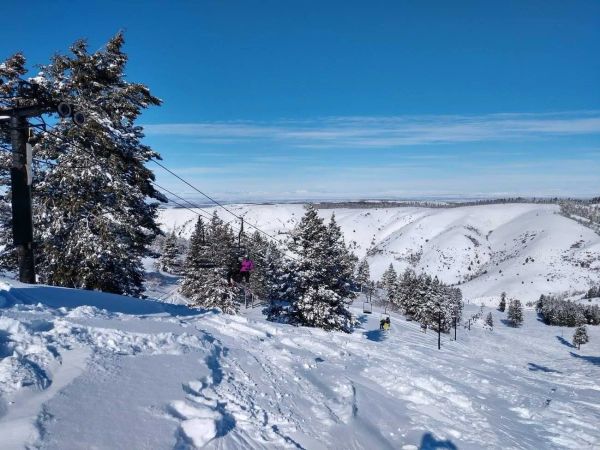
Kelly Canyon, Idaho, Adds Snowmaking, a Bigger Terrain Park and More Parking for 2026-27
Kelly Canyon had a rough 2025-26, and the Idaho resort has spent the summer making sure it doesn’t repeat. Snowmaking now reaches the top of Goldrush, the terrain park is doubling in size with a stereo system, lights and a snack shack, and the car park is getting bigger. Grooming is stepping up too. Target opening is December 4, conditions permitting.
9 Oct 2026