The Overview
Michael Fulton
Melbourne-based skier and snowboarder with 50+ resorts across 5 continents. Specialises in Australian resorts and international resort comparisons.
Les 2 Alpes spans 1,280 to 3,568 metres across 200 kilometres of piste, delivering 2,243 metres of vertical drop and access to France's highest skiing at the Dôme de la Lauze glacier. The ski area comprises 88 runs distributed as 55% beginner, 28% intermediate, 12% advanced and 5% expert terrain, with 75% of skiing above 2,000 metres ensuring reliable conditions from late November through early May. The resort holds Europe's largest skiable glacier and France's second-oldest ski history behind Chamonix, whilst the continuous top-to-bottom descent from 3,600 to 1,300 metres ranks among the world's longest pisted verticals. Grand Domaine lift passes start at €42 off-peak and €65 peak-season, with a Supernova season pass priced at €899.
The inverted terrain layout places wide glacier runs at altitude and steeper pistes below, with beginners finding forgiving slopes on the Mont de Lans glacier whilst lower sectors like La Fée and Bellecombes challenge advanced skiers. The Vallée Blanche sector to the west delivers sunny intermediate cruising from Pied Moutet at 2,339 metres, and the resort's substantial snowpark ranks among France's largest with halfpipe, kickers and boardercross. Off-piste access extends across both marked terrain and vast untracked zones, particularly quiet on weekdays due to the resort's dispersed geography. A continuous blue run now links the glacier to the village following a €10 million construction project that moved 550,000 cubic metres of earth.
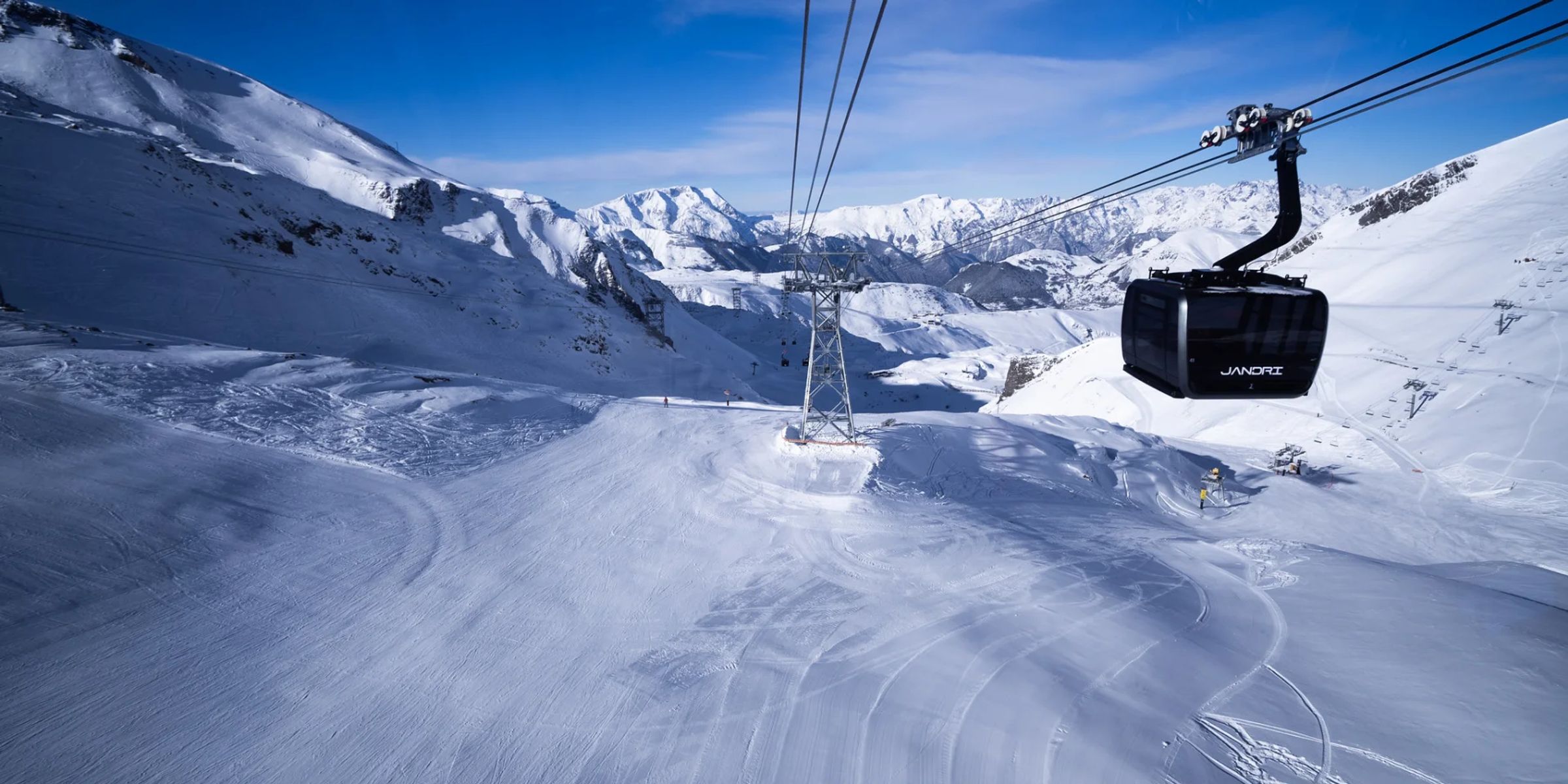
The purpose-built village stretches along a 2-kilometre plateau at 1,650 metres, built atop mountain pastures belonging to Mont-de-Lans and Vénosc communes in the valleys below. A free shuttle runs every 15 minutes connecting accommodation clusters, and the resort maintains a young, sporty atmosphere with year-round operations drawing training camps, freestylers and party crowds. Eight gondolas and numerous high-speed chairs serve a combined uphill capacity of 66,000 per hour across 44 lifts, though queues can extend during French school holidays. On-mountain dining spans affordable self-service to white-tablecloth options, with Le 3200 panoramic restaurant at the Jandri top station offering views across the Écrins massif.
Six-day passes include two days in Alpe d'Huez and one in Serre Chevalier as part of the Grande Galaxie regional arrangement, though resorts remain unlinked by lifts. The 2025-26 winter season runs 29 November to 3 May, extending to early July on the glacier for athlete training camps. Beginners benefit from extensive high-altitude learning terrain and village-level nursery slopes, intermediates enjoy wide cruising runs, and experts access La Grave's legendary off-piste via a short walk or occasional snowcat tow from the Dôme de la Lauze summit. The resort suits skiers prioritising vertical, glacier reliability and value pricing over traditional Alpine village charm.
2243m
Vertical
88
Runs
200 km
Piste
4m
Annual snow
The Terrain
88 runs across 200 km of piste
Les 2 Alpes spreads 88 runs across 200 km of piste of terrain. It leans beginner at 55%, with 48 beginner runs to find your feet and 15 advanced or expert runs when you want to push.
Terrain split
88
runs
88 runs across 4 grades
Beginner48 runs · 55%
Intermediate25 runs · 28%
Advanced11 runs · 12%
Expert4 runs · 5%
Time it right
When to visit Les 2 Alpes
The 2025-26 winter season operates 29 November 2025 to 3 May 2026, delivering 156 days of lift-served skiing across the main domain. Spring skiing continues on the glacier through May with reduced operations, and the area partially reopens from mid-June to late August for summer skiing, training camps and mountain biking. October half-term openings occasionally occur on the glacier when snow cover permits, whilst ski touring extends access during closure periods. The resort's high-altitude profile and glacier reach support one of France's longest operational calendars.
Historical snowfall averages 334 centimetres annually, with the heaviest accumulations in December through February when the second week of December typically receives 54 centimetres. Elevation advantage keeps 75% of terrain above 2,000 metres, where natural snow remains reliable from early winter through late spring. The glacier holds 180 to 300 centimetres of base depth through March whilst lower slopes carry 80 to 120 centimetres, and snowmaking infrastructure supplements natural coverage on key runs including the new blue home piste. Temperatures range from minus 8 to minus 3 degrees Celsius on the glacier, with village-level daytime highs reaching 5 to 10 degrees during spring months.
January and February deliver peak powder conditions with consistent cold temperatures, whilst March and April offer spring corn snow and longer daylight for high-altitude sessions. December provides early-season access often limited to upper sectors until mid-month snowfall builds lower-elevation bases. Weekdays outside French school holidays see notably lighter crowds, and the glacier's north-facing exposure preserves snow quality through April and May when lower slopes soften by afternoon. Mornings offer firmed overnight refreeze during spring, with skiing best before midday as temperatures climb.
The Rise Festival precedes Christmas with music performances and DJ sets on-mountain and in the village, combining six-day lift tickets with concert access. January's Mad Snow Race and March's SnowZone and Snow Fest events mix skiing with entertainment, whilst night skiing on Vallée Blanche operates throughout the season. Summer glacier operations from 13 June to 30 August run 07:00 to 12:30 daily, hosting national team training, freestyle camps and the Mountain of Hell downhill mountain bike race in late June. Les Lumières de la Muzelle night trail race features 11, 16, 21 and 42-kilometre distances through winter darkness.
Season 2025 - 2026
29 Nov 2025
Opens
4 May 2026
Closes
156
Days open
4 m
Annual snow
Getting there
Getting to Les 2 Alpes, and where to stay
Les 2 Alpes sits in the Isère department within the Oisans valley of the Écrins massif, built on a high plateau where mountain pastures from Mont-de-Lans and Vénosc communes meet. The purpose-built resort lies 75 kilometres southeast of Grenoble at 1,650 metres elevation, surrounded by peaks exceeding 3,000 metres including the Muzelle which dominates the skyline. The Écrins National Park borders the ski area, and the freeride destination of La Grave lies accessible via a short walk from the Dôme de la Lauze summit. Mont-de-Lans village sits in the valley to the north at 1,260 metres, whilst Vénosc at 960 metres occupies the southern valley linked by gondola but not by piste.
Grenoble serves as the nearest major city 70 kilometres northwest, with TGV high-speed rail connecting to Paris in 3 hours and Lyon in 1 hour 15 minutes. Bourg d'Oisans lies 20 kilometres below the resort along the valley floor, where the D213 road begins its ascent through a dozen switchbacks cleared daily during winter. The drive from Grenoble to Les 2 Alpes takes approximately 1 hour 15 minutes in clear conditions, though the final climbing section requires winter tyres or chains from November through March. Regular bus services operate between Grenoble bus station and the resort, with transfers coordinated around TGV arrivals.
Road access follows the A48 and A480 motorways to Grenoble, then the RD1091 towards Briançon via Bourg d'Oisans before turning onto the D213 at Chambon dam. From the south and Italy, the RD1091 runs north from Briançon, though the Lautaret and Galibier passes close seasonally. Lyon sits 160 kilometres west via motorway, Geneva 220 kilometres north, and Marseille connects via Grenoble on a longer southern approach. The resort provides covered and outdoor parking across multiple districts, though spaces fill rapidly during peak periods.
Grenoble Alpes Isère Airport lies closest at 90 minutes by road, serving seasonal flights from major European cities with shuttle buses coordinating around arrivals. Lyon-Saint Exupéry International Airport sits 160 kilometres distant with broader year-round connections, whilst Geneva-Cointrin at 220 kilometres offers another international gateway. Shuttle operators run from all three airports directly to resort, and private transfers arrange door-to-door service. Train passengers arriving at Grenoble SNCF station connect via bus, taxi or shared shuttle for the final 70-kilometre leg, typically adding 1 to 1.5 hours to overall journey time.
Where to stay
Search all stays →Hotels and lodges near Les 2 Alpes, powered by Stay22.
Latest News
From the SnowStash desk
Aspen Snowmass Marks 80th Anniversary With $3.75 Throwback Lift Tickets
Aspen Snowmass turns 80 this December, and it's marking the milestone with $3.75 lift tickets on the anniversary itself - the original 1946 price. A discounted long weekend, $19.46 dining specials, lodging deals up to 46 percent off, and a season of anniversary programming round out the celebration across all four mountains.
17 Sept 2026
Doppelmayr Group Posts 9.1% Revenue Growth in 2025/26, Passing 1.3 Billion Euros
Doppelmayr closed its 2025/26 business year with revenue up 9.1 percent to 1.3 billion euros, driven by projects including the Big Sky Explorer Gondola, Deer Valley's Mayflower East Village Gondola, and the first TRI-Line installation at Hoch-Ybrig. Headcount grew too, with the ropeway manufacturer now employing almost 4,000 people worldwide.
16 Sept 2026
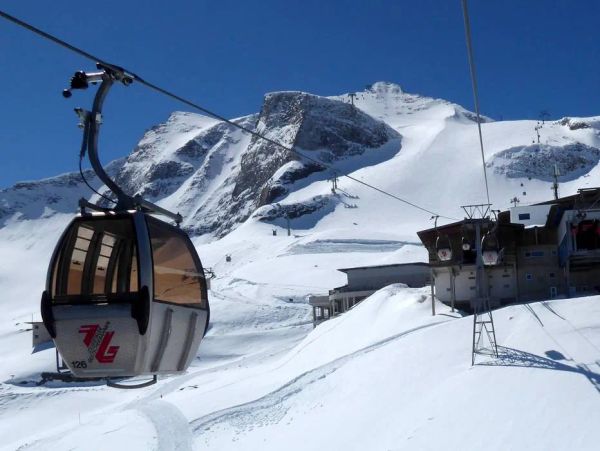
Hintertux Glacier Replaces 40-Year-Old Gondola to Tuxer Fernerhaus
Hintertux Glacier is retiring its 40-year-old gondola to the Tuxer Fernerhaus. The replacement carries 10 people per cabin instead of four, with seat heating and nearly 40 percent more hourly capacity. Doppelmayr's new line opens at the end of October 2026, right as the glacier's high-altitude terrain becomes accessible again for the new season.
16 Sept 2026
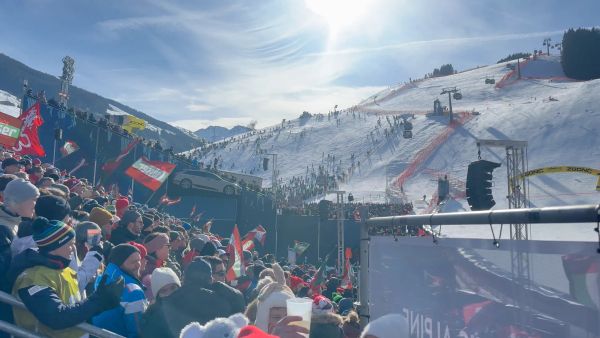
FIS Weighs Holding World Championships in Almost Every Winter, Starting 2032
The International Ski and Snowboard Federation is looking at a major shake-up to its title events calendar. From 2032, World Championships could run not just in odd-numbered years but in every non-Olympic winter too, effectively putting a global title event on the calendar almost every season. The FIS Council has approved the concept following a feasibility study, though an accelerated rollout as early as 2028 is also under consideration.
4 Sept 2026
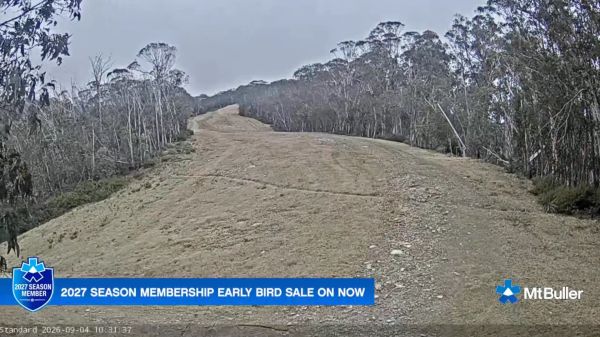
Mount Buller Becomes Latest Australian Resort to Call Time Early on 2026
Mount Buller closes out its 2026 season this Sunday, joining Falls Creek, Hotham and Charlotte Pass in a cluster of closures landing almost simultaneously and roughly a month ahead of schedule. The culprit is stark: Spencers Creek's benchmark snow depth hit 31.2cm on 3 September, just 18% of the 73-year average and an all-time low for this point in the season. Six of Victoria and NSW's best-known resorts will have shut their lifts early within a span of about two and a half weeks.
4 Sept 2026
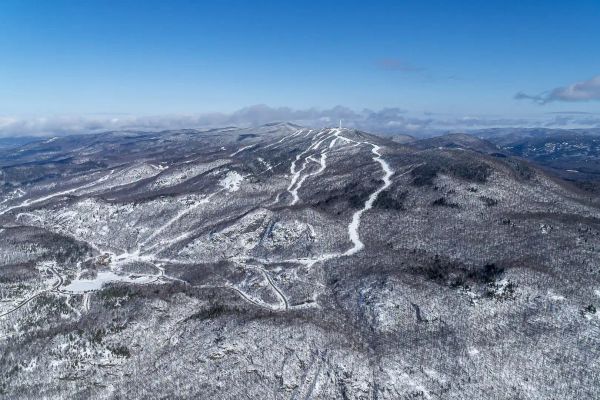
Tremblant to Add New Timber Summit Ski Sector for 2027/28 Season
Tremblant has confirmed a major expansion of its Quebec ski area, with a new Timber Summit sector adding 62 acres of terrain, eight trails and a high-speed quad chairlift for winter 2027/28. It's part of a CAD 42.5 million investment that also includes a new beginner learning zone at Versant Soleil opening this coming season. The project has grown considerably since it was first announced back in 2020, when it carried a far smaller budget and an opening date that never eventuated.
2 Sept 2026
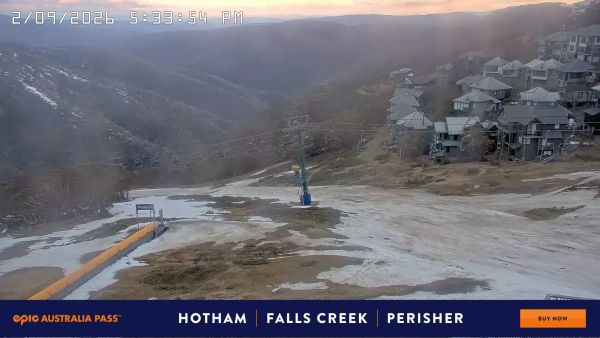
Mount Hotham to Close for the 2026 Season on Sunday, September 6
We knew when the Bird Bath Pond Skim showed up on Hotham's Instagram that the season was on its way out. It's been a rough one - I only managed two days on snow all year, at Falls Creek - and now Baw Baw, Selwyn and Hotham have all called it, possibly the worst Australian season I've seen in a decade. Hotham's last day of lift operations is Sunday, 6 September, with a Retro Day, Father's Day après and closing sales before the lifts stop turning for good.
1 Sept 2026
Thredbo to Replace Ageing Gunbarrel Quad With New Six-Seat Chairlift for 2028
Thredbo Alpine Resort has confirmed plans to replace its 37-year-old Gunbarrel quad chairlift with a new six-seat Doppelmayr D-Line, targeting winter 2028. The AUD 35 million project will keep travel time roughly the same but lift capacity from 2,800 to 3,000 skiers per hour. It's part of a broader investment push that also includes doubled snowmaking capacity at Friday Flat for 2027, with the ageing Kosciuszko Express now flagged as the resort's next major lift replacement after Gunbarrel.
31 Aug 2026
Les 2 Alpes Ski Trails
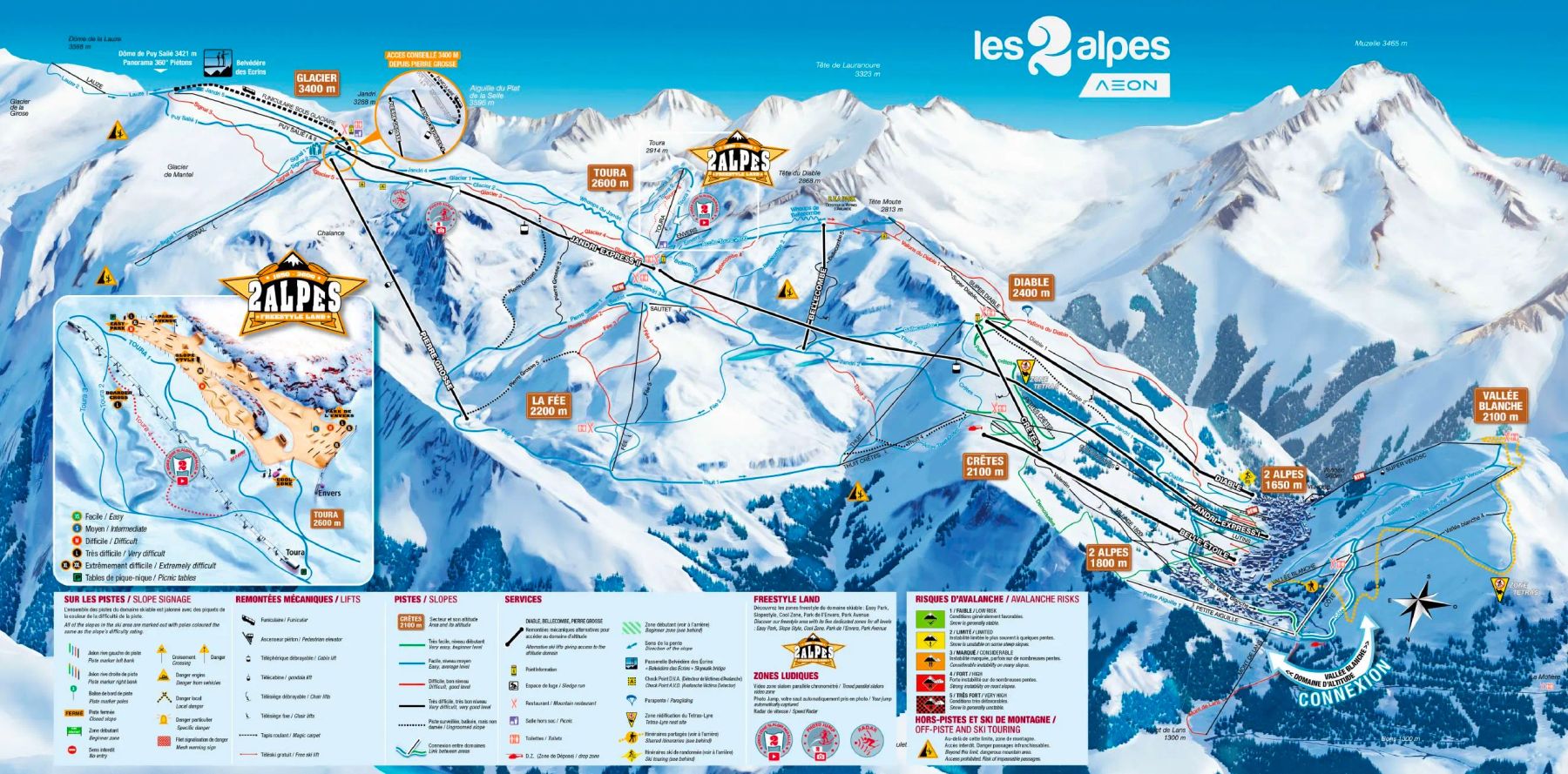
Downloadable Les 2 Alpes trail map
Terrain split
88
runs
Beginner55%
Intermediate28%
Advanced12%
Expert5%
200 km of piste
Resort Stats
Elevation
Base1280m
Summit3523m
Annual snowfall
4m
Season
2025 - 2026
29 Nov 2025 - 4 May 2026
Trail coverage
88 runs
200 km
Les 2 Alpes ski trails
Les 2 Alpes offers 88 runs across a mix of difficulties. The terrain split and trail map here show how the mountain breaks down so you can plan a day that suits your group.
- • Match runs to your ability - the terrain split shows how much of Les 2 Alpes is beginner, intermediate and advanced.
- • Check grooming and open-run status against the live conditions before committing to the upper mountain.
- • Early season and after fresh snow, favour the lifts serving your preferred grade to make the most of the day.
More Les 2 Alpes intelligence: trail map, lift system, resort overview.