
Corvatsch
120km of piste, 1,506m vertical, 3,303m summit. North-facing powder skiing in Graubünden, Switzerland.
Season 2026 - 2027
Opens
21 Nov 2026
Closes
25 Apr 2027
Days open
155
Annual snow
8m
The Overview
Michael Fulton
Melbourne-based skier and snowboarder with 50+ resorts across 5 continents. Specialises in Australian resorts and international resort comparisons.
Corvatsch rises to 3,303 metres above the Upper Engadin valley, claiming the highest mountain station in Graubünden and a commanding 1,506-metre vertical drop. The resort spreads 120 kilometres of piste across 26 marked runs, with 74 per cent graded intermediate and north-facing slopes that hold snow reliably from late November through April. Three aerial tramways access separate sectors at Corvatsch, Furtschellas and Murtèl, whilst the peak station sits above a small glacier that extends skiing well into spring.
Intermediate terrain dominates with wide cruising runs and sustained descents reaching 1,000 vertical metres on several lines. The 9-kilometre Hahnensee piste drops from Corvatsch summit to St Moritz Bad, threading through varied pitch and aspect. Furtschellas offers gentler graded blues for progression, whilst expert terrain includes steep couloirs and marked freeride zones above the glacier. Corvatsch Park ranks among the Alps' larger terrain parks, hosting FIS Freeski and Snowboard World Cup events annually.
The mountain attracts a sports-focused clientele distinct from the neighbouring Corviglia scene. On-mountain dining centres on substance rather than luxury, with the 3,303-metre summit restaurant serving polenta-based dishes and mid-station Murtèl offering wood-fired pizza. Friday night skiing illuminates a 4.2-kilometre run, Switzerland's longest floodlit descent. The Hossa Bar at mid-mountain anchors après activity.
Ikon Pass holders receive seven days' combined access across all St Moritz areas, with Corvatsch included in the Engadin Mountain Pool regional pass. The 2025-26 season runs 22 November to 26 April. Corvatsch suits confident intermediates and expert skiers seeking sustained vertical and reliable snow conditions away from St Moritz's central crowds.
1506m
Vertical
26
Runs
120 km
Piste
8m
Annual snow
Ikon Pass
Pass
The Terrain
26 runs across 120 km of piste
At 3,303 metres, Corvatsch tops out higher than almost anything else in the St Moritz region, and the snow reflects it, with 7.6 metres a year keeping the slopes dependable late into the season. The sporty Upper Engadin mountain covers 120 kilometres of piste across 26 runs, with 1,506 metres of vertical from 1,797 metres. Intermediates dominate at 74%, with 11% beginner, 10% advanced and 5% expert. Terrain suits confident skiers who want sustained, open descents rather than nursery slopes, and three aerial trams plus a handful of chairs keep the large area linked together.
The Hahnensee run, known as the Königsabfahrt of the Engadin, is a black descent of about 9 kilometres to St Moritz Bad and is the signature piste. Freeriders head for Fuorcla Surlej, reached from the top of the Corvatsch cable car, which offers around 1,000 metres of vertical through wide powder slopes and steep couloirs; this is serious terrain needing proper gear and a guide. Murtèl has wide rolling blues for lower intermediates, and Friday night skiing lights up the longest floodlit run in Switzerland. Best for strong intermediates and advanced skiers, with limited options for beginners.
Terrain split
26
runs
26 runs across 4 grades
Beginner3 runs · 11%
Intermediate19 runs · 74%
Advanced3 runs · 10%
Expert1 run · 5%
Time it right
When to visit Corvatsch
The 2025-26 season opened 22 November and runs through 26 April, spanning five months of lift-served skiing. Corvatsch typically operates one of the Engadin's longer seasons, with north-facing aspects and high elevation preserving coverage into late spring. Early-season openings in late November align with the resort's 3,303-metre summit elevation advantage.
Snowfall averages 760 centimetres annually at upper elevations, though recent seasons show variability. The 30-year average sits near 170 centimetres, whilst the 2023-24 season delivered only 80 centimetres. North-facing exposure and glacier presence help maintain base depths above 100 centimetres during peak winter. Limited snowmaking supplements natural accumulation on key runs including the night skiing route.
January through March delivers prime conditions, with February offering the deepest snowpack and coldest temperatures for powder preservation. April extends the season on upper slopes, where spring corn develops reliably on sun-exposed aspects. Powder can linger for days in shaded sectors given Corvatsch's quieter midweek traffic compared to Corviglia.
Friday night skiing runs 7pm to 1am December through January and 7pm to 2am February through April on the 4.2-kilometre illuminated descent. The Corvatsch Park terrain features and halfpipe operate throughout the season. No summer glacier skiing operates despite the summit's elevation. Mid-November through early May represents the reliable window for snow conditions.
Season 2026 - 2027
21 Nov 2026
Opens
25 Apr 2027
Closes
155
Days open
8 m
Annual snow
Getting there
Getting to Corvatsch, and where to stay
Corvatsch occupies the south-western flank of the Upper Engadin valley in Graubünden canton, opposite St Moritz across the valley floor. Base facilities sit between 1,797 and 1,870 metres elevation near the villages of Surlej, Silvaplana and Sils im Engadin. The resort stands 12 kilometres by road south-west of St Moritz town centre, surrounded by peaks including the 3,451-metre Piz Corvatsch summit.
Silvaplana (population 900) and neighbouring Surlej provide the closest accommodation options, connected by free electric shuttle buses running every 20 minutes to the Corvatsch tramway. Sils im Engadin lies 1.1 kilometres from base facilities, whilst St Moritz sits 7 kilometres distant with regular PostBus connections. The valley's lake plateau stretches below at 1,800 metres, flanked by Piz Bernina at 4,049 metres to the south.
Road access follows Route 3 through the Engadin valley, reached via Julier Pass from the north or Maloja Pass from the south. Zurich lies 203 kilometres distant with a 2.5-hour drive via Chur, the Graubünden capital 86 kilometres north. Milan sits 125 kilometres south-west over the Maloja Pass. The Vereina rail tunnel offers an alternative approach from Austria.
Zurich Airport (ZRH) provides the primary international gateway at 211 kilometres, requiring 2 hours 47 minutes by car. Milan Malpensa (MXP) sits 183 kilometres distant. Train connections run from both airports to St Moritz station via Chur on the Rhaetian Railway, with journey times near 4.5 hours from Zurich. Local buses complete the final 8-kilometre transfer from St Moritz to Corvatsch base stations.
Where to stay
Search all stays →Hotels and lodges near Corvatsch, powered by Stay22.
Latest News
From the SnowStash desk
Alps Snow Forecast: Up to 64 cm Headed for the High Glaciers as the Snow Line Drops
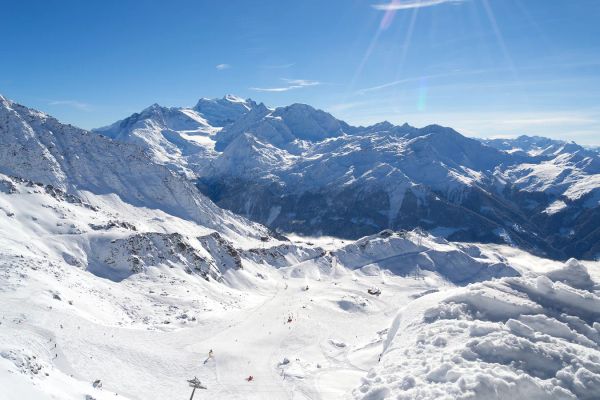
The Alps are about to swap mild, sunny October weather for something far more wintry. A cold front arrives Tuesday, and SnowStash forecasts have Monterosa Ski out in front with 64 cm over 14 days, ahead of Blatten Belalp (55 cm) and Verbier (43 cm). The snow line should fall below 2000 metres by Wednesday night, and glaciers across Switzerland, Italy and Austria are in line for the best of it. The wind will have a say too.
20 Oct 2026
Four Dead After Avalanche Near Ski Portillo in Chile
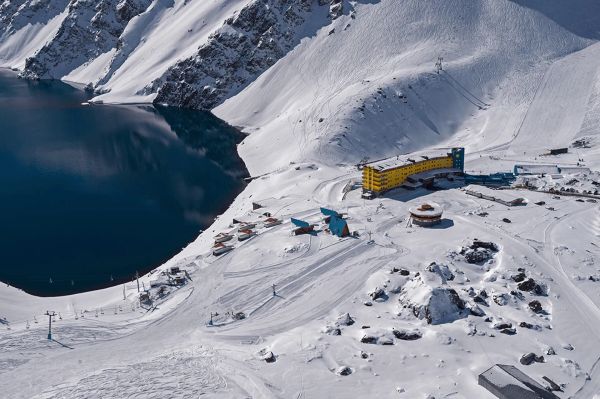
A large avalanche struck near Laguna del Inca adjacent to Ski Portillo on Saturday afternoon, killing four people and injuring four others. The group were day visitors mountaineering in the backcountry after reportedly being warned about elevated avalanche risk by resort staff.
18 Oct 2026

Europe Ski Resorts Open Now: What Is Skiable in Mid-October 2026
Europe’s ski season is open, technically. After a record-warm summer, glaciers in Austria, Switzerland and Italy are running a few pistes apiece, Sölden, Stubai and Kitzsteinhorn started late, Titlis has pushed back to 24 October, and Zermatt reopens a few lifts on 14 October after more than two months shut. Finland’s Levi and Ruka are skiing on stored snow. Here is what is open, and what you actually get at each.
14 Oct 2026

Zermatt Plans World Cup Downhill Return on the Gornergrat for 2028
Zermatt is having another crack at a World Cup downhill, and this time nobody has to cross a border. Around 13 million Swiss francs is going into rebuilding the Gornergrat piste, including a jump fed by a roughly 300-metre in-run across the roof of the Gornergrat Railway gallery, with the Matterhorn lined up behind it for the TV cameras. First men’s race is pencilled in for March 2028, pending FIS homologation.
14 Oct 2026

Mt. Rose Begins Snowmaking for the 2026-27 Season at Lake Tahoe
Lake Tahoe’s highest base elevation is paying off early: Mt. Rose has started making snow for 2026-27 after the first flurries and a cold snap. The Nevada resort is backing it with nearly US$2 million in upgrades, including a replacement snowmaking main line, a new PistenBully groomer and restraint bars on every lift. Opening day is yet to be confirmed, though Heavenly and Northstar are already eyeing 20 November.
13 Oct 2026

Utah Ski Resorts 2026-27: What’s New at Alta, Deer Valley, Powder Mountain and More
Utah is still building flat out. For 2026-27, Powder Mountain opens a steep new Skytrac chair into more than 1,000 acres of advanced terrain, Deer Valley adds 200 acres on Hail Peak, Sundance gets a new quad and Park City adds a gondola from its new parking structure. Snowmaking is expanding almost everywhere, Eagle Point stays closed after the Cottonwood Fire, and the 2034 Games are setting the pace. Here’s what’s new, resort by resort.
13 Oct 2026

Mt Hutt Invests NZ$12 Million in Base Area, Tripling Its Sun Deck
Mt Hutt is getting busier, and its base lodge is about to catch up. NZ$12 million goes into a heated sun deck roughly three times the current size (430 m² to 1,300 m²), plus a new toilet block, heated steps down to snow level, extra storage and a new food and beverage outlet. Building starts after the 2026 season, with everything due for winter 2027.
11 Oct 2026

Vermont Ski Resort Opening Dates 2026-27: Few Dates Set, Killington Waits on the Cold
Vermont's season is slow to take shape. Stratton is tentatively targeting 18 November and Sugarbush 21 November, while Pico has Friday 11 December on the calendar. Killington never sets a date and opens when the snowmaking allows, and Vail Resorts has yet to name days for Stowe, Okemo and Mount Snow. The forecasts disagree about snow, and the main El Niño worry for the Green Mountains is warmth.
9 Oct 2026
Corvatsch Trail Map
Live Corvatsch trail map
Loading trail map...
Downloadable Corvatsch trail map
Terrain split
26
runs
Beginner11%
Intermediate74%
Advanced10%
Expert5%
120 km of piste
Resort Stats
Elevation
Base1797m
Summit3303m
Annual snowfall
8m
Season
2026 - 2027
21 Nov 2026 - 25 Apr 2027
Trail coverage
26 runs
120 km
About Corvatsch's trail map
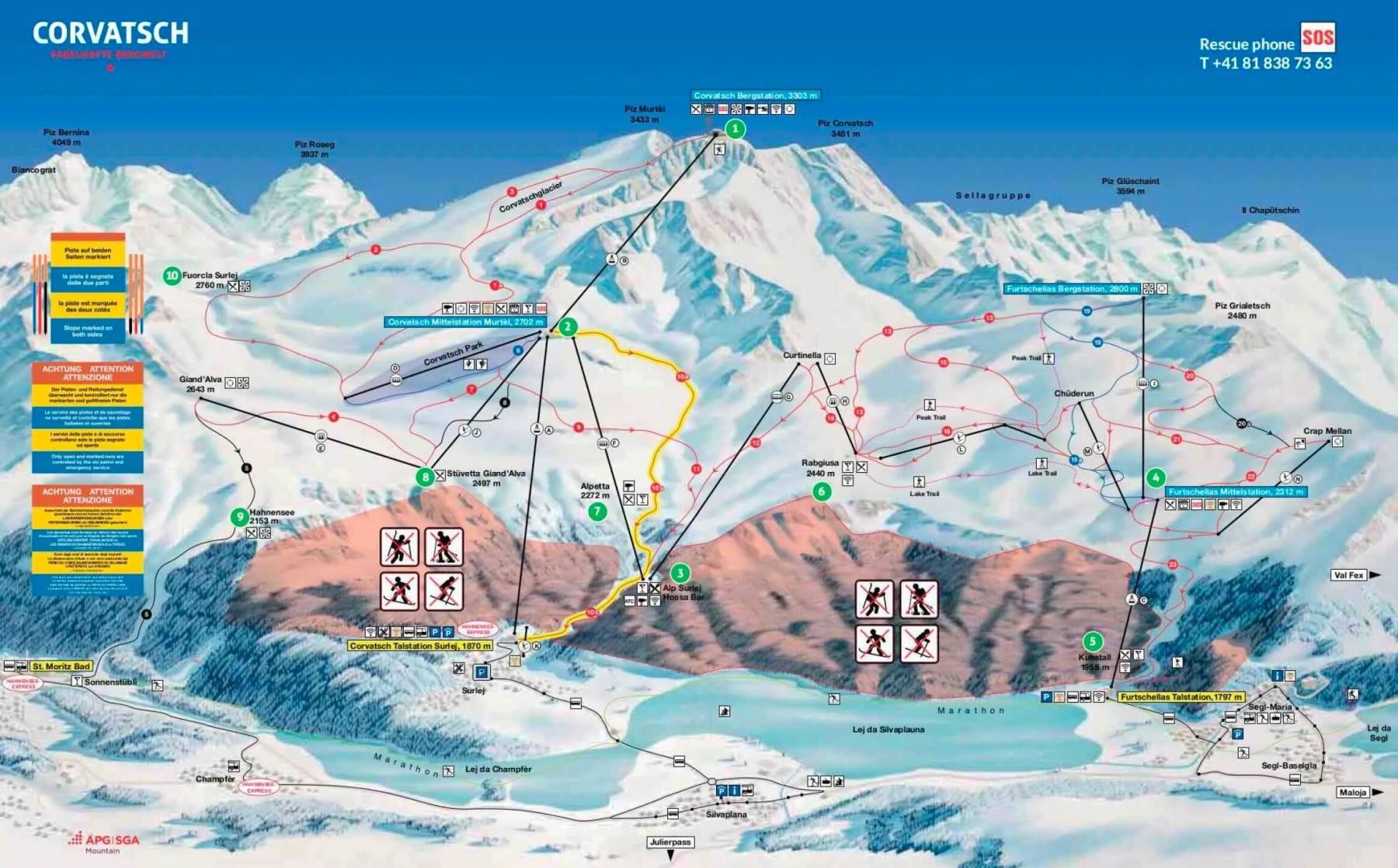
Explore Corvatsch's full trail map with 26 runs across the mountain, colour-coded by difficulty and shown alongside the terrain split. Use it to plan a day that matches your ability, find lift-served pockets of your favourite grade, and see how the resort links together. Download the piste map (PDF) ↗
More Corvatsch intelligence: snow report, lift system, webcams, resort overview.