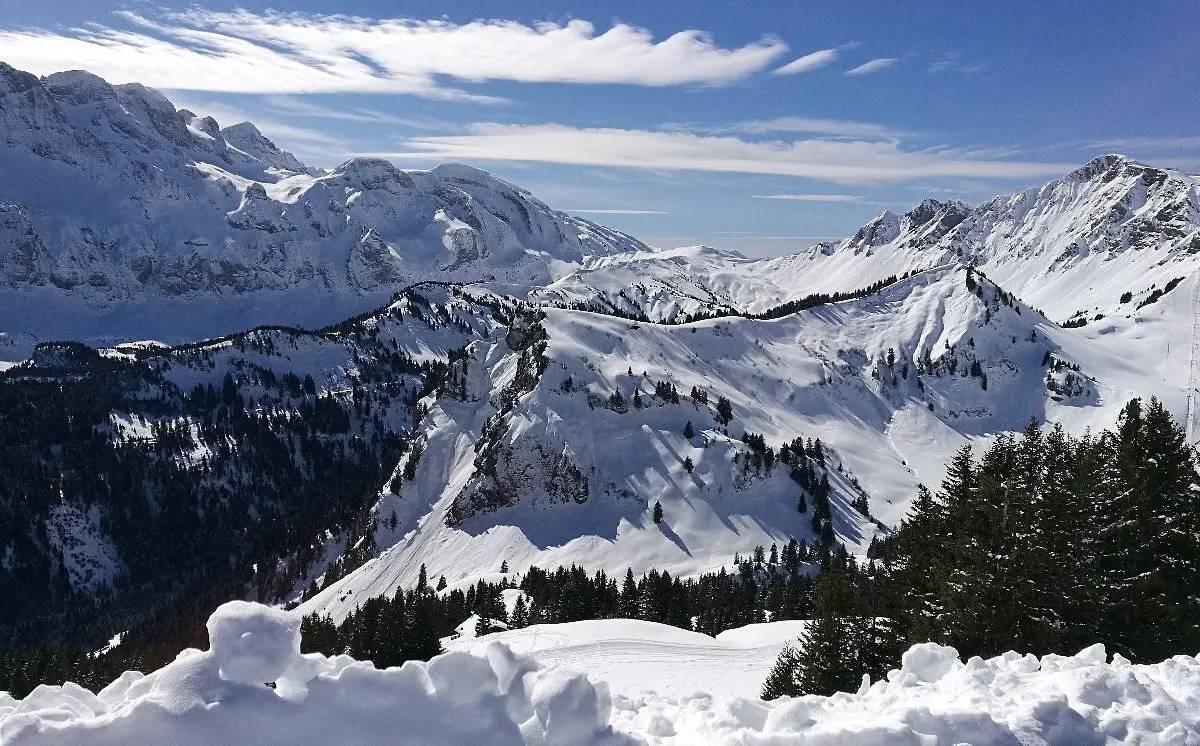
Les Portes du Soleil
580km across 12 French-Swiss villages. 163 lifts, 2,254m summit, Geneva 80km. €65-75 day pass. Home of the Swiss Wall.

Current Conditions→
Season 2026 - 2027
Opens
28 Nov 2026
Closes
18 Apr 2027
Days open
141
Annual snow
4.1m
The Overview
Michael Fulton
Melbourne-based skier and snowboarder with 50+ resorts across 5 continents. Specialises in Australian resorts and international resort comparisons.
Les Portes du Soleil spans 580 kilometres of marked piste across 277 runs, spreading between 985 and 2,254 metres elevation with 1,269 metres of vertical drop. The cross-border ski area links 12 villages in France's Haute-Savoie and Switzerland's Valais, making it one of the two largest ski areas in the world alongside Les Trois Vallées. Eight French resorts including Morzine, Avoriaz, Châtel and Les Gets connect with four Swiss resorts including Champéry, Morgins and Les Crosets, all accessed on a single lift pass. The microclimate between Lake Geneva and Mont Blanc generates substantial snowfall from November to April, typically enabling operations from early December through mid-to-late April.
Terrain distribution favours progression, with 53 per cent beginner slopes, 36 per cent intermediate and 11 per cent advanced across 14 valleys covering 1,036 square kilometres. The Pas de Chavanette, known as the Swiss Wall, descends 331 metres over one kilometre with a 40-degree pitch and car-sized moguls, earning an orange classification beyond the standard black rating. The Linga sector connects Châtel to Avoriaz whilst the Grand Paradis run drops beneath the Dents du Midi peaks. Tree-lined runs dominate below 1,800 metres whilst open bowls characterise the upper elevations near Pointe de Mossettes at 2,260 metres.
Most base villages retain traditional Chablais architecture with wood chalets and working market towns, whilst Avoriaz at 1,800 metres remains Europe's largest purpose-built car-free resort with 18,000 beds. Morzine anchors the French side as the largest town and most central access point to the entire circuit. The Swiss villages of Champéry, Morgins and Torgon offer quieter alternatives with views of the Dents du Midi range. Free shuttle buses connect outlying areas including Abondance and Saint-Jean-d'Aulps to the main lift network.
The full Portes du Soleil pass unlocks all 12 resorts across both countries, with individual sector passes available for Avoriaz, Morzine-Les Gets and the Swiss valleys. Adult day tickets range from €65 to €75 depending on season, with youth season passes from €470. The area suits intermediates exploring varied terrain across two countries, families seeking gentle tree-lined progressions, and advanced skiers tackling the Swiss Wall and Linga sectors. Eight French and four Swiss resorts provide accommodation from traditional chalets to modern ski-in developments.
1269m
Vertical
277
Runs
580 km
Piste
4.1m
Annual snow
The Terrain
277 runs across 580 km of piste
Les Portes du Soleil is among the largest linked ski domains in the Alps, with 277 runs over 580 kilometres between 985 and 2,254 metres, a vertical of 1,269 metres. The split is 53% beginner, 36% intermediate and 11% advanced, with nothing graded expert. Roughly 160 lifts keep the circuit turning, including 38 six-seat chairs, 28 quads, 10 gondolas and 73 T-bars. Snowmaking tops up natural cover on the lower slopes, and the scale of the place means a week rarely repeats itself. Distances are big, so plan your day around where you intend to finish.
On the Swiss side, the villages of Champéry, Les Crosets, Champoussin and Morgins feed a long run of linked slopes towards France. The best-known stretch is the Swiss Wall off the Pas de Chavanette, a steep mogul field that regularly draws onlookers from the chairlift beside it. Away from that, most of the area is cruising terrain, with gentle tree-lined runs below about 1,800 metres and open slopes higher up. It suits intermediates and families who like variety and range, though genuinely steep skiing is limited to a handful of runs.
Terrain split
277
runs
277 runs across 4 grades
Beginner147 runs · 53%
Intermediate100 runs · 36%
Advanced30 runs · 11%
Expert0 runs · 0%
Time it right
When to visit Les Portes du Soleil
The 2025-2026 season runs from 30 November 2025 to 21 April 2026, with some lower Swiss sectors closing earlier depending on snow conditions. Typical operations span early December through mid-to-late April, offering approximately 20 weeks of skiing. The Geneva-Mont Blanc microclimate between Lake Geneva and Europe's highest peak creates consistent snowfall patterns, with Châtel averaging 400 centimetres annually at 2,200 metres summit elevation. This geographic positioning generates reliable accumulation despite modest summit heights compared to higher French resorts.
Annual snowfall averages vary between 320 and 381 centimetres depending on aspect, with the French sectors averaging 8 metres total winter accumulation according to some measurements. The relatively low elevations from 985 to 2,254 metres benefit from moisture-laden systems crossing Lake Geneva, whilst pasture-covered lower slopes require only 20 centimetres of base to become skiable. Snowmaking covers lower elevations including Morzine at 1,000 metres, Morgins and the key valley connections. Base depths typically peak in February and March rather than January.
January and February deliver the most reliable powder and coldest temperatures, whilst December offers early-season conditions with shorter daylight. March combines deep snowpack with longer days and warmer temperatures, ideal for circuit touring between villages. April brings spring conditions with corn snow by afternoon, though north-facing Swiss sectors hold powder longer. The area opens some lifts for autumn glacier-free operations and extends through the French Easter holidays regardless of date.
The Pass'Portes mountain bike event runs 26-28 June 2026 in Avoriaz, marking the transition to summer operations beginning mid-May. No notable on-snow festivals feature prominently beyond local village celebrations. Night skiing does not operate across the main Portes du Soleil network. The shoulder seasons see reduced lift operations with Swiss valleys often closing connections by early April whilst French sectors maintain access through the final weekend.
Season 2026 - 2027
28 Nov 2026
Opens
18 Apr 2027
Closes
141
Days open
4.1 m
Annual snow
The record
Historical snowfall at Les Portes du Soleil
Daily snow reports at Les Portes du Soleil go back to 1996, 31 winters on the books. Open the record to compare winters, lifts and piste.
77 cm
Snowiest day
24 Dec 2024
48 cm
This winter · 2026-27
so far
410 cm
Typical winter
average of complete seasons
Winter totals
cm
Past wintersThis winter
Getting there
Getting to Les Portes du Soleil, and where to stay
Les Portes du Soleil occupies the Chablais Alps straddling Haute-Savoie in France and Valais canton in Switzerland, positioned between Lake Geneva 30 kilometres north and Mont Blanc 50 kilometres south. The French villages sit in the Abondance and Aulps valleys whilst Swiss resorts occupy the Val d'Illiez and overlook the Rhône valley. Morzine anchors the network at 1,000 metres elevation, Avoriaz sits at 1,800 metres, Châtel at 1,200 metres, and Champéry at 1,050 metres in the shadow of the Dents du Midi peaks reaching 3,257 metres.
The nearest major centre is Geneva, 80 kilometres northwest, with Montreux and Lausanne on Lake Geneva's northern shore 40 kilometres from the Swiss valleys. Thonon-les-Bains lies 30 kilometres north as the main French lakeside town. Cluses sits 30 kilometres west as the closest French railhead whilst Aigle provides Swiss rail connections 25 kilometres north. The Franco-Swiss border runs along the ridgeline between Avoriaz and Les Crosets, with the Pas de Morgins mountain pass linking Châtel to Morgins by road in winter.
Road access from France follows the A40 Autoroute Blanche from Geneva and Lyon, exiting at Cluses 22 kilometres from Morzine or continuing to Thonon-les-Bains. The drive from Geneva takes 80 minutes to Morzine, 90 minutes to Châtel via the D902 through the Abondance valley. From Switzerland, the A9 motorway exits at Aigle or Monthey, with 20 minutes' drive to Champéry and Morgins. The Pas de Morgins provides the only winter road connection between French and Swiss sectors.
Geneva International Airport sits one hour from most resorts, served by 49 airlines with 388 daily flights. Direct buses operate from Geneva to Les Prodains below Avoriaz in under two hours. Train connections reach Cluses and Thonon-les-Bains from Geneva in 90 minutes via the Léman Express cross-border service, with onward buses to Morzine, Châtel and Les Gets. The Swiss side connects via train to Aigle station, then the S36 regional line directly to Champéry in two hours 30 minutes total from Geneva, with bus connections to Morgins from Troistorrents.
Where to stay
Search all stays →Stays map loads when you scroll here
Hotels and lodges near Les Portes du Soleil, powered by Stay22.
Latest News
From the SnowStash desk

Val Gardena to Alpe di Siusi Lift Link Back in Play After Court Ruling
The Val Gardena-Alpe di Siusi lift link isn’t dead after all. A South Tyrol court has overturned Santa Cristina’s rejection of the new Monte Pana-Saltria link on procedural grounds, after the council skipped required public information sessions. Opponents want the missing sessions held and a fresh vote, and nothing has been approved. For now it’s still a bus between the two, but a plan first floated in 2017 is back in the conversation.
8 Nov 2026
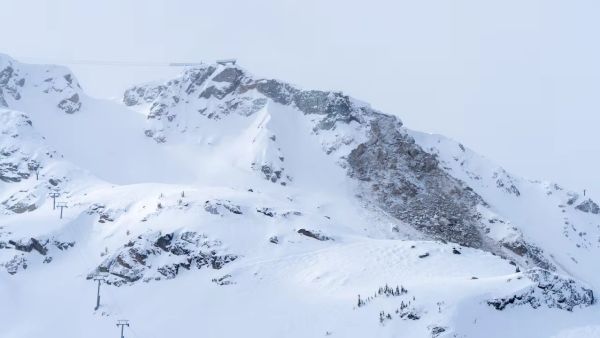
Whistler Blackcomb Rockslide Zone Stays Closed Through 2026-27 Season
A section of Whistler Peak terrain will stay closed all 2026-27 season, Vail Resorts has confirmed, with rockslide mitigation work continuing into summer 2027. Peak Express is still expected to run this winter, but locals are already arguing about what’s actually off limits, whether the Whistler Bowl is gone, and why the news landed after pass sales wound down. Here’s where things stand.
7 Nov 2026
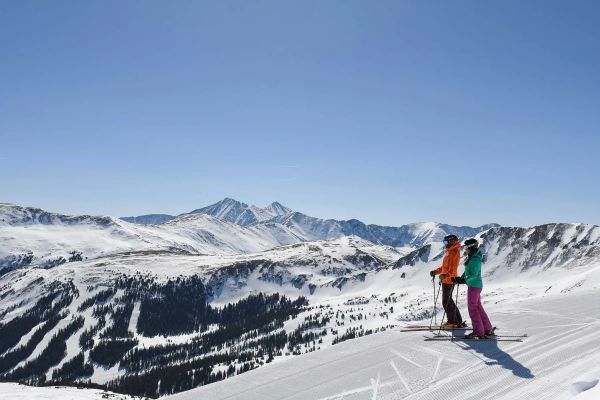
Loveland Ski Area Opens for 2026-27 and Marks 60 Years of Snowmaking
Loveland is open. The Colorado ski area started Chet’s Dream turning on Saturday 7 November to kick off 2026-27, with $60 adult lift tickets to mark 60 years of snowmaking. Expect three runs, nearly 1,000 vertical feet (about 300 metres) of top-to-bottom skiing, live music on the Basin Patio and no beginner terrain yet. Here’s what’s open, what it costs and when Loveland Valley follows.
7 Nov 2026
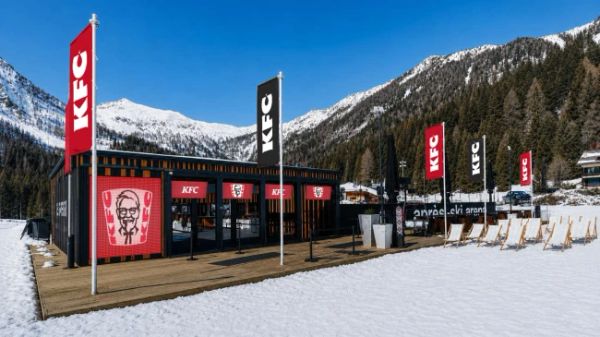
KFC Is Coming to the Slopes at Cortina and Madonna di Campiglio
Fried chicken is heading up the Dolomites. From 5 December KFC will run two restaurants on the slopes - one at 2,123 metres at Cortina, one at 1,700 metres at Madonna di Campiglio - and the polenta-and-canederli crowd has opinions. Local politicians, conservation groups and plenty of Facebook commenters are calling it a step too far, while others just want a cheaper lunch. Here’s what’s on the menu and what’s the fuss.
5 Nov 2026

Mt Rose Aims to Open First in Tahoe on November 6
Mt Rose is going for the first-in-Tahoe title, with the Lakeview Express due to spin at 9 a.m. on Friday, November 6. One main lift, three runs and plenty of snowmaking, sitting on the highest base elevation in the region at 8,260 ft. Here is what is open, what is not (sorry, tubing fans), and how the early North American openings are stacking up.
4 Nov 2026

Europe Snow Forecast: Serre Chevalier Leads With 82 cm Over the Next 10 Days
Europe has had a quiet start to November, but our 10-day forecast has Serre Chevalier on 82 cm and Les 2 Alpes on 71 cm. Two pushes are lined up: a western Alps top-up from Friday, then a bigger, wider system on Thursday, November 12 and Friday, November 13 that reaches Italy and Switzerland. Full leaderboard inside.
4 Nov 2026

Mammoth Mountain Opens Early on November 5 With Up to 33 Inches of Snow in the Forecast
Mammoth just moved opening day forward to Thursday, November 5, eight days ahead of schedule. A snowy weekend and cold snowmaking nights did the work, and our forecast shows up to 33 inches more landing on November 13 and 14. Here is what opens, what the weather looks like and where Mammoth sits among the early Ikon Pass openers.
3 Nov 2026

Utah Snow Storm Builds Early-Season Base Ahead of November Openings
Rain down low, snow up high, and a snow report full of zeros that mostly means ‘not updated yet’. Utah’s first proper storm of 2026-27 is rolling through the Wasatch, Snowbird’s snow stake is closing in on 10 inches, and Brian Head is five days from opening day. Early November snow rarely looks like much, but it is the layer every November opening date is built on. Here is where it stands.
1 Nov 2026
Les Portes du Soleil Lift System
The ski area operates 163 lifts comprising 10 gondolas, two aerial trams, 38 six-seat chairs, 28 quad chairs, one eight-seat chair, five triple chairs, two double chairs, four surface lifts and 73 T-bars spread across the Franco-Swiss network. The Prodains Express cable car connects Morzine to Avoriaz in minutes whilst the Super Morzine gondola accesses the Pléney sector. On the Swiss side, the 125-passenger Champéry-Planachaux aerial tramway climbs from 1,050 to 2,000 metres, providing rapid access from the Val d'Illiez. The Super Châtel gondola links the French village to Torgon and Morgins across the border.
Key installations include the Mossettes chairlift serving the Franco-Swiss border at 2,260 metres and the Chavanette chairlift accessing the Swiss Wall from both Avoriaz and Les Crosets. The Mont Chéry gondola in Les Gets reaches 2,000 metres whilst the Ardent gondola connects Montriond to the Lindarets plateau. Fast six-pack chairs dominate the French sectors including the Linga Express, Léchère and Morclan installations upgraded between 2020 and 2024. The Pointe de Nyon cable car climbs to 2,019 metres above Morzine with panoramic views toward Mont Blanc.
The circuit flows anticlockwise from Morzine through Avoriaz to Les Crosets, descending to Champéry before climbing to Morgins, Châtel and back via the Linga sector. Most lifts operate 9am to 4:30pm with last ascents at 4:15pm. Three main access points serve day visitors: Morzine's Pléney and Super Morzine gondolas, the Prodains Express below Avoriaz, and the Champéry cable car. Valley connections require short bus transfers at La Chapelle d'Abondance and between Morgins and Châtel via the Pas de Morgins road.
Recent investments replaced the three-seat Morclan and Léchère chairs with six-packs in Avoriaz, whilst the Proclou six-seat chair now features 41 square metres of solar panels generating 9,000 kilowatt-hours annually. Les Gets upgraded the Perrières Express and Châtel modernised the Linga sector connection. The French side features predominantly modern detachable lifts whilst Swiss sectors retain more draglifts and older fixed-grip chairs. Covered magic carpets serve beginner areas at Pléney and throughout the villages.
163lifts across 9 types
2
Aerial Trams
10
Gondolas
1
8-Person Chair
38
6-Person Chairs
28
Quad Chairs
5
Triple Chairs
2
Double Chairs
73
T-Bars
4
Surface Lifts
Les Portes du Soleil lift system
Les Portes du Soleil is served by 163 lifts, listed here by type. Check which lifts are turning against the live conditions before you plan your first laps - early lifts and high-speed chairs get you to the best snow fastest.
More Les Portes du Soleil intelligence: trail map, snow report, webcams, resort overview.