Leysin
60km of pistes, 948m vertical, 72% beginner terrain. South-facing slopes in Canton Vaud with Magic Pass access.
Season 2026 - 2027
Opens
28 Nov 2026
Closes
11 Apr 2027
Days open
134
Annual snow
4m
The Overview
Michael Fulton
Melbourne-based skier and snowboarder with 50+ resorts across 5 continents. Specialises in Australian resorts and international resort comparisons.
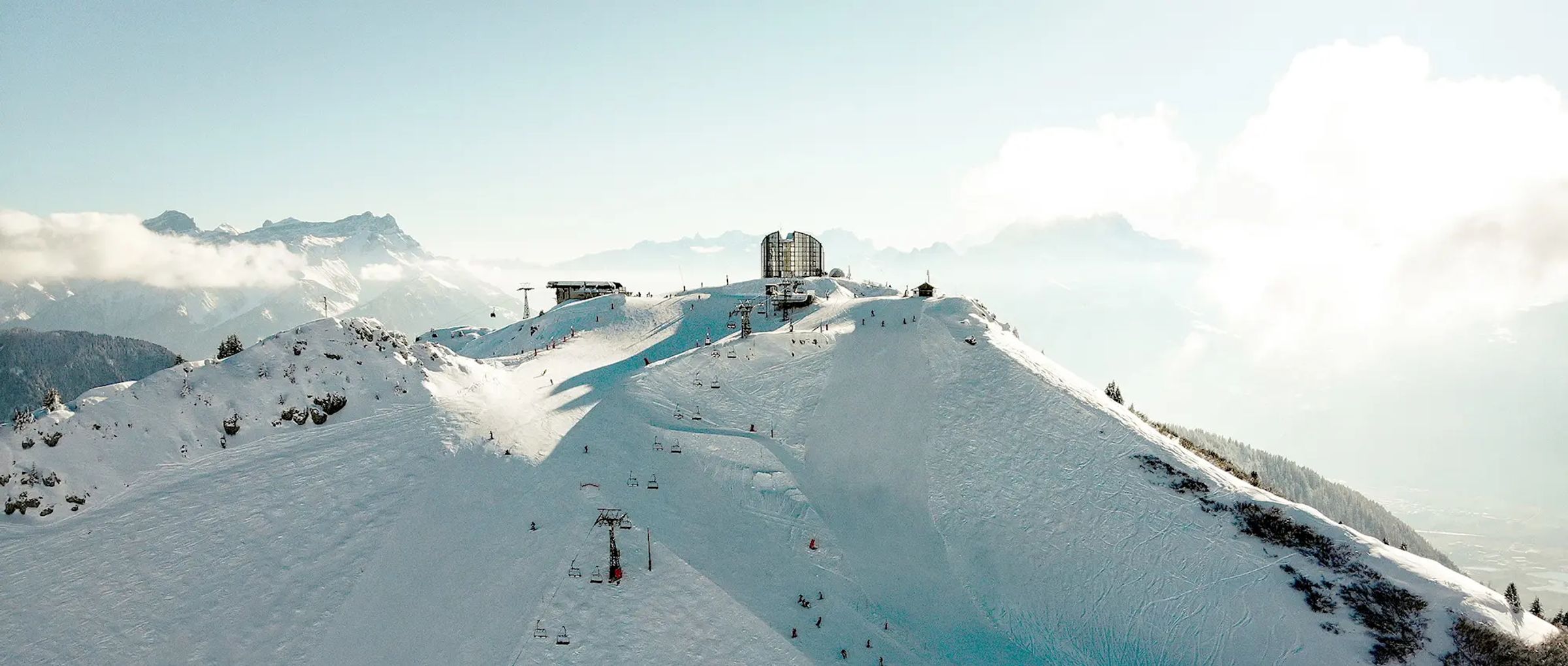
Leysin operates from 1,250 to 2,198 metres across 60 kilometres of pistes and 948 metres of vertical drop in the Vaud Alps. The resort combines with Les Mosses and La Lécherette via shuttle bus to form a 100-kilometre ski area. Snowmaking covers a portion of the terrain, whilst the south-facing slopes deliver 1,900 hours of annual sunshine. Magic Pass holders access the full network without additional day tickets.
Beginner terrain dominates with 72 per cent of marked runs, leaving 25 per cent for intermediates and three per cent rated advanced. The ski area fans across two main sectors accessed from Leysin village: the Berneuse gondola serves wide upper slopes and tree-lined descents, whilst the Tête d'Aï chairlift opens terrain towards the 2,331-metre Tour d'Aï peak. Les Chaux and La Berneuse rank among the most frequented descents. Off-piste routes from La Berneuse at 2,048 metres attract experienced riders.
Leysin hosts several international boarding schools and maintains a youthful, diverse atmosphere on the mountain. The Kuklos revolving restaurant at 2,048 metres completes a 360-degree rotation in 90 minutes with views across Lake Geneva, Mont Blanc, the Matterhorn and the Eiger. Terrain parks traditionally featured half-pipes and jump lines, though conditions vary seasonally. The village sprawls across a sunny plateau at 1,260 metres above the Rhone Valley.
The Alpes Vaudoises regional pass extends access to Villars, Gryon, Les Diablerets and Glacier 3000, covering more than 225 kilometres of terrain within a 30-minute radius. The 2025-26 season runs from 7 December to 6 April. Leysin suits learners, families and intermediates seeking accessible Swiss skiing without the scale or price point of larger resorts. Limited expert pistes and moderate elevation require attention to snow forecasts in marginal conditions.
948m
Vertical
0
Runs
60 km
Piste
4m
Annual snow
The Terrain
0 runs across 60 km of piste
It leans beginner at 72%.
Terrain split
0
runs
0 runs across 4 grades
Beginner0 runs · 72%
Intermediate0 runs · 25%
Advanced0 runs · 3%
Expert0 runs · 0%
Time it right
When to visit Leysin
The 2025-26 season operates from 7 December 2025 to 6 April 2026, spanning four months. Typical opening lands in early December, with closures extending into mid-April depending on snow cover. Historical records show opening dates as early as late November in strong snow years. Late and early season quality suffers due to the 1,250-metre base elevation and south-facing exposure.
Annual snowfall averages 4.3 metres, with week two of December historically the snowiest period, delivering 40 centimetres across 3.4 snowy days. February provides the deepest mid-season base, averaging 145 centimetres at summit elevation and 40 centimetres at the base. Snowmaking equipment covers five kilometres of priority runs with 68 snow cannons, focusing on lower slopes and high-traffic zones. Natural accumulation remains the primary source, with elevation and aspect influencing reliability.
January through March offer the most consistent conditions, with February delivering peak depth and cold temperatures. December suits early-season visitors willing to accept limited terrain, whilst March combines longer daylight and spring snow with the resort's famed sunshine. Weekday skiing avoids the school groups and weekend crowds that frequent Leysin due to its proximity to international schools. Midweek visits in January and February provide the best balance of snow quality and empty pistes.
Night skiing operates on floodlit slopes near the village, with tobogganing open from 10:00 to 20:00. The Giant X Tour snowboard and ski event finals traditionally occur at Leysin. Terrain park features remain condition-dependent, with recent seasons seeing closures in January. Cross-country trails extend 10 kilometres within the immediate area, with 39 kilometres across the broader region. The resort officially holds Swiss Tourism Federation family-friendly certification since 2001.
Season 2026 - 2027
28 Nov 2026
Opens
11 Apr 2027
Closes
134
Days open
4 m
Annual snow
Getting there
Getting to Leysin, and where to stay
Leysin sits in the Aigle district of Canton Vaud at 1,260 metres on a south-facing plateau above the Rhone Valley. The village occupies a natural terrace beneath the Tour d'Aï massif at 2,331 metres, with views extending across Lake Geneva to the Dents du Midi, Mont Blanc and the Bernese Alps. The Grande-Eau river runs through the valley below. Leysin forms part of the Vaud Alps in western Switzerland, positioned at the eastern end of Lac Léman.
Aigle lies 14 kilometres downhill in the Rhone Valley, serving as the primary rail hub and connecting point for regional trains. Montreux sits 20 kilometres west along the lake shore, nine minutes by train from Aigle. Lausanne is 45 kilometres northwest, whilst Geneva sits 97 kilometres west. The resort village itself spreads across three kilometres of mountainside with hamlets at Veyges, Feydey, Aï and Mayen. Several international schools and former sanatorium buildings occupy the lower slopes.
Road access follows the cantonal route from Aigle via Le Sépey, climbing through switchbacks to Leysin village. From Geneva, the A1 and A9 motorways connect via exit 17 at Aigle, with total drive time of 90 minutes covering 97 kilometres. Bern lies 120 minutes northeast via the A12 to Lausanne, then A9 towards Montreux. The route passes vineyards in the Chablais wine region and Aigle Castle. Parking concentrates near lift bases.
Geneva Airport is 122 kilometres west with transfers averaging 90 minutes by road or two hours 18 minutes by train via Aigle. Bern Airport sits two hours away, Zurich 150 minutes. Direct Swiss Federal Railway trains from Geneva to Aigle depart hourly, taking 80 minutes. The Aigle-Leysin cog railway climbs to the resort in 27 minutes, stopping at Leysin Village, Versmont and Leysin-Feydey stations. Trains run hourly at 56 minutes past. Free shuttle buses 170 and 171 link stations to gondola terminals.
Where to stay
Search all stays →Hotels and lodges near Leysin, powered by Stay22.
Latest News
From the SnowStash desk
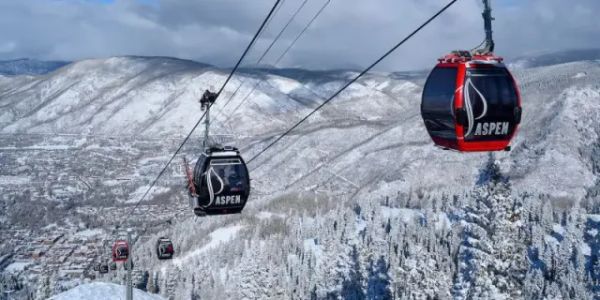
Aspen Snowmass Marks 80th Anniversary With $3.75 Throwback Lift Tickets
Aspen Snowmass turns 80 this December, and it's marking the milestone with $3.75 lift tickets on the anniversary itself - the original 1946 price. A discounted long weekend, $19.46 dining specials, lodging deals up to 46 percent off, and a season of anniversary programming round out the celebration across all four mountains.
17 Sept 2026
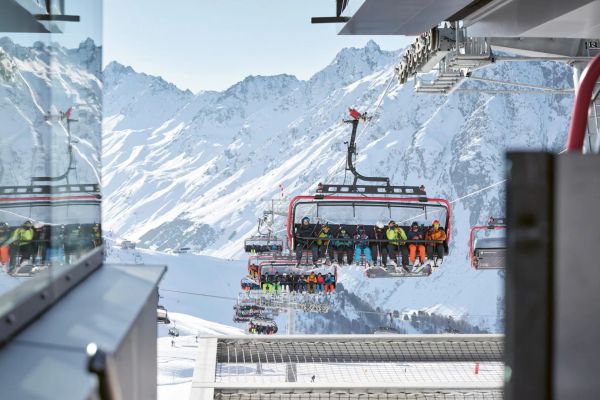
Doppelmayr Group Posts 9.1% Revenue Growth in 2025/26, Passing 1.3 Billion Euros
Doppelmayr closed its 2025/26 business year with revenue up 9.1 percent to 1.3 billion euros, driven by projects including the Big Sky Explorer Gondola, Deer Valley's Mayflower East Village Gondola, and the first TRI-Line installation at Hoch-Ybrig. Headcount grew too, with the ropeway manufacturer now employing almost 4,000 people worldwide.
16 Sept 2026
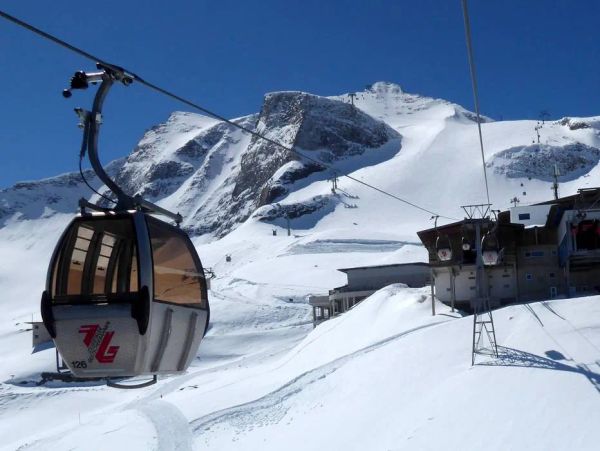
Hintertux Glacier Replaces 40-Year-Old Gondola to Tuxer Fernerhaus
Hintertux Glacier is retiring its 40-year-old gondola to the Tuxer Fernerhaus. The replacement carries 10 people per cabin instead of four, with seat heating and nearly 40 percent more hourly capacity. Doppelmayr's new line opens at the end of October 2026, right as the glacier's high-altitude terrain becomes accessible again for the new season.
16 Sept 2026
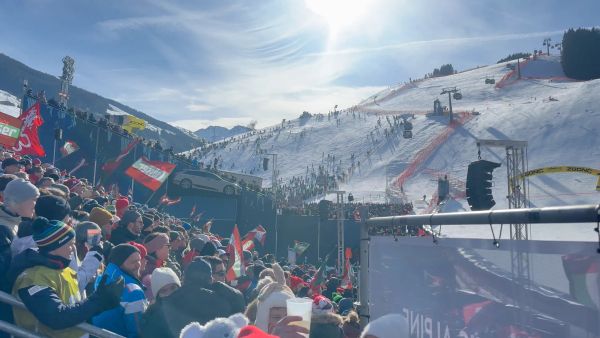
FIS Weighs Holding World Championships in Almost Every Winter, Starting 2032
The International Ski and Snowboard Federation is looking at a major shake-up to its title events calendar. From 2032, World Championships could run not just in odd-numbered years but in every non-Olympic winter too, effectively putting a global title event on the calendar almost every season. The FIS Council has approved the concept following a feasibility study, though an accelerated rollout as early as 2028 is also under consideration.
4 Sept 2026
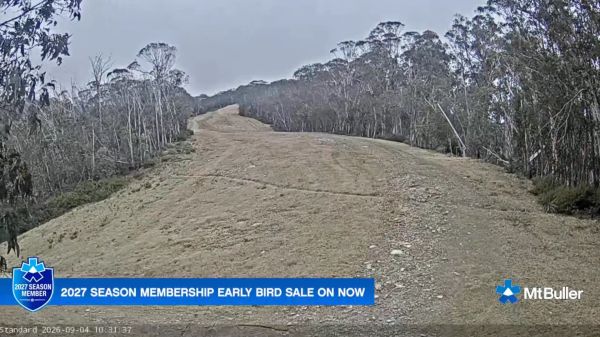
Mount Buller Becomes Latest Australian Resort to Call Time Early on 2026
Mount Buller closes out its 2026 season this Sunday, joining Falls Creek, Hotham and Charlotte Pass in a cluster of closures landing almost simultaneously and roughly a month ahead of schedule. The culprit is stark: Spencers Creek's benchmark snow depth hit 31.2cm on 3 September, just 18% of the 73-year average and an all-time low for this point in the season. Six of Victoria and NSW's best-known resorts will have shut their lifts early within a span of about two and a half weeks.
4 Sept 2026
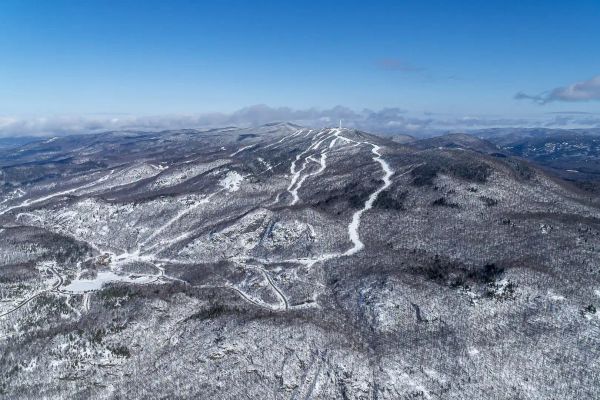
Tremblant to Add New Timber Summit Ski Sector for 2027/28 Season
Tremblant has confirmed a major expansion of its Quebec ski area, with a new Timber Summit sector adding 62 acres of terrain, eight trails and a high-speed quad chairlift for winter 2027/28. It's part of a CAD 42.5 million investment that also includes a new beginner learning zone at Versant Soleil opening this coming season. The project has grown considerably since it was first announced back in 2020, when it carried a far smaller budget and an opening date that never eventuated.
2 Sept 2026
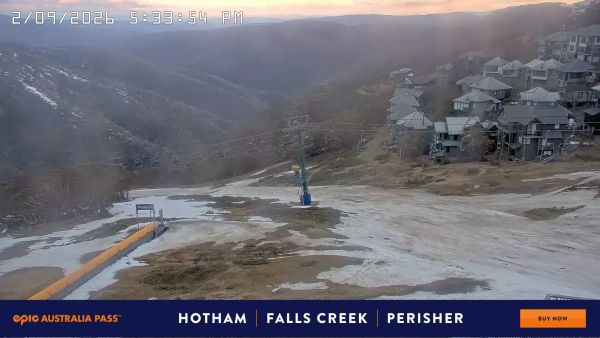
Mount Hotham to Close for the 2026 Season on Sunday, September 6
We knew when the Bird Bath Pond Skim showed up on Hotham's Instagram that the season was on its way out. It's been a rough one - I only managed two days on snow all year, at Falls Creek - and now Baw Baw, Selwyn and Hotham have all called it, possibly the worst Australian season I've seen in a decade. Hotham's last day of lift operations is Sunday, 6 September, with a Retro Day, Father's Day après and closing sales before the lifts stop turning for good.
1 Sept 2026
Thredbo to Replace Ageing Gunbarrel Quad With New Six-Seat Chairlift for 2028
Thredbo Alpine Resort has confirmed plans to replace its 37-year-old Gunbarrel quad chairlift with a new six-seat Doppelmayr D-Line, targeting winter 2028. The AUD 35 million project will keep travel time roughly the same but lift capacity from 2,800 to 3,000 skiers per hour. It's part of a broader investment push that also includes doubled snowmaking capacity at Friday Flat for 2027, with the ageing Kosciuszko Express now flagged as the resort's next major lift replacement after Gunbarrel.
31 Aug 2026
Leysin Ski Trails
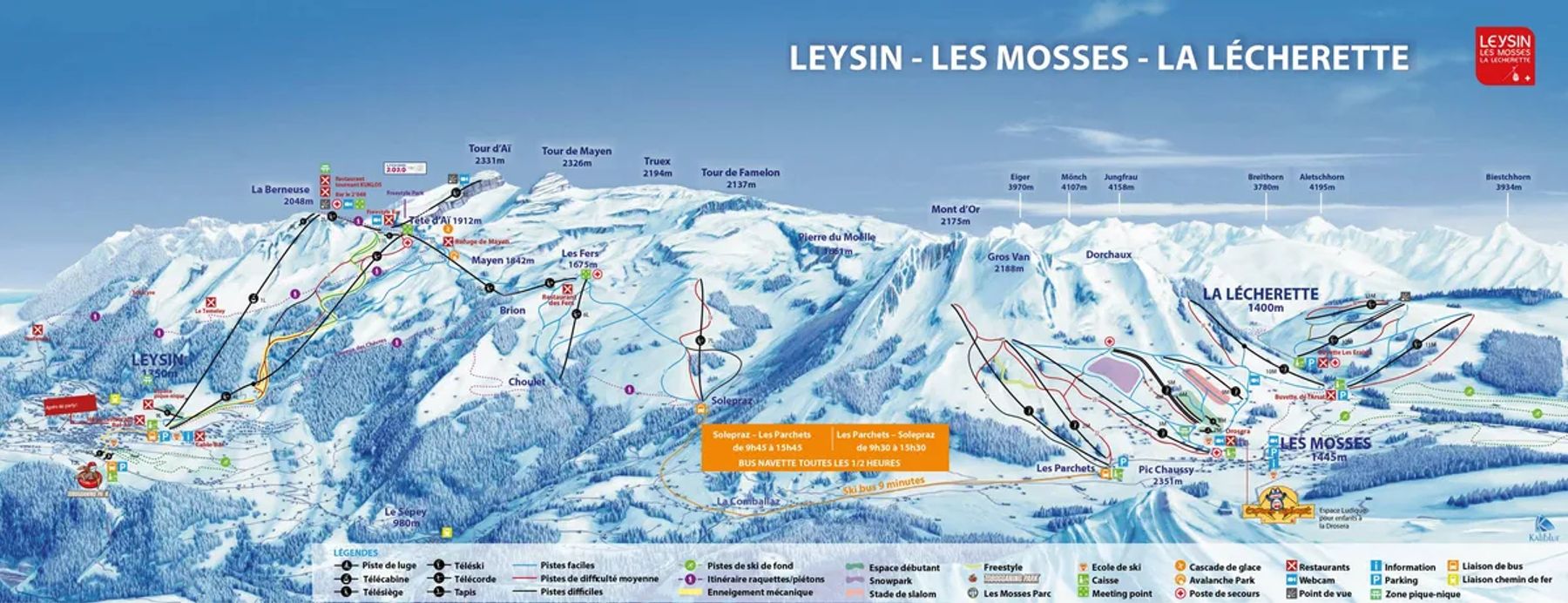
Downloadable Leysin trail map
Terrain split
0
runs
Beginner72%
Intermediate25%
Advanced3%
Expert0%
60 km of piste
Resort Stats
Elevation
Base1250m
Summit2198m
Annual snowfall
4m
Season
2026 - 2027
28 Nov 2026 - 11 Apr 2027
Trail coverage
0 runs
60 km
Leysin ski trails
Leysin offers a full spread of runs across a mix of difficulties. The terrain split and trail map here show how the mountain breaks down so you can plan a day that suits your group.
- • Match runs to your ability - the terrain split shows how much of Leysin is beginner, intermediate and advanced.
- • Check grooming and open-run status against the live conditions before committing to the upper mountain.
- • Early season and after fresh snow, favour the lifts serving your preferred grade to make the most of the day.
More Leysin intelligence: trail map, lift system, resort overview.