
Sörenberg
42km of piste spanning 1110-2298m. Magic Pass included. UNESCO Biosphere setting in Canton Lucerne, Switzerland.
Season 2026 - 2027
Opens
19 Dec 2026
Closes
28 Mar 2027
Days open
99
Annual snow
4m
The Overview
Michael Fulton
Melbourne-based skier and snowboarder with 50+ resorts across 5 continents. Specialises in Australian resorts and international resort comparisons.
Sörenberg spans 1110 to 2298 metres with 1188 metres of vertical drop and 42 kilometres of piste across two distinct sectors. The Dorf sector offers 57 per cent beginner terrain directly from the village, whilst the Rothorn sector delivers advanced skiing on the Brienzer Rothorn, the highest peak in Canton Lucerne at 2350 metres. Annual snowfall averages 4.3 metres with extensive snowmaking coverage ensuring reliable conditions from mid-December through early April. Membership in Magic Pass since 2024 grants access to over 100 ski areas across Switzerland, France and Italy for one annual fee.
The ski area divides between the gentle Schwarzenegg sector rising from the village with 500 metres of vertical for beginners, and the Rothorn sector with 1000 metres of challenging on- and off-piste terrain. The Freestyle-Line Rossweid caters to park riders, whilst the Eisee sector between 1900 and 2298 metres provides technical red and black runs with panoramic views across Lake Brienz and the Bernese Alps. Over half the terrain suits beginners, with 24 per cent intermediate, 19 per cent advanced, creating a balanced progression terrain.
Sörenberg sits within the UNESCO Entlebuch Biosphere Reserve, where protected moorland and karst landscapes frame wide, uncrowded slopes favoured by families from Lucerne and Bern. The village at 1165 metres retains a traditional Swiss atmosphere with small hotels and apartment rentals rather than large-scale development. Berghaus Eisee at 1900 metres offers simple mountain accommodation, whilst rustic mountain restaurants anchor both sectors, and night skiing operates on the floodlit Ochsenweid slope.
Magic Pass validity runs 1 May to 30 April annually, covering both winter skiing and summer lift access at competitive early-bird rates from CHF 419. The resort appeals to families with certified Family Destination Switzerland status, beginners progressing on wide learning slopes, intermediate skiers seeking value and variety, and advanced riders exploring the Rothorn freeride terrain. Day passes cost CHF 61 for adults, with 4-hour options at CHF 51, whilst children under 8 ski free year-round.
1188m
Vertical
0
Runs
42 km
Piste
4m
Annual snow
The Terrain
0 runs across 42 km of piste
Sörenberg climbs 1,188 vertical metres in central Switzerland, from 1,110 metres to 2,298 metres, across 42 kilometres of piste. Beginners get the biggest slice at 57%, ahead of 24% intermediate and 19% advanced, and there is no expert grading. Learners can start straight from the village sector, and the lift list runs to a cable car, a gondola, three quad chairs, a six-seater and eight T-bars, which is plenty for an area this size and keeps most lift lines short, while the compact layout makes it easy to regroup.
The Rothorn sector holds the steeper skiing, on the Brienzer Rothorn, the highest peak in Canton Lucerne at 2,350 metres, while the Eisee area between 1,900 metres and the top offers technical red and black runs with views over Lake Brienz. Park riders have the Rossweid freestyle line, and the Entlebuch moors and limestone give the landscape a distinct feel. Sörenberg suits families from Lucerne and Bern, beginners and intermediates wanting an uncrowded day, with a modest advanced section for those wanting a little more edge.
Terrain split
0
runs
0 runs across 4 grades
Beginner0 runs · 57%
Intermediate0 runs · 24%
Advanced0 runs · 19%
Expert0 runs · 0%
Time it right
When to visit Sörenberg
The 2025-26 season runs 13 December 2025 to 6 April 2026, offering 16 weeks of operations typical for central Swiss resorts at this elevation. Lifts generally operate daily during season with exceptions for maintenance and low snow years, though Magic Pass holders enjoy guaranteed access throughout the validity period from 1 May to 30 April annually. Extended shoulder seasons depend on snow conditions, with pre-Christmas and late-March skiing contingent on sufficient base depth at the 1110-metre valley elevation.
Annual snowfall averages 354 centimetres with the snowiest period occurring in week 2 of January, delivering 40 centimetres across 3 to 4 snowy days. North-facing orientation and extensive snowmaking on lower slopes protect against thaws, though mid-mountain elevations around 1500 metres prove more reliable than valley runs during warm spells. Base depths commonly exceed 100 centimetres mid-season at upper elevations, with current data showing 170 centimetres at 2298 metres and 50 centimetres at 1110 metres in February 2026. The Rothorn sector benefits from altitude advantage and shaded aspects preserving powder longer than sun-exposed Dorf terrain.
January through mid-March delivers optimal snow coverage and powder potential, whilst late December through January attracts peak crowds during school holidays. February offers reliable conditions with moderate visitor numbers, and March brings spring corn snow with longer daylight and warming temperatures. Late-season skiing in April depends on snowpack, with the Rothorn sector holding coverage longer than village-level runs. Quieter periods occur weekdays in January and late March when locals return to work post-holidays.
The resort hosts a season opening party in mid-December, night skiing operates weekly on Ochsenweid with Magic Pass holders skiing free, and Sunday sunrise rides on the Rothorn tramway include breakfast at the summit restaurant. Cross-country skiing spans 38 kilometres of trails above 1500 metres, including the Salwideli Panoramic Trail through moorland. Two toboggan runs operate from Rossweid, with a 2-kilometre run descending to the valley, complementing alpine skiing for non-skiers.
Season 2026 - 2027
19 Dec 2026
Opens
28 Mar 2027
Closes
99
Days open
4 m
Annual snow
Getting there
Getting to Sörenberg, and where to stay
Sörenberg occupies the upper Flühli valley at 1165 metres in Canton Lucerne, Central Switzerland, surrounded by the UNESCO Entlebuch Biosphere Reserve with protected moorland and the limestone ramparts of Schrattenfluh to the north. The village stretches 8 kilometres along the valley floor between Schönenboden at the Rothorn tramway base and Sörenberg Platz, with lift access points distributed throughout. The Brienzer Rothorn summit at 2350 metres forms the southern boundary, offering views across Lake Brienz to Eiger, Mönch and Jungfrau in the Bernese Oberland.
Schüpfheim lies 15 kilometres northwest as the nearest town with rail connections, whilst Flühli sits 8 kilometres down-valley as a climatic health resort and gateway village. Lucerne, the major regional city, is 50 kilometres northeast via Wolhusen and Schüpfheim, with Bern 70 kilometres west via Langnau and Schüpfheim. The resort sits in one of 400 UNESCO biosphere reserves globally, recognised for extensive naturally protected moorland covering an area unmatched elsewhere in Switzerland for concentration within a compact region.
From Lucerne, take route 10 south via Wolhusen to Schüpfheim, then follow signs 15 kilometres up-valley to Flühli and Sörenberg, totalling 65 kilometres in approximately 75 minutes. From Bern, drive east via Langnau to Schüpfheim, approximately 70 kilometres requiring 90 minutes. The Glaubenbielen Pass road from Giswil offers a summer-only alternative over narrow mountain switchbacks discouraged for nervous drivers and restricted for buses to one-direction hourly traffic. Free parking operates at valley station car parks, though weekend mornings see the Rossweid gondola lot fill early.
Zurich Airport lies 106 kilometres away with 90-minute drive time via the A2 motorway and route 10, whilst Bern Airport sits 67 kilometres distant requiring 75 minutes. Zurich serves as the primary international gateway with 700 daily flights to 170 destinations and direct trains to Lucerne every hour taking 70 minutes. From Zurich Airport or Lucerne, take trains to Schüpfheim, then PostBus line 241 to Sörenberg Post and Sörenberg Rothornbahn stops, totalling 3 hours 15 minutes from Zurich or 2 hours from Lucerne with reliable hourly connections.
Where to stay
Search all stays →Hotels and lodges near Sörenberg, powered by Stay22.
Latest News
From the SnowStash desk
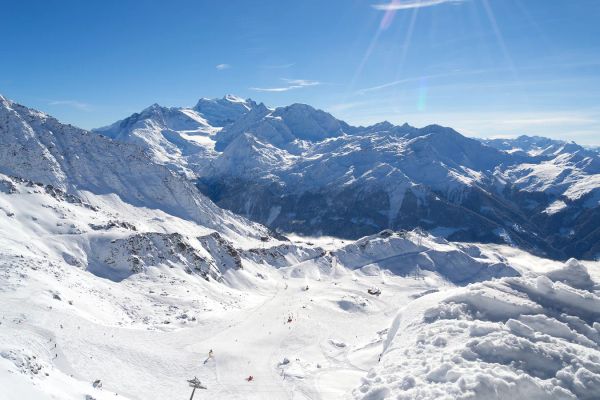
Alps Snow Forecast: Up to 64 cm Headed for the High Glaciers as the Snow Line Drops
The Alps are about to swap mild, sunny October weather for something far more wintry. A cold front arrives Tuesday, and SnowStash forecasts have Monterosa Ski out in front with 64 cm over 14 days, ahead of Blatten Belalp (55 cm) and Verbier (43 cm). The snow line should fall below 2000 metres by Wednesday night, and glaciers across Switzerland, Italy and Austria are in line for the best of it. The wind will have a say too.
20 Oct 2026
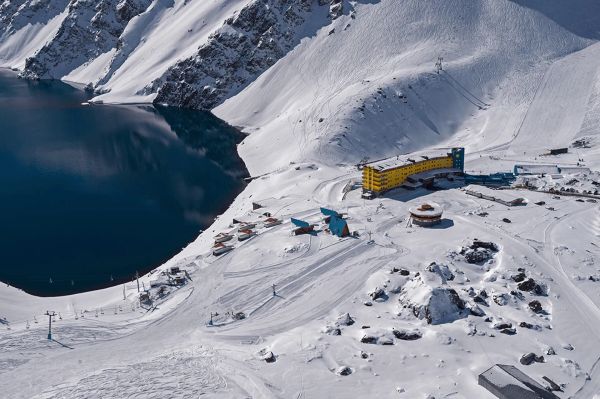
Four Dead After Avalanche Near Ski Portillo in Chile
A large avalanche struck near Laguna del Inca adjacent to Ski Portillo on Saturday afternoon, killing four people and injuring four others. The group were day visitors mountaineering in the backcountry after reportedly being warned about elevated avalanche risk by resort staff.
18 Oct 2026

Europe Ski Resorts Open Now: What Is Skiable in Mid-October 2026
Europe’s ski season is open, technically. After a record-warm summer, glaciers in Austria, Switzerland and Italy are running a few pistes apiece, Sölden, Stubai and Kitzsteinhorn started late, Titlis has pushed back to 24 October, and Zermatt reopens a few lifts on 14 October after more than two months shut. Finland’s Levi and Ruka are skiing on stored snow. Here is what is open, and what you actually get at each.
14 Oct 2026

Zermatt Plans World Cup Downhill Return on the Gornergrat for 2028
Zermatt is having another crack at a World Cup downhill, and this time nobody has to cross a border. Around 13 million Swiss francs is going into rebuilding the Gornergrat piste, including a jump fed by a roughly 300-metre in-run across the roof of the Gornergrat Railway gallery, with the Matterhorn lined up behind it for the TV cameras. First men’s race is pencilled in for March 2028, pending FIS homologation.
14 Oct 2026

Mt. Rose Begins Snowmaking for the 2026-27 Season at Lake Tahoe
Lake Tahoe’s highest base elevation is paying off early: Mt. Rose has started making snow for 2026-27 after the first flurries and a cold snap. The Nevada resort is backing it with nearly US$2 million in upgrades, including a replacement snowmaking main line, a new PistenBully groomer and restraint bars on every lift. Opening day is yet to be confirmed, though Heavenly and Northstar are already eyeing 20 November.
13 Oct 2026

Utah Ski Resorts 2026-27: What’s New at Alta, Deer Valley, Powder Mountain and More
Utah is still building flat out. For 2026-27, Powder Mountain opens a steep new Skytrac chair into more than 1,000 acres of advanced terrain, Deer Valley adds 200 acres on Hail Peak, Sundance gets a new quad and Park City adds a gondola from its new parking structure. Snowmaking is expanding almost everywhere, Eagle Point stays closed after the Cottonwood Fire, and the 2034 Games are setting the pace. Here’s what’s new, resort by resort.
13 Oct 2026

Mt Hutt Invests NZ$12 Million in Base Area, Tripling Its Sun Deck
Mt Hutt is getting busier, and its base lodge is about to catch up. NZ$12 million goes into a heated sun deck roughly three times the current size (430 m² to 1,300 m²), plus a new toilet block, heated steps down to snow level, extra storage and a new food and beverage outlet. Building starts after the 2026 season, with everything due for winter 2027.
11 Oct 2026

Vermont Ski Resort Opening Dates 2026-27: Few Dates Set, Killington Waits on the Cold
Vermont's season is slow to take shape. Stratton is tentatively targeting 18 November and Sugarbush 21 November, while Pico has Friday 11 December on the calendar. Killington never sets a date and opens when the snowmaking allows, and Vail Resorts has yet to name days for Stowe, Okemo and Mount Snow. The forecasts disagree about snow, and the main El Niño worry for the Green Mountains is warmth.
9 Oct 2026
Sörenberg Lift System
Sörenberg operates 15 lifts comprising one 80-passenger aerial tramway, one gondola, four chairlifts including a six-pack and three quads, and eight surface lifts plus one moving carpet in the learning area. Total uphill capacity reaches 20,000 skiers per hour across the connected Dorf and Rothorn sectors. The lift network spans base elevations from 1110 metres to the Brienzer Rothorn summit at 2298 metres, with efficient connections between village access points and high-altitude terrain.
The Brienzer Rothorn aerial tramway opened in December 2023 as a CHF 22 million replacement, carrying 80 passengers in panoramic cabins with floor-to-ceiling glazing over 2745 metres in approximately 6 minutes at 8 metres per second. Uphill capacity reaches 630 per hour from the Schönenboden base at 1258 metres directly to the summit. The 6-passenger Rossweid gondola, built in 1990, transports 1200 per hour over 1452 metres to the moorland plateau at 1465 metres, accessing the Mooraculum adventure park and family terrain. The Eisee six-pack chairlift with weather bubbles links the mid-mountain Eisee at 1900 metres to advanced slopes.
From the village, the Steinetli quad chair accesses Schwarzenegg beginner terrain, whilst eight T-bars serve nursery slopes and connecting runs between sectors. The Rossweid gondola and Rothorn tramway converge at different elevations, requiring skiers to descend linking runs or use the Eisee chairlift to access the summit from the Rossweid side. All three main lifts originate from separate valley stations spread along the 8-kilometre valley between Schönenboden and Sörenberg Platz.
The 2023 Rothorn tramway represents the resort's largest recent investment, replacing a 1971 installation with modern Garaventa technology including fibre-optic cables for station communication and a 35,000-kilowatt-hour solar array on the valley station roof. The six-pack Eisee chair installed in 2017 overcomes 300 metres vertical in under 7 minutes at 2.6 metres per second. Weekend queues concentrate at the Rossweid gondola base, whilst the Rothorn tramway remains quieter, particularly for intermediates deterred by the flat connecting blue run requiring skating technique.
15lifts across 6 types
1
Aerial Tram
1
Gondola
1
6-Person Chair
3
Quad Chairs
8
T-Bars
1
Surface Lift
Sörenberg lift system
Sörenberg is served by 15 lifts, listed here by type. Check which lifts are turning against the live conditions before you plan your first laps - early lifts and high-speed chairs get you to the best snow fastest.
More Sörenberg intelligence: trail map, snow report, webcams, resort overview.