TL;DR
Snow Space Salzburg has released full specs for the new Grafenberg gondola opening winter 2026/27. The 10-person, ~3km system replaces three lifts dating back to 1985, doubles capacity to 4,000 per hour, and includes a new mid-station directly at the G-Link for faster Wagrain-Flachau connections. The old Grafenberg Express 1 gondola gets a second life at Monte Popolo ski area.
Snow Space Salzburg's new Grafenberg gondola will replace infrastructure spanning four decades when it opens for winter 2026/27
Construction is now well underway on the new Grafenberg gondola at Wagrain, with the manufacturer releasing detailed specifications for the project. The new 10-person gondola will cover approximately three kilometres in two sections, rising 853 metres from the valley to the Grafenberg summit station in a journey time of around nine minutes. Capacity will sit at 4,000 people per hour - a figure that requires some context to appreciate properly.
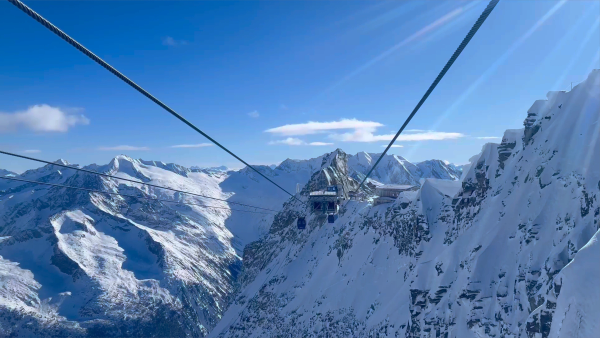
Stützenflug an der neuen Grafenbergbahn im Snow Space Salzburg
What the new lift is replacing
The three lifts being retired represent nearly four decades of accumulated infrastructure, each built by a different manufacturer and serving a different function within the Grafenberg corridor.
The original Grafenbergbahn dates to 1985 and is the oldest of the three. Built by Swoboda, it was a 6-person gondola running 3,026 metres from the valley station at 862 metres to the summit at 1,713 metres - an 851-metre altitude gain. Its carrying capacity was 1,732 people per hour, and the trip took around 11 minutes. It formed the primary access from Wagrain to the upper mountain for four decades.
The Grafenberg Express 1, built by Doppelmayr in 2009, served a different role. An 8-person gondola covering 947 metres with a 374-metre altitude gain, it ran from 862 metres to 1,236 metres at a speed of five metres per second, with a transit time of around three and a half minutes and capacity of 2,400 people per hour. This lift was confirmed decommissioned at the end of last winter and will not return - it is being relocated to the Monte Popolo ski area in Eben im Pongau, where it will be rebuilt as a new access lift.