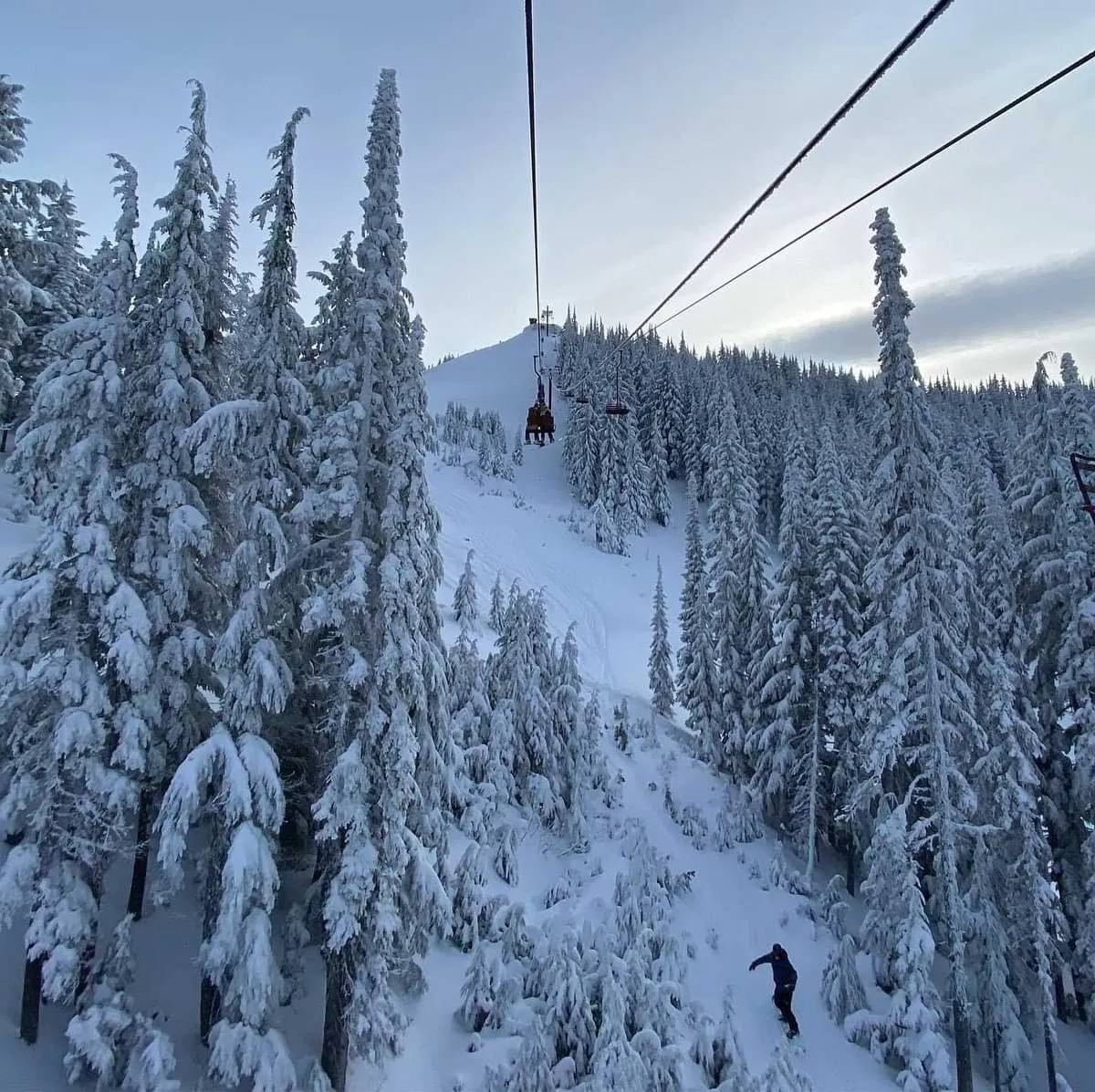
Silver Mountain
1,600 acres, 80 runs above Kellogg. World's longest single-stage gondola, Indy Pass access.

Current Conditions→
Season 2026 - 2027
Opens
28 Nov 2026
Closes
18 Apr 2027
Days open
141
Annual snow
300in
The Overview
Michael Fulton
Melbourne-based skier and snowboarder with 50+ resorts across 5 continents. Specialises in Australian resorts and international resort comparisons.
Silver Mountain's summit reaches 6,299 feet, dropping 2,198 vertical feet to a base at 4,101 feet across 80 runs spread over 1,600 acres above Kellogg, Idaho. Terrain splits 40 per cent intermediate, 30 per cent advanced, 20 per cent beginner and 10 per cent expert, with average annual snowfall of roughly 300 inches. The resort carries Indy Pass and Powder Alliance affiliation. Six lifts, including a gondola, one quad chair and two triple chairs, serve the mountain alongside two double chairs.
Silver Mountain's defining feature is its gondola, which climbs 3.1 miles directly from the town of Kellogg to the mountain base, the world's longest single-stage gondola ride at close to twenty minutes each way. This unusual base-to-mountain link was built specifically to revive a Silver Valley economy devastated by the decline of mining and logging. The resort's terrain and lift network sit above the gondola's upper terminal at Mountain House.
The ski area first opened in January 1968 as Jackass Ski Bowl on Wardner Peak, later renamed Silverhorn in 1973 following an ownership change. In the mid-1980s, Kellogg city councilman Wayne Ross conceived the idea of a gondola linking the depressed valley floor town directly to an expanded resort, aiming to stimulate the local economy. In December 1987, the US Congress approved 6.4 million US dollars in matching funds toward construction.
In September 1988, the economically struggling town of Kellogg voted by more than 82 per cent to tax itself two million US dollars over twenty years, and Swiss lift manufacturer Von Roll Tramways agreed to guarantee much of the remaining funding. Ground broke for the gondola and base village on 25 April 1989, and the resort was renamed Silver Mountain that summer. Adult daily tickets run from 79 to 99 US dollars, with season passes from 349 dollars, reflecting the resort's role as both a ski destination and a community revival project.
2,198ft
Vertical
80
Runs
1,600 acres
Skiable
300in
Annual snow
Indy / Powder Alliance
Pass
The Terrain
80 runs across 1,600 acres skiable
Silver Mountain above Kellogg offers 80 runs across about 1,600 acres (648 hectares) in the Silver Valley, with a base at 4,100 feet (1,250 m) and a summit at 6,300 feet (1,920 m), roughly 2,200 feet (670 m) of vertical. Intermediates account for 40%, advanced skiers 30%, beginners 20% and experts 10%. Skiers reach the slopes on a 3.1-mile gondola from town, and a quad, two triples and two doubles do the work above Mountain House. The mix gives intermediate skiers plenty of cruising, with enough steeper pitches to keep stronger skiers interested.
Above Mountain House, the quad and triple chairs lead to the top of Kellogg Peak, where steeps, bumps and a number of alternative lines open up toward neighbouring Wardner Peak. The Wardner side, served by a double chair, is known for chutes and mogul runs, and sits close to the original Jackass Ski Bowl area. Chair 2 reaches glades and advanced terrain, while chairs 3 and 4 serve gentler intermediate runs. Silver Mountain suits strong intermediates and advanced skiers wanting varied terrain and short lift lines, and the gondola means beginners can ride to the base without a mountain drive.
Terrain split
80
runs
80 runs across 4 grades
Beginner16 runs · 20%
Intermediate32 runs · 40%
Advanced24 runs · 30%
Expert8 runs · 10%
Time it right
When to visit Silver Mountain
The 2025-26 season at Silver Mountain ran from 21 November 2025 to 19 April 2026, a roughly twenty-one-week season supported by average annual snowfall of around 300 inches. This substantial snowfall, combined with the resort's Silver Valley location, gives Silver Mountain a reliable natural season relative to many Idaho resorts of similar size. Season dates can shift slightly depending on early and late-season weather.
Midwinter, from December through February, typically brings the most consistent conditions to the mountain's varied terrain. The gondola ride itself is a year-round draw for visitors, meaning the resort sees traffic even from those not necessarily skiing, though winter operations centre on the lift-served terrain above Mountain House. Weekday visits tend to be quieter than weekends.
As an Indy Pass and Powder Alliance resort, Silver Mountain draws visiting skiers holding those multi-resort passes in addition to its regional Silver Valley base. The historic mining-town setting of Kellogg adds a distinct cultural dimension to the resort experience beyond the slopes themselves. School holiday periods bring increased family visitation, supported by the resort's indoor waterpark as a non-ski amenity.
Specific event programming beyond standard lift and gondola operations is not confirmed in available resort information. The combination of substantial snowfall and the novelty of the world's longest single-stage gondola ride continues to define the Silver Mountain visitor experience through the season. Kellogg's ongoing economic reliance on the resort, dating to its founding purpose in the late 1980s, remains a backdrop to its operations.
Season 2026 - 2027
28 Nov 2026
Opens
18 Apr 2027
Closes
141
Days open
300 in
Annual snow
The record
Historical snowfall at Silver Mountain
Daily snow reports at Silver Mountain go back to 2025, 2 winters on the books. Open the record to compare winters, lifts and piste.
16 in
Snowiest day
7 Jan 2026
0 in
This winter · 2026-27
so far
66 in
Typical winter
average of complete seasons
Winter totals
in
Past wintersThis winter
Getting there
Getting to Silver Mountain, and where to stay
Silver Mountain rises above the town of Kellogg in the Silver Valley of northern Idaho, with a base elevation of 4,101 feet and a summit at 6,299 feet across a 2,198-foot vertical drop over 1,600 acres. The resort sits just south of Interstate 90 in Shoshone County, a region historically built on mining and logging.
Kellogg itself is the resort's gateway town, connected directly to the mountain by the 3.1-mile gondola that climbs from the town centre to the ski area's base facilities. This direct link means visitors can begin their mountain experience from downtown Kellogg rather than driving to a separate base area, a distinctive arrangement among Idaho resorts. The town's mining heritage remains visible throughout the Silver Valley.
Interstate 90 runs directly through Kellogg, providing straightforward access from both Idaho and neighbouring Washington and Montana. Winter driving conditions on I-90 can include snow and ice during storms, though the route is well maintained given its role as a major interstate corridor. The gondola itself removes the need for a separate winding mountain access road once visitors reach town.
Spokane International Airport, roughly an hour to the west along I-90, is the nearest airport with substantial commercial service. This gives Silver Mountain reasonably convenient access for fly-in visitors from the broader Inland Northwest. Most visitors, however, arrive by car along Interstate 90 from Idaho, Washington or Montana before taking the gondola up from Kellogg.
Where to stay
Search all stays →Stays map loads when you scroll here
Hotels and lodges near Silver Mountain, powered by Stay22.
Latest News
From the SnowStash desk
Val Gardena to Alpe di Siusi Lift Link Back in Play After Court Ruling
The Val Gardena-Alpe di Siusi lift link isn’t dead after all. A South Tyrol court has overturned Santa Cristina’s rejection of the new Monte Pana-Saltria link on procedural grounds, after the council skipped required public information sessions. Opponents want the missing sessions held and a fresh vote, and nothing has been approved. For now it’s still a bus between the two, but a plan first floated in 2017 is back in the conversation.
8 Nov 2026
Whistler Blackcomb Rockslide Zone Stays Closed Through 2026-27 Season
A section of Whistler Peak terrain will stay closed all 2026-27 season, Vail Resorts has confirmed, with rockslide mitigation work continuing into summer 2027. Peak Express is still expected to run this winter, but locals are already arguing about what’s actually off limits, whether the Whistler Bowl is gone, and why the news landed after pass sales wound down. Here’s where things stand.
7 Nov 2026
Loveland Ski Area Opens for 2026-27 and Marks 60 Years of Snowmaking
Loveland is open. The Colorado ski area started Chet’s Dream turning on Saturday 7 November to kick off 2026-27, with $60 adult lift tickets to mark 60 years of snowmaking. Expect three runs, nearly 1,000 vertical feet (about 300 metres) of top-to-bottom skiing, live music on the Basin Patio and no beginner terrain yet. Here’s what’s open, what it costs and when Loveland Valley follows.
7 Nov 2026
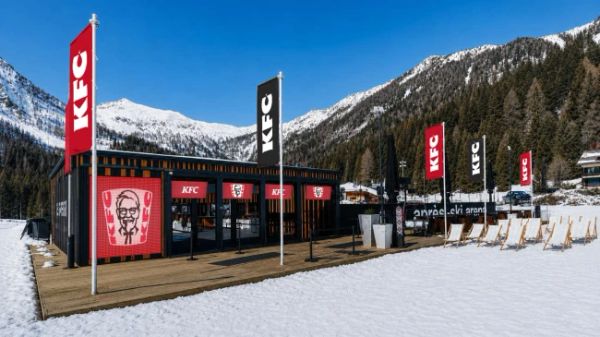
KFC Is Coming to the Slopes at Cortina and Madonna di Campiglio
Fried chicken is heading up the Dolomites. From 5 December KFC will run two restaurants on the slopes - one at 2,123 metres at Cortina, one at 1,700 metres at Madonna di Campiglio - and the polenta-and-canederli crowd has opinions. Local politicians, conservation groups and plenty of Facebook commenters are calling it a step too far, while others just want a cheaper lunch. Here’s what’s on the menu and what’s the fuss.
5 Nov 2026
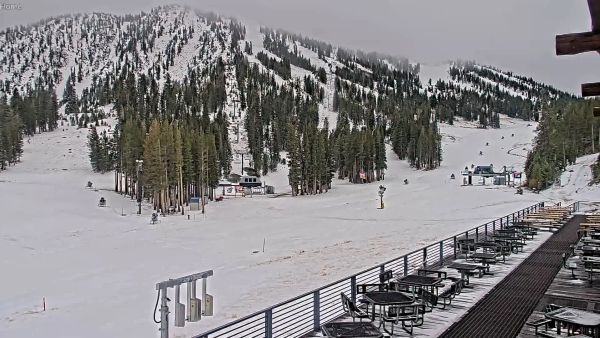
Mt Rose Aims to Open First in Tahoe on November 6
Mt Rose is going for the first-in-Tahoe title, with the Lakeview Express due to spin at 9 a.m. on Friday, November 6. One main lift, three runs and plenty of snowmaking, sitting on the highest base elevation in the region at 8,260 ft. Here is what is open, what is not (sorry, tubing fans), and how the early North American openings are stacking up.
4 Nov 2026
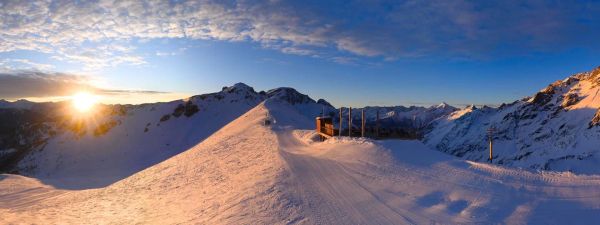
Europe Snow Forecast: Serre Chevalier Leads With 82 cm Over the Next 10 Days
Europe has had a quiet start to November, but our 10-day forecast has Serre Chevalier on 82 cm and Les 2 Alpes on 71 cm. Two pushes are lined up: a western Alps top-up from Friday, then a bigger, wider system on Thursday, November 12 and Friday, November 13 that reaches Italy and Switzerland. Full leaderboard inside.
4 Nov 2026
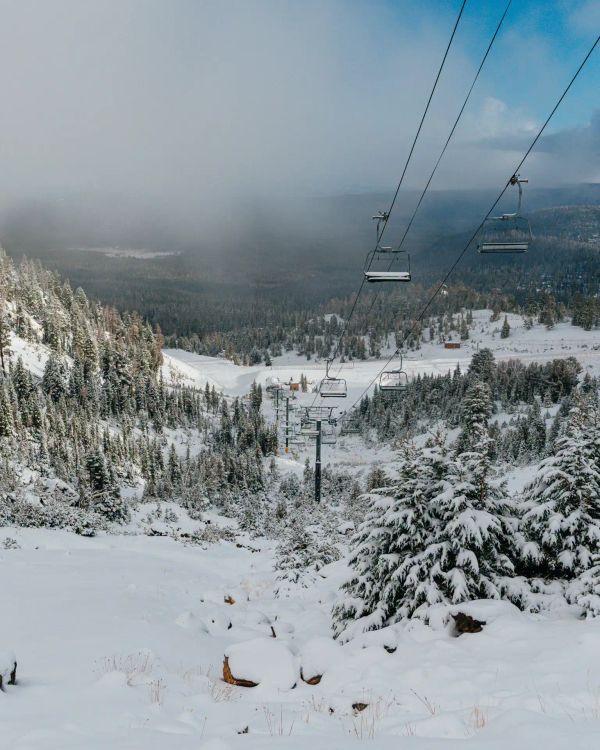
Mammoth Mountain Opens Early on November 5 With Up to 33 Inches of Snow in the Forecast
Mammoth just moved opening day forward to Thursday, November 5, eight days ahead of schedule. A snowy weekend and cold snowmaking nights did the work, and our forecast shows up to 33 inches more landing on November 13 and 14. Here is what opens, what the weather looks like and where Mammoth sits among the early Ikon Pass openers.
3 Nov 2026
Utah Snow Storm Builds Early-Season Base Ahead of November Openings
Rain down low, snow up high, and a snow report full of zeros that mostly means ‘not updated yet’. Utah’s first proper storm of 2026-27 is rolling through the Wasatch, Snowbird’s snow stake is closing in on 10 inches, and Brian Head is five days from opening day. Early November snow rarely looks like much, but it is the layer every November opening date is built on. Here is where it stands.
1 Nov 2026
Silver Mountain Webcams
5 live angles across the mountain. Tap any camera to go full-screen.
About Silver Mountain's live webcams
Check live conditions across Silver Mountain with 5 real-time webcams showing snow, weather, and lift operations, updated every 10 minutes. Check high-elevation cams for powder visibility and base-area cams for crowd levels before you head up.
Camera guide
- Krem 2 Camera6,299ft
- Experience commanding views from Silver Mountain's highest accessible elevation through this Krem 2 webcam positioned at 1920 meters above the historic mining town of Kellogg. This Silver Mountain webcam offers sweeping views of the resort's upper mountain terrain and diverse trail network that makes this Idaho destination a true powder paradise. Monitor current snow conditions and visibility through this Silver Mountain live cam as you plan your descent through 1,600 acres of legendary Idaho skiing accessed by North America's longest gondola system.
- Silver Mountain Resort House5,699ft
- Discover breathtaking panoramic views through this Silver Mountain webcam positioned at the mountain house at 1737 meters elevation, showcasing sweeping vistas toward Kellogg Peak across the resort's varied terrain. This strategic Silver Mountain live cam reveals current visibility and snow conditions as riders prepare to explore the diverse trail offerings. Check real-time mountain conditions through this Silver Mountain web cam before embarking on your Idaho powder adventure across this historic mining region's premier ski destination.
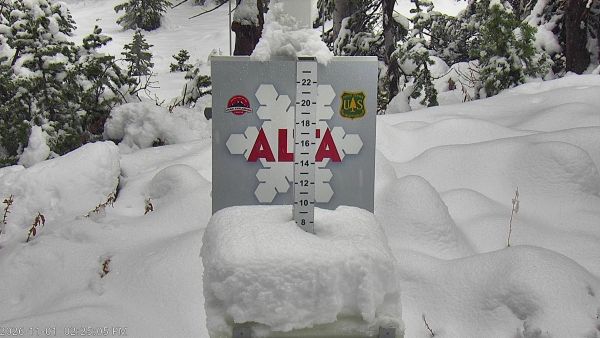
- Kellogg Snow Stake 6,299ft
- Track fresh powder accumulation through this essential Silver Mountain webcam focused on the resort's official snow stake at 1920 meters elevation in the heart of the Bitterroot Mountains. This specialized Silver Mountain live cam provides real-time snowfall measurements, letting you witness exactly how many inches of legendary Idaho powder have accumulated in the past 24 hours. Perfect for powder hunters planning their Silver Mountain web cam shows the precise snow data needed to time your visit for optimal skiing conditions at this historic mining town's mountain playground.
- Kellogg Peak 6,299ft
- Experience Silver Mountain's dramatic summit perspective through this high-altitude webcam positioned at Kellogg Peak's impressive 1920-meter elevation. This Silver Mountain live cam monitors current conditions and skier activity around the summit triple chair terminal, providing essential visibility updates across the resort's most challenging terrain. Watch advanced riders navigate the mountain's steepest slopes through this Silver Mountain webcam while assessing snow quality and weather conditions across Idaho's most vertically dramatic ski destination.
- Snow Tubing Park5,699ft
- Monitor family-friendly winter activities through this Silver Mountain webcam positioned at 1737 meters above the historic mining town of Kellogg, capturing aerial views of the resort's popular snow tubing park. This Silver Mountain live cam shows current tubing conditions and activity levels, perfect for families planning their next Idaho powder adventure. Check real-time snow quality and park operations through this Silver Mountain web cam while enjoying access via North America's longest gondola system to this exciting winter playground.
Silver Mountain snow cams FAQ
How often do Silver Mountain snow cams update?
All Silver Mountain snow cams and webcams update every 10 minutes with fresh images showing current mountain conditions. This frequent update schedule ensures you have access to near real-time conditions for planning your ski day at Silver Mountain.
Which Silver Mountain webcam shows the best powder conditions?
The high-elevation Krem 2 Camera webcam at 1,920m provides the clearest view of powder conditions and snowfall. These Silver Mountain webcams capture fresh snow accumulation and visibility better than base area cameras.
Can I see Silver Mountain lift queues on the webcams?
Yes. Multiple Silver Mountain snow cams specifically show lift queue areas and chairlift operations, helping you time your arrival and avoid peak queue periods.
When is the best time to check Silver Mountain snow cams?
Check Silver Mountain webcams early morning (7-8am) for overnight snowfall assessment, and mid-afternoon for current crowd levels and weather. The live cams are most useful after storm events to assess fresh powder.
How can I check current conditions before buying Silver Mountain lift tickets?
Use our Silver Mountain webcams alongside the live snow report to assess conditions before purchasing lift tickets. The webcams show real-time visibility, snow quality, and operational status.
Do Silver Mountain webcams work on mobile devices?
Yes. All Silver Mountain snow cams and webcams are optimized for mobile viewing, so you can check live conditions from anywhere using your phone or tablet.
More Silver Mountain intelligence: snow report, lift tickets, trail map, resort overview.