
The Overview
Michael Fulton
Melbourne-based skier and snowboarder with 50+ resorts across 5 continents. Specialises in Australian resorts and international resort comparisons.
Bridger Bowl's summit reaches 8,701 feet, dropping 2,602 vertical feet to a base at 6,099 feet across 105 runs spread over 2,000 acres near Bozeman, Montana. Terrain splits 42 per cent expert, 28 per cent intermediate, 18 per cent advanced and 12 per cent beginner, with average annual snowfall of roughly 229 inches. The resort operates as a nonprofit and carries no major multi-resort pass affiliation. Ten lifts, including one quad chair and six triple chairs, serve the mountain alongside one double chair and two surface lifts.
Bridger Bowl is best known for the Ridge, its legendary expert-only terrain spanning six named sections, including Schlasman's, and A through D Routes, that give the resort a genuine backcountry character within a lift-served setting. Its nonprofit structure, unusual among resorts of its scale, keeps ticket prices remarkably low relative to comparable Montana mountains. The heavily expert-weighted terrain profile, with 42 per cent of runs rated expert, reflects the mountain's identity as a serious skier's destination.
Skiers have used the area known as Bridger Bowl since the mid-1940s, and in 1949 the State of Montana purchased 120 acres to provide access to the Gallatin National Forest for a proposed state park and ski area. The Bozeman State Park and Recreation Association formed in 1954, and through the efforts of more than 60 volunteers, the resort's original platter lift opened to the public in January 1955.
The organisation gained 501(c)(4) nonprofit status, with membership open to Montana residents aged 18 and over electing a nine-member board, and was renamed the Bridger Bowl Association in 1971. Ridge skiing opened to the public in 1973, and the Schlasman's chairlift, named for a miner killed in an 1885 avalanche, opened for the 2008-09 season as the first lift-served terrain expansion in 30 years, adding 311 acres of expert-only terrain with a 1,700-foot vertical rise. Adult daily tickets run at a flat 30 US dollars.
2,602ft
Vertical
105
Runs
2,000 acres
Skiable
19ft
Annual snow
The Terrain
105 runs across 2,000 acres skiable
Bridger Bowl sits in the Bridger Range about 16 miles north-east of Bozeman, with 105 runs across roughly 2,000 acres (809 hectares). The base is 6,100 ft (1,859 m) and the summit tops out at 8,700 ft (2,652 m), a vertical drop of 2,600 ft (793 m). Terrain skews steep: 42% expert, 18% advanced, 28% intermediate and 12% beginner. Six triple chairs, a quad, a double and two surface lifts move skiers around the bowl. It is a non-profit, community-owned hill, and the lift system is lean, so most of the terrain is reached by short, direct rides from the base area.
Schlasman's Lift opens the Ridge, where there are no marked trails and a working avalanche transceiver is mandatory to ride. From the top, skiers can take steep chutes, spine lines and cliffs, hike north onto the Ridge or traverse south into Mundy's Bowl. The Bridger Bowl backcountry gate gives open access to Forest Service land beyond the boundary. Lower down, the groomed runs and trees suit intermediates, and the area's light, dry snow has a loyal local following. Bridger Bowl suits advanced and expert skiers and riders most, with enough mellow cruising for the rest of the group.
Terrain split
105
runs
105 runs across 4 grades
Beginner13 runs · 12%
Intermediate29 runs · 28%
Advanced19 runs · 18%
Expert44 runs · 42%
Time it right
When to visit Bridger Bowl
The 2025-26 season at Bridger Bowl ran from 6 December 2025 to 13 April 2026, a roughly nineteen-week season supported by average annual snowfall of around 229 inches. This snowfall, combined with the mountain's expert-weighted terrain, supports Bridger Bowl's reputation for reliably challenging conditions throughout the season. Season dates can shift depending on early and late-season weather.
Midwinter, from December through February, typically brings the most consistent conditions to the mountain's terrain, including the Ridge's six expert-only sections. As a nonprofit community mountain, Bridger Bowl draws heavily from Bozeman and the surrounding Gallatin Valley rather than national destination traffic, keeping the resort's culture distinctly local despite its terrain's national reputation among serious skiers.
Ridge access typically requires favourable avalanche conditions and appropriate gear given its backcountry-style character, meaning conditions and access can vary meaningfully day to day even within a single season. School holiday periods bring some increase in family visitation to the resort's more moderate terrain, though the overall skier base skews toward experienced, expert-focused visitors. Weekend crowds draw heavily from the Bozeman area.
Specific event programming beyond standard operations is not confirmed in available resort information. The nonprofit Bridger Bowl Association's governance structure, with membership open to Montana residents since 1971, continues to shape the resort's community-first priorities each season. The mountain's reputation for the Ridge and its exceptionally low, flat-rate ticket pricing remain defining features of its seasonal identity.
Season 2026 - 2027
18 Dec 2026
Opens
21 Mar 2027
Closes
93
Days open
19 ft
Annual snow
Getting there
Getting to Bridger Bowl, and where to stay
Bridger Bowl sits in the Bridger Mountains north of Bozeman, Montana, with a base elevation of 6,099 feet and a summit at 8,701 feet across a 2,602-foot vertical drop over 2,000 acres. This puts the resort within the Gallatin National Forest, a short distance from one of Montana's fastest-growing cities.
Bozeman, home to Montana State University and a rapidly growing population, provides the resort's primary lodging, dining and visitor base, with the ski area functioning as the city's genuine local mountain. The broader Gallatin Valley combines the resort with extensive additional outdoor recreation, and nearby Big Sky offers a contrasting, larger-scale destination resort experience within the same region.
Bridger Canyon Road connects Bozeman directly to the resort, climbing into the Bridger Mountains over a relatively short distance. Winter driving conditions on this route can include snow and ice, though the well-travelled road is regularly maintained given the resort's role as Bozeman's primary local ski destination. There is no direct public transport service to the mountain.
Bozeman Yellowstone International Airport, roughly 30 minutes from the resort, offers direct flights from numerous major US cities, making Bridger Bowl notably accessible for fly-in visitors despite its identity as a local, nonprofit community mountain. This combination of a nearby major airport and Bozeman's growing population continues to support strong visitation to the resort each season.
Where to stay
Search all stays →Hotels and lodges near Bridger Bowl, powered by Stay22.
Latest News
From the SnowStash desk
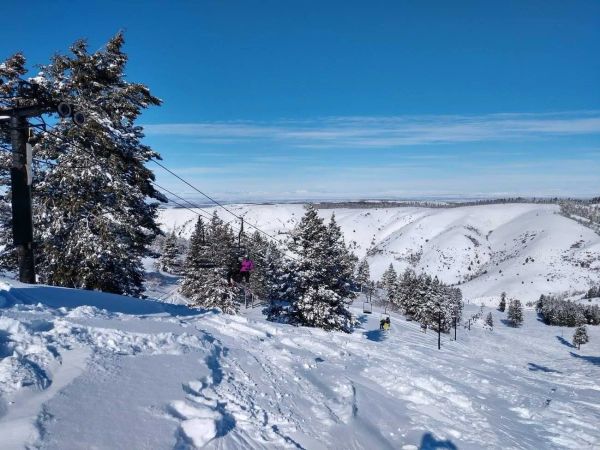
Kelly Canyon, Idaho, Adds Snowmaking, a Bigger Terrain Park and More Parking for 2026-27
Kelly Canyon had a rough 2025-26, and the Idaho resort has spent the summer making sure it doesn’t repeat. Snowmaking now reaches the top of Goldrush, the terrain park is doubling in size with a stereo system, lights and a snack shack, and the car park is getting bigger. Grooming is stepping up too. Target opening is December 4, conditions permitting.
9 Oct 2026
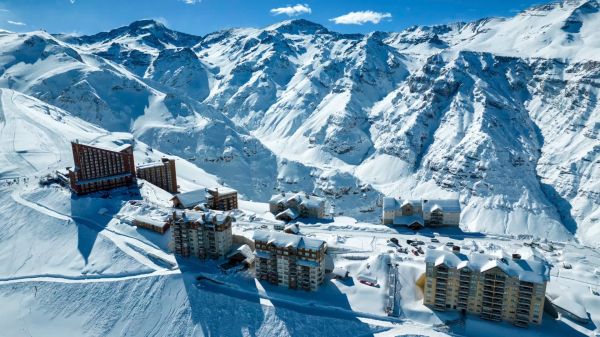
Valle Nevado Extends Season to November 8 After 108 cm in 48 Hours
Winter was meant to be winding down in Chile. Then Valle Nevado took 108 cm in 48 hours in early October, and the resort has pushed its closing date out to November 8 - its latest in 38 years of operation. That makes 143 days of skiing since opening day on June 19, with 690 cm banked for the season. Only part of the mountain is running while the storm settles, so check the mountain report before you plan a trip.
9 Oct 2026
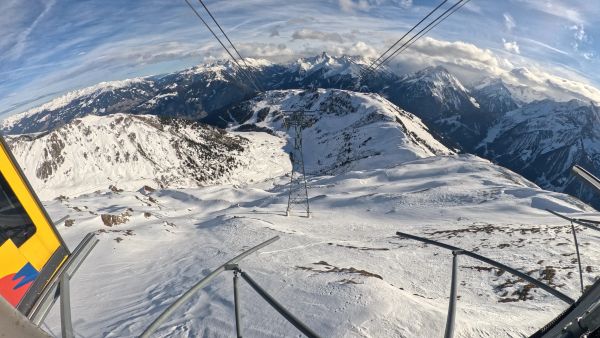
Alps Snow Forecast: Cold Front Brings Thursday Snow to the High Alps
The Alps look a lot more like winter today, for a day or so. A cold front is moving west to east, dropping up to 35 cm on high glaciers and peaks, with snow levels falling to around 1,500-1,800 m at times. Don’t plan a trip around it: mid-elevation snow will be thin and wet, every area is closed bar a limited Sölden glacier opening tomorrow, and warmer weather returns by Monday.
8 Oct 2026
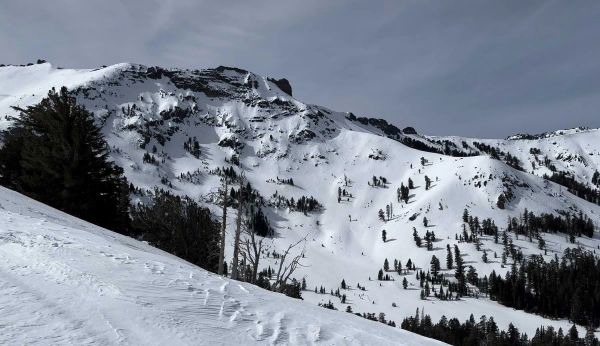
California Ski Resort Opening Dates 2026-27: Mammoth Leads, Tahoe Follows
Mammoth Mountain is first up in California, targeting Friday 13 November after a dusting of September snow. Heavenly and Northstar follow on 20 November, Palisades Tahoe on Wednesday 25 November and Sugar Bowl on 27 November, with Kirkwood on 4 December and June Mountain on 19 December. Plenty of smaller areas have no date yet. A super El Niño favours the Sierra, but a warmer storm track is the catch.
7 Oct 2026
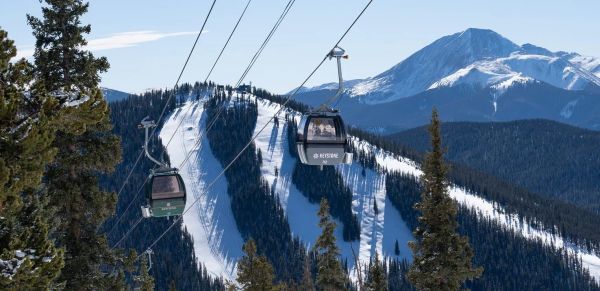
Colorado Ski Resort Opening Dates 2026-27: A-Basin and Keystone Race to Be First
Arapahoe Basin, Keystone and Winter Park are all chasing an October start, though none has a firm date yet. The first dated openers are Breckenridge and Copper on Friday 6 November, then Vail on 13 November, with most of the rest bunched around US Thanksgiving. Hesperus did not open at all last season. A super El Niño offers hope but no guarantee, and forecasters say the southern mountains have the better odds.
5 Oct 2026
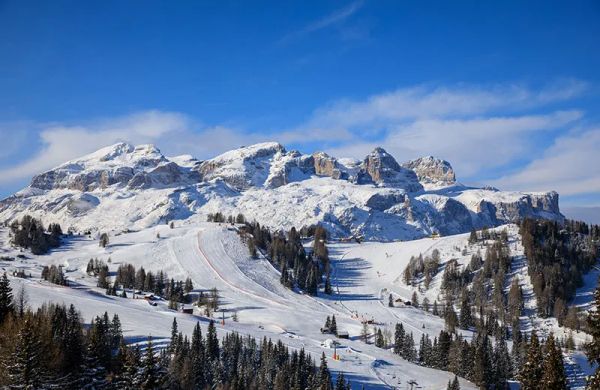
Dolomiti Superski 2026-27: Four New Gondolas, New Reservoirs and an €89 Peak Day Pass
Dolomiti Superski is spending around €100 million across its 12 areas before winter. Kronplatz gets a new 10-passenger gondola with a middle station, 3 Zinnen gets Helmissimo, and Val di Fassa swaps a chairlift for a gondola above Col Valvacin. New water-storage basins and upgraded snowmaking follow, and construction has started on the San Martino to Passo Rolle link. A peak adult day pass is €89.
4 Oct 2026
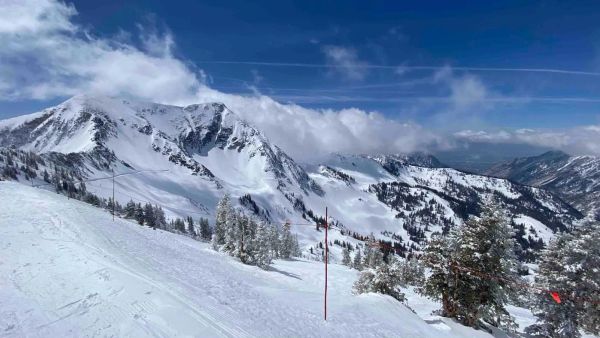
Utah Ski Resort Opening Dates 2026-27: Brian Head First, Eagle Point Out
Brian Head is targeting 6 November, though last year it aimed for 7 November and did not open until the 25th. Park City, Alta and Solitude are pencilled in for 20 November, Snowbird and Snowbasin for 27 November, and Deer Valley for 5 December. Eagle Point will stay closed after the Cottonwood Fire. A super El Niño is forecast, but the big snow is not expected until January.
4 Oct 2026
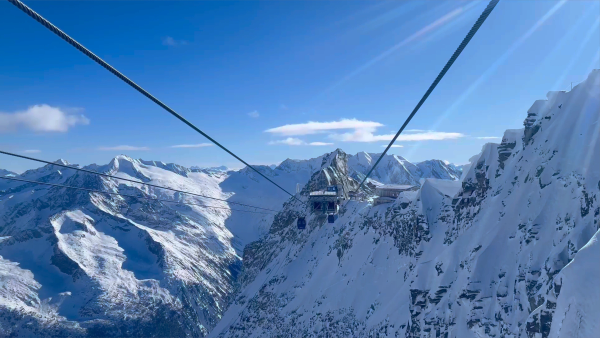
Hintertux Glacier Opens for 2026-27 With 12 Kilometres of Piste
Hintertux became Austria's second glacier to open for 2026-27 on Friday 2 October, after the Pitztal Glacier. Twelve kilometres of piste are running around the Olperer and Gefrorene Wand, served by one gondola and two drag lifts, with the Betterpark also open. Lifts officially run 8:15 am to 4:30 pm, but skiing stops at 2 pm for now.
4 Oct 2026
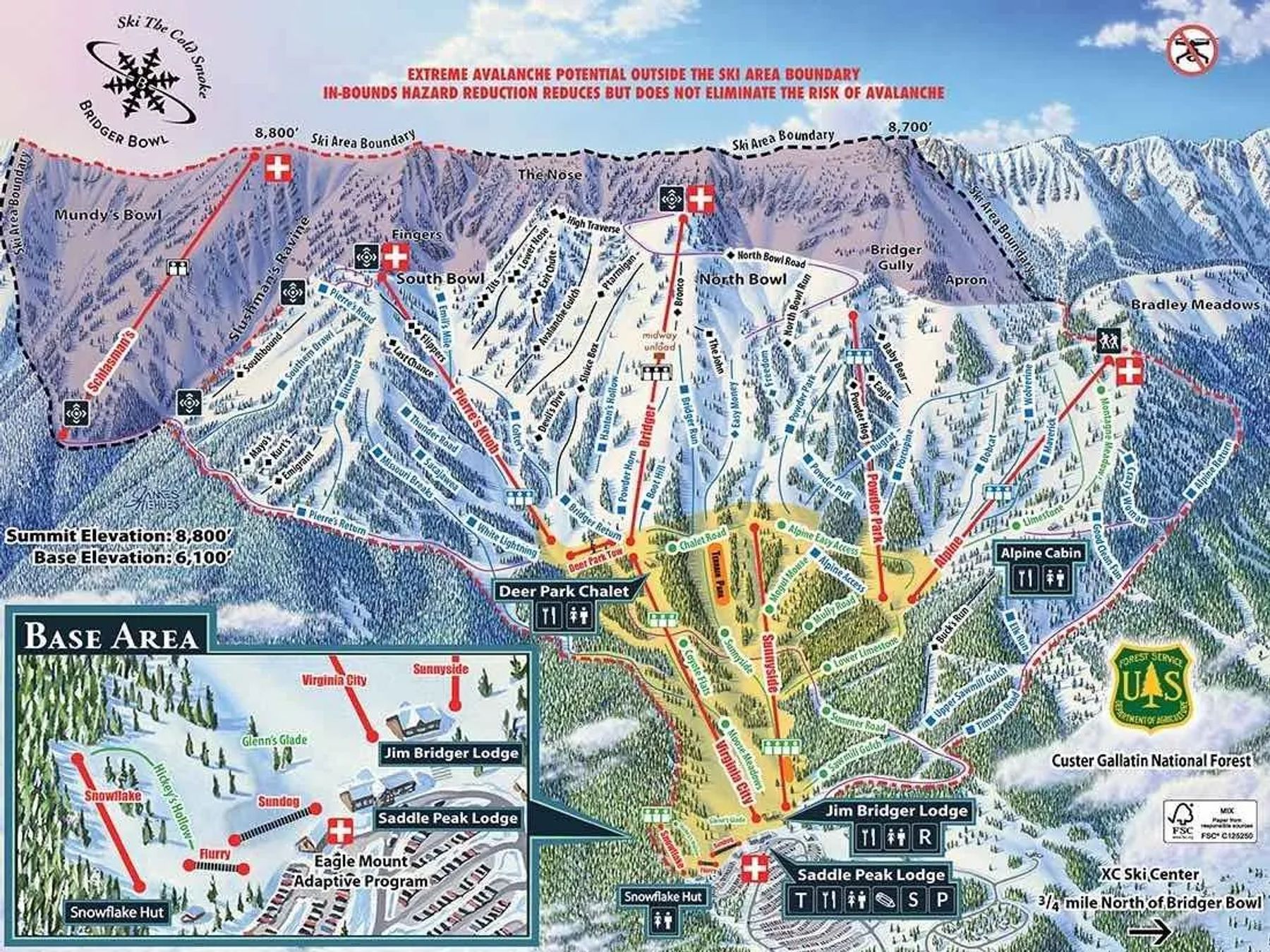
Bridger Bowl Trail Map
Downloadable Bridger Bowl trail map
Terrain split
105
runs
Beginner12%
Intermediate28%
Advanced18%
Expert42%
2,000 acres skiable809 hectares
Resort Stats
Elevation
Base6,099ft
Summit8,701ft
Annual snowfall
19ft
Season
2026 - 2027
18 Dec 2026 - 21 Mar 2027
Trail coverage
105 runs
2,000 acres (809 ha)
About Bridger Bowl's trail map
Explore Bridger Bowl's full trail map with 105 runs across the mountain, colour-coded by difficulty and shown alongside the terrain split. Use it to plan a day that matches your ability, find lift-served pockets of your favourite grade, and see how the resort links together. Download the piste map (PDF) ↗
More Bridger Bowl intelligence: snow report, lift system, webcams, resort overview.