
Red River
Ski 209 acres from New Mexico's authentic mining-town main street. 64 runs, 1,600ft vertical and 215 inches of annual snowfall in the Sangre de Cristos.
Season 2026 - 2027
Opens
26 Nov 2026
Closes
21 Mar 2027
Days open
115
Annual snow
18ft
The Overview
Michael Fulton
Melbourne-based skier and snowboarder with 50+ resorts across 5 continents. Specialises in Australian resorts and international resort comparisons.
Red River Ski Area occupies 209 acres of terrain in the Carson National Forest within the Sangre de Cristo Mountains of northern New Mexico, rising from a base of 8,750 feet to a summit of 10,350 feet across a 1,600-foot vertical. The 64 runs break down as 31% beginner, 31% intermediate and 38% advanced — a distribution that reflects the resort's genuine appeal across ability levels, with no expert classification in the trail grading and a notably high proportion of challenging terrain for a resort of this scale.
Three terrain parks, including the "Hollywood" park running beneath the Platinum Chair, extend the mountain's appeal for freestyle skiers and snowboarders. Children five and under ski free, seniors 70 and over ski free, and lift tickets remain significantly below the pricing of the larger New Mexico resorts in the region.
What distinguishes Red River from the majority of ski resorts in the American Southwest is its origin and layout: the town was founded in the 1890s as a gold and silver mining settlement, and the ski area was built directly into it in the late 1950s, with chairlifts rising from Main Street rather than from a purpose-built resort village.
The Platinum Chair and Gold Chair both depart from the town centre, making Red River one of a small number of US ski towns — alongside Park City and Aspen — where the lift infrastructure integrates directly with a functioning historic main street. The town's permanent population of around 540 gives it a character that purpose-built ski stations rarely replicate, with local bars, restaurants and accommodation concentrated within easy walking distance of the base lifts.
1,601ft
Vertical
64
Runs
209 acres
Skiable
18ft
Annual snow
The Terrain
64 runs across 209 acres skiable
Red River is a compact ski area of 209 acres (85 hectares) in the Sangre de Cristo Mountains, with 64 runs on a 1,600-foot vertical (488 m). The base sits at 8,750 feet and the summit at 10,350 feet (3,155 m). The grading is unusually steep for the size: 38% advanced, 31% intermediate and 31% beginner, with no expert-graded terrain. Seven lifts, from triple chairs to T-bars, cover the area, and snowfall averages around 215 inches a year. The lifts start from the edge of the old mining town itself, so there is no separate resort village to drive to.
The Face is the run everyone notices, a steep black diamond that stares down at the town from the base of the Platinum Chair. Hollywood, one of the mountain's terrain parks, runs beneath the same lift, so freestyle riders get a lot of laps in front of an audience. The Gold Chair also leaves from the town centre. With close to four in ten runs graded advanced, Red River suits confident intermediates and strong families who want a walkable ski town over a purpose-built village, but anyone chasing true expert terrain should look elsewhere.
Terrain split
64
runs
64 runs across 4 grades
Beginner20 runs · 31%
Intermediate20 runs · 31%
Advanced24 runs · 38%
Expert0 runs · 0%
Time it right
When to visit Red River
Red River operates from late November through to mid-April, with the 2025/26 season running 27 November to 13 April. The resort averages approximately 215 inches of annual snowfall, among the higher totals in the New Mexico Sangre de Cristo range, driven by the mountain's position in the Carson National Forest at an elevation where cold arctic air masses frequently collide with moisture systems from the south and west.
The north-facing aspects across much of the ski area preserve snow quality between storm cycles and slow the rate of melt on the lower runs during the warmer daylight hours that the high-altitude, high-sunshine New Mexico climate produces. The current 2025/26 season has recorded a base depth of around 20 inches as of early March with a season total approaching 48 inches.
January is historically the most reliable month for cold temperatures and consistent snowfall, though the resort's snowmaking infrastructure supports coverage from opening day through the spring shoulder period regardless of natural accumulation. Red River holds a Saturday night torchlight parade and fireworks during the peak winter season — a tradition that draws visitors specifically for the spectacle and gives the mountain a community atmosphere that larger, more commercially focused resorts in the region rarely match.
Spring skiing through March and into April takes advantage of long daylight hours, stable weather and firm morning snow on the upper mountain, with afternoon temperatures warming the lower runs to soft, forgiving conditions suited to families and beginner progression.
Season 2026 - 2027
26 Nov 2026
Opens
21 Mar 2027
Closes
115
Days open
18 ft
Annual snow
Getting there
Getting to Red River, and where to stay
Red River sits in Taos County in northern New Mexico, 36 miles from Taos and approximately three hours by road from Albuquerque via US-64 and NM-38. The town of Red River lies along the Enchanted Circle Scenic Byway — a 84-mile loop through the Sangre de Cristo Mountains that connects Red River, Taos, Angel Fire and Eagle Nest — making it a natural stop on a broader northern New Mexico road trip that covers some of the most dramatic high-desert mountain scenery in the American Southwest.
The drive from Albuquerque International Sunport, the region's principal airport with direct connections from major US hubs, takes around three hours under normal conditions. Taos Ski Valley, one of the most technically demanding ski resorts in the US, is 36 miles to the southwest and reachable on the same Enchanted Circle route for those looking to combine visits across the northern New Mexico ski region.
The Sangre de Cristo Mountains take their name from a 1719 observation by Spanish explorer Antonio Valverde y Cosio, who saw the snow-covered peaks at sunrise lit deep red — "Blood of Christ" — a name that has stayed with the range for three centuries and gives the region a distinct cultural and historical identity beyond its ski terrain.
The Carson National Forest surrounds the Red River valley on all sides, and the mountains above the ski area support populations of deer, elk and bighorn sheep that are regularly visible from the upper lifts. The Enchanted Forest Cross Country Ski Area operates adjacent to Red River and provides an additional 35 kilometres of groomed Nordic trails for those looking to extend activity beyond the downhill terrain, making the broader Red River valley a more complete winter destination than the ski area statistics alone suggest.
Where to stay
Search all stays →Hotels and lodges near Red River, powered by Stay22.
Latest News
From the SnowStash desk
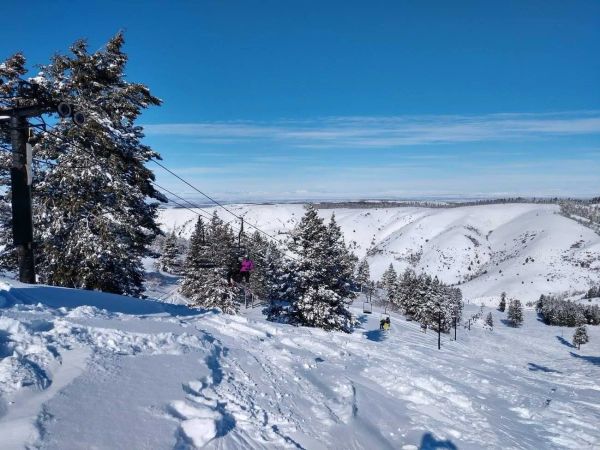
Kelly Canyon, Idaho, Adds Snowmaking, a Bigger Terrain Park and More Parking for 2026-27
Kelly Canyon had a rough 2025-26, and the Idaho resort has spent the summer making sure it doesn’t repeat. Snowmaking now reaches the top of Goldrush, the terrain park is doubling in size with a stereo system, lights and a snack shack, and the car park is getting bigger. Grooming is stepping up too. Target opening is December 4, conditions permitting.
9 Oct 2026
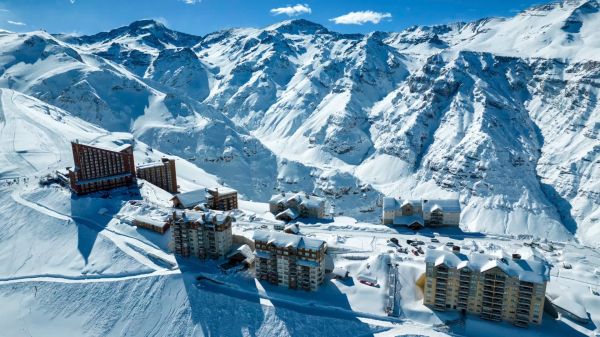
Valle Nevado Extends Season to November 8 After 108 cm in 48 Hours
Winter was meant to be winding down in Chile. Then Valle Nevado took 108 cm in 48 hours in early October, and the resort has pushed its closing date out to November 8 - its latest in 38 years of operation. That makes 143 days of skiing since opening day on June 19, with 690 cm banked for the season. Only part of the mountain is running while the storm settles, so check the mountain report before you plan a trip.
9 Oct 2026
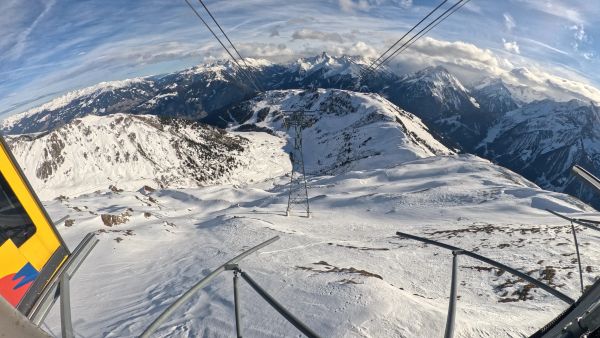
Alps Snow Forecast: Cold Front Brings Thursday Snow to the High Alps
The Alps look a lot more like winter today, for a day or so. A cold front is moving west to east, dropping up to 35 cm on high glaciers and peaks, with snow levels falling to around 1,500-1,800 m at times. Don’t plan a trip around it: mid-elevation snow will be thin and wet, every area is closed bar a limited Sölden glacier opening tomorrow, and warmer weather returns by Monday.
8 Oct 2026
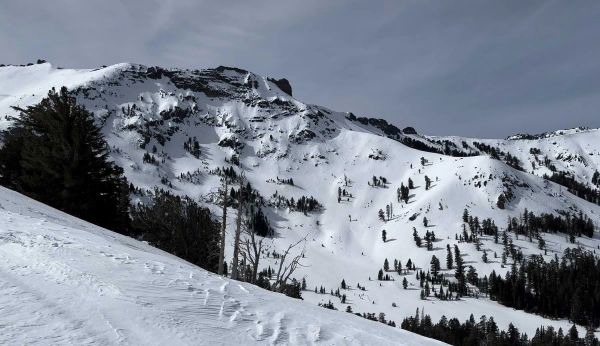
California Ski Resort Opening Dates 2026-27: Mammoth Leads, Tahoe Follows
Mammoth Mountain is first up in California, targeting Friday 13 November after a dusting of September snow. Heavenly and Northstar follow on 20 November, Palisades Tahoe on Wednesday 25 November and Sugar Bowl on 27 November, with Kirkwood on 4 December and June Mountain on 19 December. Plenty of smaller areas have no date yet. A super El Niño favours the Sierra, but a warmer storm track is the catch.
7 Oct 2026
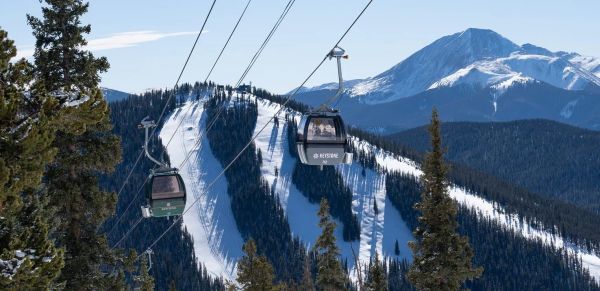
Colorado Ski Resort Opening Dates 2026-27: A-Basin and Keystone Race to Be First
Arapahoe Basin, Keystone and Winter Park are all chasing an October start, though none has a firm date yet. The first dated openers are Breckenridge and Copper on Friday 6 November, then Vail on 13 November, with most of the rest bunched around US Thanksgiving. Hesperus did not open at all last season. A super El Niño offers hope but no guarantee, and forecasters say the southern mountains have the better odds.
5 Oct 2026
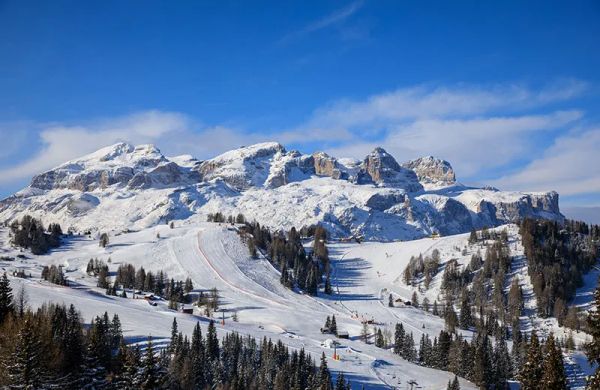
Dolomiti Superski 2026-27: Four New Gondolas, New Reservoirs and an €89 Peak Day Pass
Dolomiti Superski is spending around €100 million across its 12 areas before winter. Kronplatz gets a new 10-passenger gondola with a middle station, 3 Zinnen gets Helmissimo, and Val di Fassa swaps a chairlift for a gondola above Col Valvacin. New water-storage basins and upgraded snowmaking follow, and construction has started on the San Martino to Passo Rolle link. A peak adult day pass is €89.
4 Oct 2026
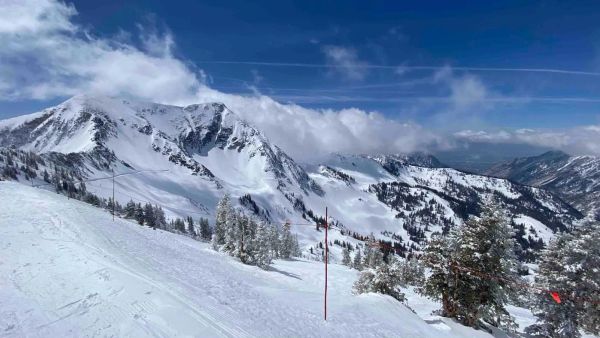
Utah Ski Resort Opening Dates 2026-27: Brian Head First, Eagle Point Out
Brian Head is targeting 6 November, though last year it aimed for 7 November and did not open until the 25th. Park City, Alta and Solitude are pencilled in for 20 November, Snowbird and Snowbasin for 27 November, and Deer Valley for 5 December. Eagle Point will stay closed after the Cottonwood Fire. A super El Niño is forecast, but the big snow is not expected until January.
4 Oct 2026
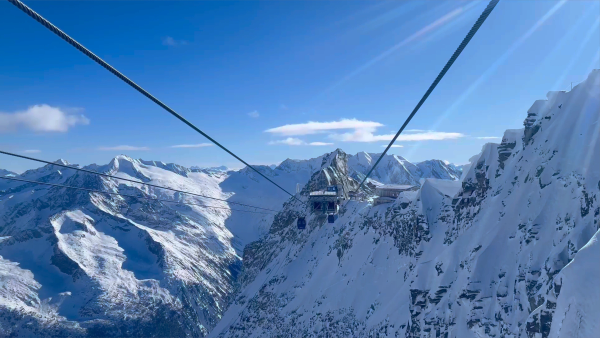
Hintertux Glacier Opens for 2026-27 With 12 Kilometres of Piste
Hintertux became Austria's second glacier to open for 2026-27 on Friday 2 October, after the Pitztal Glacier. Twelve kilometres of piste are running around the Olperer and Gefrorene Wand, served by one gondola and two drag lifts, with the Betterpark also open. Lifts officially run 8:15 am to 4:30 pm, but skiing stops at 2 pm for now.
4 Oct 2026