
Brighton
Salt Lake's favorite night skiing destination. Features 1050 acres of terrain epic powder days extensive terrain parks and perfect learning programs.
Season 2026 - 2027
Opens
4 Dec 2026
Closes
9 May 2027
Days open
156
Annual snow
42ft
The Overview
Michael Fulton
Melbourne-based skier and snowboarder with 50+ resorts across 5 continents. Specialises in Australian resorts and international resort comparisons.
Brighton Resort delivers exceptional skiing and snowboarding across 1,050 acres of diverse terrain at the head of Big Cottonwood Canyon, with elevations ranging from 2,668m base to 3,200m summit. Utah's oldest ski resort combines 66 runs spanning all ability levels with some of the most reliable snowfall in North America, averaging 12.7m annually in one of the snowiest microclimates on the continent. The resort's claim to fame extends beyond daytime operations, offering over 200 acres of illuminated terrain across 32 runs six nights weekly, making Brighton the only Salt Lake area resort with extensive night skiing.
Brighton's authentic, welcoming atmosphere attracts everyone from first-time learners to expert cliff-huckers, earning consistent recognition from locals for best value and family-friendly terrain. The resort's historical significance as the first Utah ski area, established in 1936, blends seamlessly with modern lift infrastructure including the Crest Express, currently Utah's fastest chairlift. Five terrain parks cater to freestyle progression, whilst natural features including bowls, chutes, and extensive tree skiing provide endless exploration opportunities across two main zones.
The resort's straightforward layout and accessible pricing structure keep the focus squarely on quality skiing rather than resort frills. Children aged six and under ski free with paying adults, whilst direct connections to neighbouring Solitude Resort via the SolBright pass expand terrain options for multi-resort adventures in the legendary Cottonwood Canyons.
1,745ft
Vertical
66
Runs
1,050 acres
Skiable
42ft
Annual snow
Ikon
Pass
The Terrain
66 runs across 1,050 acres skiable
Brighton Resort sits at the head of Big Cottonwood Canyon in Utah's Wasatch Range, with 1,050 acres (425 hectares) of terrain and 66 runs. The base is at 8,750 ft (2,668 m) and the summit at 10,500 ft (3,200 m), giving 1,750 ft (532 m) of vertical. The difficulty split is 21% beginner, 39% intermediate, 25% advanced and 15% expert, a rounded spread with a strong intermediate core. Seven lifts serve the mountain, including Crest 6 Express, Utah's fastest chairlift, and three high-speed quads. Brighton also runs one of the largest night skiing programmes in the western United States, with lights over more than 200 acres.
The Majestic and Explorer lifts serve the beginner zones, while the Millicent, Great Western and Snake Creek lifts open progressively harder intermediate and advanced runs, and Crest 6 Express reaches the upper mountain quickly. Night skiing runs from 4pm to 9pm, Monday to Saturday, on four lifts: Explorer, Majestic, Crest Express and Snake Creek Express. That makes Brighton a practical choice for after-work laps as well as full days. Brighton suits families, learners and keen intermediates, plus anyone wanting a session under lights. Neighbouring Solitude shares the SolBright pass, and the SolBright run loops from the top of Summit down to the Sunrise lift to link the two mountains.
Terrain split
66
runs
66 runs across 4 grades
Beginner14 runs · 21%
Intermediate26 runs · 39%
Advanced17 runs · 25%
Expert10 runs · 15%
Time it right
When to visit Brighton
Brighton typically operates from mid-November through mid-April, with the most consistent conditions occurring January through March when the Cottonwood Funnel microclimate delivers its legendary snowfall. The resort's elevated position between 2,668m and 3,200m combined with predominantly north-facing aspects creates exceptional snow preservation throughout the season, often maintaining quality conditions when lower-elevation resorts struggle. The 12.7m average annual snowfall frequently exceeds 500 inches in exceptional years, occasionally surpassing 700 inches during particularly active storm cycles.
Early season openings become possible through the resort's high base elevation and reliable pre-Christmas snowfall, whilst spring skiing extends well into April with excellent corn snow developing on sunny afternoons. The microclimate's position at the head of Big Cottonwood Canyon intercepts westerly storm flow efficiently, with the Wasatch Range forcing moisture-laden air upward where it condenses and deposits exceptionally dry, light powder across Brighton's varied terrain.
Night skiing operations run six nights weekly from mid-December through mid-March, offering extended riding opportunities under lights during the season's core months. The resort's snow quality benefits from Utah's famously low-density powder, creating forgiving conditions for progression whilst delivering the deep, consistent coverage that attracts powder seekers to the Cottonwood Canyons. Clear, sunny days provide spectacular alpine vistas whilst maintaining excellent snow quality on shaded aspects throughout winter.
Season 2026 - 2027
4 Dec 2026
Opens
9 May 2027
Closes
156
Days open
42 ft
Annual snow
Getting there
Getting to Brighton, and where to stay
Located at the top of Big Cottonwood Canyon approximately 58km southeast of downtown Salt Lake City, Brighton sits just 56km from Salt Lake City International Airport with drive times averaging 45-50 minutes under normal conditions. The resort's position in the Wasatch Range places it amongst North America's most accessible alpine skiing destinations, with the scenic Highway 190 canyon approach providing a straightforward route from the Salt Lake valley floor. Brighton's proximity to metropolitan Salt Lake creates convenient access to diverse accommodation options in surrounding communities including Cottonwood Heights, Sandy, and Midvale.
The resort shares Big Cottonwood Canyon with neighbouring Solitude Mountain Resort located just 3km away, with interconnecting terrain and combined SolBright passes allowing skiers to experience both mountains during single visits. This strategic canyon position creates a powder haven where orographic lift generates substantially higher snowfall than the valley below, whilst maintaining remarkably short transfer times from major transport hubs. Free UTA ski bus services connect downtown Salt Lake and park-and-ride facilities directly to the resort throughout winter, providing economical transport alternatives.
Brighton's location within the Wasatch-Cache National Forest surrounds visitors with pristine alpine scenery and direct backcountry access gates for adventurous skiers seeking terrain beyond the resort boundary. The canyon's year-round recreation opportunities extend Brighton's appeal beyond winter months, with lift-assisted mountain biking and disc golf available during summer. Weekend parking reservations become essential during peak periods, though the robust public transport network and carpool options provide practical alternatives to private vehicle access up the canyon.
Where to stay
Search all stays →Hotels and lodges near Brighton, powered by Stay22.
Latest News
From the SnowStash desk
Alps Snow Forecast: Up to 64 cm Headed for the High Glaciers as the Snow Line Drops
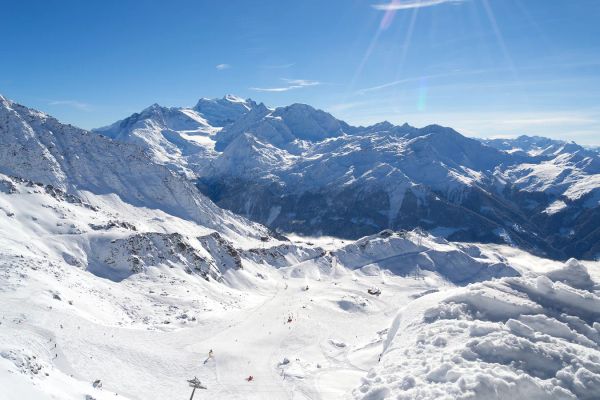
The Alps are about to swap mild, sunny October weather for something far more wintry. A cold front arrives Tuesday, and SnowStash forecasts have Monterosa Ski out in front with 64 cm over 14 days, ahead of Blatten Belalp (55 cm) and Verbier (43 cm). The snow line should fall below 2000 metres by Wednesday night, and glaciers across Switzerland, Italy and Austria are in line for the best of it. The wind will have a say too.
20 Oct 2026
Four Dead After Avalanche Near Ski Portillo in Chile
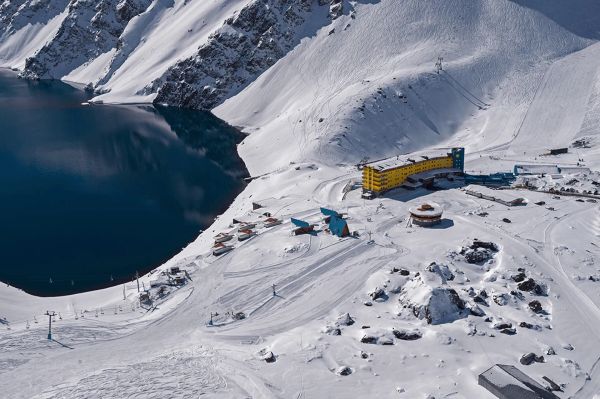
A large avalanche struck near Laguna del Inca adjacent to Ski Portillo on Saturday afternoon, killing four people and injuring four others. The group were day visitors mountaineering in the backcountry after reportedly being warned about elevated avalanche risk by resort staff.
18 Oct 2026

Europe Ski Resorts Open Now: What Is Skiable in Mid-October 2026
Europe’s ski season is open, technically. After a record-warm summer, glaciers in Austria, Switzerland and Italy are running a few pistes apiece, Sölden, Stubai and Kitzsteinhorn started late, Titlis has pushed back to 24 October, and Zermatt reopens a few lifts on 14 October after more than two months shut. Finland’s Levi and Ruka are skiing on stored snow. Here is what is open, and what you actually get at each.
14 Oct 2026

Zermatt Plans World Cup Downhill Return on the Gornergrat for 2028
Zermatt is having another crack at a World Cup downhill, and this time nobody has to cross a border. Around 13 million Swiss francs is going into rebuilding the Gornergrat piste, including a jump fed by a roughly 300-metre in-run across the roof of the Gornergrat Railway gallery, with the Matterhorn lined up behind it for the TV cameras. First men’s race is pencilled in for March 2028, pending FIS homologation.
14 Oct 2026

Mt. Rose Begins Snowmaking for the 2026-27 Season at Lake Tahoe
Lake Tahoe’s highest base elevation is paying off early: Mt. Rose has started making snow for 2026-27 after the first flurries and a cold snap. The Nevada resort is backing it with nearly US$2 million in upgrades, including a replacement snowmaking main line, a new PistenBully groomer and restraint bars on every lift. Opening day is yet to be confirmed, though Heavenly and Northstar are already eyeing 20 November.
13 Oct 2026

Utah Ski Resorts 2026-27: What’s New at Alta, Deer Valley, Powder Mountain and More
Utah is still building flat out. For 2026-27, Powder Mountain opens a steep new Skytrac chair into more than 1,000 acres of advanced terrain, Deer Valley adds 200 acres on Hail Peak, Sundance gets a new quad and Park City adds a gondola from its new parking structure. Snowmaking is expanding almost everywhere, Eagle Point stays closed after the Cottonwood Fire, and the 2034 Games are setting the pace. Here’s what’s new, resort by resort.
13 Oct 2026

Mt Hutt Invests NZ$12 Million in Base Area, Tripling Its Sun Deck
Mt Hutt is getting busier, and its base lodge is about to catch up. NZ$12 million goes into a heated sun deck roughly three times the current size (430 m² to 1,300 m²), plus a new toilet block, heated steps down to snow level, extra storage and a new food and beverage outlet. Building starts after the 2026 season, with everything due for winter 2027.
11 Oct 2026

Vermont Ski Resort Opening Dates 2026-27: Few Dates Set, Killington Waits on the Cold
Vermont's season is slow to take shape. Stratton is tentatively targeting 18 November and Sugarbush 21 November, while Pico has Friday 11 December on the calendar. Killington never sets a date and opens when the snowmaking allows, and Vail Resorts has yet to name days for Stowe, Okemo and Mount Snow. The forecasts disagree about snow, and the main El Niño worry for the Green Mountains is warmth.
9 Oct 2026