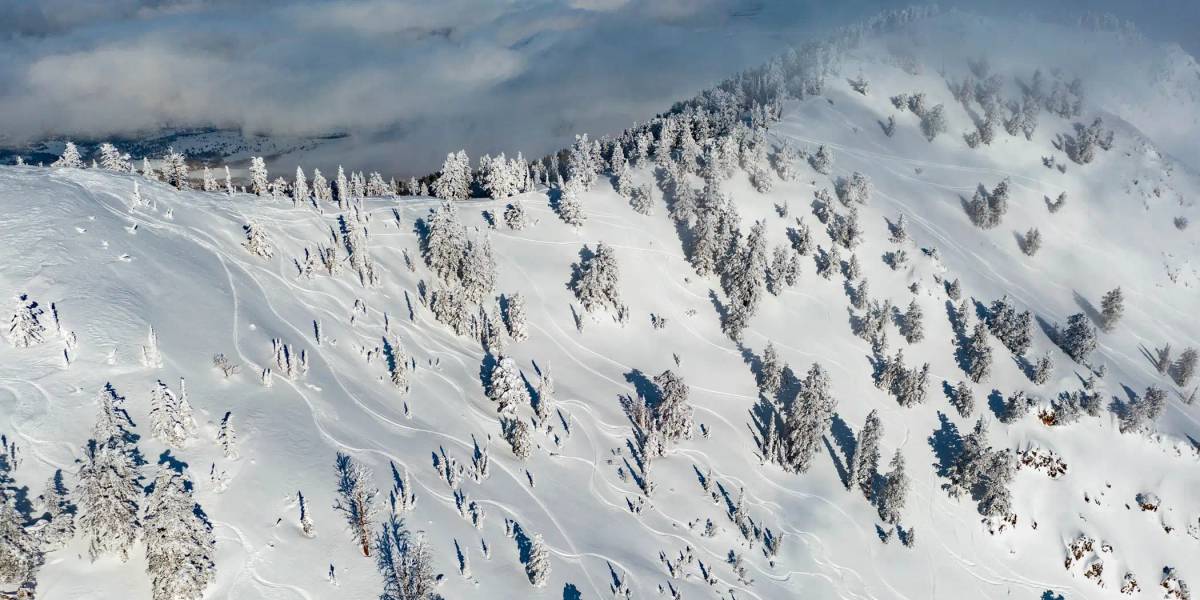
Powder Mountain
8,464 acres, 500 inches annual snowfall, uncrowded skiing in Utah's northern Wasatch. Indy Pass included.

Season 2026 - 2027
Opens
11 Dec 2026
Closes
11 Apr 2027
Days open
121
Annual snow
274in
The Overview
Michael Fulton
Melbourne-based skier and snowboarder with 50+ resorts across 5 continents. Specialises in Australian resorts and international resort comparisons.
Powder Mountain spans 8,464 acres across Weber and Cache counties in the Wasatch Range, claiming the title of North America's largest ski area by acreage. The resort operates between 2,103 metres base and 2,872 metres summit, delivering 769 metres of vertical drop across 154 runs split 25 per cent beginner, 40 per cent intermediate, 30 per cent advanced, and 5 per cent expert. Annual snowfall averages 500 inches, with the resort receiving 12.7 metres during a typical season.
The terrain includes 3,000 acres of lift-served skiing alongside additional acreage accessed via snowcat rides, shuttle buses, and guided tours into zones like Lightning Ridge and Powder Country. Nine lifts serve the public mountain, including five quad chairs, one triple chair, and three surface lifts. The 2025-26 season runs from 6 December to 29 March. Powder Mountain ranked number one in Ski Magazine's Top 30 Resorts in the West in 2023.
The resort caps daily ticket sales to maintain low skier density, averaging one skier per acre on busy days compared to 14 or more at major resorts. Three base areas—Timberline, Hidden Lake, and Sundown—offer lodges, rentals, and dining, with night skiing available at Sundown until 9pm. On-mountain facilities include the Powder Keg bar, Hidden Lake Cantina, and Timberline Cafeteria, plus two terrain parks reinstated for the 2024-25 season.
Powder Mountain operates on the Indy Pass with two-day access included, whilst adult day tickets range from 109 to 219 US dollars depending on dates. Netflix co-founder Reed Hastings assumed ownership in 2023, introducing a blended public-private model with some terrain reserved for the Powder Haven homeowner community. The uncrowded atmosphere, affordable cat skiing from 25 US dollars per ride, and massive acreage suit powder hunters, families, and intermediate skiers seeking space.
2,523ft
Vertical
154
Runs
8,464 acres
Skiable
274in
Annual snow
Indy
Pass
The Terrain
154 runs across 8,464 acres skiable
Powder Mountain markets itself as the largest ski area in the United States by acreage, with 8,464 acres (3,425 hectares) of lift, snowcat and shuttle-served terrain in the Wasatch Range above Eden, Utah. The 154 runs drop from a 6,900 ft (2,103 m) base to a 9,420 ft (2,872 m) summit, a vertical of 2,520 ft (769 m). Trails split 25% beginner, 40% intermediate, 30% advanced and 5% expert, so the mountain is mostly friendly, with plenty of room to stretch out. Daily ticket sales are capped, which keeps skier density low even on busy weekends.
Timberline, Hidden Lake and Sundown are the three base areas. Powder Country and Woody's World are off-piste zones, with about 1,200 acres reached from the Sundown, Timberline and Hidden Lake lifts and a free shuttle bus returning skiers to the bases. Single-ride snowcat trips to Lightning Ridge deposit skiers at roughly 8,500 ft for runs through Weber Bowl, an expert-rated bowl, as well as Cache Bowl and advanced chutes. Night skiing runs at Sundown until 9pm. Powder Mountain suits powder hunters, families and intermediates who want space to roam, although the shuttle logistics reward visitors who plan their day around where they want to finish.
Terrain split
154
runs
154 runs across 4 grades
Beginner39 runs · 25%
Intermediate62 runs · 40%
Advanced46 runs · 30%
Expert8 runs · 5%
Time it right
When to visit Powder Mountain
The 2025-26 season opened 6 December 2025 and closed 29 March 2026, delivering a typical 16-week operating window. Powder Mountain historically opens mid-December and operates through late March or early April depending on snowpack. The resort's 2,103-metre base elevation sits lower than Salt Lake resorts like Snowbird at 2,469 metres, creating more variable conditions but also capturing unique storm patterns.
Powder Mountain averages 500 inches of annual snowfall—12.7 metres—benefiting from a northern Wasatch microclimate that often receives snow when other Utah resorts miss storms. The 2025-26 season recorded 342.9 centimetres through mid-May 2026. Base depths typically range from 100 to 150 centimetres mid-season. The resort operates no snowmaking, relying entirely on natural accumulation across its 8,464 acres.
January through February delivers peak powder conditions, with the highest monthly totals historically arriving in February at 57 inches followed by March at 52 inches. December and early January see lighter accumulation averaging 23 and 40 inches respectively. Spring skiing extends through March with warming temperatures and corn snow developing on south-facing aspects. The resort's northern location means storm cycles can arrive later in the season compared to central Wasatch resorts.
Night skiing operates daily from 4pm to 9pm on the Sundown lift for 19 US dollars. The resort hosts Natural Selection Tour events in February, drawing freeride athletes to its steep terrain. Four passholder-only weekends in February provide exclusive access to season pass holders. The resort's uncrowded policy means powder can remain untracked for days after storms, particularly in the expansive Lightning Ridge and Powder Country zones.
Season 2026 - 2027
11 Dec 2026
Opens
11 Apr 2027
Closes
121
Days open
274 in
Annual snow
The record
Historical snowfall at Powder Mountain
Daily snow reports at Powder Mountain go back to 2010, 17 winters on the books. Open the record to compare winters, lifts and piste.
32 in
Snowiest day
23 Jan 2017
0 in
This winter · 2026-27
so far
253 in
Typical winter
average of complete seasons
Winter totals
in
Past wintersThis winter
Getting there
Getting to Powder Mountain, and where to stay
Powder Mountain sits east of Eden, Utah, in the northern Wasatch Range where Weber and Cache counties meet. The resort spans elevations from 6,900 to 9,422 feet across ridges overlooking Ogden Valley to the west and the Great Salt Lake beyond. James Peak marks the summit at 2,872 metres. Eden village lies 10 kilometres west at the valley floor, whilst the resort's three base lodges occupy mid-mountain elevations around 2,500 metres.
The resort operates 88 kilometres northeast of Salt Lake City and 40 kilometres from Ogden, Utah's seventh-largest city. Ogden serves as the primary service town with a population of 87,000, offering hotels, dining, and historic railroad attractions along 25th Street. Huntsville sits 16 kilometres south of Eden in Ogden Valley. The area was established in 1972 by Alvin Cobabe on ranchland his father acquired starting in 1902 for sheep grazing.
Access follows State Route 158 through Ogden Canyon from Interstate 15, climbing east into Ogden Valley before ascending Powder Mountain Road to the resort. The drive from Ogden takes 40 minutes, whilst Salt Lake City lies 75 minutes south via I-15. The winding mountain road gains over 1,000 metres elevation from the valley floor. Parking operates on a first-come basis at Timberline, Hidden Lake, and Sundown lodges, with weekend paid parking until 1pm.
Salt Lake City International Airport sits 89 kilometres south, providing the primary air gateway with direct flights from major US and international cities. The airport-to-resort transfer takes approximately one hour by car. Ogden-Hinckley Airport lies 30 kilometres west but serves limited commercial traffic. No direct shuttle services operate, making rental cars the standard transfer option. Utah Transit Authority buses connect Ogden to Eden with the 674 route, though services remain infrequent for resort access.
Where to stay
Search all stays →Stays map loads when you scroll here
Hotels and lodges near Powder Mountain, powered by Stay22.
Latest News
From the SnowStash desk
Val Gardena to Alpe di Siusi Lift Link Back in Play After Court Ruling
The Val Gardena-Alpe di Siusi lift link isn’t dead after all. A South Tyrol court has overturned Santa Cristina’s rejection of the new Monte Pana-Saltria link on procedural grounds, after the council skipped required public information sessions. Opponents want the missing sessions held and a fresh vote, and nothing has been approved. For now it’s still a bus between the two, but a plan first floated in 2017 is back in the conversation.
8 Nov 2026
Whistler Blackcomb Rockslide Zone Stays Closed Through 2026-27 Season
A section of Whistler Peak terrain will stay closed all 2026-27 season, Vail Resorts has confirmed, with rockslide mitigation work continuing into summer 2027. Peak Express is still expected to run this winter, but locals are already arguing about what’s actually off limits, whether the Whistler Bowl is gone, and why the news landed after pass sales wound down. Here’s where things stand.
7 Nov 2026
Loveland Ski Area Opens for 2026-27 and Marks 60 Years of Snowmaking
Loveland is open. The Colorado ski area started Chet’s Dream turning on Saturday 7 November to kick off 2026-27, with $60 adult lift tickets to mark 60 years of snowmaking. Expect three runs, nearly 1,000 vertical feet (about 300 metres) of top-to-bottom skiing, live music on the Basin Patio and no beginner terrain yet. Here’s what’s open, what it costs and when Loveland Valley follows.
7 Nov 2026
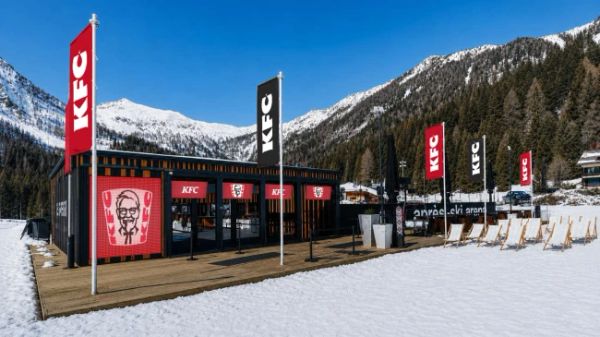
KFC Is Coming to the Slopes at Cortina and Madonna di Campiglio
Fried chicken is heading up the Dolomites. From 5 December KFC will run two restaurants on the slopes - one at 2,123 metres at Cortina, one at 1,700 metres at Madonna di Campiglio - and the polenta-and-canederli crowd has opinions. Local politicians, conservation groups and plenty of Facebook commenters are calling it a step too far, while others just want a cheaper lunch. Here’s what’s on the menu and what’s the fuss.
5 Nov 2026
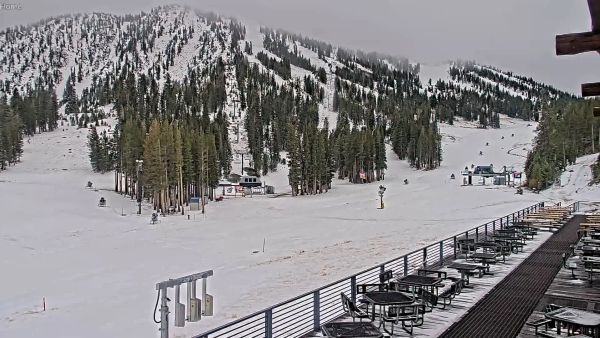
Mt Rose Aims to Open First in Tahoe on November 6
Mt Rose is going for the first-in-Tahoe title, with the Lakeview Express due to spin at 9 a.m. on Friday, November 6. One main lift, three runs and plenty of snowmaking, sitting on the highest base elevation in the region at 8,260 ft. Here is what is open, what is not (sorry, tubing fans), and how the early North American openings are stacking up.
4 Nov 2026
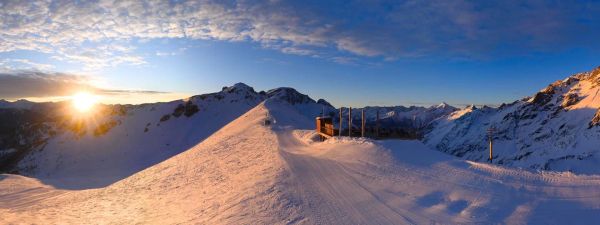
Europe Snow Forecast: Serre Chevalier Leads With 82 cm Over the Next 10 Days
Europe has had a quiet start to November, but our 10-day forecast has Serre Chevalier on 82 cm and Les 2 Alpes on 71 cm. Two pushes are lined up: a western Alps top-up from Friday, then a bigger, wider system on Thursday, November 12 and Friday, November 13 that reaches Italy and Switzerland. Full leaderboard inside.
4 Nov 2026
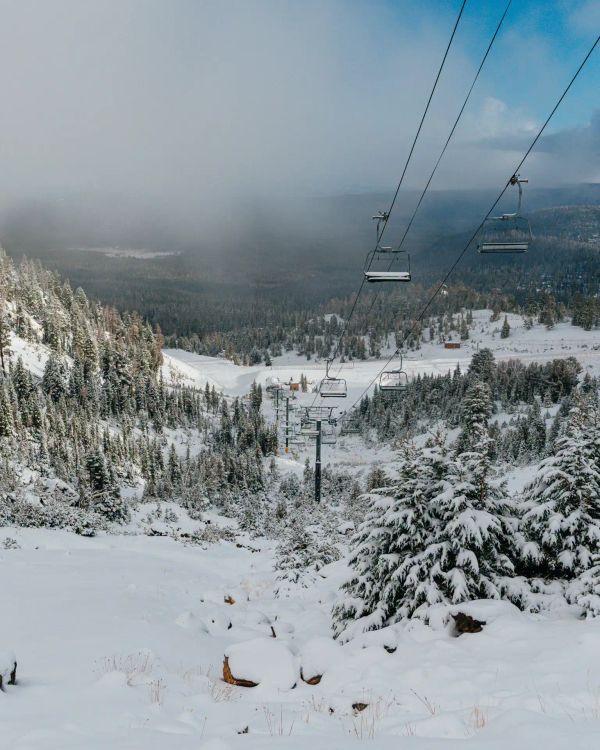
Mammoth Mountain Opens Early on November 5 With Up to 33 Inches of Snow in the Forecast
Mammoth just moved opening day forward to Thursday, November 5, eight days ahead of schedule. A snowy weekend and cold snowmaking nights did the work, and our forecast shows up to 33 inches more landing on November 13 and 14. Here is what opens, what the weather looks like and where Mammoth sits among the early Ikon Pass openers.
3 Nov 2026

Utah Snow Storm Builds Early-Season Base Ahead of November Openings
Rain down low, snow up high, and a snow report full of zeros that mostly means ‘not updated yet’. Utah’s first proper storm of 2026-27 is rolling through the Wasatch, Snowbird’s snow stake is closing in on 10 inches, and Brian Head is five days from opening day. Early November snow rarely looks like much, but it is the layer every November opening date is built on. Here is where it stands.
1 Nov 2026
Powder Mountain Lift System
Powder Mountain operates nine lifts across its public terrain, comprising five quad chairlifts, one triple chair, and three surface lifts including t-bars and a platter tow. The lift fleet prioritises terrain access over speed, with only one high-speed detachable quad. Total uphill capacity remains modest by design to preserve the resort's uncrowded character.
Hidden Lake Express anchors the system as a high-speed quad covering 1,268 feet of vertical in seven minutes, serving as the central hub for accessing multiple terrain pods. The Paradise quad, upgraded to high-speed for 2024-25, reduced ride times from 16 to seven minutes and provides the primary route back after full descents. Lightning Ridge and Timberline fixed-grip quads access advanced terrain and connect the Sundown base to upper mountain zones, whilst the Sundown lift operates until 9pm for night skiing.
Base-to-summit access flows through multiple routes, with skiers driving to mid-mountain parking at Timberline or Hidden Lake lodges at 2,500 metres elevation. Free shuttle buses connect Powder Country and Woody's World zones—1,200 acres of off-piste terrain—back to base areas. Single-ride snowcat access to Lightning Ridge costs 25 US dollars, depositing skiers at 2,600 metres for runs through Weber Bowl, Cache Bowl, and advanced chutes.
The resort invested 20 million US dollars in lift infrastructure for 2024-25, installing four new chairlifts including the Lightning Ridge quad that replaced snowcat-only terrain. A planned 40 million US dollar expansion will add the DMI triple chair for 2026-27, unlocking 1,000 acres of expert terrain in Wolf Creek Canyon. The existing Sundown lift will be replaced with a high-speed quad, improving access and reliability from the western base area.
9lifts across 3 types
5
Quad Chairs
1
Triple Chair
3
T-Bars
Powder Mountain lift system
Powder Mountain is served by 9 lifts, listed here by type. Check which lifts are turning against the live conditions before you plan your first laps - early lifts and high-speed chairs get you to the best snow fastest.
More Powder Mountain intelligence: trail map, snow report, webcams, resort overview.