
The Overview
Michael Fulton
Melbourne-based skier and snowboarder with 50+ resorts across 5 continents. Specialises in Australian resorts and international resort comparisons.
Powder Mountain spans 8,464 acres across Weber and Cache counties in the Wasatch Range, claiming the title of North America's largest ski area by acreage. The resort operates between 2,103 metres base and 2,872 metres summit, delivering 769 metres of vertical drop across 154 runs split 25 per cent beginner, 40 per cent intermediate, 30 per cent advanced, and 5 per cent expert. Annual snowfall averages 500 inches, with the resort receiving 12.7 metres during a typical season.
The terrain includes 3,000 acres of lift-served skiing alongside additional acreage accessed via snowcat rides, shuttle buses, and guided tours into zones like Lightning Ridge and Powder Country. Nine lifts serve the public mountain, including five quad chairs, one triple chair, and three surface lifts. The 2025-26 season runs from 6 December to 29 March. Powder Mountain ranked number one in Ski Magazine's Top 30 Resorts in the West in 2023.
The resort caps daily ticket sales to maintain low skier density, averaging one skier per acre on busy days compared to 14 or more at major resorts. Three base areas—Timberline, Hidden Lake, and Sundown—offer lodges, rentals, and dining, with night skiing available at Sundown until 9pm. On-mountain facilities include the Powder Keg bar, Hidden Lake Cantina, and Timberline Cafeteria, plus two terrain parks reinstated for the 2024-25 season.
Powder Mountain operates on the Indy Pass with two-day access included, whilst adult day tickets range from 109 to 219 US dollars depending on dates. Netflix co-founder Reed Hastings assumed ownership in 2023, introducing a blended public-private model with some terrain reserved for the Powder Haven homeowner community. The uncrowded atmosphere, affordable cat skiing from 25 US dollars per ride, and massive acreage suit powder hunters, families, and intermediate skiers seeking space.
2,523ft
Vertical
154
Runs
8,464 acres
Skiable
42ft
Annual snow
Indy
Pass
The Terrain
154 runs across 8,464 acres skiable
Powder Mountain markets itself as the largest ski area in the United States by acreage, with 8,464 acres (3,425 hectares) of lift, snowcat and shuttle-served terrain in the Wasatch Range above Eden, Utah. The 154 runs drop from a 6,900 ft (2,103 m) base to a 9,420 ft (2,872 m) summit, a vertical of 2,520 ft (769 m). Trails split 25% beginner, 40% intermediate, 30% advanced and 5% expert, so the mountain is mostly friendly, with plenty of room to stretch out. Daily ticket sales are capped, which keeps skier density low even on busy weekends.
Timberline, Hidden Lake and Sundown are the three base areas. Powder Country and Woody's World are off-piste zones, with about 1,200 acres reached from the Sundown, Timberline and Hidden Lake lifts and a free shuttle bus returning skiers to the bases. Single-ride snowcat trips to Lightning Ridge deposit skiers at roughly 8,500 ft for runs through Weber Bowl, an expert-rated bowl, as well as Cache Bowl and advanced chutes. Night skiing runs at Sundown until 9pm. Powder Mountain suits powder hunters, families and intermediates who want space to roam, although the shuttle logistics reward visitors who plan their day around where they want to finish.
Terrain split
154
runs
154 runs across 4 grades
Beginner39 runs · 25%
Intermediate62 runs · 40%
Advanced46 runs · 30%
Expert8 runs · 5%
Time it right
When to visit Powder Mountain
The 2025-26 season opened 6 December 2025 and closed 29 March 2026, delivering a typical 16-week operating window. Powder Mountain historically opens mid-December and operates through late March or early April depending on snowpack. The resort's 2,103-metre base elevation sits lower than Salt Lake resorts like Snowbird at 2,469 metres, creating more variable conditions but also capturing unique storm patterns.
Powder Mountain averages 500 inches of annual snowfall—12.7 metres—benefiting from a northern Wasatch microclimate that often receives snow when other Utah resorts miss storms. The 2025-26 season recorded 342.9 centimetres through mid-May 2026. Base depths typically range from 100 to 150 centimetres mid-season. The resort operates no snowmaking, relying entirely on natural accumulation across its 8,464 acres.
January through February delivers peak powder conditions, with the highest monthly totals historically arriving in February at 57 inches followed by March at 52 inches. December and early January see lighter accumulation averaging 23 and 40 inches respectively. Spring skiing extends through March with warming temperatures and corn snow developing on south-facing aspects. The resort's northern location means storm cycles can arrive later in the season compared to central Wasatch resorts.
Night skiing operates daily from 4pm to 9pm on the Sundown lift for 19 US dollars. The resort hosts Natural Selection Tour events in February, drawing freeride athletes to its steep terrain. Four passholder-only weekends in February provide exclusive access to season pass holders. The resort's uncrowded policy means powder can remain untracked for days after storms, particularly in the expansive Lightning Ridge and Powder Country zones.
Season 2026 - 2027
11 Dec 2026
Opens
11 Apr 2027
Closes
121
Days open
42 ft
Annual snow
Getting there
Getting to Powder Mountain, and where to stay
Powder Mountain sits east of Eden, Utah, in the northern Wasatch Range where Weber and Cache counties meet. The resort spans elevations from 6,900 to 9,422 feet across ridges overlooking Ogden Valley to the west and the Great Salt Lake beyond. James Peak marks the summit at 2,872 metres. Eden village lies 10 kilometres west at the valley floor, whilst the resort's three base lodges occupy mid-mountain elevations around 2,500 metres.
The resort operates 88 kilometres northeast of Salt Lake City and 40 kilometres from Ogden, Utah's seventh-largest city. Ogden serves as the primary service town with a population of 87,000, offering hotels, dining, and historic railroad attractions along 25th Street. Huntsville sits 16 kilometres south of Eden in Ogden Valley. The area was established in 1972 by Alvin Cobabe on ranchland his father acquired starting in 1902 for sheep grazing.
Access follows State Route 158 through Ogden Canyon from Interstate 15, climbing east into Ogden Valley before ascending Powder Mountain Road to the resort. The drive from Ogden takes 40 minutes, whilst Salt Lake City lies 75 minutes south via I-15. The winding mountain road gains over 1,000 metres elevation from the valley floor. Parking operates on a first-come basis at Timberline, Hidden Lake, and Sundown lodges, with weekend paid parking until 1pm.
Salt Lake City International Airport sits 89 kilometres south, providing the primary air gateway with direct flights from major US and international cities. The airport-to-resort transfer takes approximately one hour by car. Ogden-Hinckley Airport lies 30 kilometres west but serves limited commercial traffic. No direct shuttle services operate, making rental cars the standard transfer option. Utah Transit Authority buses connect Ogden to Eden with the 674 route, though services remain infrequent for resort access.
Where to stay
Search all stays →Hotels and lodges near Powder Mountain, powered by Stay22.
Latest News
From the SnowStash desk

Vermont Ski Resort Opening Dates 2026-27: Few Dates Set, Killington Waits on the Cold
Vermont's season is slow to take shape. Stratton is tentatively targeting 18 November and Sugarbush 21 November, while Pico has Friday 11 December on the calendar. Killington never sets a date and opens when the snowmaking allows, and Vail Resorts has yet to name days for Stowe, Okemo and Mount Snow. The forecasts disagree about snow, and the main El Niño worry for the Green Mountains is warmth.
9 Oct 2026

Crans-Montana 2027 World Championships President Resigns Ahead of Fraud Hearing
Less than four months out from the Crans-Montana 2027 World Championships, the man running the organising committee has stepped down. Claude-Alain Schmidhalter resigned as Swiss-Ski vice president and OC president after being indicted over a business dispute unrelated to skiing. He denies the allegations and faces court on October 27. Interim leaders are in place for the February 1-14 event.
9 Oct 2026

Kelly Canyon, Idaho, Adds Snowmaking, a Bigger Terrain Park and More Parking for 2026-27
Kelly Canyon had a rough 2025-26, and the Idaho resort has spent the summer making sure it doesn’t repeat. Snowmaking now reaches the top of Goldrush, the terrain park is doubling in size with a stereo system, lights and a snack shack, and the car park is getting bigger. Grooming is stepping up too. Target opening is December 4, conditions permitting.
9 Oct 2026
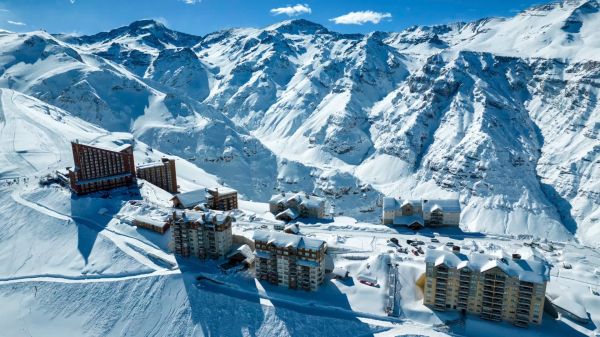
Valle Nevado Extends Season to November 8 After 108 cm in 48 Hours
Winter was meant to be winding down in Chile. Then Valle Nevado took 108 cm in 48 hours in early October, and the resort has pushed its closing date out to November 8 - its latest in 38 years of operation. That makes 143 days of skiing since opening day on June 19, with 690 cm banked for the season. Only part of the mountain is running while the storm settles, so check the mountain report before you plan a trip.
9 Oct 2026
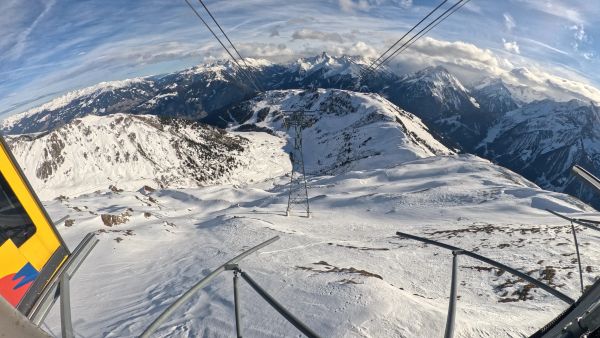
Alps Snow Forecast: Cold Front Brings Thursday Snow to the High Alps
The Alps look a lot more like winter today, for a day or so. A cold front is moving west to east, dropping up to 35 cm on high glaciers and peaks, with snow levels falling to around 1,500-1,800 m at times. Don’t plan a trip around it: mid-elevation snow will be thin and wet, every area is closed bar a limited Sölden glacier opening tomorrow, and warmer weather returns by Monday.
8 Oct 2026
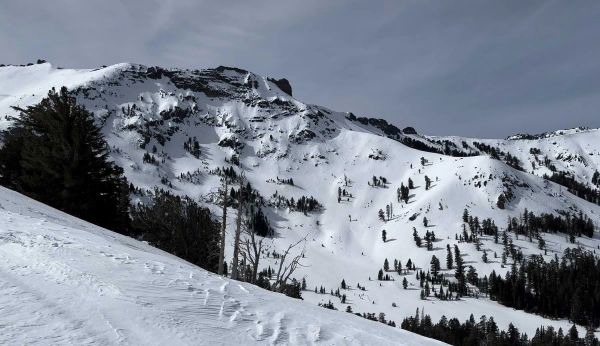
California Ski Resort Opening Dates 2026-27: Mammoth Leads, Tahoe Follows
Mammoth Mountain is first up in California, targeting Friday 13 November after a dusting of September snow. Heavenly and Northstar follow on 20 November, Palisades Tahoe on Wednesday 25 November and Sugar Bowl on 27 November, with Kirkwood on 4 December and June Mountain on 19 December. Plenty of smaller areas have no date yet. A super El Niño favours the Sierra, but a warmer storm track is the catch.
7 Oct 2026
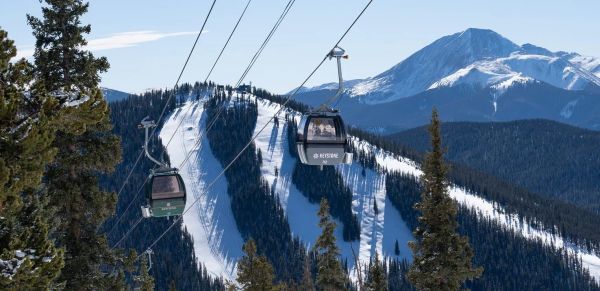
Colorado Ski Resort Opening Dates 2026-27: A-Basin and Keystone Race to Be First
Arapahoe Basin, Keystone and Winter Park are all chasing an October start, though none has a firm date yet. The first dated openers are Breckenridge and Copper on Friday 6 November, then Vail on 13 November, with most of the rest bunched around US Thanksgiving. Hesperus did not open at all last season. A super El Niño offers hope but no guarantee, and forecasters say the southern mountains have the better odds.
5 Oct 2026
Dolomiti Superski 2026-27: Four New Gondolas, New Reservoirs and an €89 Peak Day Pass
Dolomiti Superski is spending around €100 million across its 12 areas before winter. Kronplatz gets a new 10-passenger gondola with a middle station, 3 Zinnen gets Helmissimo, and Val di Fassa swaps a chairlift for a gondola above Col Valvacin. New water-storage basins and upgraded snowmaking follow, and construction has started on the San Martino to Passo Rolle link. A peak adult day pass is €89.
4 Oct 2026
Powder Mountain Trail Map
Downloadable Powder Mountain trail map
Terrain split
154
runs
Beginner25%
Intermediate40%
Advanced30%
Expert5%
8,464 acres skiable3,425 hectares
Resort Stats
Elevation
Base6,900ft
Summit9,423ft
Annual snowfall
42ft
Season
2026 - 2027
11 Dec 2026 - 11 Apr 2027
Trail coverage
154 runs
8,464 acres (3,425 ha)
About Powder Mountain's trail map
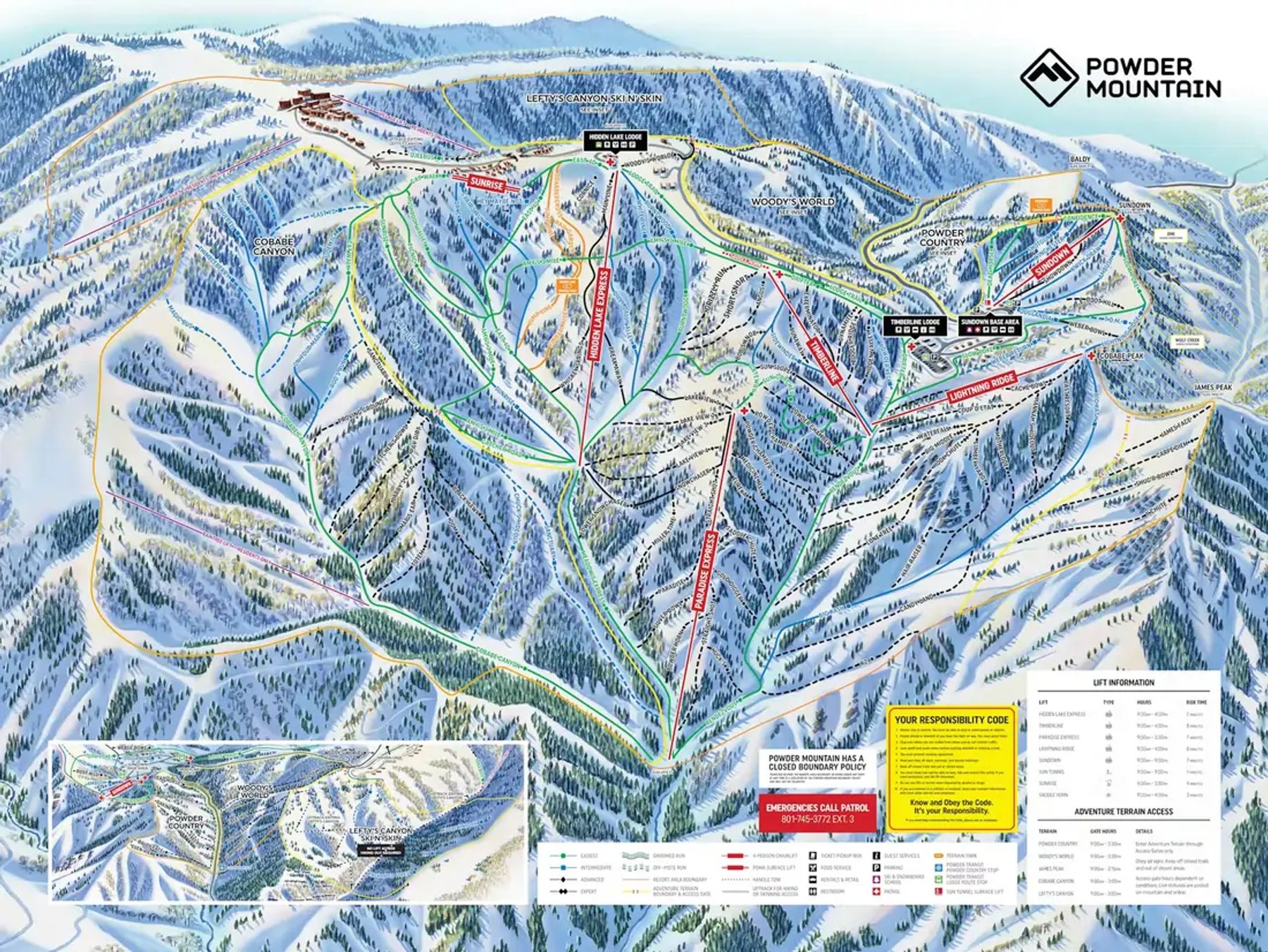
Explore Powder Mountain's full trail map with 154 runs across the mountain, colour-coded by difficulty and shown alongside the terrain split. Use it to plan a day that matches your ability, find lift-served pockets of your favourite grade, and see how the resort links together. Download the piste map (PDF) ↗
More Powder Mountain intelligence: snow report, lift system, webcams, resort overview.