The Overview
Michael Fulton
Melbourne-based skier and snowboarder with 50+ resorts across 5 continents. Specialises in Australian resorts and international resort comparisons.
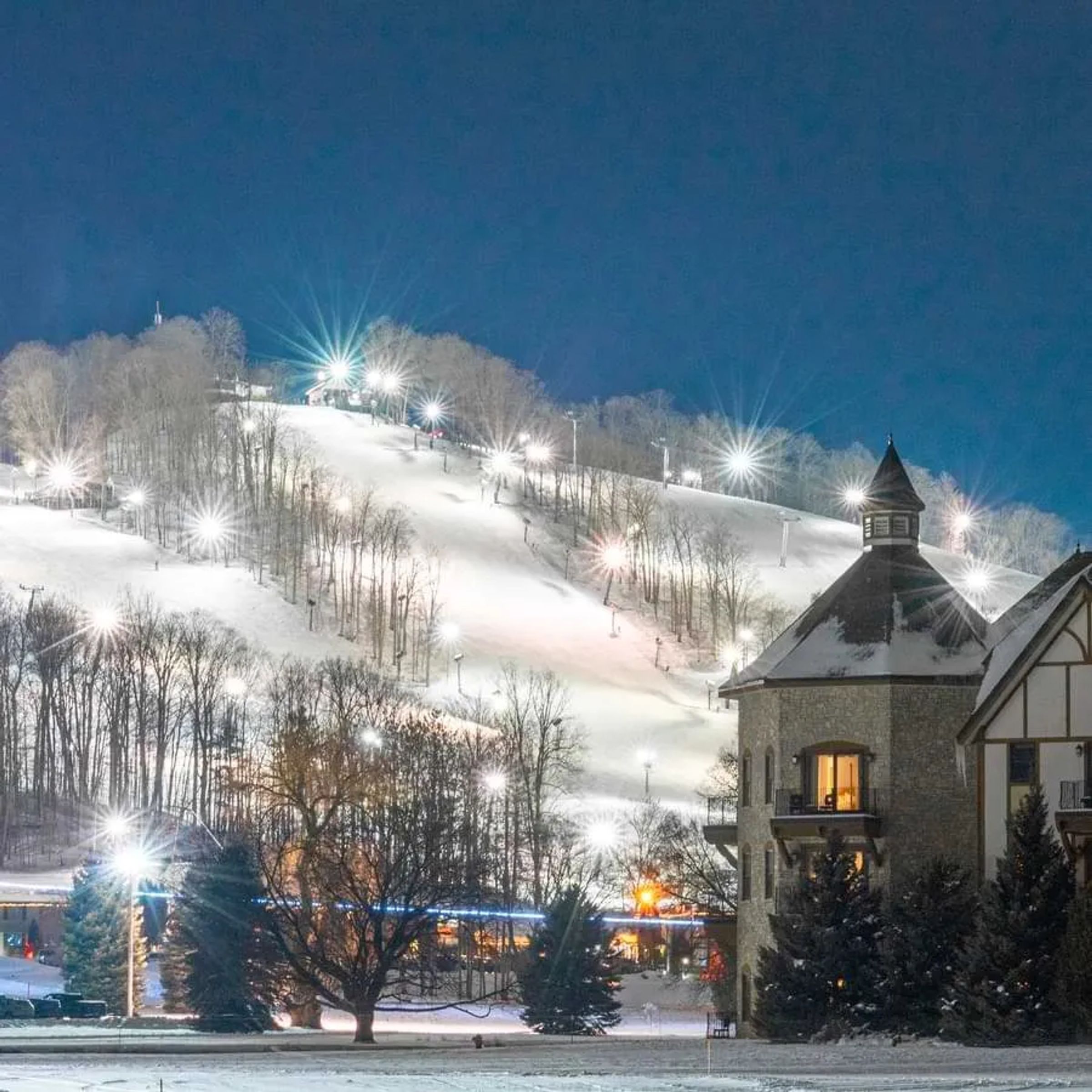
Boyne Mountain's summit reaches 1,119 feet, dropping 499 vertical feet to a base at 620 feet across 60 runs spread over 415 acres in Boyne Falls, Michigan. Terrain splits 48 per cent beginner, 27 per cent intermediate, 20 per cent advanced and 5 per cent expert, with average annual snowfall of roughly 140 inches. The resort carries Ikon Pass access and is the founding property of Boyne Resorts. Eleven lifts, including four quad chairs, an eight-person chair and a six-person chair, serve the mountain alongside two double chairs, one triple chair and two surface lifts.
Boyne Mountain holds a foundational place in ski lift history, having hosted the world's first four-person chairlift in 1969, a direct outgrowth of founder Everett Kircher's decades of lift engineering innovation. The resort's heavily beginner-weighted terrain and indoor waterpark reflect its identity as a family and four-season destination rather than a steep, expert-focused mountain. Its Ikon Pass access has extended its reach well beyond its traditional Midwest visitor base.
Everett Kircher, together with Jim Christianson and John Norton, founded what became Boyne Resorts in 1947, purchasing a steep Northern Michigan hill for one US dollar from a former state senator. The trio started with a single run, a used chairlift bought from Sun Valley in Idaho, and a warming hut. Kircher went on to invent the Boyne Snowmaker, making the resort an early adopter of snowmaking technology in the 1950s.
Kircher's innovations continued with the world's first triple chairlift installed at sister resort Boyne Highlands in 1963, followed by the world's first four-person chairlift at Boyne Mountain itself in 1969. Family-owned since 1948, the resort has remained under Kircher family control since he transferred ownership to his children in 1976, continuing after his death in 2002. Adult daily tickets run from 75 to 120 US dollars using dynamic advance-booking pricing, with the Boyne Michigan Gold season pass from 899 dollars.
499ft
Vertical
60
Runs
415 acres
Skiable
12ft
Annual snow
Ikon
Pass
The Terrain
60 runs across 415 acres skiable
Boyne Mountain spreads 60 runs across 415 acres skiable of terrain. It leans beginner at 48%, with 29 beginner runs to find your feet and 15 advanced or expert runs when you want to push.
Terrain split
60
runs
60 runs across 4 grades
Beginner29 runs · 48%
Intermediate16 runs · 27%
Advanced12 runs · 20%
Expert3 runs · 5%
Time it right
When to visit Boyne Mountain
The 2025-26 season at Boyne Mountain ran from 6 December 2025 to 13 April 2026, a roughly eighteen-week season. Average annual snowfall of around 140 inches, combined with the extensive snowmaking pioneered by founder Everett Kircher's Boyne Snowmaker technology in the 1950s, supports reliable conditions across this operating window. Season dates can shift depending on early and late-season weather.
Midwinter, from December through February, typically brings the most consistent conditions to the resort's predominantly beginner and intermediate terrain. Night skiing extends the useful ski day for the resort's Midwest visitor base, while the indoor Avalanche Bay waterpark supports year-round tourism beyond winter skiing alone. As an Ikon Pass property, the resort draws visitors from beyond Michigan during peak periods.
Boyne Mountain's dynamic advance-booking pricing structure rewards early ticket purchases, a pricing approach shared across several Boyne Resorts properties. School holiday periods bring particularly strong family visitation given the resort's substantial beginner terrain and non-ski amenities. Weekends typically see heavier crowds than weekdays throughout the season.
Specific event programming beyond standard lift operations and the resort's waterpark is not confirmed in available resort information. Under continuous Kircher family ownership since 1948, the resort's seasonal offerings have consistently emphasised family accessibility over expert-only terrain. Its status as the founding property of Boyne Resorts, now a multi-resort company with an Ikon Pass presence, continues to shape its identity through the season.
Season 2025 - 2026
6 Dec 2025
Opens
13 Apr 2026
Closes
128
Days open
12 ft
Annual snow
Getting there
Getting to Boyne Mountain, and where to stay
Boyne Mountain sits in Boyne Falls, in Michigan's northern Lower Peninsula, with a base elevation of 620 feet and a summit at 1,119 feet across a 499-foot vertical drop over 415 acres. This is the founding location of Boyne Resorts, now a multi-resort company with properties across North America.
Boyne Falls and nearby Boyne City offer local services, while the broader Northern Michigan region, including Petoskey and Charlevoix, provides more extensive lodging and dining options within a short drive. The resort's own on-site accommodation and amenities, including its indoor waterpark, support much of its visitor base directly. Sister resort Boyne Highlands, now branded The Highlands at Harbor Springs, sits a short distance to the north.
US Route 131 and state highways connect Boyne Falls to the broader Northern Michigan road network, with the resort positioned for reasonably straightforward access from across the Lower Peninsula. Winter driving conditions in the region can include lake-effect snow and ice, though the well-travelled routes through this popular tourism area are regularly maintained. There is no direct public transport service to the resort.
Cherry Capital Airport in Traverse City and Pellston Regional Airport both offer commercial service within reasonable driving distance, while Detroit and Grand Rapids provide more extensive flight options for visitors travelling from further afield. Most visitors drive to Boyne Mountain from within Michigan or neighbouring Midwest states given the resort's strong regional visitor base.
Where to stay
Search all stays →Hotels and lodges near Boyne Mountain, powered by Stay22.
Latest News
From the SnowStash desk
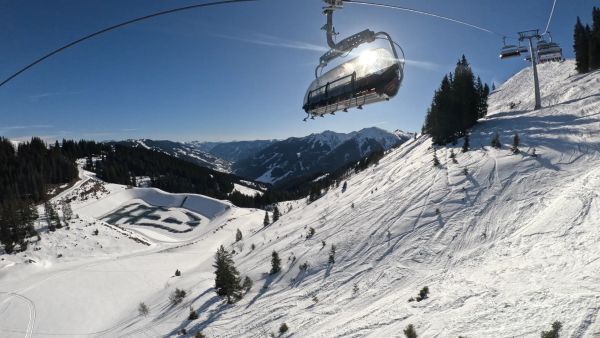
Saalbach Hinterglemm Resort Review: 270 km of Piste, 70 Lifts and a Three-Resort Pass
Four connected areas, 70 lifts and a World Championship course, yet Saalbach Hinterglemm still runs like a family holiday. Two days on snow and a Worlds Super-G later, here is who it suits, what the Ski ALPIN CARD covers and why Epic Pass holders should pay attention. Big on blues, light on steeps.
30 Sept 2026
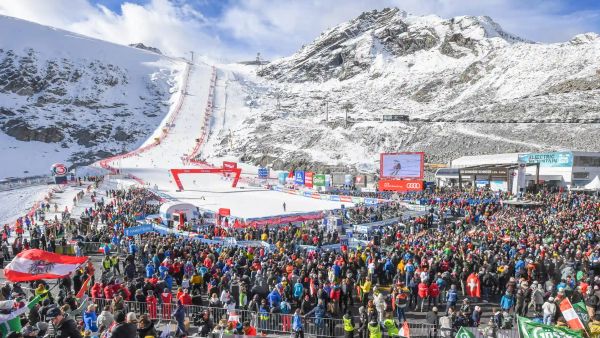
Sölden Plans Four-Race World Cup Opener on the Rettenbach Glacier from 2027
Sölden's World Cup opener has been two giant slaloms on the Rettenbach glacier for as long as most fans can remember. From 2027/28 it could be four. Director Jack Falkner wants to add two Super-Gs, backed by a nod from Vincent Kriechmayr, and turn the opening into a full week where the ski world gathers in the Ötztal. FIS and the ÖSV are yet to sign off. This year, it's still just the two GS races on 24 and 25 October.
29 Sept 2026
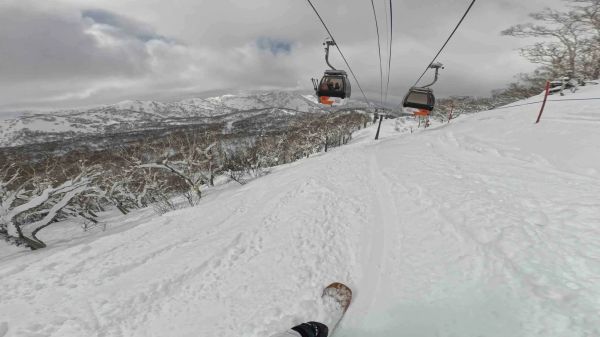
Hokkaido Ski Resort Opening Dates 2026/27: Sapporo Kokusai Leads Off on 20 November
Hokkaido's lift season now has dates. Sapporo Kokusai opens first on 20 November, Niseko United, Kiroro, Rusutsu and Furano follow on 28 November, and Kamui closes the list on 12 December. Everything hinges on snow, and with a strong El Niño in play, the JMA gives Hokkaido's Japan Sea side a 40% chance of below-normal snowfall. Honshu's Japan Sea coast looks shakier.
28 Sept 2026
Swiss Ski Resorts Post Second-Highest Winter Revenue on Record Despite a Warm Season
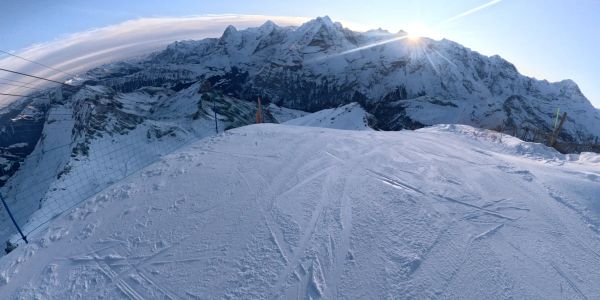
Switzerland logged 25.7 million ski days last winter, only 2.3% off the record, in a season that ranked sixth-warmest since records began. Revenue hit CHF 895.8 million, second only to 2024/25. Zermatt led on visits and takings, foreign guests hit a ten-year high, and 12 resorts never opened at all. Snowmaking, late storms and high altitude carried the numbers. Anything sitting at 1,000-1,200 m had a far rougher time.
26 Sept 2026
Aspen Snowmass Marks 80th Anniversary With $3.75 Throwback Lift Tickets
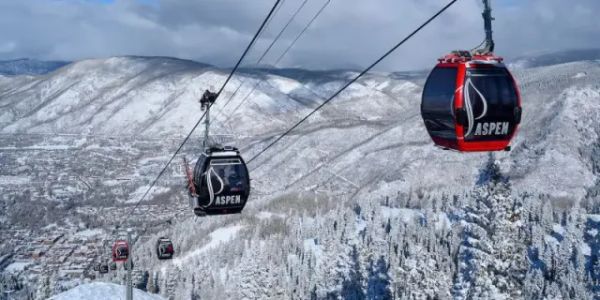
Aspen Snowmass turns 80 this December, and it's marking the milestone with $3.75 lift tickets on the anniversary itself - the original 1946 price. A discounted long weekend, $19.46 dining specials, lodging deals up to 46 percent off, and a season of anniversary programming round out the celebration across all four mountains.
17 Sept 2026
Doppelmayr Group Posts 9.1% Revenue Growth in 2025/26, Passing 1.3 Billion Euros
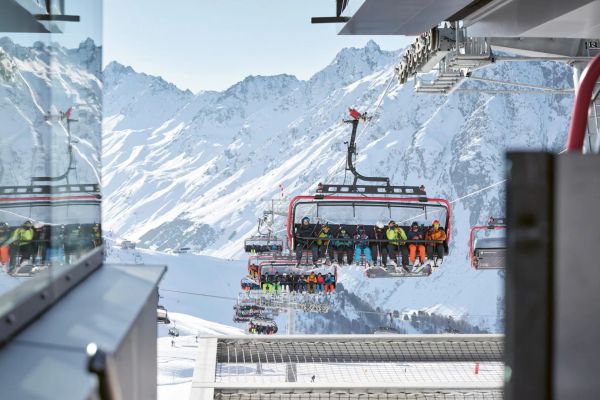
Doppelmayr closed its 2025/26 business year with revenue up 9.1 percent to 1.3 billion euros, driven by projects including the Big Sky Explorer Gondola, Deer Valley's Mayflower East Village Gondola, and the first TRI-Line installation at Hoch-Ybrig. Headcount grew too, with the ropeway manufacturer now employing almost 4,000 people worldwide.
16 Sept 2026
Hintertux Glacier Replaces 40-Year-Old Gondola to Tuxer Fernerhaus
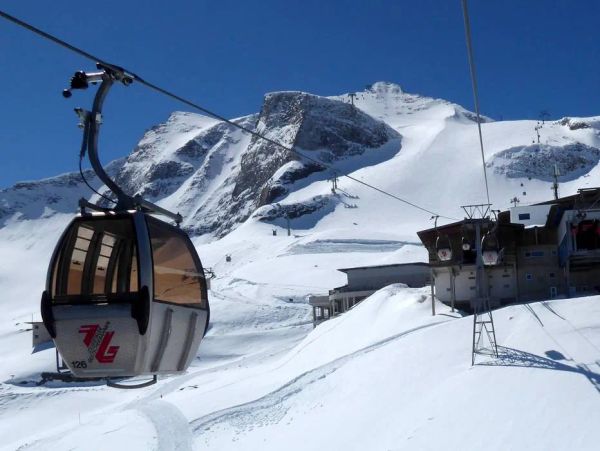
Hintertux Glacier is retiring its 40-year-old gondola to the Tuxer Fernerhaus. The replacement carries 10 people per cabin instead of four, with seat heating and nearly 40 percent more hourly capacity. Doppelmayr's new line opens at the end of October 2026, right as the glacier's high-altitude terrain becomes accessible again for the new season.
16 Sept 2026
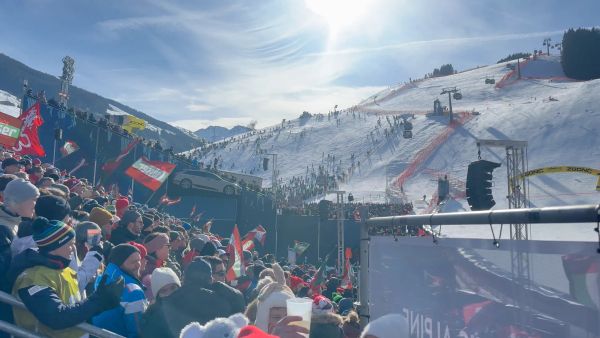
FIS Weighs Holding World Championships in Almost Every Winter, Starting 2032
The International Ski and Snowboard Federation is looking at a major shake-up to its title events calendar. From 2032, World Championships could run not just in odd-numbered years but in every non-Olympic winter too, effectively putting a global title event on the calendar almost every season. The FIS Council has approved the concept following a feasibility study, though an accelerated rollout as early as 2028 is also under consideration.
4 Sept 2026
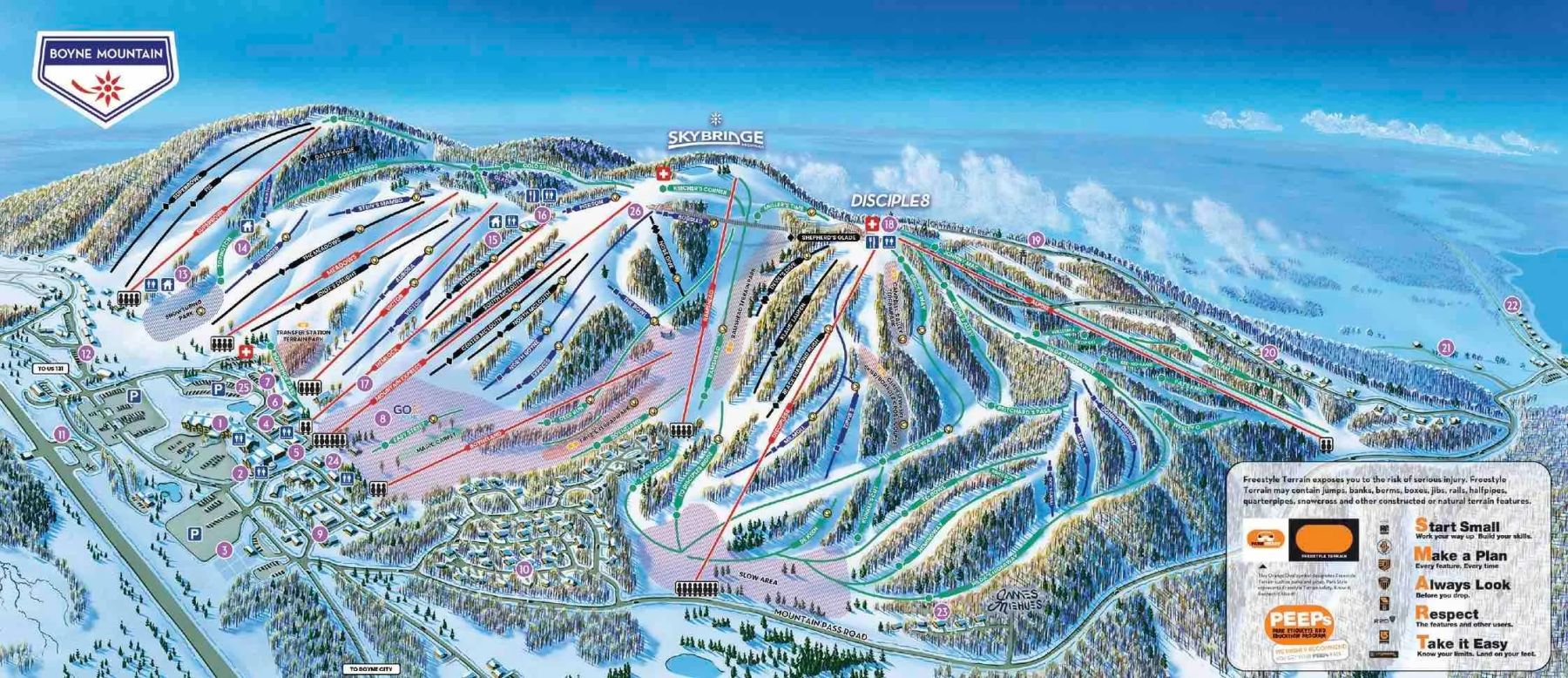
Boyne Mountain Ski Trails
Downloadable Boyne Mountain trail map
Terrain split
60
runs
Beginner48%
Intermediate27%
Advanced20%
Expert5%
415 acres skiable168 hectares
Resort Stats
Elevation
Base620ft
Summit1,119ft
Annual snowfall
12ft
Season
2025 - 2026
6 Dec 2025 - 13 Apr 2026
Trail coverage
60 runs
415 acres (168 ha)
Boyne Mountain ski trails
Boyne Mountain offers 60 runs across a mix of difficulties. The terrain split and trail map here show how the mountain breaks down so you can plan a day that suits your group.
- • Match runs to your ability - the terrain split shows how much of Boyne Mountain is beginner, intermediate and advanced.
- • Check grooming and open-run status against the live conditions before committing to the upper mountain.
- • Early season and after fresh snow, favour the lifts serving your preferred grade to make the most of the day.
More Boyne Mountain intelligence: trail map, lift system, resort overview.