
The Overview
Michael Fulton
Melbourne-based skier and snowboarder with 50+ resorts across 5 continents. Specialises in Australian resorts and international resort comparisons.
Mt Ashland's summit reaches 7,533 feet, dropping 1,152 vertical feet to a base at 6,381 feet across 44 runs spread over 240 acres above Ashland in southern Oregon. Terrain splits 41 per cent intermediate, 36 per cent advanced, 12 per cent beginner and 11 per cent expert, with average annual snowfall of roughly 265 inches. The resort carries Indy Pass affiliation and is owned and operated by the nonprofit Mt. Ashland Association rather than a for-profit company.
Mt Ashland's nonprofit structure is the result of a community rescue effort in the early 1990s, making it one of relatively few community-owned ski areas in the country. The mountain's substantial snowfall, exceeding 260 inches annually, supports a genuinely advanced-weighted terrain mix relative to its modest 240-acre footprint. Its identity as a locally saved and locally run mountain remains central to how the Southern Oregon community relates to the resort.
Local backcountry ski enthusiasts were already using the mountain by the 1950s, and some of them built a lodge and a single lift in 1963, with Mt Ashland opening to the public on 11 January 1964. The ski area passed through several ownership structures over the following decades: the Mount Ashland Corporation ceased operations in 1970, prompting the Southern Oregon College Foundation to take over management after Jackson County financed the purchase of the ski area's assets, before Dick Hicks bought the area from the county in 1977 and incorporated it as Ski Ashland, Inc.
Seattle-based Harbor Properties purchased the ski area from Hicks in 1983, but in January 1992 the company shocked the region by announcing it would either sell the area for 1.7 million US dollars or dismantle its chairlifts and relocate them to Washington. Southern Oregon responded with a community campaign: local Rotary clubs raised 600,000 dollars and Oregon Lottery funds contributed a further 500,000 dollars to buy out the resort, with the City of Ashland holding the necessary US Forest Service permit until the newly formed nonprofit Mt. Ashland Association could take over operations. Adult daily tickets run from 75 to 89 US dollars, with a season pass at 649 dollars.
1,152ft
Vertical
44
Runs
240 acres
Skiable
22ft
Annual snow
Indy
Pass
The Terrain
44 runs across 240 acres skiable
Mt Ashland is a community-run ski area in the Siskiyou Mountains above Ashland, covering 240 acres (97 hectares) with 44 runs. The base sits at 6,380 feet and the summit at 7,530 feet (2,296 m), a vertical of about 1,150 feet (351 m). For a small hill the grading is serious: 36% advanced and 11% expert, alongside 41% intermediate and 12% beginner. Snowfall averages roughly 265 inches a year. The lifts are spread across separate pods rather than one big network, so the terrain feels more compartmentalised than the acreage suggests.
The Ariel chair serves the full vertical, while Windsor, Comer, Lithia and Sonnet cover shorter runs and the First Act conveyor handles the beginner area. Sonnet Bowl offers off-piste skiing for those wanting an extra challenge, and the Sonnet chair has run since 1987, when it replaced an older Poma lift. With almost half the terrain graded advanced or expert, Mt Ashland suits intermediate and advanced skiers from southern Oregon who want steeper pitches on a modest footprint. Beginners have a smaller share of the mountain, so they should stay near the conveyor.
Terrain split
44
runs
44 runs across 4 grades
Beginner5 runs · 12%
Intermediate18 runs · 41%
Advanced16 runs · 36%
Expert5 runs · 11%
Time it right
When to visit Mt Ashland
The 2025-26 season at Mt Ashland ran from 13 December 2025 to 29 March 2026, a roughly fifteen-week season supported by average annual snowfall of around 265 inches. This substantial snowfall gives Mt Ashland one of the more reliable natural seasons among southern Oregon ski areas. Season dates can shift depending on early and late-season storm activity.
Midwinter, from January through February, typically brings the most consistent conditions to the mountain's advanced-weighted terrain. As a nonprofit community mountain, Mt Ashland draws primarily from the Rogue Valley and broader southern Oregon and northern California region rather than national destination traffic. Weekend crowds are generally heavier than weekdays, drawing from Ashland, Medford and the surrounding communities.
As an Indy Pass resort, Mt Ashland draws some visiting skiers holding that multi-resort pass in addition to its core regional base. The Mt. Ashland Association's nonprofit structure shapes much of the resort's seasonal programming toward community access and affordability rather than large-scale destination amenities. School holiday periods bring increased family visitation given the mountain's mix of terrain.
Specific event programming beyond standard operations is not confirmed in available resort information. The mountain's 1992 community rescue, funded through Rotary club fundraising and Oregon Lottery contributions, remains a defining part of its identity and is frequently referenced in the association's ongoing community communications. Military discount pricing reflects the resort's connection to the broader southern Oregon community it serves.
Season 2026 - 2027
18 Dec 2026
Opens
21 Mar 2027
Closes
93
Days open
22 ft
Annual snow
Getting there
Getting to Mt Ashland, and where to stay
Mt Ashland sits above the city of Ashland in the Siskiyou Mountains of southern Oregon, with a base elevation of 6,381 feet and a summit at 7,533 feet across a 1,152-foot vertical drop over 240 acres. This is one of the southernmost ski areas in Oregon, close to the California border.
Ashland itself, well known for the Oregon Shakespeare Festival and its broader arts scene, provides the resort's main lodging, dining and services, with the ski area operating as a genuine day-use community mountain for the city's residents. Medford, a larger regional centre, lies a further short drive north. The Siskiyou Mountains offer additional summer and shoulder-season recreation beyond winter skiing.
Interstate 5 provides the main route to Ashland from both the north and south, with the Mt Ashland Access Road then climbing from the interstate into the ski area itself. Winter driving conditions on the access road can include snow and ice, and the route's elevation gain means conditions can differ substantially from those in Ashland below. There is no direct public transport service to the mountain.
Rogue Valley International-Medford Airport, roughly 30 minutes from Ashland, is the nearest airport with commercial service, making Mt Ashland reasonably accessible for fly-in visitors despite its identity as a local community mountain. Most visitors, however, are Rogue Valley residents driving up from Ashland or Medford rather than fly-in destination travellers.
Where to stay
Search all stays →Hotels and lodges near Mt Ashland, powered by Stay22.
Latest News
From the SnowStash desk
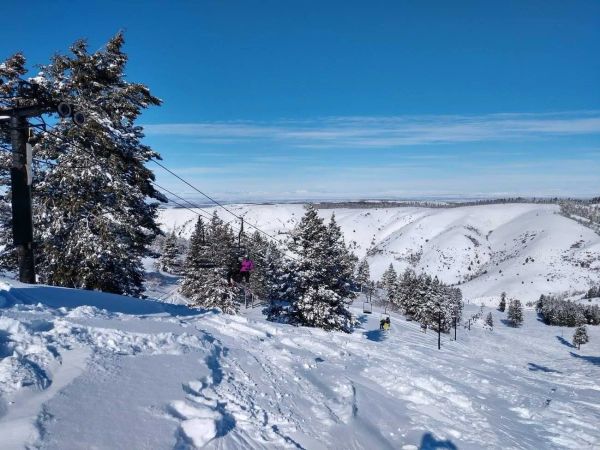
Kelly Canyon, Idaho, Adds Snowmaking, a Bigger Terrain Park and More Parking for 2026-27
Kelly Canyon had a rough 2025-26, and the Idaho resort has spent the summer making sure it doesn’t repeat. Snowmaking now reaches the top of Goldrush, the terrain park is doubling in size with a stereo system, lights and a snack shack, and the car park is getting bigger. Grooming is stepping up too. Target opening is December 4, conditions permitting.
9 Oct 2026
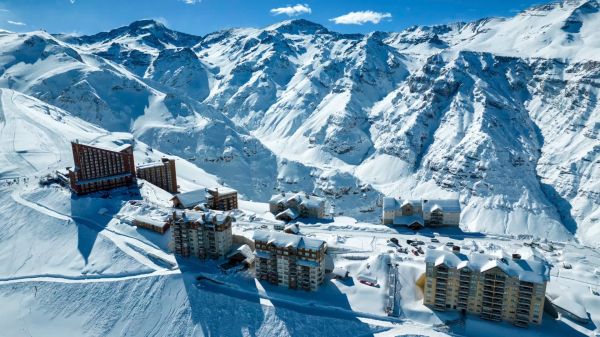
Valle Nevado Extends Season to November 8 After 108 cm in 48 Hours
Winter was meant to be winding down in Chile. Then Valle Nevado took 108 cm in 48 hours in early October, and the resort has pushed its closing date out to November 8 - its latest in 38 years of operation. That makes 143 days of skiing since opening day on June 19, with 690 cm banked for the season. Only part of the mountain is running while the storm settles, so check the mountain report before you plan a trip.
9 Oct 2026
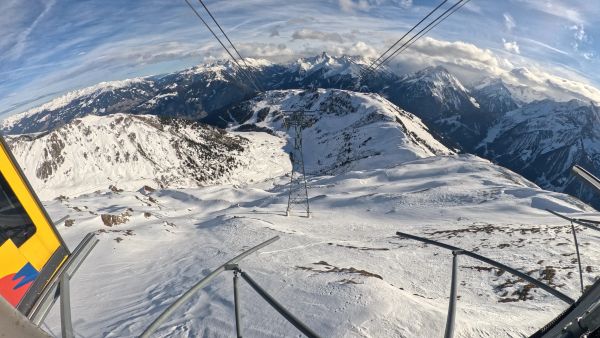
Alps Snow Forecast: Cold Front Brings Thursday Snow to the High Alps
The Alps look a lot more like winter today, for a day or so. A cold front is moving west to east, dropping up to 35 cm on high glaciers and peaks, with snow levels falling to around 1,500-1,800 m at times. Don’t plan a trip around it: mid-elevation snow will be thin and wet, every area is closed bar a limited Sölden glacier opening tomorrow, and warmer weather returns by Monday.
8 Oct 2026
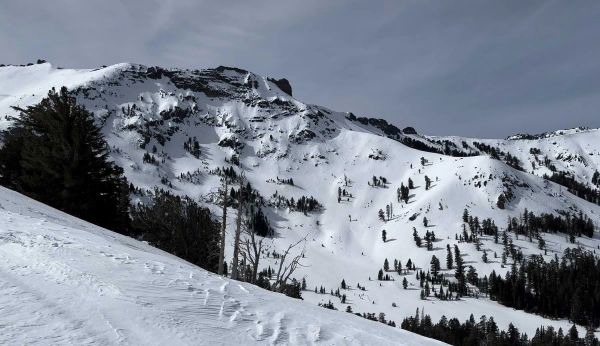
California Ski Resort Opening Dates 2026-27: Mammoth Leads, Tahoe Follows
Mammoth Mountain is first up in California, targeting Friday 13 November after a dusting of September snow. Heavenly and Northstar follow on 20 November, Palisades Tahoe on Wednesday 25 November and Sugar Bowl on 27 November, with Kirkwood on 4 December and June Mountain on 19 December. Plenty of smaller areas have no date yet. A super El Niño favours the Sierra, but a warmer storm track is the catch.
7 Oct 2026
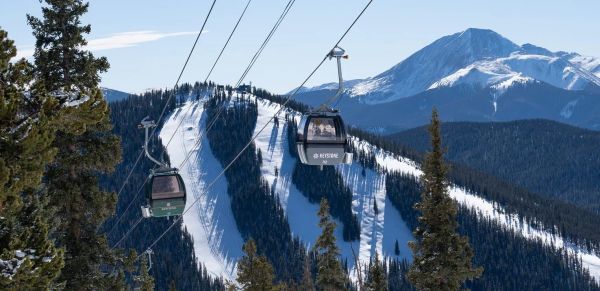
Colorado Ski Resort Opening Dates 2026-27: A-Basin and Keystone Race to Be First
Arapahoe Basin, Keystone and Winter Park are all chasing an October start, though none has a firm date yet. The first dated openers are Breckenridge and Copper on Friday 6 November, then Vail on 13 November, with most of the rest bunched around US Thanksgiving. Hesperus did not open at all last season. A super El Niño offers hope but no guarantee, and forecasters say the southern mountains have the better odds.
5 Oct 2026
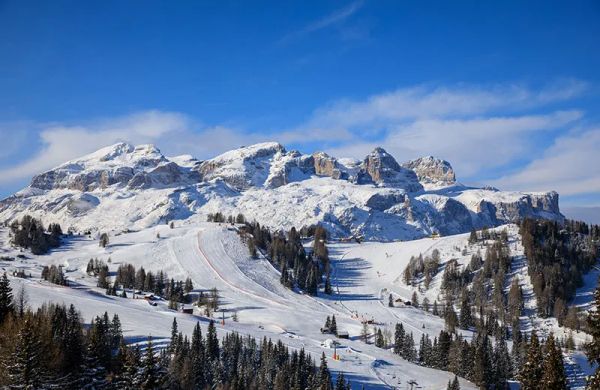
Dolomiti Superski 2026-27: Four New Gondolas, New Reservoirs and an €89 Peak Day Pass
Dolomiti Superski is spending around €100 million across its 12 areas before winter. Kronplatz gets a new 10-passenger gondola with a middle station, 3 Zinnen gets Helmissimo, and Val di Fassa swaps a chairlift for a gondola above Col Valvacin. New water-storage basins and upgraded snowmaking follow, and construction has started on the San Martino to Passo Rolle link. A peak adult day pass is €89.
4 Oct 2026
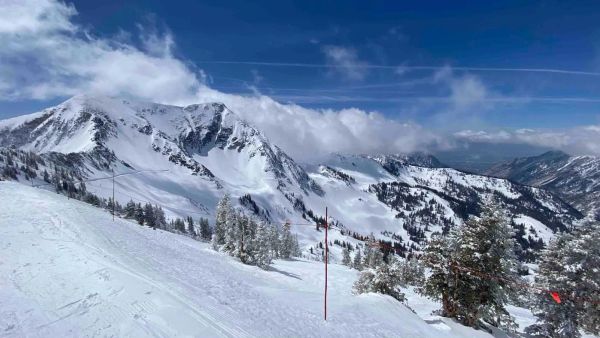
Utah Ski Resort Opening Dates 2026-27: Brian Head First, Eagle Point Out
Brian Head is targeting 6 November, though last year it aimed for 7 November and did not open until the 25th. Park City, Alta and Solitude are pencilled in for 20 November, Snowbird and Snowbasin for 27 November, and Deer Valley for 5 December. Eagle Point will stay closed after the Cottonwood Fire. A super El Niño is forecast, but the big snow is not expected until January.
4 Oct 2026
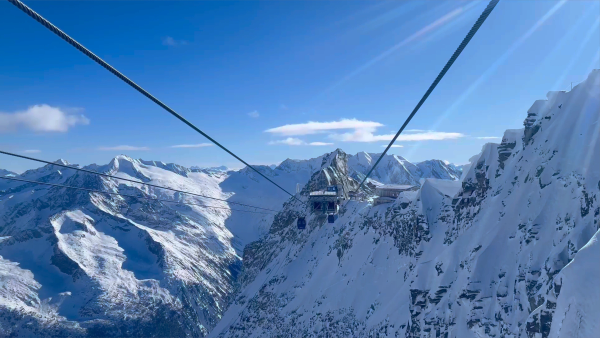
Hintertux Glacier Opens for 2026-27 With 12 Kilometres of Piste
Hintertux became Austria's second glacier to open for 2026-27 on Friday 2 October, after the Pitztal Glacier. Twelve kilometres of piste are running around the Olperer and Gefrorene Wand, served by one gondola and two drag lifts, with the Betterpark also open. Lifts officially run 8:15 am to 4:30 pm, but skiing stops at 2 pm for now.
4 Oct 2026
Mt Ashland Lift System
Mt Ashland's lift-served terrain covers 44 runs across 240 acres above Ashland, Oregon, accessed via a network built up gradually since the mountain's original single lift installed by local volunteers in 1963. Specific current lift types and counts are not confirmed in available resort information, though the network has been shaped by decades of nonprofit reinvestment rather than large-scale commercial expansion.
The mountain's lift infrastructure survived a serious threat in January 1992, when then-owner Harbor Properties announced plans to either sell the ski area or dismantle its chairlifts entirely and relocate them out of state. The Southern Oregon community's successful campaign to raise 1.1 million US dollars through Rotary clubs and Oregon Lottery funds preserved the existing lift infrastructure in place, avoiding what would have been a complete loss of lift-served skiing on the mountain.
Since the Mt. Ashland Association, a 501(c)(3) nonprofit governed by an eleven-member board of directors, took over operations following the 1992 community buyout, lift maintenance and reinvestment decisions have been directed by this community-elected board rather than a for-profit ownership structure. This nonprofit model prioritises continued access and affordability over shareholder returns.
Specific recent lift replacement or expansion projects are not confirmed in available resort information. The mountain's substantial average snowfall of around 265 inches places significant operational demands on its lift and grooming infrastructure each season. The Mt. Ashland Association's board continues to direct capital decisions with the mountain's community-rescue history as a defining backdrop.
0lifts across 0 types
Mt Ashland lift system
Mt Ashland is served by a network of lifts, listed here by type. Check which lifts are turning against the live conditions before you plan your first laps - early lifts and high-speed chairs get you to the best snow fastest.
More Mt Ashland intelligence: trail map, snow report, webcams, resort overview.