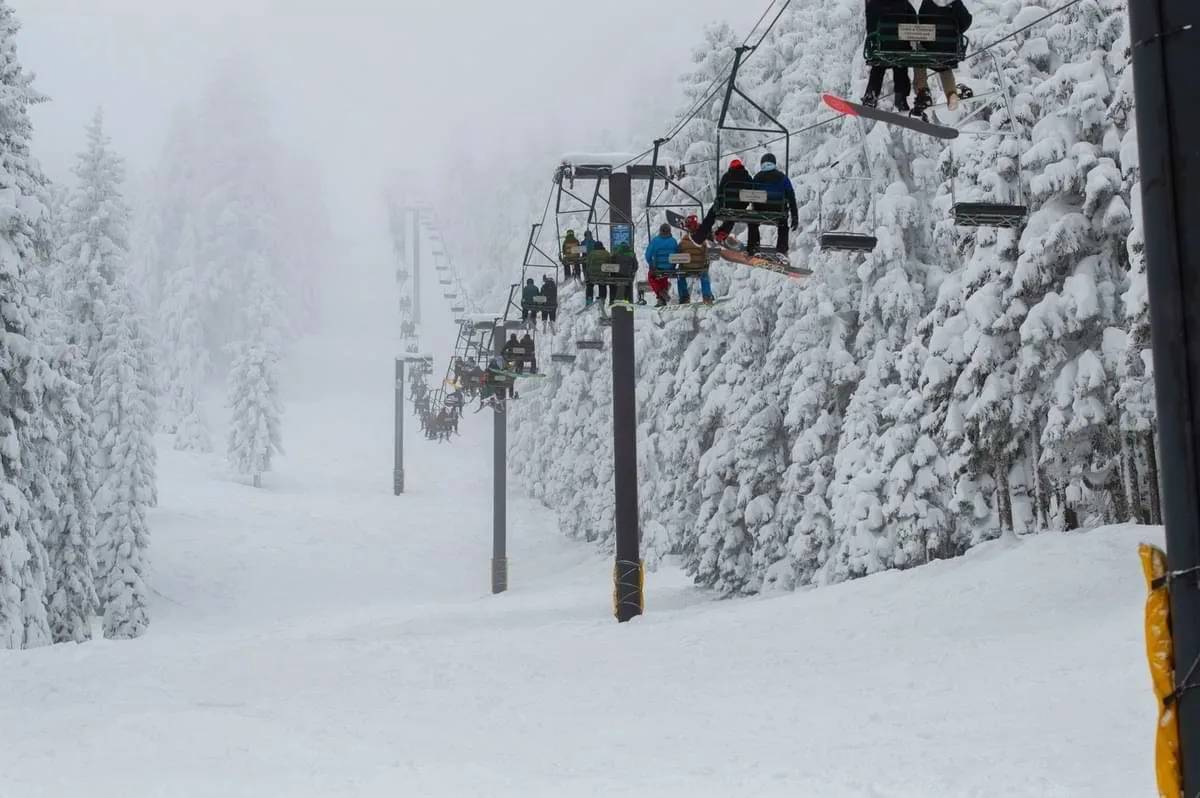
Mt Ashland
240 acres, 44 runs above Ashland. Community-owned nonprofit resort, Indy Pass access.

Season 2026 - 2027
Opens
18 Dec 2026
Closes
21 Mar 2027
Days open
93
Annual snow
265in
The Overview
Michael Fulton
Melbourne-based skier and snowboarder with 50+ resorts across 5 continents. Specialises in Australian resorts and international resort comparisons.
Mt Ashland's summit reaches 7,533 feet, dropping 1,152 vertical feet to a base at 6,381 feet across 44 runs spread over 240 acres above Ashland in southern Oregon. Terrain splits 41 per cent intermediate, 36 per cent advanced, 12 per cent beginner and 11 per cent expert, with average annual snowfall of roughly 265 inches. The resort carries Indy Pass affiliation and is owned and operated by the nonprofit Mt. Ashland Association rather than a for-profit company.
Mt Ashland's nonprofit structure is the result of a community rescue effort in the early 1990s, making it one of relatively few community-owned ski areas in the country. The mountain's substantial snowfall, exceeding 260 inches annually, supports a genuinely advanced-weighted terrain mix relative to its modest 240-acre footprint. Its identity as a locally saved and locally run mountain remains central to how the Southern Oregon community relates to the resort.
Local backcountry ski enthusiasts were already using the mountain by the 1950s, and some of them built a lodge and a single lift in 1963, with Mt Ashland opening to the public on 11 January 1964. The ski area passed through several ownership structures over the following decades: the Mount Ashland Corporation ceased operations in 1970, prompting the Southern Oregon College Foundation to take over management after Jackson County financed the purchase of the ski area's assets, before Dick Hicks bought the area from the county in 1977 and incorporated it as Ski Ashland, Inc.
Seattle-based Harbor Properties purchased the ski area from Hicks in 1983, but in January 1992 the company shocked the region by announcing it would either sell the area for 1.7 million US dollars or dismantle its chairlifts and relocate them to Washington. Southern Oregon responded with a community campaign: local Rotary clubs raised 600,000 dollars and Oregon Lottery funds contributed a further 500,000 dollars to buy out the resort, with the City of Ashland holding the necessary US Forest Service permit until the newly formed nonprofit Mt. Ashland Association could take over operations. Adult daily tickets run from 75 to 89 US dollars, with a season pass at 649 dollars.
1,152ft
Vertical
44
Runs
240 acres
Skiable
265in
Annual snow
Indy
Pass
The Terrain
44 runs across 240 acres skiable
Mt Ashland is a community-run ski area in the Siskiyou Mountains above Ashland, covering 240 acres (97 hectares) with 44 runs. The base sits at 6,380 feet and the summit at 7,530 feet (2,296 m), a vertical of about 1,150 feet (351 m). For a small hill the grading is serious: 36% advanced and 11% expert, alongside 41% intermediate and 12% beginner. Snowfall averages roughly 265 inches a year. The lifts are spread across separate pods rather than one big network, so the terrain feels more compartmentalised than the acreage suggests.
The Ariel chair serves the full vertical, while Windsor, Comer, Lithia and Sonnet cover shorter runs and the First Act conveyor handles the beginner area. Sonnet Bowl offers off-piste skiing for those wanting an extra challenge, and the Sonnet chair has run since 1987, when it replaced an older Poma lift. With almost half the terrain graded advanced or expert, Mt Ashland suits intermediate and advanced skiers from southern Oregon who want steeper pitches on a modest footprint. Beginners have a smaller share of the mountain, so they should stay near the conveyor.
Terrain split
44
runs
44 runs across 4 grades
Beginner5 runs · 12%
Intermediate18 runs · 41%
Advanced16 runs · 36%
Expert5 runs · 11%
Time it right
When to visit Mt Ashland
The 2025-26 season at Mt Ashland ran from 13 December 2025 to 29 March 2026, a roughly fifteen-week season supported by average annual snowfall of around 265 inches. This substantial snowfall gives Mt Ashland one of the more reliable natural seasons among southern Oregon ski areas. Season dates can shift depending on early and late-season storm activity.
Midwinter, from January through February, typically brings the most consistent conditions to the mountain's advanced-weighted terrain. As a nonprofit community mountain, Mt Ashland draws primarily from the Rogue Valley and broader southern Oregon and northern California region rather than national destination traffic. Weekend crowds are generally heavier than weekdays, drawing from Ashland, Medford and the surrounding communities.
As an Indy Pass resort, Mt Ashland draws some visiting skiers holding that multi-resort pass in addition to its core regional base. The Mt. Ashland Association's nonprofit structure shapes much of the resort's seasonal programming toward community access and affordability rather than large-scale destination amenities. School holiday periods bring increased family visitation given the mountain's mix of terrain.
Specific event programming beyond standard operations is not confirmed in available resort information. The mountain's 1992 community rescue, funded through Rotary club fundraising and Oregon Lottery contributions, remains a defining part of its identity and is frequently referenced in the association's ongoing community communications. Military discount pricing reflects the resort's connection to the broader southern Oregon community it serves.
Season 2026 - 2027
18 Dec 2026
Opens
21 Mar 2027
Closes
93
Days open
265 in
Annual snow
Getting there
Getting to Mt Ashland, and where to stay
Mt Ashland sits above the city of Ashland in the Siskiyou Mountains of southern Oregon, with a base elevation of 6,381 feet and a summit at 7,533 feet across a 1,152-foot vertical drop over 240 acres. This is one of the southernmost ski areas in Oregon, close to the California border.
Ashland itself, well known for the Oregon Shakespeare Festival and its broader arts scene, provides the resort's main lodging, dining and services, with the ski area operating as a genuine day-use community mountain for the city's residents. Medford, a larger regional centre, lies a further short drive north. The Siskiyou Mountains offer additional summer and shoulder-season recreation beyond winter skiing.
Interstate 5 provides the main route to Ashland from both the north and south, with the Mt Ashland Access Road then climbing from the interstate into the ski area itself. Winter driving conditions on the access road can include snow and ice, and the route's elevation gain means conditions can differ substantially from those in Ashland below. There is no direct public transport service to the mountain.
Rogue Valley International-Medford Airport, roughly 30 minutes from Ashland, is the nearest airport with commercial service, making Mt Ashland reasonably accessible for fly-in visitors despite its identity as a local community mountain. Most visitors, however, are Rogue Valley residents driving up from Ashland or Medford rather than fly-in destination travellers.
Where to stay
Search all stays →Stays map loads when you scroll here
Hotels and lodges near Mt Ashland, powered by Stay22.
Latest News
From the SnowStash desk
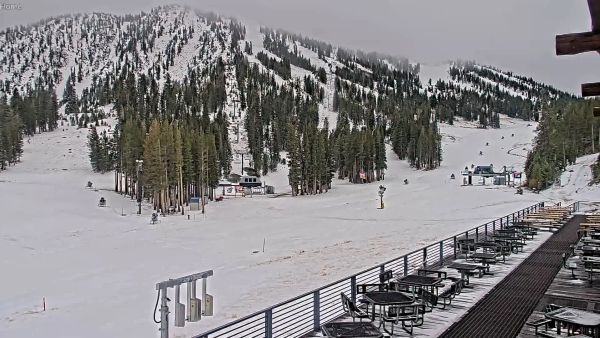
Mt Rose Aims to Open First in Tahoe on November 6
Mt Rose is going for the first-in-Tahoe title, with the Lakeview Express due to spin at 9 a.m. on Friday, November 6. One main lift, three runs and plenty of snowmaking, sitting on the highest base elevation in the region at 8,260 ft. Here is what is open, what is not (sorry, tubing fans), and how the early North American openings are stacking up.
4 Nov 2026
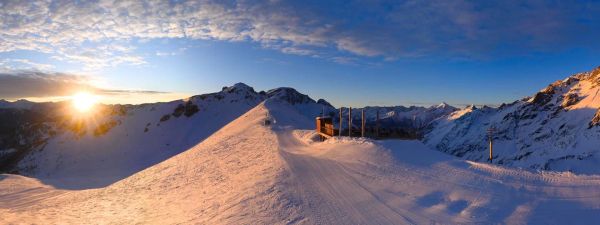
Europe Snow Forecast: Serre Chevalier Leads With 82 cm Over the Next 10 Days
Europe has had a quiet start to November, but our 10-day forecast has Serre Chevalier on 82 cm and Les 2 Alpes on 71 cm. Two pushes are lined up: a western Alps top-up from Friday, then a bigger, wider system on Thursday, November 12 and Friday, November 13 that reaches Italy and Switzerland. Full leaderboard inside.
4 Nov 2026
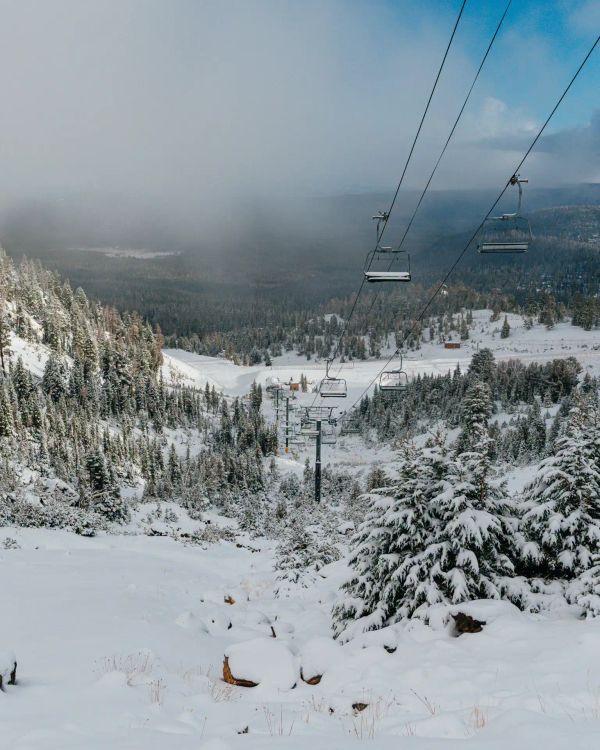
Mammoth Mountain Opens Early on November 5 With Up to 33 Inches of Snow in the Forecast
Mammoth just moved opening day forward to Thursday, November 5, eight days ahead of schedule. A snowy weekend and cold snowmaking nights did the work, and our forecast shows up to 33 inches more landing on November 13 and 14. Here is what opens, what the weather looks like and where Mammoth sits among the early Ikon Pass openers.
3 Nov 2026

Utah Snow Storm Builds Early-Season Base Ahead of November Openings
Rain down low, snow up high, and a snow report full of zeros that mostly means ‘not updated yet’. Utah’s first proper storm of 2026-27 is rolling through the Wasatch, Snowbird’s snow stake is closing in on 10 inches, and Brian Head is five days from opening day. Early November snow rarely looks like much, but it is the layer every November opening date is built on. Here is where it stands.
1 Nov 2026
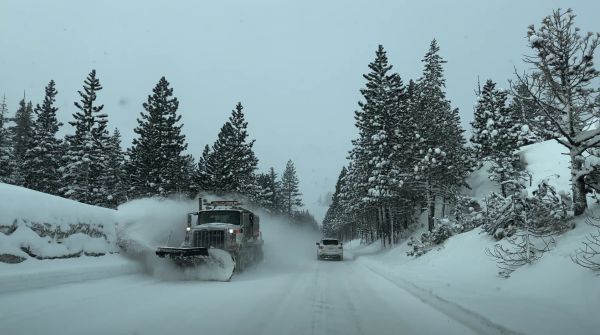
Sierra Nevada Halloween Storm: Dodge Ridge Forecast to Lead With 19 Inches
Halloween weekend brings a wet, windy storm to the Sierra Nevada. Our five-day forecast has Dodge Ridge on top with 19 in, followed by Bear Valley at 15 in and Mammoth Mountain at 12 in, with most of it landing on Saturday. A winter weather advisory covers the Tahoe Basin and Mono County until 7 AM Sunday, gusts could reach 47 mph and the freezing level swings between 4,900 and 8,700 ft, so some bases will see rain. A dry spell follows from Monday.
31 Oct 2026
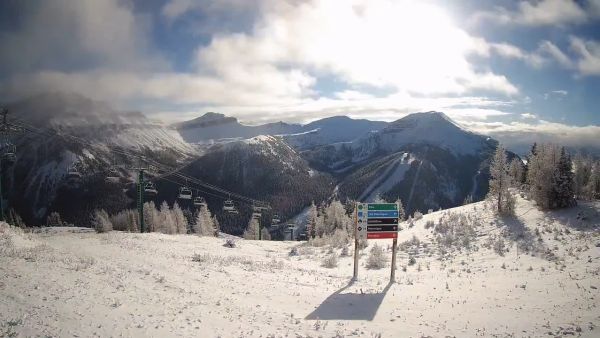
Lake Louise Opens Early on 1 November With Juniper Express and Easy Street
The Rockies get their first lift-served turns of the season early. Lake Louise opens Sunday 1 November, five days ahead of schedule, after a cold October and round-the-clock work from the snowmaking and mountain crews. Terrain is limited to Juniper Express Chair and Easy Street, with two small terrain parks and the beginner area for lessons. Opening-day tickets are over 60% off, with prices rising as more lifts open. First chair is at 9:30 am under the resort’s new lift hours.
31 Oct 2026
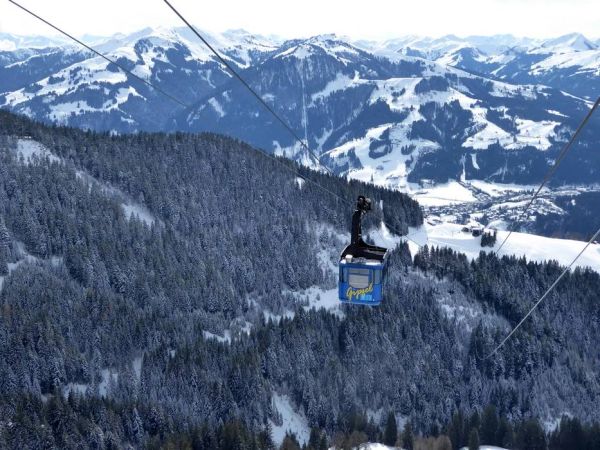
Kitzbüheler Horn Summit Cable Car to Be Replaced After 70 Years
A Tyrolean summit lift that has been carrying guests up the Kitzbüheler Horn since 1955 is on borrowed time. Its licence runs to 2045, but a new inspection rule has made refurbishment uneconomic, so Bergbahn AG Kitzbühel will spend around €15 million on a replacement on the same line. It should hold roughly 100 people and keep running in winds that would stop today’s lift. Building starts in autumn 2027, which makes this winter and next summer the last chances to ride the old one.
30 Oct 2026
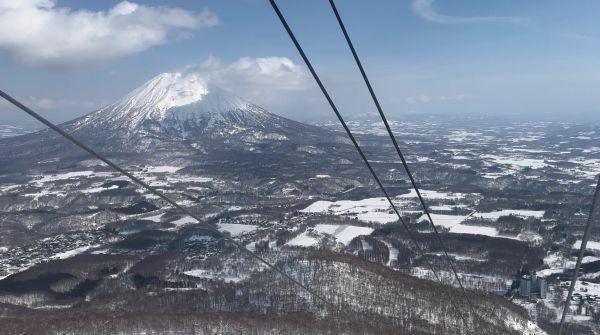
What’s New in Japan Skiing This Winter: Niseko Gondola, a Private Resort and a Bigger Ikon Pass
Niseko Village is replacing a lift from the early 1980s with an eight-person gondola, Tsugaike gets a six-person chairlift, Madarao joins the Ikon Pass and Togari opens Asia’s first private ski resort. Here’s what is actually new in Japan skiing for 2026/27, plus what is still a year or two away.
30 Oct 2026
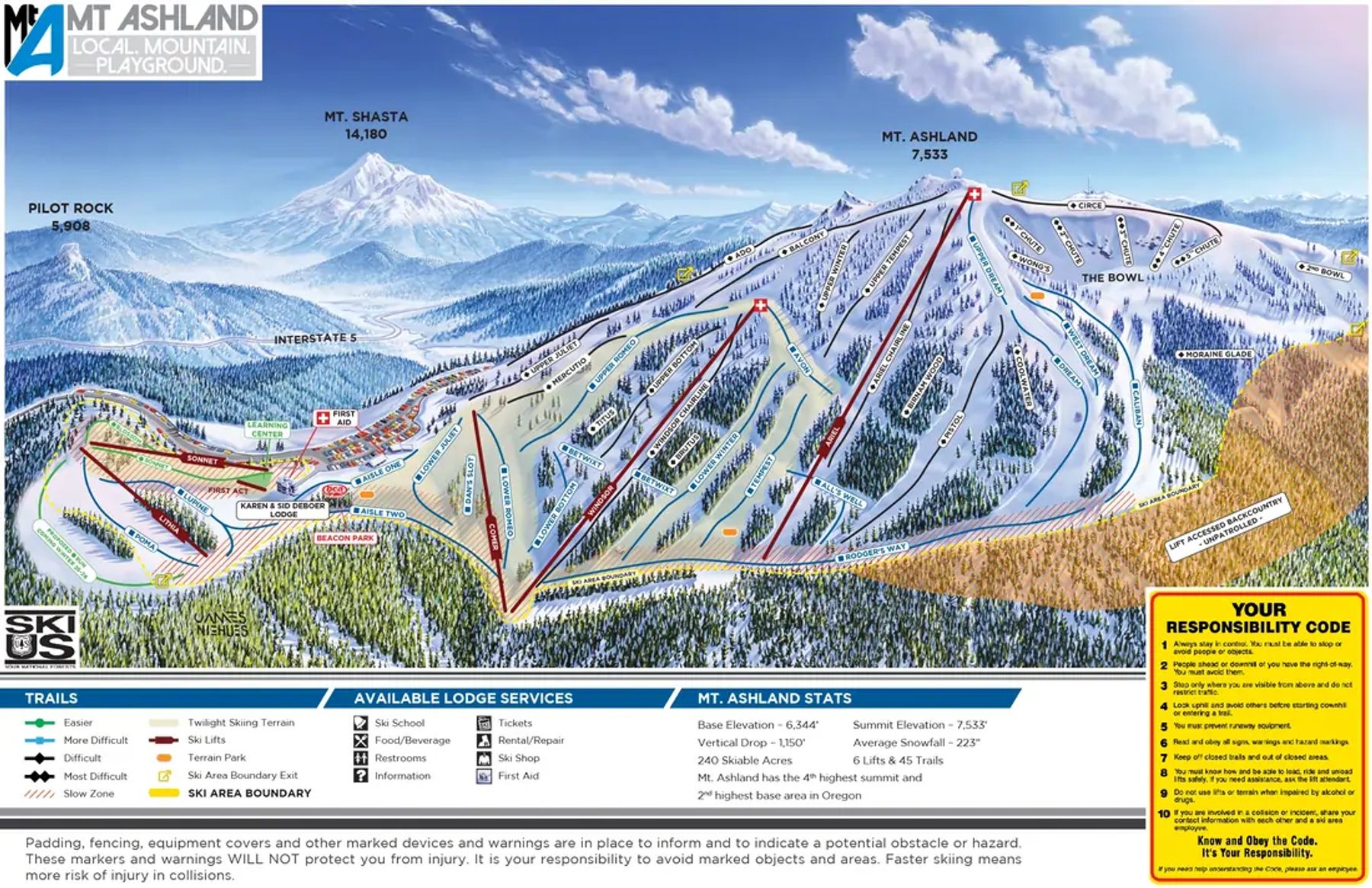
Mt Ashland Trail Map
Downloadable Mt Ashland trail map
Terrain split
44
runs
Beginner12%
Intermediate41%
Advanced36%
Expert11%
240 acres skiable97 hectares
Resort Stats
Elevation
Base6,381ft
Summit7,533ft
Annual snowfall
265in
Season
2026 - 2027
18 Dec 2026 - 21 Mar 2027
Trail coverage
44 runs
240 acres (97 ha)
About Mt Ashland's trail map
Explore Mt Ashland's full trail map with 44 runs across the mountain, colour-coded by difficulty and shown alongside the terrain split. Use it to plan a day that matches your ability, find lift-served pockets of your favourite grade, and see how the resort links together. Download the piste map (PDF) ↗
More Mt Ashland intelligence: snow report, lift system, webcams, resort overview.