
Mt Ashland
240 acres, 44 runs above Ashland. Community-owned nonprofit resort, Indy Pass access.
Season 2026 - 2027
Opens
18 Dec 2026
Closes
21 Mar 2027
Days open
93
Annual snow
22ft
The Overview
Michael Fulton
Melbourne-based skier and snowboarder with 50+ resorts across 5 continents. Specialises in Australian resorts and international resort comparisons.
Mt Ashland's summit reaches 7,533 feet, dropping 1,152 vertical feet to a base at 6,381 feet across 44 runs spread over 240 acres above Ashland in southern Oregon. Terrain splits 41 per cent intermediate, 36 per cent advanced, 12 per cent beginner and 11 per cent expert, with average annual snowfall of roughly 265 inches. The resort carries Indy Pass affiliation and is owned and operated by the nonprofit Mt. Ashland Association rather than a for-profit company.
Mt Ashland's nonprofit structure is the result of a community rescue effort in the early 1990s, making it one of relatively few community-owned ski areas in the country. The mountain's substantial snowfall, exceeding 260 inches annually, supports a genuinely advanced-weighted terrain mix relative to its modest 240-acre footprint. Its identity as a locally saved and locally run mountain remains central to how the Southern Oregon community relates to the resort.
Local backcountry ski enthusiasts were already using the mountain by the 1950s, and some of them built a lodge and a single lift in 1963, with Mt Ashland opening to the public on 11 January 1964. The ski area passed through several ownership structures over the following decades: the Mount Ashland Corporation ceased operations in 1970, prompting the Southern Oregon College Foundation to take over management after Jackson County financed the purchase of the ski area's assets, before Dick Hicks bought the area from the county in 1977 and incorporated it as Ski Ashland, Inc.
Seattle-based Harbor Properties purchased the ski area from Hicks in 1983, but in January 1992 the company shocked the region by announcing it would either sell the area for 1.7 million US dollars or dismantle its chairlifts and relocate them to Washington. Southern Oregon responded with a community campaign: local Rotary clubs raised 600,000 dollars and Oregon Lottery funds contributed a further 500,000 dollars to buy out the resort, with the City of Ashland holding the necessary US Forest Service permit until the newly formed nonprofit Mt. Ashland Association could take over operations. Adult daily tickets run from 75 to 89 US dollars, with a season pass at 649 dollars.
1,152ft
Vertical
44
Runs
240 acres
Skiable
22ft
Annual snow
Indy
Pass
The Terrain
44 runs across 240 acres skiable
Mt Ashland is a community-run ski area in the Siskiyou Mountains above Ashland, covering 240 acres (97 hectares) with 44 runs. The base sits at 6,380 feet and the summit at 7,530 feet (2,296 m), a vertical of about 1,150 feet (351 m). For a small hill the grading is serious: 36% advanced and 11% expert, alongside 41% intermediate and 12% beginner. Snowfall averages roughly 265 inches a year. The lifts are spread across separate pods rather than one big network, so the terrain feels more compartmentalised than the acreage suggests.
The Ariel chair serves the full vertical, while Windsor, Comer, Lithia and Sonnet cover shorter runs and the First Act conveyor handles the beginner area. Sonnet Bowl offers off-piste skiing for those wanting an extra challenge, and the Sonnet chair has run since 1987, when it replaced an older Poma lift. With almost half the terrain graded advanced or expert, Mt Ashland suits intermediate and advanced skiers from southern Oregon who want steeper pitches on a modest footprint. Beginners have a smaller share of the mountain, so they should stay near the conveyor.
Terrain split
44
runs
44 runs across 4 grades
Beginner5 runs · 12%
Intermediate18 runs · 41%
Advanced16 runs · 36%
Expert5 runs · 11%
Time it right
When to visit Mt Ashland
The 2025-26 season at Mt Ashland ran from 13 December 2025 to 29 March 2026, a roughly fifteen-week season supported by average annual snowfall of around 265 inches. This substantial snowfall gives Mt Ashland one of the more reliable natural seasons among southern Oregon ski areas. Season dates can shift depending on early and late-season storm activity.
Midwinter, from January through February, typically brings the most consistent conditions to the mountain's advanced-weighted terrain. As a nonprofit community mountain, Mt Ashland draws primarily from the Rogue Valley and broader southern Oregon and northern California region rather than national destination traffic. Weekend crowds are generally heavier than weekdays, drawing from Ashland, Medford and the surrounding communities.
As an Indy Pass resort, Mt Ashland draws some visiting skiers holding that multi-resort pass in addition to its core regional base. The Mt. Ashland Association's nonprofit structure shapes much of the resort's seasonal programming toward community access and affordability rather than large-scale destination amenities. School holiday periods bring increased family visitation given the mountain's mix of terrain.
Specific event programming beyond standard operations is not confirmed in available resort information. The mountain's 1992 community rescue, funded through Rotary club fundraising and Oregon Lottery contributions, remains a defining part of its identity and is frequently referenced in the association's ongoing community communications. Military discount pricing reflects the resort's connection to the broader southern Oregon community it serves.
Season 2026 - 2027
18 Dec 2026
Opens
21 Mar 2027
Closes
93
Days open
22 ft
Annual snow
Getting there
Getting to Mt Ashland, and where to stay
Mt Ashland sits above the city of Ashland in the Siskiyou Mountains of southern Oregon, with a base elevation of 6,381 feet and a summit at 7,533 feet across a 1,152-foot vertical drop over 240 acres. This is one of the southernmost ski areas in Oregon, close to the California border.
Ashland itself, well known for the Oregon Shakespeare Festival and its broader arts scene, provides the resort's main lodging, dining and services, with the ski area operating as a genuine day-use community mountain for the city's residents. Medford, a larger regional centre, lies a further short drive north. The Siskiyou Mountains offer additional summer and shoulder-season recreation beyond winter skiing.
Interstate 5 provides the main route to Ashland from both the north and south, with the Mt Ashland Access Road then climbing from the interstate into the ski area itself. Winter driving conditions on the access road can include snow and ice, and the route's elevation gain means conditions can differ substantially from those in Ashland below. There is no direct public transport service to the mountain.
Rogue Valley International-Medford Airport, roughly 30 minutes from Ashland, is the nearest airport with commercial service, making Mt Ashland reasonably accessible for fly-in visitors despite its identity as a local community mountain. Most visitors, however, are Rogue Valley residents driving up from Ashland or Medford rather than fly-in destination travellers.
Where to stay
Search all stays →Hotels and lodges near Mt Ashland, powered by Stay22.
Latest News
From the SnowStash desk
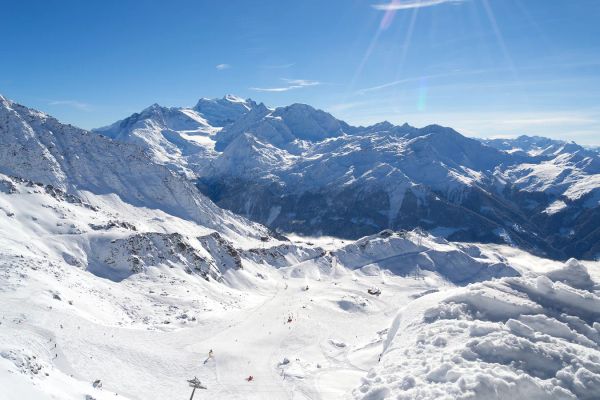
Alps Snow Forecast: Up to 64 cm Headed for the High Glaciers as the Snow Line Drops
The Alps are about to swap mild, sunny October weather for something far more wintry. A cold front arrives Tuesday, and SnowStash forecasts have Monterosa Ski out in front with 64 cm over 14 days, ahead of Blatten Belalp (55 cm) and Verbier (43 cm). The snow line should fall below 2000 metres by Wednesday night, and glaciers across Switzerland, Italy and Austria are in line for the best of it. The wind will have a say too.
20 Oct 2026

Four Dead After Avalanche Near Ski Portillo in Chile
A large avalanche struck near Laguna del Inca adjacent to Ski Portillo on Saturday afternoon, killing four people and injuring four others. The group were day visitors mountaineering in the backcountry after reportedly being warned about elevated avalanche risk by resort staff.
18 Oct 2026

Europe Ski Resorts Open Now: What Is Skiable in Mid-October 2026
Europe’s ski season is open, technically. After a record-warm summer, glaciers in Austria, Switzerland and Italy are running a few pistes apiece, Sölden, Stubai and Kitzsteinhorn started late, Titlis has pushed back to 24 October, and Zermatt reopens a few lifts on 14 October after more than two months shut. Finland’s Levi and Ruka are skiing on stored snow. Here is what is open, and what you actually get at each.
14 Oct 2026

Zermatt Plans World Cup Downhill Return on the Gornergrat for 2028
Zermatt is having another crack at a World Cup downhill, and this time nobody has to cross a border. Around 13 million Swiss francs is going into rebuilding the Gornergrat piste, including a jump fed by a roughly 300-metre in-run across the roof of the Gornergrat Railway gallery, with the Matterhorn lined up behind it for the TV cameras. First men’s race is pencilled in for March 2028, pending FIS homologation.
14 Oct 2026

Mt. Rose Begins Snowmaking for the 2026-27 Season at Lake Tahoe
Lake Tahoe’s highest base elevation is paying off early: Mt. Rose has started making snow for 2026-27 after the first flurries and a cold snap. The Nevada resort is backing it with nearly US$2 million in upgrades, including a replacement snowmaking main line, a new PistenBully groomer and restraint bars on every lift. Opening day is yet to be confirmed, though Heavenly and Northstar are already eyeing 20 November.
13 Oct 2026

Utah Ski Resorts 2026-27: What’s New at Alta, Deer Valley, Powder Mountain and More
Utah is still building flat out. For 2026-27, Powder Mountain opens a steep new Skytrac chair into more than 1,000 acres of advanced terrain, Deer Valley adds 200 acres on Hail Peak, Sundance gets a new quad and Park City adds a gondola from its new parking structure. Snowmaking is expanding almost everywhere, Eagle Point stays closed after the Cottonwood Fire, and the 2034 Games are setting the pace. Here’s what’s new, resort by resort.
13 Oct 2026

Mt Hutt Invests NZ$12 Million in Base Area, Tripling Its Sun Deck
Mt Hutt is getting busier, and its base lodge is about to catch up. NZ$12 million goes into a heated sun deck roughly three times the current size (430 m² to 1,300 m²), plus a new toilet block, heated steps down to snow level, extra storage and a new food and beverage outlet. Building starts after the 2026 season, with everything due for winter 2027.
11 Oct 2026

Vermont Ski Resort Opening Dates 2026-27: Few Dates Set, Killington Waits on the Cold
Vermont's season is slow to take shape. Stratton is tentatively targeting 18 November and Sugarbush 21 November, while Pico has Friday 11 December on the calendar. Killington never sets a date and opens when the snowmaking allows, and Vail Resorts has yet to name days for Stowe, Okemo and Mount Snow. The forecasts disagree about snow, and the main El Niño worry for the Green Mountains is warmth.
9 Oct 2026
Mt Ashland Lift Tickets
Mt Ashland lift tickets & passes
Opening day for the winter 2026 - 2027 season is scheduled for Dec 18, 2026 (subject to change). Lift tickets at Mt Ashland typically go on sale well before the start of the ski season.
Day passes start from US$55, with peak rates up to US$89.
Indy8 pass options
Single-day passes
Adult 18–64
Adult Full Day
US$75up to US$89 peak
Full day access to Mt Ashland in Southern Oregon. Experience expert terrain with 44 slopes and spectacular views from the Siskiyou Summit.
Buy passYouth 13–17
Youth Full Day
US$65up to US$79 peak
Youth daily ticket for Mt Ashland. Southern Oregon skiing with challenging terrain perfect for developing advanced skiing skills in the Siskiyou Mountains.
Buy passChild 7–12
Child Full Day
US$55up to US$69 peak
Children's lift ticket at Mt Ashland Ski Area. Southern Oregon family skiing with beginner terrain and excellent ski school programs.
Buy passChild 0–6
Child (6 & Under)
Free
Free skiing for children 6 and under at Mt Ashland. Southern Oregon's mountain playground welcomes families with affordable skiing near Ashland.
Buy passSenior 65–99
Senior Full Day
US$65up to US$79 peak
Senior lift ticket for Mt Ashland. Discounted access to Southern Oregon's expert terrain with 1,150 feet of vertical and powder skiing.
Buy passAdult 18–64
Military Discount
US$56up to US$67 peak
Military personnel discount at Mt Ashland. Active duty and veterans receive 25% off lift tickets with valid military ID required.
Buy passHalf-day passes
Adult 18–64
Half Day
US$59up to US$69 peak
Half day skiing at Mt Ashland starting in the afternoon. Perfect for shorter visits to Southern Oregon's challenging mountain terrain.
Buy passSeason passes
Adult 18–64
Season Pass
US$649
Unlimited access to Mt Ashland all season with no blackout dates. Southern Oregon's nonprofit ski area offers excellent value and free partner resort days.
Buy passLift tickets FAQ
How much does a Mt Ashland day pass cost?
Mt Ashland day passes range from US$55 to US$89 depending on the date and advance booking.
Can I buy Mt Ashland lift tickets online?
Yes, you can purchase tickets directly from the resort website or at the resort ticket office.
Are there discounts for multi-day passes?
Yes, multi-day packages typically offer significant savings compared to individual day passes. The per-day cost decreases with longer stays.
What is included with a Mt Ashland lift ticket?
Full access to all lifts and trails at Mt Ashland, including mountain safety and patrol services.
What is the difference between Mt Ashland lift tickets and ski passes?
"Lift tickets" and "ski passes" refer to the same thing at Mt Ashland - your access to the mountain's lifts and trails for your chosen duration.
When should I buy Mt Ashland lift tickets for the best price?
Purchase tickets at least 7 days in advance for the best rates, and consider weekday visits for further savings over weekend rates.
Does Mt Ashland offer group discounts on lift tickets?
Group discounts are typically available for parties of 10 or more. Contact Mt Ashland directly for group booking information and rates.
How can I check current conditions before buying tickets?
Before purchasing, check the live snow report and mountain webcams to see current weather, snow conditions, and lift operations at Mt Ashland.
More Mt Ashland intelligence: snow report, webcams, resort overview.